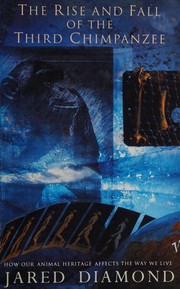
Start with The Third Chimpanzee. It is the earlier, broader book in which the argument that made Diamond famous is still assembling itself, and it is written by a biologist looking at humans as one more species rather than by a thesis-holder defending a position. Language, art, agriculture, genocide and extinction, all treated as animal behaviour. It is also less contested than what came next, so you meet the method before you meet the fight.
The obvious alternative is Guns, Germs, and Steel, which is the book everyone means and the one you will end up reading. Start there and you inherit thirty years of accumulated argument without knowing it is there — the objections have become part of the book's reputation, and most readers absorb them second-hand and garbled. Read it second, on purpose, with at least one critic beside it.
The big thesis books
Guns, Germs, and Steel argues that the broad shape of world history follows from geography and biogeography: which continents had domesticable plants and animals, which ran east to west, which therefore developed dense populations, epidemic diseases and steel. Historians and anthropologists have pushed back hard, on two main grounds — that the model leaves almost no room for human agency, institutions or contingency, and that several of its specific regional cases do not hold up to specialist scrutiny. Diamond's defenders answer that a book explaining continental-scale patterns is not obliged to explain particular events. This is a genuine, unresolved disciplinary disagreement, and no reading list decides it.
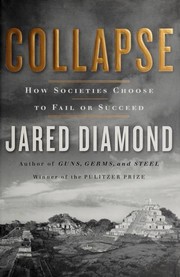
Collapse asks why some societies destroy their own environmental base. It is the most useful of his books for a general reader and it contains the most disputed single chapter: the account of deforestation and social collapse on Rapa Nui, which archaeologists working on the island have challenged in detail, arguing for a much larger role for introduced rats and for European contact and slaving. Read the chapter, then read the response.
The world until yesterday draws lessons for modern life from small-scale traditional societies, largely in New Guinea. Anthropologists and indigenous-rights organisations objected publicly to how contemporary peoples are characterised in it, particularly around violence. Upheaval applies a personal-crisis framework to national crises and had the coolest reception of any of his books, including from reviewers otherwise sympathetic to him.
Why Is Sex Fun? is the short, cheerful outlier — human sexual biology compared with other animals, and the least contentious thing he has written.
Read the critics alongside
Questioning collapse is an edited volume in which archaeologists and anthropologists respond to Collapse case by case; our catalogue credits Patricia Ann McAnany, one of its two editors. It is a scholarly book and reads like one, but it is the most direct rebuttal available.
The Dawn of Everything, by David Graeber and David Wengrow, argues something close to the opposite about early human societies: that there was no single trajectory from foraging bands to agriculture to states, that people experimented with political forms deliberately, and that the standard story is an artefact of how the evidence was read. It has its own critics. Put it next to Guns, Germs, and Steel and let both stand; that pairing is more educational than either book alone.
The books underneath the argument
Ecological Imperialism, by Alfred Crosby, is the scholarly source for much of the disease-and-biology material Diamond popularised, and it came first. Plagues and Peoples, by William McNeill, made the case for epidemic disease as a driver of history decades before Guns, Germs, and Steel. Neither is hard going, and reading them clarifies which parts of Diamond are synthesis and which are his own.
If you read three, read The Third Chimpanzee, Guns, Germs, and Steel and one of the two rebuttals. That is the honest minimum for having an opinion. More history-of-ideas sequences sit on the Jared Diamond hub.
Follow the full ordered path here: Jared Diamond Reading Order: Where to Begin, and What the Critics Say.