Psychoanalysis: The Best Books on the Talking Cure and What It Became, in Order
Psychoanalysis is three things at once and reading it well means keeping them apart: a body of clinical practice that thousands of therapists still do every day, a set of nineteenth-century theoretical writings by one Viennese neurologist, and a contested claim to scientific standing. This path reads them in that order. It starts with modern therapists describing what actually happens in a consulting room, then goes back to Freud's own books — which read very differently from anything written about them, being case-driven, literary and often wrong — then covers the clinical literature that trained practitioners use, and ends with the critics. The evidence base is genuinely disputed: some outcome research finds psychodynamic therapy performs comparably to other talking therapies, critics argue the studies are weaker than that summary suggests, and specific Freudian claims about repression and recovered memory have been seriously damaged. The final stage is there so you meet that argument rather than being told how it resolved.
What Happens in the Room
BeginnerUnderstand psychodynamic therapy as a practice — transference, the frame, the therapist's own reactions — through therapists writing about real patients, before meeting any theory.
▸ Study plan for this stage
Pace: Three to four weeks for around 960 pages. Grosz's The Examined Life (225 pages) is thirty-one very short case studies and can be read a few at a time over ten days — resist reading it in one go, because the accumulation is the argument. Yalom's Love's Executioner (304 pages) has ten longer cases and
- Psychodynamic therapy is a practice before it is a theory, and this stage deliberately shows you the practice first. What analysts do is listen for pattern over time, not deliver interpretations.
- Transference: the patient's feelings toward significant figures in their life re-emerging in relation to the therapist. It is treated not as a nuisance but as the material — the past becoming observable in the present, in the room.
- Countertransference: the therapist's own reactions to the patient, used as clinical data rather than suppressed. Yalom is unusually candid about his own boredom, attraction and irritation, which is exactly why he is placed second.
- The frame — fixed time, fixed fee, fixed place, and consistency about all three — is a technical device, not an administrative convention. Deviations from it are treated as information.
- Grosz is a London psychoanalyst with decades of practice, and his cases are a few pages each with no jargon and no theory. That is the gentlest available demonstration of what analytic listening is for. Susie Orbach's In Therapy, built from session transcripts, does a similar job if you want a secon
- Gottlieb writes as a therapist who is also in therapy, so you see both chairs at once, which makes it the best account here of what a patient actually experiences week to week.
- The case study is a genre with real limits: cases are selected, reconstructed from memory and notes, anonymised and shaped for readability, and none of them is evidence of efficacy. Hold that from the start — the final stage takes it up directly.
- The evidence base for psychodynamic therapy is genuinely disputed. Some outcome research finds it performs comparably to other talking therapies; critics argue the studies supporting that summary are weaker than it suggests. This path meets that argument at the end rather than pretending it is settl
- What is transference, and how would you recognise it in one of Grosz's cases before he names it?
- Yalom reports his own irritation and attraction. How does he convert those reactions into clinical information, and what would go wrong if he did not report them at all?
- What is the frame doing? Take one case where it is tested and say what the test revealed.
- What can a written case study establish and what can it not? Be specific about selection, reconstruction and the absence of a comparison.
- Gottlieb shows both sides of the therapeutic relationship. What does the patient experience that the therapist appears not to notice, and vice versa?
- After three books, describe in your own words what a psychodynamic therapist is actually doing during a session.
- Take three Grosz cases and for each write down the presenting problem, the pattern the analyst identifies, and the evidence in the case for that pattern. The third column is usually thinner than the second — note that.
- For two Yalom cases, list every countertransference reaction he reports and what he does with it.
- Write a paragraph on what all three books have in common in how they present a case, then a paragraph on what a sceptic would say that shared form conceals.
- Keep a list of technical terms as they appear — transference, countertransference, resistance, the frame, working through — with a definition drawn from the cases rather than from a glossary. You will formalise these in the third stage.
Next up: Having watched the practice, you can read its founder without mistaking summaries of him for the thing itself — and Freud reads very differently from anything written about him.

Thirty-one very short case studies from a London psychoanalyst with twenty-five years of practice, each a few pages. The gentlest possible entry: no jargon, no theory, and the clearest demonstration of what analytic listening is for. Susie Orbach's In Therapy, built from session transcripts, does a similar job if you want a second.
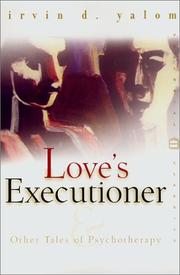
Ten longer cases from an American existential psychiatrist, notable for how much Yalom admits about his own boredom, attraction and irritation. Read second because it introduces countertransference — the therapist's reactions as clinical data — which the later theory books formalise.

A therapist in therapy, so you see both chairs at once. The most recent and most popular book here, and the best account of what a patient experiences week to week. Read third; after Grosz and Yalom you will notice how much of the technique it is describing.
Freud in His Own Words
BeginnerRead the primary sources rather than summaries of them, and get a feel for how Freud actually argued — from cases, by analogy, and with far more hedging than the popular caricature suggests.
▸ Study plan for this stage
Pace: Four to five weeks for around 1,075 pages. Studies on Hysteria (372 pages) comes first and takes ten days; read the case histories closely and the theoretical sections more quickly. The Interpretation of Dreams (510 pages) is long and uneven — read the first two chapters and the final chapter proper
- Freud argues from cases, by analogy and with considerably more hedging than the popular caricature suggests. Reading him directly is the fastest correction to both his admirers and his detractors.
- Studies on Hysteria, published in 1895 and co-written with Breuer, is where the method is invented on the page: symptoms traced to forgotten experiences, and the discovery that talking about them relieved them. Breuer's patient Anna O supplied the phrase the talking cure.
- Those cases have been re-examined critically ever since, and several of the reported cures did not hold. That is not a footnote — it is central to how the primary texts should be read.
- The Interpretation of Dreams introduces the unconscious as a systematic hypothesis, along with condensation, displacement, secondary revision and the theory of dreams as disguised wish fulfilment.
- Freud's dream theory is not accepted by contemporary sleep science, which has its own accounts of dreaming. Read the book for the model of mind it proposes and the method of interpretation it demonstrates, not as a description of what dreams are.
- Civilization and Its Discontents argues that civilisation is purchased with instinctual renunciation and therefore guarantees a residue of unhappiness. It is speculative social theory rather than clinical work, and should not be mistaken for evidence.
- The move from clinical observation to general theory is the recurring methodological issue in Freud, and it is where most later criticism lands. Watch him make it.
- Freud writes well and persuasively, which is itself a hazard: the rhetorical force of the prose does work that the evidence does not.
- In Studies on Hysteria, how does Freud actually get from a symptom to an explanation? Reconstruct the inferential steps in one case and mark the ones that do not follow necessarily.
- What does the talking cure claim to do, and what did Breuer and Freud take as evidence that it had worked?
- State the wish-fulfilment theory of dreams precisely. What observations would count against it, and does Freud allow for any?
- Where in The Interpretation of Dreams does Freud generalise from a small number of cases to a claim about all minds? Is the generalisation defended or asserted?
- What is Freud's argument in Civilization and Its Discontents, and what kind of claim is it — empirical, conceptual, or moral?
- Having read the case books in the first stage, how much of what modern therapists do is recognisably in these texts, and how much is not?
- Take one case from Studies on Hysteria and write out the chain of inference as numbered steps, marking each as observation, inference or assumption.
- Interpret one of your own dreams by Freud's method as he sets it out, then write a paragraph on what the exercise did and did not establish.
- List every claim in The Interpretation of Dreams you take to be falsifiable and every one you take not to be. The proportion is the point.
- Summarise Civilization and Its Discontents in 400 words without using any Freudian vocabulary. What survives translation is the argument; what does not may be terminology doing unearned work.
- Compare one of Freud's cases with one of Grosz's. Note what has changed in how a case is presented, and what has not.
Next up: Freud is the origin rather than the state of the field, and the next stage covers what practitioners were actually trained on after the tradition moved away from him.

The 1895 starting point, co-written with Breuer, whose patient Anna O gave the treatment its name of the talking cure. Read it first among the primary texts because it is where the method is invented on the page, and because the cases have been re-examined critically ever since — several of the reported cures did not hold.

Freud's own choice for his most important book, and the introduction of the unconscious, condensation, displacement and wish fulfilment. Long and uneven; the first two chapters and the last are the load-bearing ones. Read it knowing that its central theory of dreams is not accepted by contemporary sleep science.

Short, late, and the most rewarding Freud for a general reader: the argument that civilisation is bought with instinctual renunciation and therefore guarantees a residue of unhappiness. Placed last here because it is speculative social theory rather than clinical work, and should not be mistaken for evidence.
The Clinical Tradition After Freud
IntermediateFollow how the practice developed away from Freud — object relations, the therapeutic relationship as the agent of change — and see the texts that actually train psychodynamic clinicians today.
▸ Study plan for this stage
Pace: Five to six weeks for around 1,035 pages. Winnicott's Playing and Reality (169 pages) is short and dense — read it slowly over a week and a half, a chapter at a sitting. Casement's On Learning from the Patient (244 pages) takes ten days and is best read with a notebook. McWilliams's Psychoanalytic D
- Object relations shifted the tradition's centre from drives to relationships: the mind is understood as populated by internalised representations of others, formed early and re-enacted later.
- Winnicott was a paediatrician before he was an analyst, which is why his writing stays concrete. Transitional objects, the good-enough mother, and the capacity to be alone are the three ideas from Playing and Reality that have travelled furthest outside the field.
- The good-enough mother is a deliberately anti-perfectionist concept: reliable failure in tolerable doses is what allows a child to develop, and the idea reframes what a therapeutic relationship has to provide. Melanie Klein's Envy and Gratitude is the harder, darker branch of the same tradition.
- Casement's internal supervision is the most practically useful idea in this stage: noticing your own assumptions in the middle of a session, entertaining an alternative reading, and correcting course before the interpretation is spoken.
- The therapeutic relationship itself as the agent of change, rather than insight delivered through interpretation, is the central movement of post-Freudian clinical thinking, and it is the claim that most distinguishes this tradition's self-understanding from cognitive approaches.
- McWilliams's Psychoanalytic Diagnosis is the standard graduate text on personality organisation and character structure — neurotic, borderline and psychotic levels of organisation crossed with character types — and it is unusually humane for a diagnostic system. Her Psychoanalytic Case Formulation i
- Diagnosis here means something different from a symptom checklist: it is a description of how a person is organised, intended to guide technique rather than to label. That distinction is worth holding against the wider psychiatric context.
- Gabbard is a psychiatrist writing for clinicians, and his primer covers assessment, the frame, working with resistance and termination — the least literary and most practical book on the path. His Psychodynamic Psychiatry in Clinical Practice is the fuller reference.
- What does object relations theory claim about the structure of mind, and how does it differ from Freud's drive model?
- Explain the good-enough mother and the capacity to be alone. What does each concept explain that a perfectionist model of parenting cannot?
- What is internal supervision, and how would a therapist practise it in real time? Describe a sequence from Casement.
- How does McWilliams's notion of personality organisation differ from a symptom-based diagnosis, and what does it let a clinician do differently?
- Gabbard describes resistance and termination as technical problems. What is the technique in each case, and what is it aiming at?
- Which of these ideas depend on Freud's theory being right, and which would survive if it were abandoned entirely?
- Write out Winnicott's three central concepts with a real example of each from ordinary life. If you cannot find examples, you have not understood them.
- Take one Casement vignette and identify the assumption he catches himself making and the alternative he substitutes. Then do the same for a conversation of your own.
- Build a summary table of McWilliams's levels of personality organisation with the implications each carries for technique.
- Reread two cases from the first stage using McWilliams's vocabulary and note what the vocabulary makes visible that plain description did not.
- Summarise Gabbard's account of the treatment arc — assessment, frame, working through, termination — on one page as a practitioner would need it.
Next up: You now know what the tradition claims to do and how; the last stage takes the case against it seriously, in its strongest form, and sorts what has been abandoned from what is still defended.
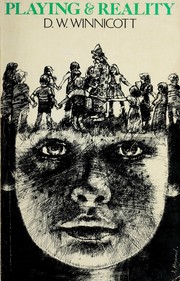
The most influential single book of British object-relations thinking: transitional objects, the good-enough mother, the capacity to be alone. Winnicott was a paediatrician first, which is why his writing stays concrete. Melanie Klein's Envy and Gratitude is the harder, darker branch of the same tradition.
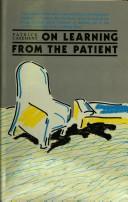
Casement's account of internal supervision — noticing your own assumptions in the middle of a session and correcting them. The best bridge between reading about therapy and doing it, and the point at which this path stops being for spectators.
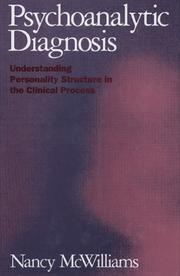
The standard graduate text on personality organisation and character structure, and unusually humane for a diagnostic manual. Read it after Casement: it gives names to the patterns the case books have been showing you. Her Psychoanalytic Case Formulation is the companion volume.

A compact technical primer on how the treatment is actually conducted — assessment, the frame, working with resistance and termination. Gabbard is a psychiatrist who writes for clinicians, so this is the most practical and least literary book on the path; his Psychodynamic Psychiatry in Clinical Practice is the fuller reference.
The Critics and the Evidence
IntermediateTake the case against psychoanalysis seriously in its strongest form, distinguish the claims that have been abandoned from those still defended, and see where the tradition sits relative to modern neuroscience.
▸ Study plan for this stage
Pace: Four to five weeks. Malcolm's Psychoanalysis: The Impossible Profession (174 pages) is short and sharp and can be read in three or four evenings — it comes first because it is sceptical without being hostile. Crews's The Memory Wars (299 pages) takes a week and includes the correspondence the essays
- Malcolm's portrait, built around long interviews with a New York analyst, is still the sharpest account of what analysts believe they are doing. It is sceptical without being hostile, which is why it opens the stage rather than closing it.
- Crews's essays and the furious correspondence they provoked concern repression and the recovered-memory movement, and they represent the most consequential attack on psychoanalysis in practice rather than in theory — because the clinical claim at issue caused documented harm to real families.
- The distinction that organises this stage: claims that have been abandoned or seriously damaged, such as the reliability of recovered repressed memories and Freud's specific dream theory, versus claims still defended, such as the therapeutic value of the relationship and the existence of unconscious
- Crews's later book on Freud, catalogued under that bare title, extends the case to Freud's personal and professional conduct and is far more polemical than The Memory Wars. Knowing that distinction keeps the two arguments separate.
- Zaretsky's social history explains how psychoanalysis spread through the twentieth century, why it captured American psychiatry, and why it then lost that position to medication and cognitive behavioural therapy. Professional status was decided by institutional and economic forces as much as by evid
- Efficacy and theoretical truth are separate questions. A therapy can help without its explanatory theory being correct, and a theory can be interesting without the treatment derived from it working. Most public argument about Freud collapses the two.
- Solms is a neuropsychologist who also trained analytically, and he argues that affective neuroscience vindicates a version of Freud's basic picture. That is one researcher's programme, contested within its own field, and it is included as a live rejoinder rather than a settled answer. The catalogue
- The honest position at the end of this path is that the evidence base is disputed: some outcome research finds psychodynamic therapy comparable to other talking therapies, critics argue those studies are weaker than the summary implies, and specific Freudian claims about repression have been serious
- What does Malcolm find analysts believe they are doing, and where does she suggest the self-understanding and the practice come apart?
- State the recovered-memory claim precisely as it was made clinically, say what the evidence against it actually shows, and separate Crews's argument about repression from his argument about Freud's conduct — which of the two bears on whether the therapy works?
- According to Zaretsky, why did psychoanalysis capture American psychiatry and then lose it? How much of that story is about evidence?
- How would you distinguish the question of whether psychodynamic therapy helps from the question of whether Freud's theory is true? What kind of study answers each?
- What exactly is Solms claiming, what would confirm it, and why is it contested by other neuroscientists?
- Having read all four stages, which parts of this tradition do you now think are worth taking seriously, and on what basis?
- Build a three-column table: claims abandoned, claims contested, claims still defended. Populate it from the whole path, not just this stage, and cite the book behind each entry.
- Write the strongest one-page case against psychoanalysis and the strongest one-page case for it, without indicating your own view.
- Take the recovered-memory episode and write a short account of how a clinical practice can spread, cause harm and be retracted, naming the mechanisms at each step.
- Read one Solms chapter and mark every claim as established neuroscience, contested interpretation, or analogy. The proportions are the assessment.
- Finish by rereading two cases from the first stage. Write 500 words on what you now think is happening in them, using the vocabulary of the third stage and the scepticism of this one.
Next up: That closes the path: the practice as clinicians describe it, Freud in his own words, the tradition that grew away from him, and the critics — with the evidence base left genuinely open, which is where it actually stands.

Malcolm's 1981 portrait of the profession from inside — built around long interviews with a New York analyst — and still the sharpest thing written about what analysts believe they are doing. Sceptical without being hostile, which is why it comes first here rather than last.
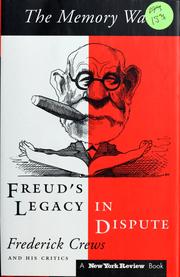
Crews's essays and the furious correspondence they provoked, on repression and the recovered-memory movement of the 1980s and 1990s. The most consequential attack on psychoanalysis in practice rather than in theory, since the clinical claim at issue caused documented harm. Crews's later Freud, catalogued under that bare title, extends the case to Freud's conduct and is far more polemical.

A social history of psychoanalysis across the twentieth century — how it spread, why it captured American psychiatry, and why it then lost that position to medication and cognitive behavioural therapy. Read after the critics for the account of how the field's status was actually decided.

Solms is a neuropsychologist who took an analytic training and argues that affective neuroscience vindicates a version of Freud's basic picture. Included last as the live rejoinder rather than the settled answer; it is one researcher's programme, contested in its own field, and the catalogue record carries an odd hyphenated display title.
Discussion
Keep reading
Paths that share books, cover the same subject, or open a related topic.