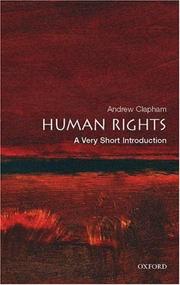
Start with Human Rights by Andrew Clapham, the Oxford Very Short Introduction — roughly two hundred small pages by a serious scholar, and the fastest way to see the shape of the field. Then move to International human rights law edited by Daniel Moeckli and colleagues, which is the standard multi-author university textbook and the book a course would actually set.
The spine of this subject is the argument, not the syllabus. The law itself is quickly described: a set of post-1945 treaties, the Universal Declaration and the two Covenants, three regional systems in Europe, the Americas and Africa, and a machinery of committees, rapporteurs and courts. What is genuinely contested is where the idea came from, and whether ratifying any of it changes what states do to people. This path is built to take you through the doctrine quickly and then spend most of its time on those two disputes, which is where the interesting books are.
Two practical cautions. This is a fast-moving field tied to specific instruments and case law, so check publication dates — a textbook more than a few years old will be behind on jurisprudence and on ratifications. And nothing here is legal advice: whether a claim can be brought turns on jurisdiction, admissibility, exhaustion of domestic remedies and time limits that no textbook can apply to a particular situation. For the general international law framework these rules sit inside, see international law.
The doctrine
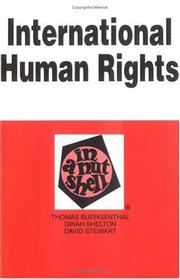
International human rights in a nutshell by Thomas Buergenthal is a compressed American law-student outline — cheap, dry and good for getting the structure into your head. International human rights law, the Moeckli volume, is the main textbook. Textbook on international human rights by Rhona K. M. Smith is the single-author alternative, organised right by right and system by system; if you have Moeckli you do not need both. International Human Rights by Philip Alston and Ryan Goodman is the large casebook — extracts from judgments, reports and commentary with questions attached, well over a thousand pages. It is a study instrument, not a book to read through.
Where the idea came from
Inventing Human Rights by Lynn Avery Hunt argues that eighteenth-century changes in sensibility, including the reading of epistolary novels and the retreat from judicial torture, made rights thinkable in a new way. It is an argument rather than a consensus. A World Made New by Mary Ann Glendon is the narrative of Eleanor Roosevelt and the drafting of the Universal Declaration between 1946 and 1948, and the best account of that room.
The Last Utopia by Samuel Moyn cuts directly against Hunt: he argues human rights became a mass political language only in the 1970s, after other utopian projects failed, and that reading them back into 1789 or even 1948 is a genealogy invented afterwards. Read Hunt and Moyn together. The dispute between them is the most productive thing in the modern literature and this article is not going to resolve it for you.
Does it actually work?
Mobilizing for human rights by Beth A. Simmons is the most methodologically demanding book on the list: a quantitative study finding that treaty ratification does have measurable effects, but mainly where it hands domestic actors — litigants, campaigners, opposition politicians — something to organise around. The justice cascade by Kathryn Sikkink traces the spread of individual criminal accountability and the evidence associating prosecutions with improvements. Evidence for Hope is Sikkink answering the pessimists directly, including on whether the data show decline at all.
The pessimists get their own hearing. The Endtimes Of Human Rights by Stephen Hopgood argues the movement's global institutions are a Western moral project past its moment. Not enough is Moyn again, arguing that human rights coexisted comfortably with widening material inequality because they were never designed to speak to it.
The philosophy
The idea of human rights by Charles R. Beitz closes the path. He treats human rights as a political practice to be understood on its own terms rather than as moral truths to be derived first and applied second. Conceptually the hardest book here, and much easier once you have seen the practice it is theorising.
Follow the full path in order — the doctrine section is short on purpose.
Follow the full ordered path here: International Human Rights Law: What to Read, in Order.
Ready to learn something deeply?
Build a reading path — free