International Human Rights Law: The Best Books, in Order
International human rights law is a body of treaties, monitoring bodies and regional courts that claims to bind states in how they treat their own people — which is exactly the claim classical international law spent three centuries denying. This path takes it in four movements: what the instruments actually say and oblige, where the whole idea came from, whether ratifying any of it changes state behaviour, and the serious case that the movement is finished. The historical and critical stages are not decoration here; the argument about the field's origins is currently the liveliest thing in it, and a reader who only learns the doctrine will not understand why the doctrine is contested. Two practical notes: the textbooks are reissued every few years and human rights law moves fast, so treat each catalogue record as identifying the work rather than the edition and buy the current one; and nothing on this path is legal advice or a guide to bringing a claim.
What the system actually is
BeginnerLearn the architecture — the Universal Declaration, the two Covenants, the treaty bodies, the three regional systems — well enough that the textbooks stop being an alphabet soup of acronyms.
▸ Study plan for this stage
Pace: 2–3 weeks, about 530 pages. Clapham's Human Rights (171) is the Very Short Introduction, filed in our catalogue under the bare title — read it in one or two evenings. Buergenthal's International Human Rights in a Nutshell (358) is a compact survey covering the UN machinery and the European, Inter-Am
- The International Bill of Rights: the Universal Declaration, the ICCPR and the ICESCR, and what each is and is not
- Declaration versus treaty versus customary norm — the different force of each
- The core UN treaties and their monitoring committees, and what a treaty body can actually do
- State reporting, individual communications and the optional protocols that enable them
- The Human Rights Council, the special procedures and Universal Periodic Review
- The three regional systems — European, Inter-American, African — and their very different enforcement powers
- Civil-political versus economic-social-cultural rights, and the immediate-obligation versus progressive-realisation distinction
- The vocabulary problem: which acronym is a treaty, which a body, which a procedure
- What is the legal status of the Universal Declaration today, and how did it acquire it?
- What happens, procedurally, when a state ratifies the ICCPR? Name each obligation that attaches.
- What can the European Court of Human Rights do that the UN Human Rights Committee cannot?
- What does 'progressive realisation' oblige a state to do, and how is compliance assessed?
- Distinguish the Human Rights Council, the Human Rights Committee and the Office of the High Commissioner.
- Build a one-page table of the nine core UN treaties: treaty, monitoring body, whether individual complaints are available, and whether your own state has accepted them.
- Look up your country's most recent Universal Periodic Review and read the recommendations it accepted and those it noted; the difference is the whole system in miniature.
- Draw the three regional systems side by side with columns for founding instrument, court, standing and enforcement.
- Write out every acronym you meet in these two books with its expansion and one line on what it does; keep the sheet for the next stage.
Next up: You can now read the field's shorthand; the next stage works through the obligations themselves at the level a course would teach them.
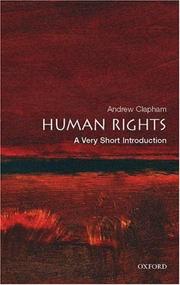
The Very Short Introduction, filed in our catalogue under the bare title. Clapham is a Geneva professor and a former UN special rapporteur, and this is the cleanest short account of what rights are claimed, by whom, against whom. Read it in an evening before anything longer.
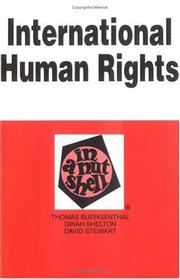
A compact survey by a judge of the International Court of Justice who was also a child survivor of Auschwitz. It covers the UN machinery and the European, Inter-American and African systems in the space most books spend on the UN alone, which makes it the fastest route to the whole map.
The law itself
IntermediateWork through the substantive obligations, the enforcement mechanisms and the arguments about scope — derogation, reservations, extraterritoriality — at the level a course would teach them.
▸ Study plan for this stage
Pace: 10–12 weeks, and the heaviest stage on the path — treat it as a term rather than a month. Moeckli's International Human Rights Law (672) is the standard edited textbook with each chapter by a specialist, and it is the main text; Smith's Textbook on International Human Rights (386) is a single-author
- Obligations to respect, protect and fulfil, and how the tripartite typology is applied to a specific right
- Derogation in time of emergency, non-derogable rights, and the procedural conditions on derogating
- Reservations to human rights treaties, the object-and-purpose test, and the treaty bodies' contested severability doctrine
- Extraterritorial application: effective control over territory and over persons, and the divergence between the courts on it
- Limitation clauses — prescribed by law, legitimate aim, necessary in a democratic society, proportionate
- Margin of appreciation and subsidiarity as European doctrines with no exact analogue elsewhere
- Non-state actors, business and human rights, and the gap between state-centric law and corporate conduct
- Justiciability of economic and social rights, and the minimum core obligation argument
- Take the prohibition of torture and set out the state's obligations to respect, protect and fulfil it, with authority for each.
- Under what conditions may a state derogate, and which rights survive derogation under the ICCPR and under the ECHR?
- What is the severability approach to invalid reservations, and why do states object to it?
- When does a state's human rights obligation follow it abroad? Compare the leading European and UN answers.
- Run a full limitation analysis on a real restriction on expression: is it prescribed by law, does it pursue a legitimate aim, is it necessary and proportionate?
- What is the strongest argument that economic and social rights are justiciable, and the strongest against?
- For every chapter of Moeckli, read the corresponding extracts in Alston and Goodman before reading the chapter; the casebook first is slower and works better.
- Brief five leading judgments from the casebook in the standard form — facts, issue, holding, reasoning, dissent — including at least one from each regional system.
- Take one right and trace it through all three books, noting where Moeckli's specialist author, Smith and the casebook editors emphasise different things.
- Write a 1,000-word answer to a real past examination question on derogation or extraterritoriality using only these three texts, then mark it against what the casebook extracts actually say.
Next up: With the doctrine in hand, the next stage asks where the whole idea came from — which turns out to be the liveliest argument in the field.

The standard edited textbook, with each chapter written by a specialist in that area. Broader and more current than any single-author treatment, and the right main text for this path. Heavily revised between editions, so buy the newest.

A single authorial voice covering the same ground, and a useful corrective if the edited volume's chapter-by-chapter structure leaves you without a thread. Shorter, and better on the regional systems than most.

Alston and Goodman's casebook — the extracts, judgments and committee findings themselves, with the editorial framing that made its predecessor the field's standard teaching text. This is the volume that turns a subject you have read about into one you have read. Note that its published title and its longer text-and-materials form resolve to this single record.
Where the idea came from
IntermediateFollow the two competing origin stories — an eighteenth-century moral revolution, or a 1970s substitute for failed political utopias — and understand what each implies about the movement's future.
▸ Study plan for this stage
Pace: 4–5 weeks, about 990 pages: Inventing Human Rights (272), A World Made New (368), The Last Utopia (352). Read in that order: Hunt makes the long-origins case, Glendon narrates the drafting of the Universal Declaration as a story of the people in the room, and Moyn demolishes both. Hunt's argument fr
- Hunt's thesis: changing eighteenth-century sensibilities about pain, torture and bodily autonomy made universal rights thinkable
- The empathy-and-the-novel mechanism, and why historians dispute it as causation
- The drafting of the UDHR: Roosevelt, Malik, Chang, Cassin, Humphrey, and what each brought to the text
- Compromise and deliberate ambiguity in the Declaration's language, and what got left out
- Moyn's thesis: human rights surged in the 1970s as a minimalist morality replacing collapsing revolutionary and anticolonial projects
- The break-versus-continuity question, and what each answer implies about the movement's future
- 1948 as a beginning or as a dead letter until the 1970s — the empirical dispute underneath the philosophical one
- Why an origin story is politically consequential rather than merely academic
- What is Hunt's causal mechanism, and what evidence would falsify it?
- Which drafting compromises does Glendon identify, and which of them still generate litigation?
- Set out Moyn's argument in five sentences. Which of Hunt's and Glendon's claims does it deny outright, and which does it merely reframe?
- What does Moyn's dating imply about the movement's relationship to decolonisation?
- If Moyn is right, what follows for how the doctrine you learned in the previous stage should be understood?
- Read the Universal Declaration itself article by article with Glendon open, and annotate each article with who pushed for it and what it displaced.
- Build a timeline from 1945 to 1980 marking every event Moyn treats as decisive and every one Glendon does; the divergence is the argument.
- Write the strongest one-page reply Hunt could make to The Last Utopia using only her own book.
- Aryeh Neier's The International Human Rights Movement is a history written from inside by a founder of Human Rights Watch and resolves in our catalogue; read its account of the 1970s against Moyn's.
Next up: The history is contested; the next stage moves from where the idea came from to whether any of it changes what states actually do.
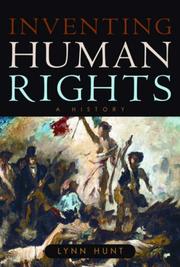
The long-origins case: that the epistolary novel and changing attitudes to torture and pain in the eighteenth century made the idea of universal rights thinkable at all. Charming, unorthodox as history, and the argument everything else in this stage is answering.
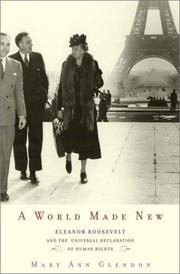
The drafting of the Universal Declaration, told as the story of the people in the room — Eleanor Roosevelt, Charles Malik, Peng-chun Chang, René Cassin. Read it directly after Hunt to see the idea turned into a text by negotiation and compromise rather than by moral progress.

The demolition of both books above: Moyn argues human rights did not descend from 1789 or even 1948, but surged in the 1970s as a minimalist morality that replaced collapsing revolutionary and anticolonial projects. The single most influential revisionist book in the field, and the reason the history stage exists. For the practitioners' answer to it, Aryeh Neier's The International Human Rights Movement — a history from inside, by a founder of Human Rights Watch — resolves in our catalogue.
Does any of it work?
IntermediateMove from doctrine and history to evidence, and learn how the empirical literature tries to establish whether ratifying a treaty changes anything on the ground.
▸ Study plan for this stage
Pace: 5–6 weeks, about 1,150 pages: Mobilizing for Human Rights (472), The Justice Cascade (342), Evidence for Hope (332). Simmons is a quantitative political scientist and her book is the methodological centre of this stage — read the research design and the identification strategy, not only the conclusi
- The selection problem: states that ratify may already be the ones intending to comply, and what that does to naive comparisons
- Simmons's finding that treaty effects are strongest in partially democratic transitional states, and the mobilisation mechanism she proposes for it
- Domestic litigation, agenda-setting and mobilisation as the channels through which an international treaty acts
- The justice cascade: the spread of individual criminal accountability from a handful of Latin American prosecutions
- The deterrence claim and the counterclaim that prosecutions entrench abusers — and what evidence bears on it
- Measurement: how human rights violations get coded, and the information paradox that better reporting looks like worse behaviour
- Sikkink's argument that perceived decline is an artefact of rising standards and improved measurement
- What counts as evidence in this literature, and the limits of cross-national panel data on hidden phenomena
- What is Simmons's identification strategy, and how does she address the possibility that ratification is endogenous?
- Under which political conditions does Simmons find treaties matter, and why does her mechanism predict exactly that pattern?
- What is the evidence for the deterrent effect of prosecutions in The Justice Cascade, and what is the strongest objection to it?
- What is the information paradox in human rights measurement, and how does Sikkink argue around it?
- Which claim in this stage is best supported by evidence, and which is most dependent on how violations are coded?
- Reconstruct Simmons's core research design on paper — units, treatment, outcome, controls — and identify the assumption the whole result rests on.
- Look up your own country's ratification record and compare its pre- and post-ratification record on one measurable right using a standard dataset.
- Take one national case from The Justice Cascade and follow the prosecutions in it through to their outcomes using current sources.
- Write the paragraph a sceptic would write about Evidence for Hope, then the paragraph Sikkink would write in reply.
Next up: Having seen the best empirical case for the system, the final stage takes the strongest arguments that it is nonetheless finished.

The most careful quantitative attempt to answer the question, and its finding is specific rather than cheerful: treaties matter most in partially democratic states, because they give domestic activists something to mobilise around. Read the methodology, not just the conclusion — this is where the field's evidence standards get set.

The case that individual criminal accountability spread as a norm from a handful of Latin American prosecutions outward, and that it deterred abuses rather than provoking them. The strongest optimistic argument built on data instead of assertion.

Sikkink's direct reply to the pessimists in the next stage: an argument that the perception of decline is an artefact of better reporting and rising standards. Read it immediately before or after the critique, as one half of an argument rather than on its own.
The serious critique
IntermediateTake the strongest arguments that the movement is exhausted, that it addressed the wrong problem, and that its philosophical foundations are weaker than its rhetoric — and decide what remains.
▸ Study plan for this stage
Pace: 4–5 weeks, about 790 pages: The Endtimes of Human Rights (264), Not Enough (287), The Idea of Human Rights (235). Hopgood and Moyn are polemical works of political argument; Beitz is analytic political philosophy and is the slowest reading here despite being the shortest. Read Hopgood, then Moyn — N
- Hopgood's distinction between global Human Rights as a professionalised Geneva institution and local human rights activism
- The material and geopolitical conditions Hopgood says sustained the institution, and his account of why they have gone
- Human rights as a secular religion, and what that framing explains and obscures
- Moyn's sufficiency-versus-equality argument: rights succeeded as a language of a floor and were useless against distributive inequality
- The correlation Moyn presses: the movement's rise coinciding with the neoliberal era, and the disputed question of whether that is causal
- Beitz's practice-based approach: understanding human rights by what the practice does rather than by deriving them from human nature
- Human rights as grounds for international concern, and what that account licenses and forbids
- The alternative foundationalist route, and why the choice between them affects which rights make the list
- What exactly is Hopgood claiming has ended, and what does he concede survives?
- What is Moyn's argument that human rights were compatible with rising inequality, and where is he arguing correlation rather than cause?
- How would Sikkink reply to Hopgood, using only Evidence for Hope?
- What is Beitz's practice-based account, and what does it gain by refusing to ground rights in a theory of human nature?
- After all five stages, what do you think the system does well, what it cannot do, and which of these five critics has the better of the argument — and on what evidence?
- Take one contemporary crisis and write how each of the five stages would analyse it: doctrinally, historically, empirically, and from Hopgood's and Moyn's positions.
- Chart the movement's growth against a distributional inequality series for the same period and see how much of Moyn's correlation is actually there.
- Write Beitz's account of a single right in his own terms, then write the foundationalist version — James Nickel's Making Sense of Human Rights resolves in our catalogue and takes the rival approach.
- Produce a final two-page position paper stating what you now believe international human rights law achieves, with a citation from each stage supporting each claim.
Next up: With doctrine, history, evidence and critique in place, the next reading is primary: the treaty texts, the general comments and the current judgments of the regional courts, all of which this path has equipped you to read for yourself.
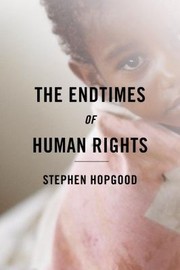
The argument that global Human Rights — the professionalised, Geneva-centred institution, as distinct from local human rights activism — is a spent secular religion whose material conditions have gone. Uncomfortable and better argued than its title suggests.

Moyn's follow-up and the sharpest point on this path: human rights succeeded as a language of sufficiency and were useless against inequality, flourishing precisely as material distribution got worse. Read it after The Last Utopia, which it assumes.

The philosophical close. Beitz argues that human rights should be understood by what the practice actually does — as grounds for international concern — rather than by deriving them from a theory of human nature. Pair it with James Nickel's Making Sense of Human Rights if you want the rival, more foundational approach; both resolve in our catalogue.
Discussion
Keep reading
Paths that share books, cover the same subject, or open a related topic.