Maigret Reading Order: Where to Start
Georges Simenon wrote seventy-five Maigret novels, and the single most useful thing to know is that you do not have to read them in order and should not try to read them all. The books are almost entirely self-contained, they are short, and Simenon's Maigret barely ages across forty years. This path picks the acknowledged entry points and the acknowledged best, moving from the pulpy early novels of the 1930s to the quieter, sadder postwar books where most readers think he peaked.
The three to start with
BeginnerMeet Maigret's method — atmosphere, patience and sympathy rather than deduction — and see whether Simenon's stripped prose suits you.
▸ Study plan for this stage
Pace: Two weeks, one novel per four or five evenings. Each of these runs 160–185 pages and Simenon wrote them in about ten days apiece; they are meant to be consumed in one or two sittings. If you are reading fifty pages a night you are reading them correctly. The single most important thing to establish
- Simenon wrote seventy-five Maigret novels, and this path is a selection, not the series — you are not starting a completist project, and nobody sensible reads all seventy-five in order
- The books are almost entirely self-contained and Maigret barely ages across forty years, so order is a convenience rather than a requirement
- Shortness is the appeal, not a compromise: 150–185 pages, one milieu, one wounded person at the centre, no subplots
- Pietr the Latvian is the first Maigret, from 1930, and shows the character arriving fully formed — read it as an origin rather than as a best-of, because it is rougher than what follows
- The Yellow Dog is the cleanest demonstration of the actual method: a fog-bound Breton town, a handful of suspects, and a solution that turns on human weakness rather than on clues
- Night at the Crossroads shows how little Simenon cares about fair-play plotting — atmosphere first, and the puzzle assembled loosely around it
- Maigret's method is patience, immersion and sympathy: he moves into a place, eats and drinks there, and waits until the milieu tells him what happened
- These are translations, and the newer Penguin retranslations are noticeably plainer and colder than the mid-century English versions — the edition you pick changes the reading experience
- What does Maigret actually do to solve The Yellow Dog, and at what point could you have solved it yourself?
- Pietr the Latvian is rougher than the two that follow. Where specifically does it show, and what did Simenon drop afterwards?
- Night at the Crossroads is not fair-play detection. Does that bother you, and what is it offering instead?
- Describe Maigret from these three books without mentioning a single deduction. What is left?
- Simenon establishes a whole town in about fifteen pages. Pick one and identify what he chose to describe and what he left out.
- Read one of these in a single sitting. It is entirely possible in two hours, and the compression is a large part of the effect.
- After finishing The Yellow Dog, write down what Maigret understood about the town before he understood the crime.
- Check which translation you have and read the first page of a different one if you can find it. The differences are larger than in most translated fiction.
- Decide now whether you like this. If three short novels have not convinced you, seventy-two more will not.
Next up: You have the method and the length; the next stage reads the strongest of the 1930s books, where Simenon starts using the form for something harder.
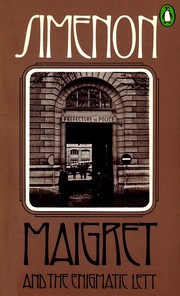
The first Maigret, written in 1930, and worth reading first purely because it shows the character arriving fully formed. It is rougher than what follows, so treat it as an origin rather than a best-of.

The best short introduction to what Simenon actually does: a fog-bound Breton town, a handful of suspects, and a solution that is about human weakness rather than clues.

The most atmospheric of the early books and the one that shows how little Simenon cares about fair-play plotting. If you enjoy this, the series is for you.
The early classics
BeginnerRead the strongest of the 1930s run and understand the shape Simenon settled into — around 150 pages, one milieu, one wounded person at the centre.
▸ Study plan for this stage
Pace: A week to ten days for these two. A Man's Head runs about 175 pages and The Late Monsieur Gallet is comparable — the same two-sitting scale as the opening stage. There is no need to slow down; the intensity comes from compression, and stretching these over a fortnight dissipates it.
- A Man's Head is the early novel with the highest stakes and the tightest structure: Maigret deliberately arranges for a condemned man to escape, staking his career on being right
- That premise inverts the detective story — Maigret is not discovering a solution, he is proving one against the institution he works for
- The Late Monsieur Gallet is the book Simenon himself singled out, and it is the clearest early case of Maigret solving a life rather than a crime: the interest is entirely in who the dead man was
- Between them these two show the two poles Simenon works between for forty years — the thriller and the autopsy of an ordinary existence
- The shape settles here: roughly 150–180 pages, one milieu, one central figure whose sadness explains the plot
- Simenon's prose is deliberately flat and unadorned; the emotional weight is carried by selection of detail, not by rhythm or metaphor
- Our catalogue lists The Late Monsieur Gallet under an inverted title form, The Late Monsieur Gallet, The — it is the same novel, and the odd form is a cataloguing artefact
- A third early novel this stage originally reached for is not currently in our catalogue; that is our gap, and the seventy-five-novel series is fully in print
- In A Man's Head, what is Maigret risking, and what does the risk tell you about how the series regards police institutions?
- The Late Monsieur Gallet reconstructs a life rather than a crime. What is the actual revelation, and why is it sad rather than shocking?
- Compare the two endings. Which one is more characteristic of the Maigret you met in the opening stage?
- Simenon called Gallet one of his own favourites. What might he have valued in it that a reader looking for a mystery would undervalue?
- What can Simenon do in 175 pages that a 400-page crime novel cannot?
- Mark the moment in A Man's Head where Maigret's certainty is at its least justified. The book's tension lives entirely in that gap.
- Write a one-paragraph biography of Monsieur Gallet from what the novel tells you. It is a more complete portrait than most novels manage of a living character.
- List the details Simenon uses to establish social class in each book. He does it in single sentences, and the technique is learnable.
- Read the opening page of each aloud. The flatness is deliberate and easier to hear than to see.
Next up: These are the sharpest of the 1930s books; the postwar novels keep the compression and drop most of the remaining pulp.

The early novel with the highest stakes and the tightest structure: Maigret deliberately lets a condemned man escape. Often named the best of the first dozen.

A quieter, sadder case that Simenon himself singled out, and the clearest early example of Maigret solving a life rather than a crime.
Maigret at his best
IntermediateRead the postwar novels where Simenon's technique matured, and where the books become studies of ordinary people under pressure.
▸ Study plan for this stage
Pace: Three to four weeks for the individual novels, which run about 160 pages each. The omnibus in this stage is a different proposition — around 860 pages collecting ten short novels, so treat it as a shelf rather than a book and read one or two of its titles here rather than the whole thing straight th
- The postwar novels are where most readers think Simenon peaked: the same length, far more control, and much less interest in crime as spectacle
- My Friend Maigret puts a Scotland Yard observer at Maigret's shoulder on a Mediterranean island, which forces Simenon to articulate the method he usually leaves implicit — it is the most explanatory book in the series
- Maigret and the Old Lady is a seaside inheritance case and one of the warmest books in the run, notable for making a whole family legible in a few pages
- Maigret Sets a Trap is the most conventionally gripping of the later books — a serial-killer manhunt in Montmartre — and proves Simenon could plot tightly when the material called for it
- The omnibus volume in this stage collects ten titles including Maigret's Memoirs, in which Maigret writes back at the novelist who invented him; it only works once you have read a good number of the novels, which is why it sits here
- Buying that omnibus means buying ten novels at once — check its contents against what you have already read so you do not duplicate
- Across these books the crimes get smaller and the portraits get larger, which is the direction the whole series travels
- Simenon's Paris here is postwar and specific — bars, concierges, commissariats — and the sociology is doing as much work as the plotting
- In My Friend Maigret, what does the English observer fail to understand about the method, and how does Simenon use his incomprehension?
- Maigret Sets a Trap is a manhunt; the others are not. What does Simenon gain and lose by plotting conventionally?
- How does Maigret and the Old Lady make a family comprehensible so quickly? Identify the specific devices.
- Maigret's Memoirs has the character correcting his own author. What does that let Simenon say about the series that a novel could not?
- Compare a postwar novel with one from the opening stage. What is technically better, and what has been lost?
- Which of these would you hand to someone who says they dislike crime fiction, and why?
- Check the omnibus contents list before reading and pick two titles from it rather than reading all ten in sequence — that is how the volume is best used.
- While reading My Friend Maigret, write down every explicit statement of method. It is the closest thing the series has to a manual.
- Sketch the family tree in Maigret and the Old Lady as you read. Simenon expects you to hold it without notes, and seeing it drawn shows how efficiently he built it.
- Note how many pages Maigret Sets a Trap spends on procedure versus on the killer's home life. The proportion is the argument.
- Pick one novel here and one from the 1930s stage and compare their final pages. The change in what counts as an ending is the clearest measure of Simenon's development.
Next up: The method is fully visible and the portraits have taken over from the puzzles; the last stage goes further in that direction, into the bleakest books of the run.

Maigret on a Mediterranean island with a Scotland Yard observer at his shoulder, which forces Simenon to explain the method he usually leaves implicit. Ideal at this point in the path.

The odd one out: Maigret writing back at the novelist who invented him. Only works if you have read a good number first, which is exactly why it sits here.

A seaside inheritance case and one of the warmest books in the series, showing Simenon's gift for making a whole family legible in a few pages.
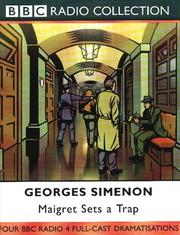
The most conventionally gripping of the later books — a serial-killer manhunt in Montmartre — and a good demonstration that Simenon could plot tightly when he chose.
The late, dark ones
IntermediateFinish with the bleakest of the run, and leave with a sense of where to wander next in the remaining sixty-odd novels.
▸ Study plan for this stage
Pace: A week to ten days. Both are short, in the usual 160–190 page range, but they read slower than the early novels because almost nothing happens quickly. Read them close together — they share a temperature — and then stop deliberately rather than drifting into the remaining sixty-odd novels at random.
- Maigret and the Headless Corpse is a grim canal-side case that is really a portrait of a marriage; the mystery is close to incidental by this point in the series
- This is the late Simenon mode: less mystery, more autopsy of a life, and endings that offer understanding rather than justice
- Maigret's Patience returns to a case Maigret has been circling for years, which makes it a natural stopping point — the detective catching up with his own past
- Our catalogue's record for that book is the French-language edition, La patience de Maigret; the English translation is published as Maigret's Patience, and the catalogue entry is an edition artefact rather than a different novel
- Reading Maigret in French is a genuine option at this level: the vocabulary is small by design, and it is one of the standard texts for intermediate French readers
- The late books are noticeably sadder and more resigned; Maigret's sympathy has hardened into something closer to fatigue
- Having finished this stage you can pick almost any of the remaining novels at random — that is the actual structure of the series, and this path exists to get you to the point where random selection works
- The Penguin retranslation project has put nearly all seventy-five into consistent modern English, so continuing is a matter of picking a title rather than hunting editions
- In Maigret and the Headless Corpse, when do you stop caring who did it, and is the book working or failing at that point?
- What is different about Maigret's attitude to the people he investigates in these two books compared with The Yellow Dog?
- Maigret's Patience is built on a case that predates the novel. What does that structure do that a fresh case could not?
- These books resolve without much satisfaction. Is that a limitation of the late Simenon or the point of it?
- You have now read across four decades of one character. What actually changed — Maigret, Paris, or Simenon?
- Write down the marriage at the centre of Maigret and the Headless Corpse as a two-paragraph character study. The crime is the frame; this is the picture.
- If you have any French, read the first page of La patience de Maigret in the original alongside a translation. Simenon's restricted vocabulary makes this unusually feasible.
- Make your own shortlist of five more Maigrets from any list of the seventy-five, chosen purely on setting. That is how experienced readers of the series actually choose.
- Decide explicitly whether you are done. The series has no ending to reach, and readers who do not choose a stopping point tend to drift rather than finish.
Next up: You have a working map of a seventy-five-novel series and the reading habits to wander it without a guide.
A grim canal-side case that is really a portrait of a marriage. Representative of the late Simenon: less mystery, more autopsy of a life.

A late novel that returns to a case Maigret has been circling for years, and a fitting place to stop. From here you can pick almost any Maigret at random — that is the point of the series.
Discussion
Keep reading
Paths that share books, cover the same subject, or open a related topic.