Inspector Rebus Reading Order: Where to Start
Ian Rankin's Inspector Rebus series is a landmark of British crime fiction, following Edinburgh detective John Rebus across 23 novels spanning three decades. This curriculum guides a newcomer through the series in publication order — the intended reading sequence — grouped into stages that reflect Rebus's evolution: his raw, troubled beginnings; his prime years as a complex moral force; and his late-career renaissance. Reading in order lets each book build on the relationships, history, and Edinburgh underworld established before it.
Meet Rebus — The Early Cases
BeginnerGet introduced to John Rebus's character, his demons, his city, and Rankin's atmospheric prose style. Establish the core cast and the gritty Edinburgh setting that underpins everything that follows.
▸ Study plan for this stage
Pace: 8–10 weeks total (~25–30 pages/day, reading on weekdays with weekends for reflection): Weeks 1–3 for "Knots and Crosses," Weeks 4–6 for "Hide and Seek," and Weeks 7–10 for "Wolfman" (slightly longer to allow deeper engagement as complexity grows).
- John Rebus as a flawed, self-destructive protagonist — his alcoholism, failed relationships, and military/SAS past as revealed in 'Knots and Crosses' form the psychological bedrock of the entire series.
- Edinburgh as a character in its own right — Rankin uses the city's Old Town/New Town divide, its pubs, estates, and underbelly to mirror Rebus's own fractured inner life across all three novels.
- The serial-killer thriller structure of 'Knots and Crosses' and how Rankin subverts the genre by making the detective himself the hidden centre of the crime.
- The theme of hidden Edinburgh — 'Hide and Seek' introduces the drug culture and class hypocrisy lurking beneath the city's respectable surface, a motif that deepens throughout the series.
- Rankin's atmospheric, spare prose style — short chapters, dark irony, literary allusions (especially to Robert Louis Stevenson's Jekyll and Hyde in 'Knots and Crosses'), and a rhythm that mirrors Rebus's restless mind.
- The role of personal demons and guilt — each book shows Rebus haunted by past failures (his SAS breakdown, his estrangement from his daughter Samantha, his broken marriage), making his detective work feel like penance.
- Secondary cast foundations — the early appearances of colleagues and antagonists (e.g., Gill Templer, Michael Rebus) establish relationship dynamics and loyalties that recur and evolve.
- The shift in scale from 'Wolfman' — the London setting and serial-killer manhunt show Rankin testing Rebus outside Edinburgh, revealing how deeply the character is rooted in his home city when displaced.
- By the end of 'Knots and Crosses,' what is the connection between Rebus's SAS past and the serial killer's identity, and why does this make Rebus uniquely — and uncomfortably — central to the case?
- How does Rankin use the Jekyll and Hyde parallel in 'Knots and Crosses' to comment on Rebus's own dual nature as both detective and damaged man?
- In 'Hide and Seek,' what does the murder in the squat reveal about the gap between Edinburgh's wealthy establishment and its dispossessed underclass, and how does Rebus navigate that divide?
- Across all three books, what recurring behaviours and coping mechanisms define Rebus — and what do they cost him personally and professionally?
- How does Rebus's displacement to London in 'Wolfman' change the reader's understanding of his relationship with Edinburgh? What does he lose, and what does he discover about himself?
- How does Rankin's prose style — chapter length, dialogue, descriptive focus — create atmosphere in these early novels? Find one passage from each book that you consider exemplary and explain your choice.
- Character journal: After finishing each book, write a one-page profile of Rebus as he stands at that novel's close — his state of mind, key relationships, and what wound is freshest. Compare all three profiles at the end to chart his arc across the stage.
- Edinburgh map exercise: Using a free online map of Edinburgh, locate and annotate at least five real places mentioned across 'Knots and Crosses' and 'Hide and Seek' (pubs, streets, neighbourhoods). Note what mood or plot function each location serves — this trains you to read the city as Rankin intends.
- Jekyll and Hyde intertextual read: Read or re-read Stevenson's 'Strange Case of Dr Jekyll and Mr Hyde' (it's short — under 100 pages) alongside 'Knots and Crosses' and write a paragraph on three specific parallels Rankin draws. This unlocks a layer of meaning Rankin builds deliberately.
- Prose style imitation: Choose a two-page scene from any of the three books and rewrite it from a different character's point of view (e.g., Gill Templer's perspective on a scene Rankin gives to Rebus). This forces close attention to Rankin's word choices and narrative distance.
- Theme tracker: Create a simple three-column table (one column per book) and track the following threads — Rebus's drinking, his relationship with women, and a moment of unexpected compassion or humanity. Reviewing the table at the end reveals patterns invisible book-by-book.
- Discussion or reflection question: 'Rankin has said Rebus was partly inspired by his own feelings of being an outsider in Edinburgh. Does reading these three books make Edinburgh feel welcoming or threatening — or both at once?' Write 300 words or discuss with a reading partner before moving to the next stage.
Next up: Having established Rebus's psychology, Edinburgh's geography of crime, and Rankin's prose rhythms through these three foundational novels, the reader is now equipped to appreciate how the series deepens and darkens as Rebus faces more institutionally complex cases and his personal demons become harder to outrun.
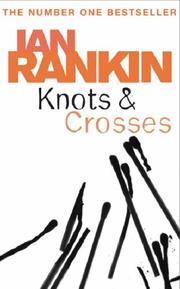
The debut novel and the essential starting point — it introduces DS John Rebus, his fractured psychology, and Edinburgh as a character in its own right. Read this first to understand who Rebus is at his rawest.
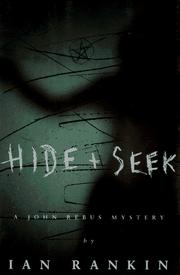
The second novel deepens Rebus's world, introducing the Edinburgh drug underworld and the class tensions that will recur throughout the series. It builds directly on the tone and relationships established in the debut.

Published as 'Tooth and Nail' in later editions, this third entry takes Rebus to London and broadens his world beyond Edinburgh — a useful early expansion of scope before the series fully settles into its Scottish identity.
Rebus Hits His Stride
BeginnerExperience the series finding its full voice — richer plots, sharper social commentary, and the introduction of key recurring figures including Detective Siobhan Clarke, Rebus's most important colleague.
▸ Study plan for this stage
Pace: 6–8 weeks total (~25–30 pages/day): spend roughly 2 weeks on Strip Jack, 2 weeks on The Black Book, and 2–3 weeks on Let It Bleed, with a few buffer days between books for reflection and exercises.
- The maturation of Rebus's investigative voice: by Strip Jack, Rankin's prose is more assured, plots are more intricately layered, and Rebus's moral complexity is fully on display — track how this feels different from the series' earlier entries.
- Scottish political and class anatomy: Strip Jack dissects the genteel hypocrisy of Edinburgh's political class through MP Gregor Jack's scandal; The Black Book digs into the criminal underworld beneath a derelict Edinburgh hotel; Let It Bleed escalates to government-level corruption and privatisatio
- The introduction and early development of Siobhan Clarke: Siobhan appears in Let It Bleed as a junior detective whose methodical, rule-respecting approach directly contrasts with Rebus's instinctive rule-breaking — note every scene they share and what each reveals about the other.
- Rebus's self-destructive patterns as a recurring motif: across all three books, alcohol, isolation, and insubordination are not just character colour but plot engines — identify specific moments where his personal failings directly affect case outcomes.
- Edinburgh as a character with a dual identity: Rankin consistently maps a respectable, tourist-facing Edinburgh against a corrupt, hidden one — track the specific locations in each book (the New Town in Strip Jack, the Central Hotel in The Black Book, the Scottish Office in Let It Bleed) and what so
- The mechanics of Rankin's social commentary: Rankin embeds critique of Thatcherism, privatisation, and institutional corruption into genre plotting — practise identifying where the 'whodunit' machinery and the political argument reinforce each other.
- Recurring supporting cast and their functions: figures like Brian Holmes and Jack Morton appear across these books — map who recurs, what role they play, and how Rankin uses them to create a sense of an ongoing, lived-in world.
- Plot architecture and the 'slow burn' reveal: all three novels withhold key information and layer red herrings carefully — pay attention to chapter structure, point-of-view choices, and the timing of revelations as craft lessons in crime fiction construction.
- In Strip Jack, how does the scandal surrounding Gregor Jack reflect Rankin's critique of the Scottish political establishment, and how does Rebus's personal sympathy for Jack complicate his investigation?
- The Central Hotel in The Black Book is more than a crime scene — what does it represent thematically, and how does the novel use its history to connect past crimes to present ones?
- How does Let It Bleed use the privatisation of government services as both a plot mechanism and a piece of social commentary, and what does this say about Scotland's relationship with Westminster in the mid-1990s?
- Compare Rebus's working relationship with Brian Holmes across Strip Jack and The Black Book with his first interactions with Siobhan Clarke in Let It Bleed — what does the contrast reveal about how Rebus relates to colleagues who challenge him?
- Across all three novels, identify at least two moments where Rebus's drinking or personal recklessness directly altered the course of an investigation — were the outcomes better or worse for his intervention?
- How does Rankin's Edinburgh shift geographically and socially across these three books — what does the movement from constituency politics (Strip Jack) to derelict underworld (The Black Book) to government corridors (Let It Bleed) suggest about the scope of corruption Rankin is mapping?
- Edinburgh location journal: as you read each book, keep a running list of every real Edinburgh location mentioned. After finishing all three, sketch a rough map grouping locations by social class or institutional power — note how the geography of crime shifts across the trilogy.
- Character contrast sheet for Siobhan vs. Rebus: create a two-column table. Each time Siobhan and Rebus appear together in Let It Bleed, log their differing approaches to the same situation. At the end, write a one-paragraph prediction of how their partnership will evolve in later books.
- Social commentary annotation: choose one chapter from each of the three books that you feel carries the heaviest political or social critique. Write 3–5 sentences per chapter explaining what Rankin is arguing and how the crime plot delivers that argument.
- Rebus self-destruction tracker: keep a simple log as you read — each time Rebus drinks heavily, defies a superior, or acts on instinct against advice, note the page, the action, and the immediate consequence. Review the log after each book and assess whether the pattern is escalating.
- Comparative opening and closing analysis: re-read the first and last chapters of each novel after finishing it. Write a short note (half a page) on what question the opening poses and whether the closing truly answers it — this builds awareness of Rankin's structural craft.
- Mini-essay after Let It Bleed: write 400–600 words arguing which of the three books best represents the series 'finding its full voice' and why, using specific scenes, characters, and lines of dialogue as evidence.
Next up: These three books establish the social and institutional landscape — and the Rebus–Siobhan dynamic — that the series will push to darker, more personal extremes in the stages ahead, where the cases grow colder, the corruption deeper, and Siobhan's role increasingly central.
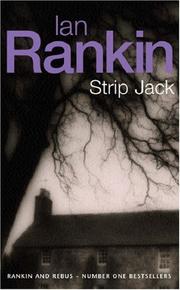
A pivotal novel where Rankin's writing matures noticeably — the plotting is tighter and the Edinburgh political world comes alive. A great bridge from the early rough-edged books to the classic mid-series form.
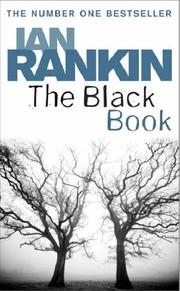
Introduces the Big Ger Cafferty crime empire, one of the series' most important ongoing antagonists. Understanding Cafferty here pays dividends across all the novels that follow.
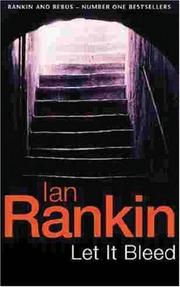
A sharp, politically charged thriller set against Scottish devolution debates — it shows Rankin using Rebus to dissect real Scottish society, a hallmark of the best books in the series.
The Classic Rebus — Peak Novels
IntermediateRead the novels widely considered the pinnacle of the series — complex, layered crime fiction where Rebus, Siobhan Clarke, and Cafferty are all firing on all cylinders against Edinburgh's darkest corners.
▸ Study plan for this stage
Pace: 9–11 weeks total; roughly 3–4 weeks per novel at ~25–30 pages per day. Suggested breakdown: "Black and Blue" (weeks 1–3), "The Hanging Garden" (weeks 4–6), "Dead Souls" (weeks 7–10), with a final consolidation week for reflection and exercises. Allow slower pacing for "Black and Blue" as its multi-s
- Parallel and braided plotting: 'Black and Blue' runs the Bible John cold case, the Johnny Bible copycat, and the Lenny Spaven wrongful-conviction thread simultaneously — study how Rankin controls pacing across three timelines without losing the reader
- The weight of institutional failure: all three novels interrogate how police forces, legal systems, and social services fail ordinary people — track specific moments where the system breaks down in each book
- Rebus as a flawed moral compass: by this stage Rebus bends and breaks rules not out of laziness but out of a fierce, self-destructive personal code — analyse the cost of that code in each novel
- Big Ger Cafferty as dark mirror: 'The Hanging Garden' and 'Dead Souls' deepen the Rebus–Cafferty relationship into something almost symbiotic; note how each man needs the other to define himself
- Siobhan Clarke's emergence: watch how Clarke evolves from cautious foil to independent investigator across 'The Hanging Garden' and 'Dead Souls', and what her presence reveals about Rebus by contrast
- Edinburgh as a character with a shadow side: the city's geography, class divisions, and post-devolution identity are woven into every investigation — map how specific Edinburgh locations carry thematic weight
- Trauma, guilt, and obsession: 'Dead Souls' in particular uses the paedophile-ring investigation and Rebus's past to explore how unresolved guilt shapes a detective's choices
- The cold-case structure as metaphor: in 'Black and Blue' the Bible John case (real Scottish history) bleeds into the present — understand how Rankin uses real criminal history to interrogate collective Scottish memory
- In 'Black and Blue', how does the Bible John historical case function thematically alongside the Johnny Bible copycat murders, and what does their juxtaposition say about Scotland's relationship with its own violent past?
- How does Rebus's handling of the Lenny Spaven wrongful-conviction storyline in 'Black and Blue' complicate our view of him as a hero — and what does his television confrontation cost him personally and professionally?
- In 'The Hanging Garden', the Bosnian war-crimes thread and the Edinburgh gangland war are kept in tension throughout the novel. How does Rankin use that international backdrop to comment on local crime and impunity?
- How does Cafferty's vulnerability in 'The Hanging Garden' (following the attempt on his life) shift the power dynamic between him and Rebus, and does Rebus exploit or protect that vulnerability — and why?
- In 'Dead Souls', how does the return of a figure from Rebus's past (Jim Margolies' death, the paedophile network) force him to confront the limits of his ability to save people, and how does this connect to the novel's title?
- Across all three novels, trace Siobhan Clarke's growing independence: at what specific moments does she push back against or diverge from Rebus, and what does each divergence reveal about her developing moral framework?
- Plot-strand map for 'Black and Blue': draw a three-column diagram (Bible John / Johnny Bible / Spaven) and, as you read, log which chapters advance which strand, who the key players are, and where the strands intersect. At the end, write a paragraph on whether the resolution of each strand feels earned.
- Character-contrast journal — Rebus vs. Clarke: keep a running log (one entry per 50 pages across 'The Hanging Garden' and 'Dead Souls') noting one decision Rebus makes and one decision Clarke makes in the same approximate timeframe. After finishing 'Dead Souls', write a 300-word comparison of their ethical styles.
- Edinburgh location tracker: each time a specific Edinburgh place (a pub, a street, a housing scheme, a landmark) appears in any of the three novels, note it, the scene it hosts, and the mood Rankin attaches to it. At the end, write a short paragraph on whether the city feels like a consistent character or shifts between books.
- The Cafferty dossier: create a one-page profile of Big Ger Cafferty updated after each novel — his goals, his leverage over Rebus, his vulnerabilities, and one quote that best captures him in that book. Compare the three snapshots and write two sentences on how his role in the series has evolved.
- Real-history research exercise (for 'Black and Blue'): spend 30–60 minutes reading a factual summary of the real Bible John case (1968–1969). Then write a half-page reflection on how Rankin fictionalises and repurposes the case — what he keeps, what he changes, and what moral responsibility a crime novelist has when using real unsolved murders.
- Thematic essay (end-of-stage): write 500–700 words arguing which of the three novels best represents the series' central theme of 'institutional failure and personal conscience'. Use at least one specific scene from each book as evidence, and conclude with a sentence on what the three novels together say that none could say alone.
Next up: Mastering the layered plotting, the Rebus–Cafferty dynamic, and Siobhan Clarke's emerging independence in these three peak novels gives the reader the interpretive depth needed to appreciate how Rankin later tests, ages, and ultimately transforms these relationships in the later-career and post-retirement Rebus novels that follow.
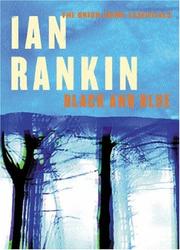
Winner of the Crime Writers' Association Gold Dagger and the breakthrough novel that made Rankin internationally famous. A masterclass in scope and ambition — essential reading and a series high point.

Follows directly from Black and Blue's momentum, weaving war crimes, organised crime, and Rebus's personal life into one of the series' most emotionally resonant plots.
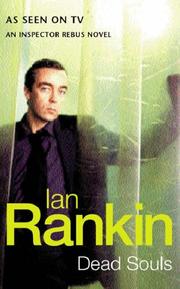
A darker, more introspective Rebus novel that deepens his backstory and his relationship with Siobhan Clarke — essential for understanding the emotional core of the later books.
Rebus Under Pressure — The Late Career
IntermediateFollow Rebus as he faces mandatory retirement, institutional change, and the consequences of a lifetime of moral compromise — the series' most psychologically rich and novelistically ambitious phase.
▸ Study plan for this stage
Pace: 6–8 weeks total; roughly 25–30 pages per day. Suggested breakdown: Weeks 1–2 for "Resurrection Men" (noting its unique internal-affairs framing), Weeks 3–4 for "Fleshmarket Close" (slower, more sociological — allow extra time for reflection), Weeks 5–6 for "Exit Music" (emotionally dense finale — re
- Institutional erosion and the 'last man standing' archetype — Rebus as a relic of an older policing culture increasingly at odds with modern Lothian & Borders bureaucracy
- Moral compromise as cumulative debt — across all three books, past sins (cover-ups, rule-bending, loyalty over law) return with compounding interest, forcing Rebus to reckon with what his career has actually cost
- The undercover/internal-affairs mirror in 'Resurrection Men' — Rebus infiltrating a group of rogue cops forces him to confront how thin the line is between himself and the officers he is investigating
- Immigration, asylum, and the 'invisible victim' in 'Fleshmarket Close' — Rankin uses the Knoxland estate and the asylum-seeker storyline to interrogate how Scottish society treats those it would rather not see
- Edinburgh as a city in transition — the post-devolution, post-Holyrood Edinburgh of these novels is wealthier and more self-conscious, and Rebus's alienation from it deepens accordingly
- Mandatory retirement as narrative engine — 'Exit Music' is structured around a hard deadline (Rebus's last working days), turning every scene into a countdown and every choice into a potential legacy-defining act
- Siobhan Clarke's evolution from apprentice to equal — across the three books she moves from Rebus's shadow into her own moral and professional agency, setting up the post-Rebus future
- The Russian dissident subplot in 'Exit Music' as political allegory — the murder of a poet in Edinburgh during a Russian trade delegation visit allows Rankin to comment on complicity between governments and money
- In 'Resurrection Men', how does Rebus's undercover role among disgraced officers function as both plot device and psychological mirror — what does it reveal about his own capacity for corruption that a straightforward investigation could not?
- How does 'Fleshmarket Close' use the parallel storylines of the Knoxland murder and the asylum-seeker case to argue something specific about visibility, power, and whose deaths are treated as worth solving in contemporary Scotland?
- By 'Exit Music', Rebus's retirement is mandatory and imminent — in what ways does Rankin use the countdown structure to force Rebus (and the reader) to evaluate whether his career represents justice served or justice compromised?
- Trace Siobhan Clarke's arc across all three books: where does she defer to Rebus, where does she push back, and what does her growing independence cost her personally and professionally?
- All three novels feature victims who are, in some sense, 'outsiders' — rogue cops, asylum seekers, a foreign poet. What does Rankin suggest about the relationship between outsider status and vulnerability to institutional indifference?
- How does Rankin's Edinburgh change between 'Resurrection Men' and 'Exit Music', and how does that changing city reflect or deepen Rebus's sense of obsolescence?
- Moral ledger exercise: After finishing each book, make a two-column list of one morally questionable decision Rebus makes and its consequence — by the end of 'Exit Music' you should have a three-entry ledger that maps his cumulative compromise across this stage.
- Character voice journal: Write a one-page internal monologue from Siobhan Clarke's point of view at the end of each book — focus on how she sees Rebus differently each time. Compare all three entries when finished to track her arc.
- Setting annotation: As you read 'Fleshmarket Close', mark every scene set in Knoxland versus every scene set in central Edinburgh. Sketch a rough map and note which characters move between zones and which are confined — use this to discuss how geography encodes social power in the novel.
- Countdown timeline for 'Exit Music': Create a simple day-by-day timeline of Rebus's final working days as the novel presents them. Note which plot threads are resolved before retirement and which are deliberately left open — consider what Rankin is saying about the nature of closure.
- Comparative essay (500–700 words): Choose one 'outsider victim' from each of the three books and write a short comparative piece arguing what Rankin, taken across all three novels, believes about institutional Scotland's relationship to those it marginalises.
- Playlist or mood-board exercise: Rankin is famously attentive to music (Rebus's tastes run to classic rock). Identify at least two musical references per book, research the songs or artists, and write two sentences on how each choice colours the emotional tone of the scene in which it appears.
Next up: Completing this stage — especially "Exit Music" and its enforced farewell — prepares the reader for the post-retirement Rebus novels, where the absence of institutional authority strips away the last scaffolding around his identity and forces the series to reinvent what a Rebus story even is.
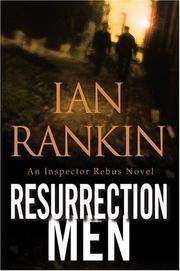
Puts Rebus in a 'last chance' retraining programme alongside other troubled detectives — a brilliant structural conceit that forces deep character examination and is widely praised as a series standout.

Tackles immigration and asylum in modern Scotland with real moral weight — one of Rankin's most socially engaged novels and a key step toward the series' powerful final act.

Rebus's official retirement novel — a bittersweet, perfectly crafted farewell to his career on the force. Read everything before this so the emotional payoff lands fully.
Rebus Returns — The Renaissance
ExpertDiscover the acclaimed post-retirement Rebus novels, where Rankin reinvents the character as a civilian consultant working alongside a now-senior Siobhan Clarke — darker, wiser, and arguably better than ever.
▸ Study plan for this stage
Pace: 8–10 weeks total; roughly 2–3 weeks per novel at ~25–30 pages/day. Suggested breakdown: "Standing in Another Man's Grave" (weeks 1–3), "Even Dogs in the Wild" (weeks 4–6), "A Song for the Dark Times" (weeks 7–10, allowing extra time for deeper reflection and comparative analysis across all three).
- Rebus's post-retirement identity: how civilian consultant status reshapes his authority, methods, and psychology compared to his active-duty years
- The evolved Rebus–Clarke dynamic: Siobhan as a fully autonomous senior detective and Rebus as a supporting, sometimes disruptive, presence rather than the lead
- Darkness as a thematic deepening: mortality, legacy, and the cost of a life spent in crime-fighting, most acutely explored in 'A Song for the Dark Times'
- The persistence of Edinburgh's criminal underworld: how Big Ger Cafferty's continued presence in 'Even Dogs in the Wild' interrogates the cyclical, unresolvable nature of organised crime
- Cold cases and buried truths: 'Standing in Another Man's Grave' uses the A9 corridor disappearances to examine how the past refuses to stay buried — for Scotland and for Rebus personally
- Rankin's reinvention of series formula: the post-retirement novels deliberately subvert procedural conventions by removing Rebus's institutional power, forcing creative narrative solutions
- Grief, isolation, and parenthood under pressure: 'A Song for the Dark Times' uses Siobhan's personal crisis (her parents' situation) and Rebus's COPD to ground the thriller in intimate human stakes
- Malcolm Fox as a third narrative pillar: his uneasy alliance with both Rebus and Clarke in 'Even Dogs in the Wild' and 'A Song for the Dark Times' adds moral and institutional complexity
- In 'Standing in Another Man's Grave', how does Rebus's lack of a badge change the way he gathers information and navigates police bureaucracy — and what does this reveal about how much of his former success depended on institutional power versus personal tenacity?
- How does the Rebus–Cafferty relationship in 'Even Dogs in the Wild' complicate any simple reading of either man as hero or villain, and what does their uneasy alliance suggest about Rankin's moral worldview?
- In 'A Song for the Dark Times', Rankin splits the narrative between Edinburgh and a remote Scottish coastal setting — what does this geographical contrast achieve thematically, and how does it reflect Rebus's own internal divisions?
- Across all three novels, how has Siobhan Clarke's characterisation evolved from her earliest appearances in the series, and do these books ultimately position her as Rebus's successor, his equal, or something more complicated?
- How does Rebus's deteriorating health (his COPD diagnosis) function as more than a plot device across these novels — what does it force him, and the reader, to confront about heroism, ageing, and relevance?
- Malcolm Fox begins the series as an antagonist to Rebus in earlier stages; how do 'Even Dogs in the Wild' and 'A Song for the Dark Times' reframe that relationship, and what does his integration into the core trio say about institutional versus personal loyalty?
- Character arc mapping: Create a three-column timeline for Rebus, Clarke, and Fox across all three novels, noting a key decision each character makes in each book and how it shifts their relationships — use this to write a one-page argument for who is the true moral centre of this stage.
- Close-reading passage journal: Select one scene per novel where Rebus is explicitly reminded of his civilian status (e.g., being denied access, having to ask rather than demand). Write a 200-word annotation for each, analysing how Rankin's language signals the power shift.
- Edinburgh as character: Using 'Standing in Another Man's Grave' (the A9 route) and 'A Song for the Dark Times' (the Highlands coast), sketch or annotate a map of Scotland marking key locations. For each, write two sentences on how the setting amplifies the novel's central theme.
- Villain comparison essay: Write a 400–500 word comparative piece on the antagonists across the three novels, arguing which poses the most genuinely unsettling threat to the world Rankin has built — and why that threat feels distinctly post-retirement-era.
- Dialogue rewrite exercise: Find a scene in 'Even Dogs in the Wild' where Rebus and Cafferty interact. Rewrite it as if Rebus still held his Detective Inspector rank. Reflect in a short paragraph on what changes — and what disturbingly does not.
- Thematic synthesis essay: After finishing all three novels, write a 600-word essay responding to this prompt: 'Rankin's post-retirement Rebus novels argue that justice is not an institution — it is a habit of character.' Do you agree? Use specific evidence from all three books.
Next up: By internalising how Rankin stripped Rebus of institutional power and rebuilt him as a civilian force of nature across these three novels, the reader is fully equipped to engage with any subsequent or adjacent works — whether future Rebus instalments, Rankin's standalone fiction, or the broader Scottish crime tradition — with a sophisticated understanding of how series characters can be radically

Rebus's triumphant return after a six-year gap — he's retired but can't stay away. This novel re-establishes him brilliantly and is the essential entry point to the final phase of the series.

Brings Rebus, Clarke, and Cafferty together in a tense, mature thriller that rewards readers who have followed all three characters from the beginning — the long-running dynamics pay off magnificently here.

One of the most recent Rebus novels, set against a post-Brexit Scotland — proof that Rankin and Rebus are still at the very top of their game and a fitting capstone to this deep-dive curriculum.
Discussion
Keep reading
Paths that share books, cover the same subject, or open a related topic.