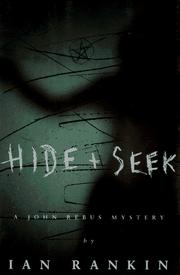
Inspector Morse Reading Order and Guide
There are thirteen Morse novels and they are best read in publication order, which is also their internal order — Morse ages, Lewis grows into the job, and the last book depends on everything before it. The catch is that the first three are apprentice work and the series improves sharply from the middle onward, so this path tells you what to expect from the openers rather than letting you conclude the series is not for you.
The first three
BeginnerMeet Morse and Lewis, learn Dexter's habit of letting his detective be wrong for most of the book, and get past the weakest stretch of the series.
▸ Study plan for this stage
Pace: Three to four weeks, roughly 250–310 pages each. These are the slowest-going books in the path, not because they are long but because the first two are apprentice work — budget for a stall in Last Seen Wearing and push through it. If you can only give this stage one book, make it the third; but the
- Publication order is also internal order for Morse: he ages, Lewis grows into the job, and the final novel depends on everything before it, so there is no ordering decision to make
- The first three are the weakest stretch of the series and the commonest reason readers give up — knowing that in advance is most of the value of a reading order for Morse
- Dexter's Morse is much coarser than the television version: he drinks harder, he is markedly more lecherous, and the early novels carry a leering attitude toward women that has dated badly
- Last Bus to Woodstock is worth reading for the introduction rather than the plot; the Morse of this book is not yet the Morse most readers have in mind
- Last Seen Wearing is a cold case Morse inherits, and it is where Dexter's real trick first shows: the solution reverses several times before it settles
- Morse being wrong for most of the book is the structural signature of the series, not an accident — Lewis exists partly so that someone can be sceptical out loud
- The Silent World of Nicholas Quinn is the first genuinely good Morse novel, and it establishes the Oxford institutional setting — colleges, examination boards, committees — that the series lives in from here on
- The shift happens exactly here: everything before Nicholas Quinn is a competent 1970s crime novel, and everything after is the series people actually admire
- How many times does Morse construct and abandon a theory in Last Seen Wearing, and what is Dexter using the pattern for?
- What is the difference between the Morse of Last Bus to Woodstock and the Morse of The Silent World of Nicholas Quinn?
- What does Lewis do in these books that a conventional sidekick does not?
- The early novels' attitude to women is very much of 1975. Where does it intrude on the plot rather than just the texture?
- What does the Oxford institutional setting give Dexter in Nicholas Quinn that Woodstock's setting could not?
- Keep a note of each theory Morse advances and when he drops it. By the third book this becomes the main pleasure rather than a frustration.
- If you stall in Last Seen Wearing, skip to The Silent World of Nicholas Quinn and come back later. It is the one place in the sequence where that is defensible.
- Write down what the television series would have to change about the Morse of book one. The gap is instructive.
- Note how Dexter introduces the academic institution in Nicholas Quinn — committee minutes, appointments, hierarchies. That machinery is the series' real setting.
Next up: The apprentice books are behind you and the Oxford setting is established, which is everything the mature novels build on.
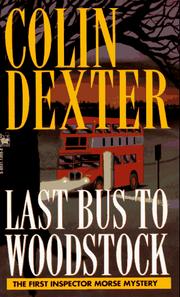
The first novel and the right place to start, though it is coarser than the Morse most readers know from television. Read it for the introduction, not the plot.

A cold case Morse inherits, and the first book where Dexter's real trick is visible: the solution reverses several times before it settles.

The first genuinely good Morse novel and the one that establishes the Oxford institutional setting the series lives in from here on.
The Oxford novels
BeginnerSee the series find its form, with Morse's crosswords, drinking and misdirection fully in place.
▸ Study plan for this stage
Pace: Three weeks for the three, at 220–260 pages each. These read faster than the openers. The Riddle of the Third Mile is the densest thing in the path and deserves an evening or two more than its length suggests; read it last in this stage and slowly.
- This is the series in its settled form: crosswords, drink, an Oxford institution, and a plot built to be misread
- Service of All the Dead is a church murder with a famously convoluted solution and won Dexter his first Silver Dagger — this is the point where the plotting becomes the main pleasure rather than the obstacle
- The Dead of Jericho opens with Morse having met the victim at a party, which makes the case personal in a way the earlier novels never manage, and it won a Silver Dagger too
- Dexter writes puzzles rather than procedurals: timetables, misdirection, false identities and coincidence, closer to Golden Age construction than to 1980s police realism
- The Riddle of the Third Mile — a body in three pieces and an academic milieu — is the most puzzle-box entry in the run and a fair test of whether Dexter's density suits you
- The crossword is not a quirk: Dexter set crosswords himself, and the novels are built like cryptic clues, where the surface reading is designed to mislead
- Morse's Oxford is institutional rather than picturesque — colleges as employers, with grievances, appointments and reputations to protect
- If you find these plots implausible, that objection is correct and beside the point; the novels are engineered, not observed
- In Service of All the Dead, at what point does the solution become guessable, and did Dexter play fair?
- How does knowing the victim change Morse's behaviour in The Dead of Jericho compared with the earlier books?
- The Riddle of the Third Mile is unusually dense. What exactly is hard about it — the plot, the cast, or the withholding?
- Find one paragraph that works like a cryptic crossword clue: technically honest, deliberately misleading. What makes it work?
- What does Lewis contribute to the solutions in this stage, and has his role changed since book one?
- After finishing each book, write out the timeline of the crime as it actually happened. Dexter's plots are almost always clearer as a chronology than as a narrative.
- Mark every point where Dexter tells you something true in a misleading way. Collecting three or four of these makes the later novels far more enjoyable.
- Try one cryptic crossword clue before starting The Riddle of the Third Mile. The habit of mind transfers directly.
- List the Oxford institutions in these three books and what each one is trying to protect. That is usually where the motive lives.
Next up: You now know the normal shape of a Morse novel well enough that the next stage's deliberate break from it will register.
A church murder with a famously convoluted solution, and Dexter's first Silver Dagger. This is where the plotting becomes the main pleasure.

The book that opens with Morse meeting the victim at a party, which makes the case personal in a way the earlier novels never manage. Also a Silver Dagger winner.
The most puzzle-box of the run — a body in three pieces and an academic milieu — and a good test of whether you enjoy Dexter's density.
The prize-winners
IntermediateRead the three novels most often named the best, including the one that abandons the format entirely.
▸ Study plan for this stage
Pace: Three to four weeks, 210–320 pages each. The Wench Is Dead is the shortest book in the path and can be read in two sittings; The Way Through the Woods deserves the most time of anything here. Note that the seventh novel of the thirteen, The Secret of Annexe 3, is not in our catalogue — that is a gap
- These are the three most admired Morse novels and the reason the series is still read rather than only watched
- The Wench Is Dead has Morse solving a Victorian murder from a hospital bed, with no crime scene, no forensics and almost no Lewis — a Gold Dagger winner and the most formally unusual book in the run
- That book only works as a break if you know the normal shape, which is why it is placed here rather than used as an entry point
- The Jewel That Was Ours — American tourists, a stolen artefact, a broad cast — is the most conventionally entertaining of the late novels and was the direct source of one of the best television episodes
- The Way Through the Woods, built around a cryptic poem printed in a newspaper, won the second Gold Dagger and is probably the finest Morse plot ever constructed
- The poem in The Way Through the Woods is meant to be solved by the reader, and the book is far better if you actually attempt it rather than waiting to be told
- Dexter's late plotting is more controlled and less lurid than the early novels, and the sexual attitudes are somewhat less obtrusive though not absent
- Morse the character is at his most sympathetic here — thwarted, bookish, ill and stubborn — which is the version television made famous
- The Wench Is Dead removes every tool a detective novel normally uses. What is left, and is it enough?
- What does The Jewel That Was Ours do with its large cast that the tighter novels cannot?
- Did you solve the poem in The Way Through the Woods? If not, where did the misdirection catch you?
- Which of these three is the best novel, and which is the best mystery? They are not the same book.
- How has Morse's relationship with Lewis changed by this stage, and what does the change cost each of them?
- Copy out the poem from The Way Through the Woods and work on it for a day before reading further. It is a genuinely solvable puzzle and the book is designed for readers who try.
- Read The Wench Is Dead in as close to one sitting as you can. Its confinement is the effect, and interruptions dilute it.
- Compare a chapter of The Jewel That Was Ours with its television adaptation if you can find it. The adaptations are unusually faithful and the differences are all revealing.
- Write down what Morse does all day in The Wench Is Dead. The answer is: reads. The novel is an argument about the sufficiency of documents.
Next up: With the peak behind you, the last three novels begin visibly winding the series down — which is what they are for.

Morse solves a Victorian murder from a hospital bed, with no crime scene and no Lewis to speak of. A Gold Dagger winner and the most unusual book in the series; read it once you know the normal shape well enough to feel the break.

American tourists, a stolen artefact and a broad cast — the most conventionally entertaining of the late novels, and the direct source of one of the best television episodes.
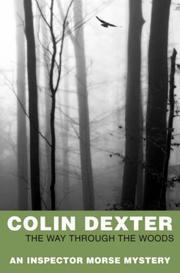
The second Gold Dagger, built around a poem printed in a newspaper, and probably the single finest Morse plot. The high point of the series.
The last cases
IntermediateFinish the arc, and read the ending Dexter wrote knowing it was the ending.
▸ Study plan for this stage
Pace: Four to five weeks; these are the longest books in the path at roughly 300, 370 and 390 pages. Read them in sequence and reasonably close together — the final three form a single decline. Leave a clear evening for The Remorseful Day and do not start anything else immediately afterwards.
- The series starts closing down in The Daughters of Cain: a late, dark case in which Morse's health is visibly failing, and the failure is not a subplot
- Death Is Now My Neighbour is famous for finally revealing Morse's first name in its closing pages — a payoff that is worth nothing if you have not spent twelve books wondering, and worth a great deal if you have
- Avoid looking that revelation up. It is the one piece of Morse trivia that everybody knows and that the books are engineered around
- The Remorseful Day is a deliberate farewell written by an author who knew it was the last one, and it should be read last and followed by nothing
- Dexter's late novels are longer and more character-driven, with the puzzle machinery still present but subordinated to the ending being prepared
- Morse's drinking, his health and his refusal of help are treated as facts with consequences rather than as charm, which is a marked change from the early books
- Lewis's arc completes here too: the sergeant of book one has become a competent detective who no longer needs Morse to be right
- There is no continuation worth the name — the character's story is finished by his own author, which is unusual in a long-running crime series
- When does The Daughters of Cain make Morse's decline unavoidable, and how does Dexter avoid sentimentality about it?
- Why does the first-name reveal work, and what would be lost by encountering it out of sequence?
- What does The Remorseful Day do that a normal Morse novel does not, and when did you realise it was doing it?
- Has Lewis changed more than Morse across thirteen books? Argue it from these three.
- Look back at Last Bus to Woodstock. What did Dexter learn in twenty-four years, and what did he never fix?
- Do not search for Morse's first name before reading Death Is Now My Neighbour. Treat it as the one spoiler worth protecting.
- Track Morse's health across the three novels — drink, diabetes, hospital visits — and note how early Dexter starts laying it in.
- After The Remorseful Day, reread the first chapter of Last Bus to Woodstock. The distance travelled is the point of having read in order.
- Write a paragraph on whether the ending is earned. Readers who admire the series and readers who resent the ending are usually arguing about the same three chapters.
Next up: The thirteen novels are complete and end where their author chose to end them; anything further is television.
A late, dark case in which Morse's health is visibly failing. The series starts closing down here, so read it in sequence.
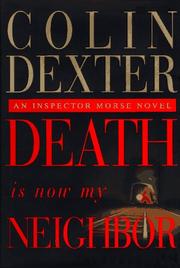
Famous for finally revealing Morse's first name in its last pages — a payoff that is worthless if you have not spent twelve books wondering.
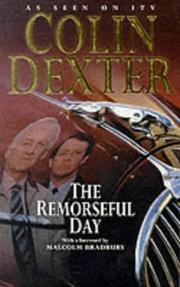
The final novel and a deliberate farewell. Read it last and read nothing after it; there is no continuation worth the name.
Discussion
Keep reading
Paths that share books, cover the same subject, or open a related topic.