Inspector Gamache Reading Order: Where to Start
Louise Penny's Three Pines novels are the rare detective series where reading order is not optional — the cases are self-contained but a long arc about corruption inside the Sûreté du Québec, and about the people Gamache trains, runs straight through them and is repeatedly spoiled by reading ahead. So: publication order, starting with Still Life, no exceptions. This path takes the first fifteen in sequence, which covers the whole Sûreté arc and its aftermath; the series continues past that point in the same order.
Start at Still Life
BeginnerMeet Gamache and the village, and be patient with a first book that is much quieter than what follows.
▸ Study plan for this stage
Pace: Three to four weeks for Still Life (A Three Pines Mystery), A Fatal Grace and The Cruelest Month — about 1,020 pages. These are comfortable 350-page novels and go at 50 pages an evening. Two things to know before you start. First, unlike most long detective series, this one cannot be read out of ord
- Gamache's method, which is essentially patience: he investigates by listening, by eating with people, and by refusing to hurry, and the books are paced to match
- Three Pines as a deliberate anachronism — a village not on any map, with a bistro, a bookshop and a bakery, and a fixed cast who are as much the point as the murders
- The four sentences that lead to wisdom, introduced early and repeated across the whole series: they are Gamache's ethical position, not a catchphrase
- Still Life as a quieter, smaller book than what follows. Its plot is modest and readers who judge the series on it are judging the wrong thing
- A Fatal Grace as the first properly plotted book and the first appearance of the Sûreté politics — published in Britain as Dead Cold, which is the same novel under another title
- The Cruelest Month making the internal conspiracy explicit, which is the exact reason nothing later can be read first
- Penny's willingness to make her recurring villagers suspects. The cosy setting is not a guarantee of anything, and the series repeatedly cashes that in
- What are the four sentences, and how does Gamache actually use them in an investigation?
- Why does Penny start with a book whose mystery is so small — what is Still Life establishing that a stronger plot would have obscured?
- What is the Sûreté conspiracy, as much as you can state it after The Cruelest Month, and who is running it?
- Which Three Pines regulars has Penny made you fond of, and has she already made any of them a suspect?
- What does the Quebec setting — the language politics, the seasons, the Anglophone village in a Francophone province — give the series that an English or American setting could not?
- Keep a page for the Sûreté characters specifically: name, rank, whose side you think they are on. This is the only note you genuinely need for this series and it will be full by book nine.
- Do not look anything up. Not a character name, not a book summary, not a cast list for the television adaptation. This series is destroyed by two sentences of the wrong information.
- Note the season of each book. Penny runs the series through the Quebec calendar and the weather is a structural element rather than a mood.
- If Still Life leaves you lukewarm, read A Fatal Grace before deciding. The gap in quality between the first and second books is one of the largest in modern crime fiction.
Next up: The village, the method and the conspiracy are all in play, so the next three books can stop being mysteries about a village and start being novels about what guilt does to the people investigating them.
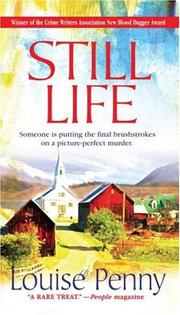
The first novel, and the only correct starting point. A woman is found dead in the woods outside Three Pines; the mystery is modest, but the village and Gamache's method of investigating by listening are established here.

A curling match, an electrocution, and a much better-plotted book than the first. Published in Britain as Dead Cold — same novel. The Sûreté politics start here.
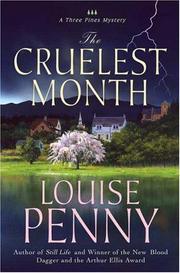
A séance in the old Hadley house and a death by fright. The book where the internal Sûreté conspiracy becomes explicit, so read it before anything else in the series.
The Series Deepens
BeginnerRead the run where Penny stops writing village mysteries and starts writing novels about guilt.
▸ Study plan for this stage
Pace: Four to five weeks for Rule Against Murder, The brutal telling and Bury Your Dead — around 1,310 pages and the most important stretch in the whole series. Read The brutal telling and Bury Your Dead consecutively and do not leave a gap between them: the second is the answer to the first and readers w
- Rule Against Murder as a change of scene: a remote lakeside inn, Gamache's marriage, and his own appalling in-laws, which fills in his private life before the series takes it apart
- The brutal telling's ending as the most divisive thing Penny has written — it is meant to feel wrong, and the wrongness is the plot
- Bury Your Dead's triple structure: a murder in Quebec City, the fallout from the previous book, and the raid that broke Gamache, told in alternating strands
- The raid as the series' primal scene. It is withheld across three books and delivered in fragments here, and everything about Gamache's relationships with his officers depends on it
- Jean-Guy Beauvoir as the series' second protagonist. From here his storyline is arguably heavier than Gamache's and is the source of most of the pain
- Quebec City in winter, the Literary and Historical Society, and the Anglophone minority — Penny using a real cultural fault line as a murder plot
- Guilt rather than justice as the subject: these books are about people who did something unforgivable and have to keep working, which is not what the first three books promised
- What is unresolved at the end of The brutal telling, and why does Penny want you to be angry rather than satisfied?
- What happened in the raid, and how does Penny control the order in which you learn it?
- How do the three strands of Bury Your Dead comment on one another — what does the historical mystery have to do with the other two?
- What has Rule Against Murder told you about Gamache's family that changes how you read his behaviour toward his officers?
- Why is Bury Your Dead so frequently called the best book in the series, and does it depend entirely on the six books before it?
- Buy The brutal telling and Bury Your Dead at the same time. Finishing the first without the second in the house is the most common way readers stall.
- After the raid material lands, go back to your Sûreté page and revise your guesses. Almost everyone has at least one badly wrong.
- Track Beauvoir's physical condition across these three books. Penny plants it carefully and it becomes the series' central thread.
- If you find The brutal telling's ending unbearable, write down why before reading on. It is the single most argued-about decision in the series and your first reaction is worth preserving.
Next up: You now know what the raid cost and who is carrying it, which is exactly the knowledge the next three books demand as they run the corruption storyline to its end.
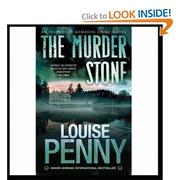
Gamache and his wife on their anniversary at a remote lakeside inn, with an appalling family. Published as The Murder Stone in Britain; the odd one out in setting and a deliberate breather before the next three.
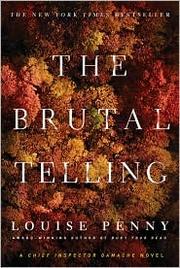
A hermit's body in the bistro and the series' most divisive ending. It is the first part of a three-book arc — do not stop here even if the ending angers you, which is the intent.

Three stories at once: a murder in Quebec City, the fallout from The Brutal Telling, and the raid that broke Gamache. Widely considered the best book she has written, and it is meaningless out of order.
The Sûreté Arc
IntermediateFollow the corruption storyline to its climax — the stretch the whole series has been building toward.
▸ Study plan for this stage
Pace: Four to five weeks for A trick of the light, The beautiful mystery and How the Light Gets In (Chief Inspector Armand Gamache #9) — about 1,230 pages, and the stretch to clear your calendar for. Read them consecutively with no other books in between. The beautiful mystery ends on the cruellest cliffh
- A trick of the light closing the Brutal Telling arc while the Montreal art world provides the case — the plot is the smaller half of the book
- Beauvoir's storyline continuing without a pause from Bury Your Dead, which is the actual through-line and the reason for the reading order
- The beautiful mystery as the series' formal experiment: a hidden monastery, Gregorian chant, twenty-four monks, no Three Pines at all
- Isolation used against Gamache. Cut off from the village and from support, he is at his most vulnerable exactly when the conspiracy moves
- How the Light Gets In as payoff: everything planted since The Cruelest Month resolves, and the book is unreadable without that groundwork
- The corruption arc's argument, which is institutional rather than personal — Penny is interested in how a police force rots, not in one bad man
- Addiction and recovery handled without sentimentality, and the series' clearest demonstration that it is not a cosy despite the bistro
- What ends in A trick of the light that began in The brutal telling, and what does the resolution cost?
- Why set The beautiful mystery in a monastery with no Three Pines characters at all — what does the total isolation permit?
- What has been done to Beauvoir by the end of The beautiful mystery, and who is responsible?
- In How the Light Gets In, which threads from books three through eight resolve? Try to list at least five.
- Is the corruption arc plausible as police procedure, and does it matter if it is not?
- Read your Sûreté page in full before starting How the Light Gets In. It is the last moment at which your guesses are still guesses.
- Read The beautiful mystery and How the Light Gets In within one week. If that is not possible, delay starting The beautiful mystery until it is.
- After finishing, go back to the passage in The Cruelest Month where the conspiracy first surfaces. It reads as a completely different scene now.
- Write down what you think the series has been about, now that its main structure is complete. The answer you give here is a good test of whether you want to continue.
Next up: The corruption arc is finished, which leaves Penny with the hardest problem a series faces — how to matter once the big story is over — and the next three books are her answers.
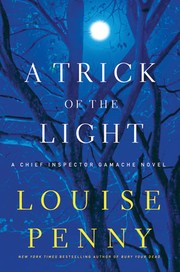
The Montreal art world and the closing of the Brutal Telling arc. Read straight on from Bury Your Dead; Beauvoir's storyline in particular continues without a pause.

A murdered choirmaster in a hidden monastery, with almost no Three Pines at all. Formally the most unusual book in the series and it ends on the series' cruellest cliffhanger.
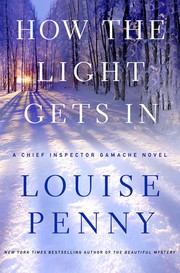
The payoff. Everything set up since The Cruelest Month resolves here, and this is precisely why the series must be read in order. Read it directly after The Beautiful Mystery.
After the Arc
IntermediateRead the books written in the quieter world that follows, where Penny has to rebuild the stakes.
▸ Study plan for this stage
Pace: Four to five weeks for The long way home, The Nature of the Beast and A great reckoning. The long way home is deliberately slow and readers coming straight off How the Light Gets In often find it flat; read it as convalescence rather than as a thriller and it works. If you want a natural exit from t
- The problem of the sequel to a climax, which Penny addresses head-on: the characters are as depleted as the series is, and the first book after the arc is about recovery for everyone including the reader
- The long way home as a quest rather than an investigation — a missing husband and a journey down the St Lawrence, with the crime arriving very late
- Art and obsession as Penny's recurring alternative subject whenever the police plot recedes
- The Nature of the Beast built on a real piece of Cold War history — an enormous gun in a Quebec forest — which is the series' most surprising factual foundation
- A boy who cries wolf as a moral structure: the book is about what a community owes someone it has decided not to believe
- A great reckoning moving Gamache into the Sûreté academy, which lets Penny examine how the corruption was taught rather than merely how it operated
- Institutional reform as a late theme. The series stops asking who is guilty and starts asking how you rebuild something rotten
- Why does Penny make The long way home so slow, and does the choice succeed?
- What is the gun in The Nature of the Beast actually based on, and what does knowing it is real do to the book?
- How does the boy's reputation function in The Nature of the Beast — what is Penny saying about credibility?
- What does Gamache try to change at the academy, and what does A great reckoning suggest about whether institutions can be repaired?
- Which of these three feels most necessary to the series, and which could be skipped without loss?
- Adjust your expectations before opening The long way home. Naming in advance that it is a quiet book prevents most of the disappointment readers report.
- Look up the real weapon behind The Nature of the Beast after finishing it, not before. The reveal works better in the order Penny wrote it.
- Note how the Three Pines cast has changed since Still Life. Several of them have had a decade of story by now and the shift is easy to miss book by book.
- If you intend to stop, stop at the end of A great reckoning. It closes the corruption story properly and leaves the village intact, which is the most satisfying exit the series offers.
Next up: With the Sûreté story genuinely finished, the remaining books become standalone novels about contemporary Quebec held together by a cast you now know intimately — a different and lighter commitment.

A missing husband and a journey down the St Lawrence — a deliberately slow book after the previous climax. Read it as convalescence rather than as a thriller.
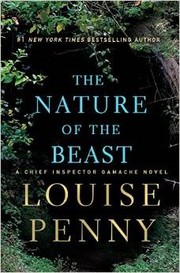
A boy who cries wolf, and an enormous gun in the forest, drawn from a genuine piece of Cold War history. The series regains its momentum here.

Gamache takes over the corrupt Sûreté academy. It works as a coda to the whole corruption arc and is one of the strongest late books.
The Later Cases
IntermediateContinue into the recent novels, where the crimes turn on contemporary Quebec and Gamache's own judgement.
▸ Study plan for this stage
Pace: Four to five weeks for Glass Houses, Kingdom of the Blind and A Better Man, about 1,300 pages. Read them in order — Kingdom of the Blind follows directly from the consequences of Glass Houses and A Better Man from both. Beyond A Better Man the series continues in the same publication order with the
- Glass Houses and the cobrador — a silent figure standing on the village green — as Penny's best single image, and a structure that runs the trial and the investigation in parallel
- A protagonist you are invited to doubt: the parallel-timeline structure only works because ten books have taught you to trust Gamache, and the book spends that trust deliberately
- Conscience versus law as the late series' subject. Gamache repeatedly does something indefensible for defensible reasons, and Penny declines to absolve him
- Kingdom of the Blind's suspension: Gamache out of office, named executor for a stranger, dealing with the fallout of his own decisions
- The opioid crisis as the contemporary Quebec material underpinning both books, which is a marked shift from the art-and-village plots of the early series
- A Better Man and the spring floods, with a demoted Gamache and a domestic crime — the series returning to a human scale after two institutional novels
- Long-series intimacy as the actual pleasure: by this point the mysteries matter less than sitting in the bistro with people you have known for fifteen books, and Penny knows it
- What does the parallel trial structure in Glass Houses let Penny withhold, and when did you realise what Gamache had done?
- Is Gamache's decision in Glass Houses defensible? The book wants the argument and does not settle it.
- How does Kingdom of the Blind use his suspension — what can he do without a badge that he could not do with one?
- What does the series gain by taking on the opioid crisis directly, and does it handle it convincingly?
- After fifteen books, what keeps you reading — the plots, the ethics, or the company? An honest answer decides whether you continue past A Better Man.
- Read the cobrador scenes in Glass Houses twice, once before and once after you know what the figure is. It is the best-constructed image in the series.
- Write down where you think Gamache crossed a line, if you think he did. Comparing that with another reader is the most interesting conversation this series produces.
- Take stock of your Sûreté page one last time and note how many of the people on it are still alive, still employed, and still trusted. It is a bleaker list than the tone of the books suggests.
- Decide whether to continue. A Better Man is a real stopping point — the series goes on in publication order with the same rules, and coming back to it in a year costs nothing.
Next up: This is the end of the path: fifteen books, the whole Sûreté arc and its aftermath, with the remaining novels waiting in the same order whenever you want the village back.

A silent figure standing on the village green, and a trial told in parallel with the investigation. The structure only works because you know Gamache well enough to doubt him.

Gamache suspended, named executor for a stranger, and dealing with the consequences of Glass Houses. Read in sequence — it is close to a direct continuation.

Spring floods, a missing daughter, and a demoted Gamache. A good stopping point if you need one: the series continues past it in the same publication order, still with no shortcuts.
Discussion
Keep reading
Paths that share books, cover the same subject, or open a related topic.