Start with The Shape of Water. It is the first novel, it is the shortest, and unlike most long-running detective series Montalbano genuinely requires order: the squad changes, Montalbano visibly ages across twenty-five years, and Camilleri wrote the books as one arc with a deliberate ending. The alternative most people try — starting with whichever title the television series made famous — costs you the establishing work that later books simply assume.
Do not rush the first fifty pages. You are learning a translation convention as well as a cast. Stephen Sartarelli's English versions are a large part of what English readers mean by Montalbano: Camilleri wrote in a mix of standard Italian and Sicilian dialect, and rather than flattening it, Sartarelli invented an English equivalent. Catarella's mangled speech is the visible case, and almost everyone finds it grating for three chapters and funny thereafter. Sartarelli's endnotes at the back of each volume explain the food, politics and local references; they are easy to miss entirely and worth reading.
The first three
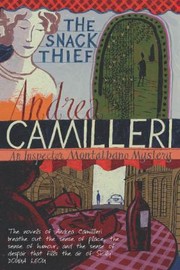
The Shape of Water establishes Vigata, the squad and the local politics every later book assumes. The Terra-Cotta Dog is where the ambition shows — a wartime mystery buried inside a Mafia case — and it is the book most readers name as the one that hooked them. The Snack Thief introduces the child Francois and the strain he puts on Montalbano's relationship with Livia, which runs through the rest of the series; skipping it makes later books confusing.
Hitting his stride
Voice of the Violin is the most tightly plotted of the early books and the closest Camilleri comes to a conventional detective novel. Excursion to Tindari runs two unrelated cases that converge, and is the first to write Montalbano as a man conscious of getting old — a theme that dominates everything after. Rounding the Mark was written out of Camilleri's disgust at Italian politics and at the treatment of migrants, and it is the angriest book in the series. Leave a gap after it; the next novel picks up from its consequences.
The mature novels
This run is the series at its peak, with the comedy and the melancholy fully balanced. The Patience of the Spider has Montalbano convalescing and working a kidnapping from his bed, continuous with the previous book and much diminished out of sequence. The Paper Moon has an unusually intricate plot and is one of the funniest. August heat is the darkest of the mid-run and has an ending a significant number of readers find hard to forgive. The potter's field won the CWA International Dagger and is often named the best of all — though its power comes from how long you have known the squad, which is precisely why it does not work as a standalone.
Montalbano's moral compromises grow across this run. He conceals, he manipulates, he decides who deserves the law, and the books do not pretend this is admirable.
The ending, written in advance
Riccardino is the deliberate final Montalbano. Camilleri wrote it in 2005, revised it in 2016, and locked it away to be published only after his death — insurance against losing the ability to end the series himself. Camilleri appears in it as a character, and Montalbano argues with him about the version of himself in the novels and on television.
That device is the reason it is meaningless out of order: it depends entirely on the reader having a settled idea of Montalbano to be contradicted. Read it as a farewell rather than as a mystery — the case is deliberately the least interesting thing in it. It is a genuine ending, and the series stops there.
Skipping
There are thirty-odd Montalbano novels and this path is a spine through them rather than the complete list. Missing a mid-run book costs little; missing The Snack Thief, Rounding the Mark or the book before The Patience of the Spider costs a lot, because each of those changes something the next one assumes.
If you want a comparable series in a different country, try Inspector Rebus.
Follow the full ordered path here: Montalbano Reading Order: Where to Start.
Ready to learn something deeply?
Build a reading path — free