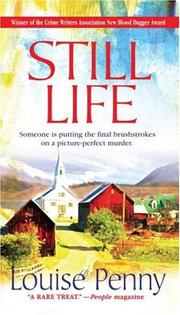
Start with Still Life. That is not the usual detective-series advice, where the first book is often the weakest and readers are told to skip ahead to where the author found her form. Here it is the only correct answer, and for a specific reason: a corruption arc inside the Sûreté du Québec runs continuously underneath the individual murder cases, and reading ahead spoils it permanently.
Still Life is also a good book on its own terms — a village in the Quebec woods, an archery death, and a police officer who is conspicuously kind in a genre that mostly is not. If it does not work for you, the series is unlikely to, because the elements that some readers find too warm are all present on page one.
The second thing to know before starting is scale. This is a series of eighteen or more novels and nobody is obliged to finish it. But the first nine are one designed structure, and every natural stopping point is after that structure completes, not inside it.
Books 1 to 3: Three Pines
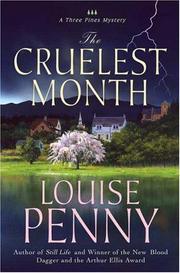
Still Life, A Fatal Grace and The Cruelest Month. Comfortable 350-page novels that go at fifty pages an evening. The village and its permanent cast — the poet, the bookseller, the bistro owners — are doing as much work as the mysteries, and if you do not enjoy their company you will not enjoy fifteen books of it.
Books 4 to 6: the series deepens
Rule Against Murder, The brutal telling and Bury Your Dead. This is the most important stretch in the series. Read The brutal telling and Bury Your Dead consecutively with no gap: the second is the answer to the first, and readers who leave six months between them lose most of the effect. Rule Against Murder is published in Britain as The Murder Stone — the same novel, and a deliberate breather before the drop.
Books 7 to 9: the Sûreté arc
A trick of the light, The beautiful mystery and How the Light Gets In. Clear your calendar and read these three consecutively with nothing in between. The beautiful mystery ends on the cruellest cliffhanger Penny has written and How the Light Gets In is its resolution; they are effectively one novel, and separating them is a self-inflicted injury.
Books 10 to 12: after the arc
The long way home, The Nature of the Beast and A great reckoning. The long way home is deliberately slow, and readers coming straight off How the Light Gets In often find it flat — read it as convalescence rather than as a thriller and it works. A great reckoning closes the corruption story properly.
Books 13 to 15: the later cases
Glass Houses, Kingdom of the Blind and A Better Man. Read them in order: Kingdom of the Blind follows directly from the consequences of Glass Houses, and A Better Man from both. The series continues past this point in the same publication order under the same no-shortcuts rule; this path stops at A Better Man because it is the last clean pause, not because the books after it are lesser.
Where to stop
Two good exits. The end of How the Light Gets In is the first: nine books, one complete arc, and an ending that genuinely ends something. The end of A great reckoning is the cleaner one, because the corruption story finishes there and Gamache's own situation resolves.
If fifteen books is more than you want, read to book nine and stop without guilt. What you should not do is read books one to three and then jump to the most recent one, which is how people usually approach a long series and is the one approach this series actively punishes. If you want a detective series you can dip into instead, Inspector Maigret is built for exactly that.
Follow the full ordered path here: Inspector Gamache Reading Order: Where to Start.
Ready to learn something deeply?
Build a reading path — free