John McPhee Reading Order: Where to Start
John McPhee has published more than thirty books across sixty years, and the usual advice — start anywhere — is unhelpful, because the subjects range from oranges to nuclear weapons to plate tectonics. The better rule is to start with a short book on a subject you do not care about, since McPhee's whole point is that the subject was never the point. This path opens with the short classics, moves to the long journalism, then takes the geology books as the deliberate deep end, and closes with his book on how he does it.
Start here: the short ones
BeginnerLearn the McPhee effect — total absorption in something you had no interest in — from books you can finish in a sitting or two.
▸ Study plan for this stage
Pace: Two to three weeks. Oranges and The Pine Barrens are about 150 pages each and can be read in a sitting or two; Encounters with the Archdruid is around 245 and deserves a week on its own. Read Oranges first and read it fast — the point of it is the surprise that a whole book about oranges is gripping
- The usual advice about McPhee — start anywhere — is unhelpful, because the subjects range from oranges to nuclear weapons to plate tectonics. The better rule is to start with a short book on a subject you do not care about, because the subject was never the point
- The thing to read McPhee for is structure. He is the most deliberate architect in American non-fiction, and once you start watching how a piece is built rather than what it is about, everything else follows
- Oranges is the standard proof that his subjects do not matter: under two hundred pages on citrus, and the best single test of whether he works on you
- The Pine Barrens takes a million acres of New Jersey wilderness and the people who live in it, and is the first book where the structural gift is fully visible — he assembles a place out of individual voices
- Encounters with the Archdruid is the most elegant structure he ever built: three trips, taken by one conservationist with three men who alter landscapes for a living, each trip a self-contained essay and the three together an argument
- That book's shape is the thing to notice — the same figure placed against three antagonists in three settings, with no editorialising required because the arrangement does the arguing
- McPhee's method is immersion plus arrangement: enormous reporting, then a structure chosen so that the material explains itself in the right order
- His people are almost always specialists talking about their work, and the dialogue is reported rather than invented — the vividness comes from selection
- How is Oranges organised? Write down its sections and ask why they are in that order rather than another.
- Encounters with the Archdruid has three parts and one recurring figure. What does the arrangement argue that a straight essay could not?
- In The Pine Barrens, how does McPhee build a sense of place — through landscape, through people, or through the relation between them?
- Pick any five pages and identify what is doing the work: a fact, a person's speech, or a transition. McPhee's transitions are his signature.
- What does McPhee never do that most magazine writers do constantly? The absence is as characteristic as the presence.
- Read Oranges in one sitting, then draw its structure as a diagram on one page. This is the habit the whole path depends on.
- For Encounters with the Archdruid, write a single sentence stating what the arrangement of the three trips implies. He never states it, and that is the technique.
- Mark three transitions between sections and work out how he gets from one to the next. He almost never uses a signposting sentence.
- Count how many times McPhee appears in the first person and what he is doing when he does. He is present far more often than readers remember, and always for a reason.
Next up: You have the effect and the first sight of the architecture; the longer books show what the same technique does across hundreds of pages.

A whole book about oranges, and the standard proof that his subjects do not matter. Under two hundred pages and the single best test of whether he is for you.
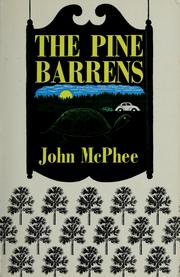
A million acres of New Jersey wilderness and the people who live in it — the first book where his structural gift is fully visible. Read it second, while the short form still surprises you.

Three trips with a conservationist and three men who wreck landscapes for a living, and the most elegant structure McPhee ever built. The book most often named as the place to start; it works better third.
The long journalism
BeginnerRead the full-length works where the reporting is deepest, and see how he sustains a structure across hundreds of pages.
▸ Study plan for this stage
Pace: Six to eight weeks. Coming Into the Country is around 440 pages and is the biggest commitment in the stage; The Control of Nature is 270 and Levels of the Game is 150. Read Levels of the Game in an evening at any point in the stage — it is short, and it is the purest structural lesson in the whole p
- Coming Into the Country is Alaska in three parts — wilderness, government, and the bush — and is generally considered his masterpiece; the three-part shape is the same move as Encounters with the Archdruid at four times the length
- The three parts descend in scale from a river journey to a state capital argument to a single small community, and the descent is the book's argument about what Alaska is
- The Control of Nature is three essays on people fighting the Mississippi, a lava flow and the San Gabriel Mountains — his most quotable book and the natural bridge into the geology
- Its three cases are chosen so that each escalates the same question: whether human engineering can hold against a landscape that has other plans
- Levels of the Game takes a single tennis match between Arthur Ashe and Clark Graebner and cuts away, point by point, into the two men's lives, class positions and politics — the whole of American race and class opened through one afternoon
- That book is the most efficient demonstration of McPhee's structural discipline available: the match supplies the chronology, so every digression has a fixed point to return to
- The lesson across all three is that McPhee finds a spine in the material — a journey, a match, a set of parallel cases — and then hangs everything on it rather than imposing an outline
- Long McPhee never feels long because the structure is doing the work that pace does in other writers
- What is the spine of Coming Into the Country in each of its three parts, and why is the order what it is?
- In Levels of the Game, what triggers each cutaway from the match? Look for the specific cue rather than a general pattern.
- The Control of Nature offers three cases. Would the book work with two, and what does the third add?
- Where does McPhee let a subject condemn themselves in their own words, and where does he intervene?
- Compare the structure of Coming Into the Country with Encounters with the Archdruid. Is it the same shape at greater scale, or a different one?
- Read Levels of the Game in one evening and then diagram it: match on one axis, biography on the other. It is the clearest structural drawing you will make in this path.
- For Coming Into the Country, write a one-line summary of each part and then argue for a different order. Doing so shows why his order is right.
- Take one essay from The Control of Nature and list every person quoted. Note how many are engineers and how many are residents; the ratio is the argument.
- Find a paragraph that carries technical information without slowing down and work out how. It is almost always because a person is saying it.
Next up: You can now see the spines; the geology quartet is where McPhee applies the technique to a subject with no human chronology at all.
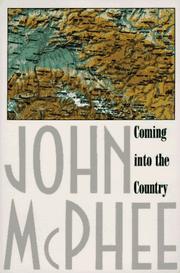
Alaska in three parts — wilderness, government and the bush — and generally considered his masterpiece. Long, and best attempted once you trust him.

Three essays on people fighting the Mississippi, a lava flow and the San Gabriel mountains. The most quotable book he wrote and the natural bridge into the geology.
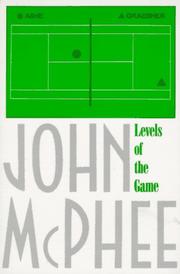
A single tennis match between Arthur Ashe and Clark Graebner, used to open up race and class in America. The purest example of his structural discipline, and short.
The geology books
IntermediateRead the four-book sequence across North America, in order, and understand why it took McPhee twenty years.
▸ Study plan for this stage
Pace: Three to four months for the four, at roughly 215, 210, 215 and 300 pages. This is the deep end and should be read slowly — twenty pages an evening, with time to lose and regain the thread. Read them strictly in order, and leave a week or two between each. The four are also available collected in on
- The quartet crosses North America along one line of latitude, one book at a time, and took McPhee about twenty years — the length is the subject as much as the geology is
- Basin and Range is the first and teaches deep time and plate tectonics from scratch; starting the sequence anywhere else means missing the vocabulary the others assume
- Deep time is the concept the whole sequence exists to convey, and McPhee's handling of it — the human scale repeatedly overwhelmed and then reasserted — is the most imitated thing he ever wrote
- In Suspect Terrain is deliberately contrarian: its geologist disputes the tectonic explanations of the first book, and reading them in order is what makes the disagreement visible as science rather than as confusion
- That argument is the structural key to the quartet — McPhee refuses to arbitrate, and instead gives each book a geologist and lets the sequence hold the disagreement
- Rising from the Plains is Wyoming, braided with the life of a geologist's father, and is usually named the best of the four because the human story and the rock story are on the same page
- Assembling California is the last, ending in the 1989 earthquake, and it assumes everything the earlier three taught — which is precisely why it comes fourth
- The structural problem McPhee set himself here is enormous: a subject with no narrative, no protagonist and no chronology a human can inhabit, solved by attaching each book to a road and a geologist
- How does Basin and Range make deep time comprehensible? Identify the specific devices — analogies, scale comparisons, repetition.
- What does the geologist in In Suspect Terrain dispute, and why does McPhee decline to say who is right?
- In Rising from the Plains, what does the father's biography give the geology that pure exposition could not?
- Each book is organised around a road trip. What does the road solve structurally?
- What does Assembling California assume you already know? Find three passages that would be opaque to a reader starting there.
- Across four books, has McPhee taught you geology or taught you how geologists think? Which was he trying to do?
- Keep a running glossary from Basin and Range. The later books reuse the terms without redefining them and the glossary is the difference between reading and skimming.
- Draw the cross-section as you go: the four books trace one line across a continent, and sketching it makes the sequence spatial rather than abstract.
- After In Suspect Terrain, write the disagreement between the two geologists as a paragraph each. McPhee will not do it for you and the exercise is the point.
- Decide before you buy whether you want four volumes or the single collected edition. The collected volume also contains material the four separate books do not.
- Time your reading rate here against the first stage. The slowdown is real and is a fair measure of what deep time costs a reader.
Next up: With four books of the hardest material behind you, the craft book will be describing pieces you have actually read.
The first of the four and the one that teaches you deep time and plate tectonics from scratch. Do not start the sequence anywhere else.

The second, and deliberately contrarian — his geologist here disputes the tectonics of the first book. Reading them in order is what makes the argument visible.
Wyoming, and the most human of the four, braided with the life of a geologist's father. Usually named the best of the sequence.
The last of the four, ending in the 1989 earthquake. It assumes everything the earlier three taught, which is exactly why it comes here.
The craft book and the late work
IntermediateSee McPhee explain his own method, once you have read enough of it to recognise what he is describing.
▸ Study plan for this stage
Pace: Three to four weeks. Uncommon Carriers is about 250 pages and reads easily — a week is plenty, and it is the right decompression after the geology. Draft No. 4 is 208 pages and should be read last and slowly, a chapter at a time, with the relevant book at hand. Reading it faster wastes it.
- Uncommon Carriers is late McPhee on freight — coal trains, tankers, a chemical truck — and proof the method still worked in his seventies and eighties
- It is deliberately lighter than the geology and is best read as a return to the pleasures of the first stage with forty more years of technique behind them
- Draft No. 4 is his book on the writing process, and it is the only book here that must be read last: nearly every chapter dissects the structure of a piece you will already have read
- Read it first and you spoil the trick — the analysis of how a structure was chosen only lands if you experienced the structure without knowing it was there
- It contains actual diagrams of the structures of his own pieces, which is the most concrete account of how professional non-fiction is built that anyone has published
- The chapters on the draft process — the deliberately awful first draft, the successive passes — are the most quoted and the most practically useful part of the book
- It is also, quietly, a book about editors and fact-checkers, and about the institutional machinery that made this kind of writing possible
- Together the two books close the path where it started: a subject you had no interest in, arranged so well that you finish it
- In Uncommon Carriers, how does McPhee make freight logistics into narrative? Identify the spine of one piece.
- Which of the structures diagrammed in Draft No. 4 belong to books you have now read, and did you notice the structure at the time?
- What does Draft No. 4 say about first drafts, and how does it differ from the usual advice?
- McPhee describes choosing a structure before writing. What does he look for in the material to find one?
- Having read the craft book, reread a chapter of the first stage. What can you now see that you could not before?
- Read Draft No. 4 with a pencil and mark every reference to a piece you have read in this path. The density of hits is the argument for reading it last.
- Copy one of his structural diagrams and then draw your own for a McPhee piece he does not diagram. Oranges and Levels of the Game both work well.
- Apply the structure-first method to something of your own — a report, a letter, an essay. Choose the arrangement before writing a sentence.
- Write a paragraph on which McPhee book you would now hand to a stranger, and which structure you would tell them to watch for.
Next up: You have read the work and then the account of how it was made, which is the only order in which either is fully legible.
Late McPhee on freight — coal trains, tankers, a chemical truck — and proof the method still worked at eighty. Lighter than the geology and a good decompression.

His book on the writing process, and the only one that should be read last: every chapter dissects the structure of a piece you will have already read. Read it first and you spoil the trick.
Discussion
Keep reading
Paths that share books, cover the same subject, or open a related topic.