There are two literatures about water and they rarely talk to each other. One is quantitative — the water balance, infiltration, aquifer mechanics, flood recurrence intervals. The other is political and narrative — who got the river, who paid, whose town flooded. Read only the first and you can compute a hydrograph while missing why a dam exists. Read only the second and you get outraged without understanding what was physically possible.
So this order alternates deliberately. Technical grounding, then a story that shows the technique meeting a landscape and a legislature, then back to the subsurface, then out to the global picture. The result is that when you read about a water crisis you can tell which part is physics and which part is allocation.
The physical basis
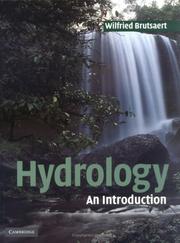
Start with Hydrology by Wilfried Brutsaert — an introduction to the water cycle at a genuinely technical level: precipitation, evaporation and evapotranspiration, infiltration, runoff generation, and the mass and energy balances that tie them together. It is a textbook and it assumes calculus. If that is not where you are, read the narrative books first and come back; but do come back, because the quantitative frame is what stops the rest from being anecdote.
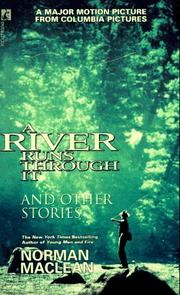
A river runs through it by Norman Maclean is the deliberate change of register — a novella about a family, a river, and fly fishing in Montana that reads water at the scale of a single reach. It is here because attention to how water actually moves over a streambed is a skill, and Maclean teaches it better than any diagram.
Where engineering meets landscape
The control of nature by John McPhee is the essential middle book: three long essays on human attempts to redirect physical processes, including the Army Corps of Engineers' ongoing effort to stop the Mississippi from switching to the Atchafalaya. McPhee is fair to the engineers and clear about the physics, and the Atchafalaya essay is the single best explanation of why large river control is a permanent commitment rather than a completed project.
Then Groundwater by Freeze and Cherry, the standard reference on the subsurface — Darcy's law, aquifer properties, flow nets, well hydraulics, and contaminant transport. Groundwater is where most of the world's accessible fresh water sits and where most depletion is invisible until it is severe, which is why it deserves its own volume rather than a chapter.
Water as politics
Cadillac desert by Marc Reisner is the classic account of Western American water development — the Bureau of Reclamation, the Colorado River, subsidized irrigation, and the political economy of dam building. It is polemical and specialists dispute parts of it, but it remains the book that shaped how a generation thinks about water allocation. Read it as a strong argument with excellent reporting.
The Johnstown flood by David McCullough narrows to a single 1889 disaster and the failed dam above it, and it is the clearest case study of how an engineering decision, a private club, and a rainstorm combine into catastrophe. It is short and it stays with you.
The global picture
Floods, Droughts, and Climate Change by Collier and Webb connects hydrologic extremes to a shifting climate at an accessible level, with strong use of imagery and case studies. Then the three global surveys: When the rivers run dry by Fred Pearce reports from depleted basins around the world; The big thirst by Charles Fishman examines the economics and the strange abundance-scarcity mix of modern water supply; and Water by Giulio Boccaletti closes with the long historical argument that water management and the formation of states are entangled from the beginning.
Where these books disagree — over dams, over pricing, over whether scarcity is physical or institutional — the disagreement is the substance, not a flaw. Related historical material sits at archaeology.
Follow the full path and the equations and the politics will stay in the same head. That is the point.
Follow the full ordered path here: The Best Books on Water and Hydrology to Read First.