Best Books on Surgery and the Surgical Life, in Reading Order
Surgery is one of the few fields where the work itself is legible to outsiders — you can follow an operation, and a failure, without a medical degree. This path starts inside the operating room with the best surgeon-writers, steps back to the brutal history that made modern surgery possible, then turns to the harder question of how surgeons are trained and how the profession handles error, before opening the clinical texts that residents actually study. It is a path for understanding a discipline, not a guide to any procedure or condition.
Inside the Operating Room
BeginnerUnderstand what surgical work actually involves — the decisions, the uncertainty, and the cost of being wrong — from surgeons who write unusually well about their own practice.
▸ Study plan for this stage
Pace: 4 weeks for 840 pages at ~30 pages/day. All three are essay collections or memoirs written for general readers with no medical background assumed. Read in the order given — Gawande sets the register, Marsh darkens it, Kalanithi inverts the point of view. Space them out; read together in a rush they
- Gawande's central admission that medicine is an imperfect science practised by fallible people, and that the interesting question is how a system copes with that rather than how to eliminate it
- The learning curve problem Gawande states most directly: every surgeon's first operation of a kind is worse than their hundredth, and someone is on the receiving end of it
- Judgement under uncertainty in the operating room — deciding to open, deciding when to stop, and the difference between a bad outcome and a bad decision
- Marsh's specific subject: neurosurgery, where a millimetre changes a personality, and the patients he has left damaged rather than the ones he saved
- Marsh's honesty about ego, boredom, irritation and the seduction of technical difficulty, which is what makes the book unusual rather than the operations
- Kalanithi's reversal — a neurosurgical resident becoming a terminal patient — and what it exposes about how the profession talks to people it cannot cure
- The question all three books converge on: what the training is for, and whether the goal of surgery is survival or something more specific
- What does Gawande mean by the learning curve, and what does he conclude about who should bear its cost? Do you find the conclusion acceptable?
- Distinguish a bad outcome from a bad decision, using a specific case from Gawande or Marsh. Why is the distinction hard to apply in retrospect?
- Marsh dwells on his failures. What does that structural choice let him say that a conventional surgical memoir cannot?
- What does Kalanithi's account show about how doctors communicate prognosis, and what does he say he did badly before his own diagnosis?
- All three authors trained in a hierarchical apprenticeship. What do they each say it taught them that a textbook could not?
- Take one case from Complications and write out the decision points as a numbered sequence, marking at each what was known, what was uncertain and what was decided. Then mark the point at which hindsight makes the decision look obvious.
- Write 250 words on a case from Do No Harm in which Marsh believes he did harm, distinguishing what went wrong technically from what went wrong in judgement.
- List every instance across the three books where a surgeon's confidence is treated as an asset and every instance where it is treated as a hazard. The tension is the subject of stage three.
- After finishing When Breath Becomes Air, write half a page answering Kalanithi's own question: what is a surgical career for? Keep it and revisit it at the end of the path.
- Note every technical term you had to guess at. That list is your vocabulary target for the next stage, where van de Laar supplies most of it.
Next up: The memoirs assume a discipline that already works; the next stage explains how it came to work at all, and how recently.

The best single entry point: a surgical resident's essays on fallibility, judgment under uncertainty, and cases that went wrong. Gawande sets the honest register the rest of the path depends on, and he does it without assuming any medical background.
A British neurosurgeon's unusually unguarded account of operating on the brain, structured case by case. Read after Gawande because Marsh is bleaker and more personal — he dwells on the patients he damaged, which is the part most surgical writing skips.
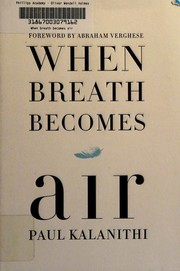
A neurosurgical resident's memoir written after his own terminal diagnosis, which flips the perspective from operator to patient. It closes the orientation stage by asking what the training is for, a question the historical and clinical stages both circle back to.
How Surgery Became Possible
BeginnerTrace how surgery moved from a fast, filthy, agonising trade to a sterile technical discipline, and understand why anaesthesia and antisepsis matter more than any individual operation.
▸ Study plan for this stage
Pace: 5 weeks for 995 pages at ~30 pages/day. All three are narrative history for general readers. Read Fitzharris first for the antisepsis story, Moore second for the century before it, and van de Laar last — his twenty-eight operations are the most efficient way to pick up the surgical vocabulary the fi
- Pre-anaesthetic surgery as a speed trade: operations measured in seconds, amputations as the archetypal procedure, and Liston's reputation built on how fast he could cut
- The two changes that made everything else possible — anaesthesia from the 1840s and antisepsis from the 1860s — and why anaesthesia alone made mortality worse by permitting longer operations
- Hospital gangrene, erysipelas, pyaemia and septicaemia as the routine post-operative causes of death, and the miasma theory that explained them wrongly
- Lister's chain of reasoning from Pasteur's fermentation work to carbolic acid, and the fact that his opponents were not stupid — they had a theory that fit their evidence
- Why surgeons resisted antisepsis: it was laborious, it implied that surgeons had been killing their own patients, and the early results were mixed and contested
- John Hunter as the founder of surgery as an experimental discipline — dissection, comparative anatomy, and the specimen collection — alongside the body-snatching economy that supplied him
- Hunter's method of arguing from observation and experiment against authority, which is the intellectual habit Lister inherited
- Van de Laar's structure — one operation per chapter across the whole history — which builds the working vocabulary of anatomy, procedure and complication that the clinical stage assumes
- Why did surgical mortality rise after the introduction of anaesthesia? Explain the mechanism.
- Reconstruct Lister's argument from Pasteur to carbolic acid step by step. Which step was the weakest at the time?
- State the miasma theory as its proponents held it, and explain what evidence it accounted for. Why was it reasonable to believe?
- What did John Hunter contribute methodologically, as distinct from surgically? Give a specific experiment.
- Pick three operations from van de Laar and explain, for each, what technical development made it survivable.
- Which of the three books best explains why the profession changed, and which best explains why it resisted?
- Build a timeline from 1750 to 1900 with three parallel bands: surgical technique, understanding of infection, and anaesthesia. Mark where each depended on the others.
- Write 300 words describing a specific pre-antiseptic operation from Fitzharris, then the same operation as it would be done today, and list every difference.
- Take ten technical terms from van de Laar you did not know, write your own one-line definition of each, and check them against a medical dictionary. This is the vocabulary you will need in stage four.
- Write the case against Lister as an 1870 surgeon would have made it, using only what was known then. Doing this fairly is harder than it looks and is the point of the exercise.
- Choose one of van de Laar's twenty-eight operations and draw the relevant anatomy from any anatomical reference, labelling the structures the procedure involves.
Next up: Technique and asepsis solved the technical problem; the next stage takes the human one — how surgeons are made, and how the profession judges them when they fail.

Joseph Lister's fight to convince surgeons that germs existed, set in Victorian operating theatres. It is the clearest single explanation of why pre-antiseptic surgery killed so reliably, and it reads as narrative history rather than a chronology.

A biography of John Hunter, the eighteenth-century anatomist who dragged surgery toward evidence and experiment — and toward grave-robbing. Read second, because Hunter's era is the one Lister inherited and had to reform.

A practising surgeon walks through the history of the field in twenty-eight specific operations, which is the most efficient way to pick up basic surgical vocabulary. It consolidates the two narratives above into a working map of what surgeons actually do.
Training, Error and Judgment
IntermediateUnderstand how surgeons are made and how the profession polices its own mistakes — the sociology and systems literature that sits behind the memoirs, and where the two accounts disagree.
▸ Study plan for this stage
Pace: 6–8 weeks for 1,021 pages at ~25 pages/day. Read strictly in order: Nolen as a period document, Bosk as the scholarly pivot, then the two Gawande books. Bosk is an academic ethnography and reads more slowly than the rest; budget extra time for it. No prerequisites beyond stage one.
- Nolen's residency as the historical baseline: extreme hours, rigid hierarchy, learning by doing on real patients with minimal supervision, all described as normal
- Bosk's central distinction between technical errors, which are forgiven as part of training, and normative errors, which are not — the failure to report, to follow up, to admit not knowing
- 'Forgive and remember' as the mechanism: the error is forgiven, the person is remembered, and the record accumulates in reputation rather than in documentation
- Quasi-normative errors and the attending surgeon's personal preferences, which residents must learn as though they were standards
- Bosk's account of the mortality and morbidity conference as a ritual of accountability, and what it does and does not achieve
- Gawande's shift in Better from anecdote to measurement — diligence, doing right, and ingenuity as the three demands, illustrated by outcome data such as the cystic fibrosis centre variation
- The bell curve problem: outcomes vary substantially between institutions and surgeons, this is measurable, and the profession has been reluctant to publish it
- The surgical safety checklist, the evidence for its effect on mortality, and the specific reasons surgeons resisted a tool that implied their memory and judgement were insufficient
- Which features of Nolen's residency would be prohibited today, and what was the argument for each reform?
- Explain Bosk's technical–normative distinction with an example of each. Why is the normative error the unforgivable one?
- What does 'forgive and remember' accomplish for a training programme, and what does it fail to accomplish for patients?
- What does the mortality and morbidity conference actually do, on Bosk's account? Is it accountability, education, or ritual?
- What is the bell curve argument in Better, and why is publishing individual and institutional outcomes contentious?
- Why did surgeons resist the checklist, and which of their objections were reasonable?
- Write a two-column comparison of Nolen's 1970 residency and residency as described by Gawande thirty years later, on hours, supervision, hierarchy and error handling.
- Classify five errors described anywhere in stages one and three as technical, normative or quasi-normative using Bosk's scheme, and justify each classification in a sentence.
- Take one case Marsh or Gawande describes and write how it would be presented at a mortality and morbidity conference, then write what would be left out.
- Find the outcome data Gawande cites in Better for one condition, and write 250 words on what the variation implies and what a patient could do with the information.
- Write out the surgical safety checklist from The Checklist Manifesto from memory, then check it. Then design a checklist for a non-medical process you are responsible for, and note which items are genuinely about failure modes and which are decoration.
- Return to the ego-versus-hazard list you made in stage one and reassess each entry using Bosk's framework.
Next up: Having seen how surgeons are made and judged, the last stage opens the books they actually study — and shows how far the popular account sits from the clinical one.
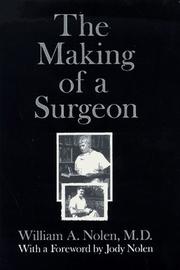
The 1970 classic of surgical residency, and the baseline against which every later account of training is measured. Read it as a period document: much of what it describes as normal — the hours, the hierarchy, the unsupervised learning — is exactly what the reforms in the following books targeted.
A sociologist's fieldwork on how surgical teams distinguish forgivable technical errors from unforgivable moral ones. This is the pivot from memoir to scholarship, and it explains the culture the memoirs describe from the inside without being written by a surgeon.
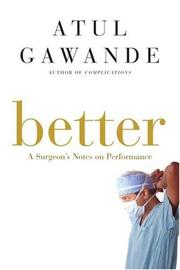
Gawande's follow-up asks what separates good surgical performance from adequate performance, using measured outcomes rather than anecdote. It follows Bosk naturally: where Bosk describes how error is judged, Gawande asks how it is reduced.

The systems argument in its most concrete form — the surgical safety checklist and the evidence behind it. Placed last in this stage because its case only lands once you understand, from Bosk and the memoirs, why surgeons resisted it.
The Clinical Literature
BeginnerSee what surgical trainees actually read, and understand the structure of the field's reference works rather than trying to master them.
▸ Study plan for this stage
Pace: 3–6 months, read selectively rather than through. Prerequisites, stated plainly: these are professional references written for people in supervised training. Schwartz assumes undergraduate physiology, biochemistry and pathology and a working anatomical vocabulary; Netter assumes you know what you ar
- How to use an anatomical atlas: Netter is organised regionally, so you locate a structure by region and by plane rather than by looking it up alphabetically
- The relationships that matter surgically — what lies deep to what, which vessels and nerves run in which plane, and which structures are at risk in a given approach
- Schwartz's organising logic: general principles first — wound healing, the metabolic response to injury, haemostasis, shock, infection, fluid and electrolytes — then system by system
- The metabolic response to injury and why the physiology chapters precede the operative ones: the patient's response to surgery is itself the subject
- Wound healing phases and the factors that impair them, which underlie almost every complication described in the memoirs
- How a surgical chapter is structured — anatomy, pathophysiology, presentation, investigation, management options, technique, complications, outcomes — and how to read one selectively
- Levels of evidence in surgical literature and why randomised trials are harder to run in surgery than in pharmacology
- How much more hedged and conditional the clinical text is than any popular account, and what that says about the confidence of the memoirs
- Describe the phases of wound healing and name three factors that impair each.
- What is the metabolic response to injury, and why does Schwartz place it before any operative chapter?
- Pick one anatomical region and, using Netter, describe what a surgeon must avoid in a specified approach and why.
- Take one complication described in Complications or Do No Harm and find how Schwartz describes its incidence, prevention and management. How does the clinical language differ from the memoir's?
- Why is high-quality randomised evidence scarcer in surgery than in drug trials? Name three structural reasons.
- After reading a clinical chapter alongside the memoir account of the same problem, what do you now think the memoirs systematically leave out?
- Pick three conditions raised in stages one and three and read only the corresponding Schwartz chapters, writing a one-page plain-English summary of each. If you cannot render it in plain English you have not finished the chapter.
- Use Netter as intended: for each of those three chapters, look up every anatomical structure named and sketch the regional relationships yourself. Sketching is what makes the atlas stick.
- Build a glossary of forty clinical terms you had to look up, with your own definitions. This is what makes a second pass through the text feasible.
- Take one operative description in Schwartz and write out the steps in order, then annotate each with the anatomy at risk. Then compare it to the same operation as described narratively by van de Laar.
- Compare the clinical account of one complication with the way Gawande, Marsh or Nolen described the same thing, and write 400 words on what the hedged clinical language conveys that the narrative does not, and vice versa.
- Return to the half-page you wrote at the end of stage one on what a surgical career is for, and rewrite it now. The two versions side by side are the honest deliverable of the path.
Next up: This closes the path: you can follow an operation, place it in the history that made it survivable, understand how the profession trains and polices itself, and read a clinical chapter without being lost.
The standard anatomical atlas, and the prerequisite for reading anything operative — every surgical text assumes you can find the structures it names. Use it as a lookup companion to the next book rather than reading it through.
One of the two canonical general-surgery texts, and the natural place to see how the discipline organises itself: physiology and wound healing first, then system by system. Read selected chapters on topics the memoirs raised rather than cover to cover — this is a reference, not a course, and it is written for people in supervised training.
Discussion
Keep reading
Paths that share books, cover the same subject, or open a related topic.