Best Books on Health Policy and How Healthcare Systems Work, in Reading Order
Health policy is the study of a machine almost nobody can see whole: the same procedure carries four different prices, the insurer is not the payer, and the bill arrives months later from a company you never chose. This path starts with the mechanics of that machine and how other rich countries built different ones, turns to the political history that explains why the American version looks the way it does, then works through the cost and pricing literature and finishes with the analytical tools policy professionals use. It is about understanding a system, not about navigating your own coverage or care.
How the Money Actually Moves
BeginnerUnderstand the basic plumbing — premiums, deductibles, chargemasters, networks, billing — and see that the design choices behind it are choices rather than necessities.
▸ Study plan for this stage
Pace: Seven weeks. An American Sickness is 419 pages organised sector by sector and takes two to three; read it with a real medical bill or Explanation of Benefits in front of you, because the book is a decoder for that document. The Healing of America is 304 pages and reads in a week and a half. Which Co
- The chargemaster and the three different numbers attached to any service: the charge, the negotiated allowed amount, and what is actually paid — no one of which is the price in any ordinary sense
- Networks, and the fact that in-network and out-of-network are contract states rather than clinical ones, which is why a patient can receive out-of-network care inside an in-network hospital
- The deductible, coinsurance and out-of-pocket maximum structure, and how it makes 'having insurance' a statement about financial exposure rather than about access
- The pharmacy benefit intermediary and the rebate model, which makes list price and net price diverge systematically and makes drug pricing opaque by design rather than by accident
- Hospital consolidation as a pricing story: mergers raise negotiated rates without a corresponding change in cost, which is the single best-evidenced finding in the field
- Reid's four models — a Bismarck system of regulated nonprofit insurers, a Beveridge system funded and provided by government, a national health insurance system of single public payer with private provision, and out-of-pocket — with the observation that the United States runs all four at once for di
- Emanuel's structured comparison across financing, coverage, cost sharing, drug pricing and outcomes, and his deliberate refusal to name a single winner
- The trade-off frontier that comparison exposes: cost, access, choice and waiting time cannot all be maximised, and each country's system is a position on that frontier rather than a mistake
- Trace a single hospital bill from the moment of service to final settlement. Who pays whom, at what price relative to the charge, and where does each difference go?
- Name Reid's four models with a country for each, and describe the financing and the provision arrangements separately — they are independent choices
- The United States uses all four models. For which population does it use each, and what does that patchwork explain about the rest of the path?
- Emanuel declines to declare a winner. Is that intellectual honesty or evasion? What would a defensible declaration actually require?
- Which of Rosenthal's rules of the dysfunctional medical market is best supported, and which would an industry economist most easily rebut?
- Get a real Explanation of Benefits — your own or a published example — and annotate every line: billed, allowed, plan paid, patient responsibility. Then account for the difference between billed and allowed
- Build a comparison table of Emanuel's eleven countries with columns for financing mechanism, universality, cost sharing at point of care, drug price setting, and one outcome measure. This table is the deliverable of the stage
- Take one common procedure and find its Medicare rate, a published commercial rate, and a hospital list price. Write a paragraph on the spread and on what the spread does not prove
- Draw Reid's four models as a two-by-two on who funds and who provides, then place ten countries on it. Several will not fit cleanly, which is the useful part
- Pick one intermediary Rosenthal describes and write 300 words on what value it adds and what it extracts, keeping the two separate
Next up: You can now read the machine — the next stage explains why it was built this way, which turns out to be a story about professional power rather than about anyone's design.

A physician-turned-journalist reverse-engineers the American medical bill piece by piece: hospitals, insurers, drugs, devices, billing companies. It is the most concrete possible starting point, because it explains the artefact every reader has actually seen.

Reid takes one bad shoulder to doctors in France, Germany, Japan, Britain and India, which turns abstract system design into a comparable experience. Read second: once you know how the American bill is constructed, the alternatives become legible as different answers to the same problem.

A systematic eleven-country comparison across financing, coverage, drug pricing and outcomes, from a policy academic who helped design the Affordable Care Act. It converts Reid's travelogue into a structured framework, and it resists declaring a single winner.
Why the American System Looks Like This
IntermediateTrace the political history — professional sovereignty, employer-based insurance, Medicare, and repeated reform attempts — that produced the arrangement described in the first stage.
▸ Study plan for this stage
Pace: Eight weeks. The Social Transformation of American Medicine is 514 pages and is the serious book of the stage; three to four weeks, read slowly, because the framework it supplies is used by every other book in the literature. The Political Life of Medicare is 224 pages and takes a week and a half. R
- Professional sovereignty: Starr's account of how American physicians converted cultural authority into economic and political power, and then used that power to set the terms on which medicine would be financed
- Licensing, the reform of medical education and the closure of competing schools as the mechanism by which the profession made itself scarce and authoritative at once
- The repeated defeat of compulsory health insurance across the first half of the twentieth century, and the fact that organised medicine was the decisive opponent every time
- Employer-sponsored insurance as an accident: wartime wage controls made fringe benefits the available form of competition for labour, and the tax treatment that followed made the accident permanent
- The origins of the early hospital and physician service plans under provider control, which built cost-plus reimbursement into the system before any government programme existed
- Medicare's 1965 design as a negotiated settlement — a layered structure covering different populations by different means, with substantial payment concessions to hospitals and physicians as the price of passage
- Oberlander's account of Medicare's political durability: a programme with a universal benefit and a broad constituency behaves differently from a means-tested one, and that difference explains repeated failed restructurings
- Starr's policy trap: each reform must be built on top of what already exists, so the arrangements that failed reform in one decade become the constraints on the next attempt — which is why the Affordable Care Act looks the way it does
- What does Starr mean by professional sovereignty, and what were the specific steps by which it was constructed?
- Trace the chain from wartime wage controls to employer-sponsored insurance to its tax treatment. What did that chain lock in, and could it now be undone?
- Name three concessions made to providers in Medicare's original design, and say what each cost over the following decades
- What is Oberlander's explanation for Medicare's political durability? Does the same mechanism apply to the Affordable Care Act, and if not, why not?
- State Starr's policy trap and apply it to one reform proposal currently under discussion: what existing arrangement would it have to be built on top of?
- Build a timeline of American health reform attempts from the 1910s to 2010: date, proposal, coalition for and against, and the specific reason it failed. Six or seven entries is enough if each is precise
- Diagram Medicare as enacted in 1965 — the parts, the populations, and the payment method for each — then annotate what each payment method incentivised
- Write 400 words arguing that the tax exclusion for employer-sponsored coverage is the single most consequential health policy decision in American history, then 400 words against that claim
- Take one feature of the system you found irrational in the first stage and trace it back to a decision Starr describes. Almost all of them lead somewhere
- Read Oberlander on one failed Medicare restructuring and write a paragraph on the coalition that defeated it. Then check whether the same coalition still exists
Next up: History explains the shape of the system — the next stage takes on its most cited failing, and separates three explanations of high cost that are routinely conflated.
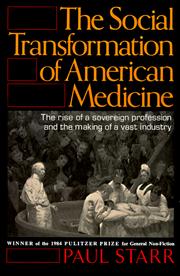
The foundational history of how American doctors acquired professional authority and used it to shape financing on their own terms. Everything else in health policy history is written in reference to this book, so read it before the narrower ones.

The single largest public programme, treated as a political object: how it passed, how it was constrained at birth, and why it keeps surviving attempts to restructure it. It supplies the case study Starr's framework predicts.
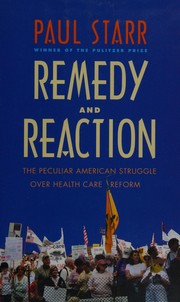
Starr's account of a century of failed reform attempts culminating in the Affordable Care Act, written by a participant in the 1990s effort. Read it last in this stage — it is the payoff of the previous two, explaining why each reform had to be built on top of what already existed.
Cost, Waste and Price
IntermediateUnderstand the leading explanations for why American healthcare costs so much, and be able to distinguish arguments about volume, price and market structure from one another.
▸ Study plan for this stage
Pace: Six weeks. Overtreated is 351 pages and takes two; read it first because the volume argument is the least intuitive of the three. Priced Out is 232 pages, short and pointed, and takes a week and a half — it is the analytical core of the stage and worth rereading. Catastrophic Care is 377 pages and t
- The three explanations of high spending that are constantly conflated: too much care, care at too high a price, and market structures that make both possible. They imply completely different remedies
- Supply-sensitive care and geographic variation: regions with more capacity deliver more care without better outcomes, which is the empirical backbone of the volume argument
- The distinction between effective care, preference-sensitive care and supply-sensitive care, which is the most useful classification in this literature and the one that makes 'waste' a tractable idea
- Overdiagnosis, particularly in screening: finding disease that would never have caused harm, and the resulting appearance of improved survival that reflects earlier detection rather than longer life
- Reinhardt's central claim that the United States pays more per unit rather than consuming more units, and that the absence of any single fee schedule is what makes this possible
- Reinhardt's framing question, which he argues America has never answered: is health care a social good to which everyone is entitled, or a private consumption good?
- That price is a political choice — every other rich country sets prices through some negotiated or administered mechanism, and the American refusal to do so is itself a policy
- Goldhill's counter-diagnosis that third-party payment is the structural fault, and the standard objection to it: spending is heavily concentrated in a small number of very sick patients who exhaust any deductible early, so demand-side cost sharing cannot reach most of the money
- Distinguish the volume, price and market-structure explanations of American health spending. What evidence would separate them?
- What is supply-sensitive care, and what is the evidence that supply rather than need drives it? What would a defender of the variation argue instead?
- Reinhardt says price is a political choice. What does that mean institutionally — what would a different choice look like in practice?
- State Goldhill's argument in its strongest form, then state the concentration-of-spending objection. Does his case survive it in modified form?
- If Reinhardt is right that price dominates, what does that imply about reform proposals aimed at delivery redesign and care coordination?
- Find international price comparisons for three procedures and one widely used drug, and write a paragraph on what the spread demonstrates and what it does not
- Look up the share of total spending accounted for by the highest-spending one, five and ten per cent of patients, then write 300 words on what that distribution implies for high-deductible plan designs
- Pick one screening test and lay out the overdiagnosis argument for it in full, using Brownlee's framework, including what the argument would need in order to be wrong
- Set Reinhardt and Goldhill on the same page: for each, write the diagnosis in one sentence and the implied remedy in one sentence. The remedies are incompatible, which is the point of the stage
- Write an 800-word memo to a legislator on whether to attack price or volume first. Take a side and say what you are giving up
Next up: You now have the mechanics, the history and the cost argument — the last stage supplies the professional vocabulary and then asks whether the health system is even where health is decided.

The volume argument: a large share of spending buys care that does not help and sometimes harms, driven by supply and incentives rather than need. Start here because it is the least intuitive of the three explanations.

The most influential health economist of his generation, arguing in his final book that the driver is price rather than quantity, and that price is a political choice. This is the analytical core of the stage and the source of the standard 'it's the prices, stupid' position.
A market-side counter-argument: that third-party payment itself, rather than any particular actor, is the structural fault. Included so the stage is not one-sided — Goldhill's diagnosis is widely disputed, and reading it against Reinhardt is the point.
The Analyst's Toolkit
IntermediatePick up the vocabulary and evidence base used by people who work in health policy, including the argument that health outcomes are determined largely outside the health system.
▸ Study plan for this stage
Pace: Six weeks. Understanding Health Policy is 240 pages and is a teaching text — two weeks, read actively, attaching each definition to a case you already met in the earlier stages. The American Health Care Paradox is 248 pages and takes a week and a half. Deaths of Despair and the Future of Capitalism
- The four modes of health care financing — out-of-pocket, individual private insurance, employment-based insurance and government financing — and the historical order in which each arose in the United States
- The iron triangle of cost, quality and access, and the discipline of naming which corner any given proposal is trading away
- Adverse selection, moral hazard and risk adjustment as the three concepts that determine whether an insurance market can exist at all, illustrated rather than defined
- The distinction between financing controls and reimbursement controls as cost-containment strategies, and the general rule that every containment mechanism shifts cost onto someone rather than eliminating it
- Bradley's reframing: the United States is not an outlier in combined health and social spending, only in the ratio between the two, which relocates the policy lever outside the health system
- The causal caution Bradley's argument requires — a cross-national correlation between spending ratio and outcomes is suggestive rather than dispositive, and she is clearer about this than her popularisers
- Case and Deaton's finding of rising mortality among less-educated Americans from suicide, overdose and alcohol-related liver disease, and their argument that the health system contributes through cost extraction from wages and through the opioid supply
- The live disputes around that work: whether the pattern is specific to one racial group, whether it is a cohort or a period effect, and how much weight the wider argument about capitalism can bear
- Name the four financing modes, the order in which they emerged in the United States, and what political conditions produced each
- State the iron triangle, then name a real enacted policy and identify which corner it traded away
- State Bradley's ratio argument precisely. What additional evidence would be needed to move it from correlation to cause?
- Trace the mechanism by which Case and Deaton hold the health care system partly responsible for deaths of despair. Is it one mechanism or several?
- Which criticism of Deaths of Despair do you find most serious, and what evidence would settle it?
- Take adverse selection, moral hazard and risk adjustment in turn and write a paragraph illustrating each with a specific case from the first three stages rather than with a textbook example
- Plot health spending against social spending for ten wealthy countries, mark one outcome measure, and then write a paragraph on what the plot cannot show
- Reconstruct the mortality trend Case and Deaton describe, disaggregated by education and age group, and write on what the disaggregation reveals that the national average conceals
- Return to your Explanation of Benefits from the first stage and re-annotate it using the vocabulary from Bodenheimer and Grumbach. It should read differently now
- Write the closing essay: 1,500 words on the one thing you would change first about the American health system, citing a book from every stage of this path, and naming which of these authors would object and on what grounds
Next up: This closes the path; the natural continuations are the health economics literature proper, the comparative health systems work on individual countries, and the social determinants and population health research that Bradley and Case and Deaton both point toward.

The standard teaching text, organised around financing, access, quality and cost control. Read it after the narrative books so the terminology attaches to cases you already know rather than arriving as definitions.

Shows that the United States is not an outlier on total health-plus-social spending, only on the ratio between them — a reframing that changes what counts as a health policy lever. It is the natural bridge from system design to population health.

Case and Deaton document rising mortality among less-educated Americans and argue that the health system is itself part of the cause. It closes the path by connecting policy design to the outcomes policy is ultimately judged on, and its interpretation remains actively debated among economists.
Discussion
Keep reading
Paths that share books, cover the same subject, or open a related topic.