Best Books on the War in the Pacific, in Reading Order
The Pacific war was fought across a third of the earth's surface by two navies that had spent twenty years preparing to fight each other, and it ended in a way no other theatre did. This path starts with a one-volume survey so the geography and the chronology settle, then reads Ian Toll's trilogy straight through as the modern narrative spine. From there it goes close-up — the carrier battles and the infantry's war — before finishing with the hardest questions the theatre raises: the racial character of the fighting, and whether the atomic bombs ended the war.
The Whole Theatre at Once
BeginnerLearn the map and the sequence: Pearl Harbor, the Philippines, Midway, Guadalcanal, the two axes of advance, the Marianas, Leyte, Okinawa.
▸ Study plan for this stage
Pace: 5-6 weeks for 589 pages, about 100 pages a week. Spector's Eagle Against the Sun is not a battle narrative and should not be read as one — the chapters on logistics, submarine warfare, inter-service rivalry and the China-Burma-India theatre are the reason it comes first. Keep an atlas or a map open
- The scale problem: the Pacific is a third of the earth's surface, and almost every strategic decision in the theatre is really a decision about fuel, distance and how long a fleet can stay at sea
- The two-axis advance and the reason it existed — MacArthur's southwest Pacific drive through New Guinea to the Philippines and Nimitz's central Pacific drive through the atolls — which was as much a political compromise between the Army and the Navy as a strategy
- Island-hopping as it actually worked: bypassing and isolating strongholds like Rabaul and Truk rather than assaulting everything, which is the opposite of what the popular image suggests
- Japan's strategic problem stated plainly — a resource-poor empire that went to war to secure oil and then could not protect the tankers carrying it
- The submarine campaign as the most cost-effective American effort of the war, and the torpedo scandal that crippled it for the first two years
- War Plan Orange and the twenty years of American planning for exactly this war, which explains why the response to Pearl Harbor was so much more coherent than it looks
- The forgotten theatres Spector insists on: China, Burma, the Aleutians, and the enormous Japanese army commitment on the Asian mainland that never faced Americans
- Logistics as the actual American war-winning capability — floating dry docks, the fleet train, Seabees building airfields in weeks — and why industrial output translated into operational tempo
- Why were there two American axes of advance rather than one, and what did the duplication cost and gain?
- What was Japan's theory of victory in December 1941? State it as its planners would have, then say which assumption failed first.
- Why did the American submarine campaign underperform badly until 1943, and what does that episode reveal about peacetime weapons testing?
- Which Japanese strongholds were bypassed rather than assaulted, and what made a garrison worth isolating instead of taking?
- Spector devotes real attention to China and Burma. What was the strategic purpose of those theatres, and did they deliver it?
- Draw the Pacific from memory and mark Pearl Harbor, Midway, Guadalcanal, Rabaul, Truk, Tarawa, Saipan, Leyte, Iwo Jima and Okinawa. Redo it until you can. Every later book assumes this map is in your head.
- Build a one-page chronology from December 1941 to August 1945 with two columns, one for each axis of advance, and a third for the Japanese home islands.
- Write 200 words on the Mark 14 torpedo failures and how long they went undiagnosed.
- For any three operations, calculate the rough distance from the nearest major American base. The numbers explain the logistics chapters better than the prose does.
- List the parts of Spector's account that surprised you against whatever you knew before. That list is your reading agenda for the rest of the path.
Next up: With the map, the chronology and the strategic logic settled, you can read Toll's three volumes as narrative rather than as instruction.
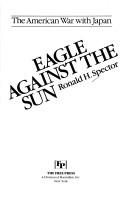
The standard single-volume American history of the war against Japan, covering strategy, logistics and inter-service politics as well as the battles. Read it first — everything after this assumes you know where Truk and Tarawa are and why they mattered.
The Modern Narrative Spine
BeginnerRead the war straight through in the fullest recent account, from Pearl Harbor to the surrender, with the Japanese side given equal weight.
▸ Study plan for this stage
Pace: 22-26 weeks for nearly 2,300 pages — the longest stage, and it should be read as one continuous book across most of a year. Pacific Crucible takes six to seven weeks, The Conquering Tide seven, and Twilight of the Gods nine to ten. Toll writes long chapters that reward sustained sittings of 40-60 pa
- Toll's long prologue on the twenty-year naval rivalry — the Washington Treaty ratios, the Japanese Navy's decisive-battle doctrine, and the American colour plans — which makes 1941 look like the resumption of an argument rather than a bolt from nowhere
- Yamamoto's gamble at Pearl Harbor and its self-defeating logic: a raid designed to buy six months of freedom that guaranteed the war would be fought to unconditional surrender
- Midway as Toll tells it — codebreaking at Station Hypo, Nimitz's decision to accept the risk, and an outcome that turned on scouting, timing and chance rather than on inevitability
- Guadalcanal as the hinge of volume two: a six-month campaign of attrition on land, at sea and in the air that Japan could not sustain and America could
- The industrial argument made concrete — the Essex-class carriers arriving in numbers from 1943 against a Japanese shipbuilding programme that never replaced its losses
- The destruction of Japanese naval aviation at the Philippine Sea in June 1944, and why the loss of trained pilots mattered more than the loss of aircraft
- Leyte Gulf as the largest naval battle ever fought, Halsey's decision to go north after the decoy carriers, and Taffy 3's action off Samar
- Toll's consistent decision to give Japanese decision-making equal narrative weight, drawing on Japanese sources, which is what separates this trilogy from earlier American accounts
- Why did Japan attack Pearl Harbor when its own war planners could not describe a path to American capitulation? Toll takes the question seriously — what is his answer?
- What actually decided Midway? Name the specific contingencies and say which one, if reversed, most plausibly changes the outcome.
- Guadalcanal is often called the turning point and so is Midway. Using Toll, make the case for each and say what a turning point would have to mean for either claim to be true.
- By what date was Japan's defeat certain in a material sense, and by what date was it recognised in Tokyo? The gap between those two answers is most of volume three.
- Was Halsey wrong at Leyte Gulf? Set out the decision as he faced it, with the information he had, before judging it.
- Toll gives the Japanese side equal weight. What does that change about the story compared with an American-sources account, and where can you see it changing?
- Keep a running order of battle across the three volumes: American and Japanese fleet carriers in commission, month by month. The curve is the war's whole material argument in one line.
- Diagram the Midway carrier action hour by hour on the morning of 4 June from Toll's account. You will redo this from Japanese sources in the next stage, and the comparison is the point.
- Write 300 words on why the Philippine Sea is called the Marianas Turkey Shoot and why the phrase understates what happened to Japanese naval aviation.
- Map the four separate actions of Leyte Gulf — Sibuyan Sea, Surigao Strait, Cape Engaño, Samar — and write one paragraph on each explaining how they connect.
- For any three Japanese commanders Toll covers, write a line each on what they believed about the war and when that belief changed.
- Mark on your stage-one chronology the point where you think the war became unwinnable for Japan, and write half a page defending the date.
Next up: Toll gives you the whole war at narrative altitude; the next stage drops to two battles and shows how much of the received account survives close examination.
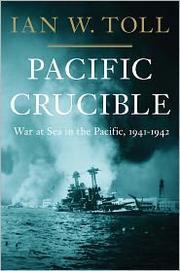
Volume one, covering 1941-42 through Midway, with long attention to the pre-war naval rivalry and to Japanese decision-making. Toll writes narrative history at the highest level; start the trilogy here and read it in order.
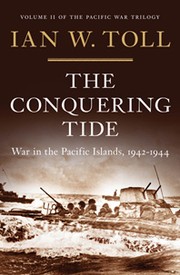
Volume two: Guadalcanal, the Solomons, and the central Pacific drive to the Marianas — the phase where American industrial output becomes decisive. The middle of the war, and the least familiar part of it.

Volume three: Leyte Gulf, the kamikaze campaign, Iwo Jima, Okinawa and the endgame. It sets up the arguments in the last stage, so read it before them.
The Battles Close Up
IntermediateGet inside two decisive naval actions in operational detail, and see how much of what you have read is legend.
▸ Study plan for this stage
Pace: 10-12 weeks. Shattered Sword is 613 pages and is a genuinely technical book — flight deck operations, spotting cycles, damage control — so give it six to seven weeks and read the operational chapters slowly. Neptune's Inferno is 516 pages of hard-driving narrative and reads much faster; four to five
- Parshall and Tully's source base: Japanese action reports, air group records and the Senshi Sosho official history, rather than the postwar English-language accounts that shaped the legend
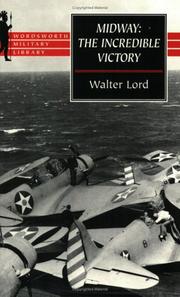
- The demolition of the five fateful minutes: Japanese carriers did not have fully spotted strike decks about to launch when the dive bombers arrived, and the reconstruction of the spotting cycle proves it
- Mitsuo Fuchida's postwar account as the source of most of the legend, and the general lesson about a single articulate participant capturing a battle's historiography for fifty years
- Japanese carrier doctrine and deck-handling practice — hangar-deck spotting, no deck park, slower cycle times — as the structural reason the fleet was vulnerable at that moment
- Hornfischer's subject: the surface actions off Guadalcanal — Savo Island, Cape Esperance, the two Naval Battles of Guadalcanal, Tassafaronga — fought at night, at close range, largely without air cover
- Savo Island as the worst defeat in American naval history and the reasons for it: poor doctrine, exhaustion, and Japanese night-fighting and torpedo superiority
- The Long Lance torpedo as a genuine technological edge the Americans did not know existed for far too long
- Ironbottom Sound and the human cost: a campaign in which the Navy lost more men killed than the Marines ashore, which almost no popular account conveys
- What specifically was wrong with the five-minutes story, and what evidence overturns it? Be able to answer at the level of deck operations, not just in summary.
- How did Fuchida's account acquire such authority, and what does that tell you about the sourcing of every battle narrative you have read so far?
- Compare Japanese and American carrier deck cycles. How much of Midway's outcome follows from doctrine and design rather than from chance?
- Why did Savo Island go so badly? Distinguish the failures of doctrine, of communication and of command.
- Hornfischer argues the surface war off Guadalcanal is neglected in favour of the carrier battles. Why do you think that is, and is he right that it distorts the picture?
- Both books correct a received account. What made each received account attractive enough to survive as long as it did?
- Redraw your Midway timeline from Parshall and Tully's reconstruction and set it beside the one you made from Toll. Mark every point where they differ and note which source each rests on.
- Write 250 words explaining Japanese carrier spotting practice to someone who has not read the book. This is the technical core and summarising it is the test.
- Draw the geography of Ironbottom Sound and plot the five major surface actions on it with dates.
- Write a paragraph on the Long Lance torpedo — range, warhead, wake — and on how long American intelligence took to accept that it existed.
- Take one claim about Midway you believed before this stage and write half a page on where it came from and whether it survives.
- Tally American and Japanese ship losses off Guadalcanal from Hornfischer and set them beside the ground casualty figures. Write two sentences on what the comparison shows.
Next up: Having seen the war as operations and as revised scholarship, you now read it from the position of the men who had no view of any of it.
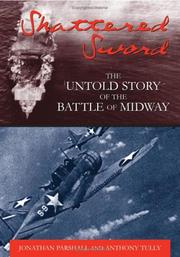
Midway reconstructed from Japanese sources, dismantling the famous five-minutes story and much else that Fuchida's postwar account put into circulation. The best demonstration on this path of what happens when historians go to the other side's records.
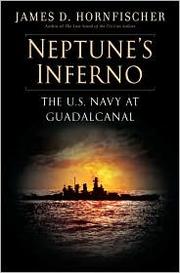
The surface naval battles off Guadalcanal — the bloodiest sustained fighting the US Navy has ever done, and usually skipped in favour of the carrier actions. Follows Shattered Sword naturally: same year, same ocean, no air cover.
The Infantry's War
IntermediateUnderstand what the island campaigns did to the men who fought them at ground level.
▸ Study plan for this stage
Pace: 5-6 weeks for 662 pages, and the pacing should be governed by tolerance rather than by speed. With the Old Breed is 326 pages; two to three weeks, and it is genuinely hard reading in the Peleliu and Okinawa chapters. Helmet for My Pillow is 336 pages and lighter in register; two weeks. Read Sledge f
- Sledge's flat register: he refuses drama, refuses uplift, and describes what he saw in the plainest available language, which is precisely why the book lands
- Peleliu as the war's clearest case of a battle that may not have needed fighting — a bypassable island, an underestimated garrison, and a month of cave-clearing on coral
- The change in Japanese defensive doctrine that Peleliu and later Iwo Jima and Okinawa reflect: no more banzai charges at the waterline, but defence in depth from prepared caves designed to make the cost unbearable
- The physical conditions Sledge insists on — heat, thirst, corpses that could not be removed, the impossibility of digging in on coral — as a subject in their own right rather than as background
- The souvenir-taking and mutilation of Japanese dead, which Sledge reports without excuse and which the next stage will explain rather than excuse
- Okinawa's mud and its scale, and Sledge's account of the long attritional slog against the Shuri line, which is the closest the Pacific came to the Western Front
- Leckie's contrast in tone: literary, funny, insubordinate, interested in the boredom and absurdity between engagements as much as in combat
- What the memoirs cannot tell you: neither man could see the campaign, and reading them after Spector and Toll is the only way to hold both scales at once
- What does Sledge's refusal of drama achieve that a more vivid account would not?
- Did Peleliu need to be fought? Set out the argument on each side using what you learned about bypassing in stage one.
- How did Japanese defensive doctrine change after 1943, and what did that change cost attacking infantry? Sledge shows you the consequence; name the cause.
- Sledge reports Americans taking gold teeth and other trophies from Japanese dead. What is he asking the reader to understand by including it, and how would you have handled that material if you were writing?
- Leckie and Sledge served in the same division and describe overlapping campaigns in completely different voices. What does each register capture that the other misses?
- Read the Okinawa chapters against Toll's account of the same battle. What does the operational history make invisible?
- Write 200 words on a single day at Peleliu as Sledge describes it, using only concrete physical detail and no adjectives of judgement. It is an exercise in his method.
- Diagram a Japanese cave defensive position from Sledge's descriptions, and write a paragraph on why it was so hard to reduce.
- Set Sledge's Okinawa chapters beside Toll's operational account and write half a page on the two scales of the same weeks.
- Note every passage in Sledge that you will want to return to after reading Dower in the next stage. There will be several.
- Write a paragraph comparing how each author handles the death of a friend. The difference in method is the difference between the two books.
Next up: The memoirs describe behaviour they do not explain; the final stage supplies the explanation and then takes on the question of how the war ended.
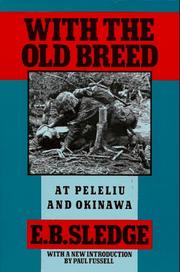
A Marine mortarman's memoir of two of the worst battles of the war, written plainly and without any interest in glory. Widely regarded as the finest combat memoir of the Second World War; read it before Leckie.
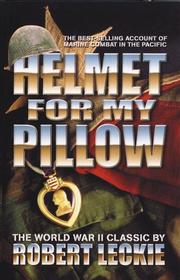
Guadalcanal, New Britain and Peleliu from another Marine in the same division, funnier and more literary than Sledge and covering the earlier campaigns. The two together span the whole Marine war.
The Hardest Questions
BeginnerTake on the war's two great controversies — the racial hatred that shaped the fighting, and what actually forced the Japanese surrender.
▸ Study plan for this stage
Pace: 18-20 weeks for roughly 1,950 pages, and this stage is about argument rather than narrative. War Without Mercy takes four weeks; read it first and read the propaganda image sections properly. Retribution is 656 pages and takes six to seven. Then the pairing that is the point of the stage: Frank's Do
- Dower's symmetry: he documents dehumanising propaganda and atrocity on both sides, and refuses to make either the mere reaction to the other
- Dower's argument that racial framing had operational consequences: surrender rates, prisoner-taking, the treatment of the dead, and the willingness to bomb cities
- The postwar reversal, which is Dower's most unsettling finding: the same stereotypes flipped valence almost overnight after 1945, suggesting how shallow their empirical content always was
- Hastings's subject in Retribution — the war's final year across the whole theatre, including the Chinese and Burmese fronts and the fate of civilians under Japanese occupation
- Frank's case in Downfall: Ultra intercepts showing the enormous Japanese buildup on Kyushu, the Ketsu-Go defensive plan, casualty projections for Olympic and Coronet, and the argument that the bombs were militarily decisive
- Hasegawa's counter-case in Racing the Enemy: that the Soviet declaration of war on 8 August removed Tokyo's last diplomatic hope of a mediated peace, and weighed at least as heavily in the decision as Hiroshima
- The evidentiary difference between them — Frank leans on American intelligence and Japanese military planning, Hasegawa on Japanese, Soviet and American diplomatic records — which is why the disagreement is durable rather than resolvable by more effort
- That this path does not adjudicate the question, and that the honest position after reading both is to be able to state each case in its own strongest terms
- Dower shows dehumanisation on both sides. Does his symmetry hold, or does the record support an asymmetry he is reluctant to state? Argue it from his own evidence.
- Hastings makes strong judgements about commanders and about Allied conduct. Pick the one you find least persuasive and write out the best case against him.
- State Frank's argument and Hasegawa's argument each in three sentences, in terms each author would accept. This is the central exercise of the stage and it should be done before you have any opinion.
- What evidence would distinguish the two cases? Does it exist in any archive, or is the question structurally underdetermined?
- The Japanese cabinet was deadlocked for months and then moved within days. What changed in those days? List everything, then ask how anyone could apportion weight between simultaneous causes.
- Having read the whole path, what is the strongest argument you can make for a position you do not hold about how the war ended?
- Collect ten propaganda images or slogans Dower reproduces, five from each side, and write one line on the mechanism each uses.
- Return to the passages you flagged in Sledge and write a page connecting them to Dower's analysis.
- Build a two-column table of Frank's and Hasegawa's evidence: for each claim, note the source type and the archive. The table is more useful than any summary of either book.
- Construct a day-by-day chronology of 6 to 15 August 1945 — Hiroshima, the Soviet declaration, Nagasaki, the imperial conferences, the surrender broadcast — and mark what the Japanese leadership knew on each day.
- Write two 400-word essays, one arguing Frank's position and one arguing Hasegawa's, with no indication of which you believe. Then write a third paragraph on what you actually think and why, being explicit about how confident you are.
- Take Hastings's account of civilian death in China and Southeast Asia and write half a page on how the theatre's casualty figures change when the Asian mainland is included. Most Anglophone accounts of the Pacific war leave those numbers out.
Next up: You finish able to hold the theatre at every scale at once — the map, the fleet, the flight deck, the foxhole — and to state the war's hardest question fairly from both sides without pretending it is settled.
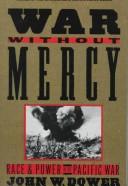
The classic study of race and propaganda on both sides, and of how each dehumanised the other. Read it first in this stage: it explains behaviour that the operational histories describe without accounting for.
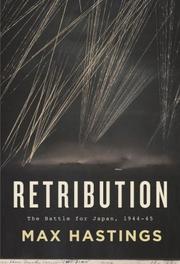
The final year of the war across the whole theatre, including China and Burma, and unsparing about Allied as well as Japanese conduct. Hastings makes strong judgements; they are worth arguing with.

The most detailed reconstruction of the invasion planning and the Japanese decision to surrender, and the strongest scholarly case that the bombs were militarily decisive. One serious position on the central controversy.
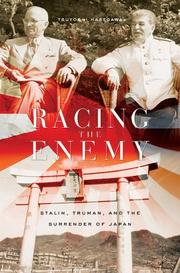
Using Japanese, Soviet and American sources, argues that the Soviet declaration of war weighed at least as heavily as the bombs in Tokyo's decision. Read it immediately after Frank — the two books make the debate legible, and this path deliberately leaves it unresolved.
Discussion
Keep reading
Paths that share books, cover the same subject, or open a related topic.