Two things trip readers up on this subject. The first is that most people start with the decision — was it necessary, was it justified — and never reach the ground. The arguments are more legible once you know what happened under the cloud, so the testimony comes first here and the strategy comes second.
The second is that the historiography is not settled and is not converging. Serious historians working from the same declassified archives reach opposed conclusions about why Japan surrendered in August 1945. A reading path that presents one of them as the answer is misleading you. This one puts the competing cases side by side and leaves them standing.
Start on the ground
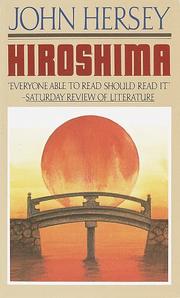
Hiroshima by John Hersey is the entry point and has been since it filled an entire issue of the New Yorker in 1946. It follows six survivors through the morning of the bombing and after, in plain reportage with no argument attached, and it is short enough to read in a sitting.
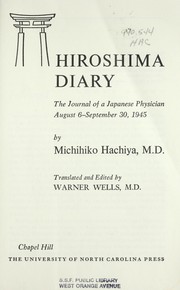
Hiroshima diary is the contemporaneous record of Michihiko Hachiya, a physician who was himself injured and who ran a hospital through the weeks that followed. It is the clinical counterpart to Hersey — dated entries, patient by patient, watching a disease nobody had a name for yet.
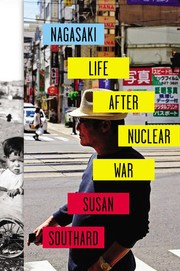
Nagasaki by Susan Southard does for the second city what Hersey did for the first, and it is the corrective to a literature that treats Nagasaki as a footnote. Southard follows five survivors across decades, which makes it as much a book about living afterwards as about the day itself.
How the weapon was built
The making of the atomic bomb by Richard Rhodes is the standard account of the physics, the people and the Manhattan Project, and it won the Pulitzer for good reason. It is long, and you can read the first two-thirds and stop without loss if the wartime engineering is what you came for.
The argument nobody has won
Here the books disagree, and you should read at least two of them. Prompt and utter destruction by J. Samuel Walker is the shortest way in and the most even-handed, laying out the evidence for and against the claim that the bombs were militarily necessary. Downfall by Richard B. Frank argues that Japan was not close to surrendering and that an invasion would have been catastrophically costly. Racing the enemy by Tsuyoshi Hasegawa argues, from Soviet as well as American and Japanese sources, that the Soviet declaration of war weighed more heavily on Tokyo than the bombs did. Hiroshima, Nagasaki by Paul Ham takes the sharply critical view that the bombings were not decisive and not defensible. These positions cannot all be right, and no reading path can adjudicate them for you. Read Walker, then whichever of Frank or Hasegawa you expect to disagree with.
Fallout by Lesley M. M. Blume returns to Hersey — how his report was researched, and what the American occupation authorities had been suppressing before it appeared. It is a useful reminder that the early record was shaped as well as reported.
Fiction, memory and afterlives
Black rain by Ibuse, Masuji is a novel, built closely on survivor diaries, about the slow social poisoning that followed: the exclusion, the marriage prospects, the radiation sickness arriving years late. Barefoot Gen, Vol. 1 by Keiji Nakazawa is a manga drawn by a survivor who was six years old in Hiroshima, and it is read by Japanese schoolchildren for a reason. Hiroshima in America, written by Robert Jay Lifton with Greg Mitchell, is an argument about American memory rather than a history of the bombing, and it is a polemical one — read it as a position in the debate, not a summary of it.
Follow the full path if you want the sequence with the study notes attached, or browse more history reading paths for the wider war.
Follow the full ordered path here: Hiroshima and Nagasaki: The Books to Read, in Order.