Global Health: The Best Books on Medicine, Poverty and Equity, in Order
Global health is a field where the strongest writers are also advocates, so this path is built to let you hear each argument from the person who believes it most and then test it against the person who does not. It opens with reporting and practitioner accounts, spends a full stage inside Paul Farmer's equity case, moves to the textbooks that describe how the field actually operates, and then puts the aid debate — Sachs against Easterly, Moyo and Deaton — on the table without adjudicating it for you. Where an author is an advocate rather than a disinterested analyst, the note says so.
What the work looks like up close
BeginnerGet a concrete picture of delivering medicine in a poor place before meeting any theory about it
▸ Study plan for this stage
Pace: 3 weeks. Tracy Kidder's Mountains Beyond Mountains is 332 pages and reads like narrative journalism, which it is. Elizabeth Pisani's The Wisdom of Whores is 386 pages and denser, because half of it is about how surveillance data is produced. Kidder's book is set largely in rural Haiti during and aft
- What delivering care in a resource-poor setting actually consists of: transport, drug supply, follow-up, and the accompaniment model Partners In Health built around it
- Directly observed therapy for tuberculosis, and why treatment adherence is a logistics problem before it is a behaviour problem
- Kidder's position — a journalist observing an advocate, sympathetic but not committed, which is a different thing from Farmer arguing his own case
- How epidemiological estimates are constructed: sampling frames, sentinel surveillance, behavioural surveys, and every judgement call inside them
- Pisani as a participant admitting she helped shape numbers for donors, which makes the book a confession as much as a critique
- Why prevalence figures are political objects: they determine funding, and the people who produce them know it
- What does Farmer's clinic in Cange actually do in a week, as Kidder describes it, and what does it cost?
- Where does Kidder register doubt about Farmer's method, and does the book resolve that doubt or leave it standing?
- By what specific steps does an HIV prevalence estimate get made, according to Pisani, and at which step is it most easily bent?
- Pisani argues that money went to the wrong populations for political reasons. What is her evidence, and who does she say it should have gone to?
- After both books, what would you want to know about any global health statistic before believing it?
- List the concrete resources Farmer's Haitian clinic depends on as Kidder itemises them — drugs, staff, vehicles, funding sources — and note which of them a national health system would ordinarily supply.
- Take one epidemiological claim from Pisani, follow her account of how the number was produced, and write out the chain from field questionnaire to press release.
- Read Kidder's account of a tuberculosis patient's full treatment course and count the number of separate points at which the patient could have been lost to follow-up.
- Write down three questions Pisani would ask about a figure that Kidder's book quotes uncritically.
Next up: Kidder describes Farmer from outside; the next stage lets Farmer make his own case in his own terms.
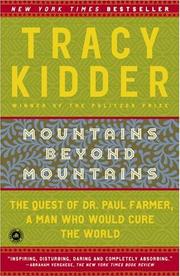
Kidder's reported portrait of Paul Farmer in rural Haiti is the standard entry point to the whole field, and it is reporting rather than argument — Kidder is a journalist observing an advocate, which is the right distance to start from.
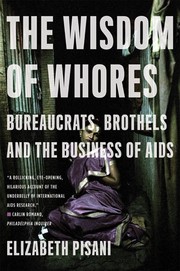
An epidemiologist's account of how HIV data actually gets made and then bent by donors and governments. Read it second as an inoculation: it shows why global health numbers are political objects long before you meet a single estimate.
The equity argument, from its strongest advocate
IntermediateFollow Paul Farmer's case that disease distribution is a product of structural violence, and see the anthropology it rests on
▸ Study plan for this stage
Pace: 4 weeks. Infections and Inequalities is 421 pages and is scholarly medical anthropology — read it first and slowly. Pathologies of Power is 411 pages and moves faster because it is argument rather than case series. Both books document torture, political killing, and deaths from treatable tuberculosi
- Structural violence: Farmer's claim that social arrangements — poverty, racism, gender inequality — cause specific, traceable disease outcomes
- The critique of 'cultural' explanations for non-adherence, and Farmer's counter-evidence that adherence follows access, not belief
- Immodest claims of causality: his charge that public health routinely mistakes the distribution of risk for the behaviour of the poor
- Health as a human right, argued explicitly and from a liberation-theology lineage rather than from cost-effectiveness
- That Farmer is a founder of Partners In Health arguing for the model he built — a practitioner-advocate, not a disinterested analyst, and the books are stronger for being read as such
- The methodological move underneath both books: ethnography of individual patients used to argue about global political economy
- Where the argument is vulnerable — scalability, cost per life saved, and opportunity cost, all of which the later stages press
- What is structural violence, in Farmer's own definition, and what would count as evidence against it?
- How does Infections and Inequalities dispose of the cultural-explanation literature on tuberculosis non-adherence?
- What is the difference in kind between the two books — where does Farmer stop reporting and start advocating, and does he mark the transition?
- Farmer treats cost-effectiveness objections as a moral evasion. State the strongest version of the objection he is refusing.
- Which of his claims are empirical and testable, and which are commitments that no data would move?
- Take one patient history from Infections and Inequalities and write out the causal chain Farmer draws from national politics down to that person's infection; then mark each link as documented, inferred or asserted.
- Find every place in Pathologies of Power where Farmer answers a cost objection, and summarise his answer in one sentence each — you will need these in stage four.
- Compare Kidder's description of the Cange clinic with Farmer's own; note what Farmer emphasises that Kidder passes over, and vice versa.
- Write the strongest one-page case against Farmer's position that you can, using only material he himself supplies. Keep it — stage four will test it.
Next up: Farmer's position became a curriculum and an institution, which is where the field's own textbooks come in.

Farmer's scholarly statement of the thesis — that tuberculosis and HIV track poverty and power, not culture or individual choice. Start with this rather than Pathologies of Power because it does the epidemiological work first, and it shows the method his earlier Haiti ethnography AIDS and Accusation established.
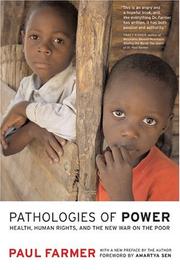
The explicitly moral book, arguing health as a human right and naming structural violence directly. Read it knowing what it is: Farmer co-founded Partners In Health, so this is a practitioner arguing for his own model, and it is the better for it.
The field as a discipline
IntermediateLearn the actual architecture — who funds what, how burden of disease is measured, and what delivery means as a technical problem
▸ Study plan for this stage
Pace: 7-8 weeks, the longest stage. Reimagining Global Health (491 pages) and Textbook of Global Health (712 pages) are university textbooks meant to be worked through chapter by chapter, not read like the reporting in stage one; expect two to three weeks each. An Introduction to Global Health Delivery is
- Reimagining Global Health as the equity position converted into a syllabus — Farmer and Kleinman are editors with a stated position, so it is a partisan textbook, well made
- Care delivery value chains: Mukherjee's framework for building a service in a weak system, from diagnosis through supply chain to community health workers
- That Mukherjee is Partners In Health's chief medical officer, so this is the same school again, at its most operational
- Birn, Pillay and Holtz as the deliberate counterweight inside the discipline: political economy of health from an explicitly left and historical position, covering colonial medicine, structural adjustment and the World Bank era at length
- The DALY and the Global Burden of Disease study — what a disability-adjusted life year measures, what weights it embeds, and why the weighting was fought over
- Christopher Murray's project as Epic Measures tells it: the ambition to measure everything, and the institutional resistance to it
- The architecture of the field: WHO, the World Bank, Gates, PEPFAR and the Global Fund, and how funding flows determine which diseases get attention
- Where do the Harvard volume and the Birn textbook disagree about the causes of health inequality, and is the disagreement empirical or ideological?
- What does Mukherjee's delivery framework require that a typical low-income health ministry does not have?
- What exactly is a DALY, what does it assume about disability, and who decided the weights?
- What does Birn's account of the World Bank's 1993 turn add that Reimagining Global Health leaves out?
- Which of the four books would you hand to someone who had to design a programme next month, and why?
- How much of the field's agenda is set by donors rather than by burden of disease?
- Pick one disease — tuberculosis — and read the chapter on it in both Reimagining Global Health and Textbook of Global Health, then list every point of factual agreement and every point of interpretive difference.
- Take Mukherjee's care delivery value chain and apply it on paper to a single condition in a specific setting, filling in each link; the gaps you cannot fill are the argument of the book.
- Using Epic Measures, work out the DALY calculation for a simple hypothetical case by hand — years of life lost plus years lived with disability, weighted — and notice which judgement you had to make yourself.
- Build a one-page map of global health funding from the four books: who gives, to whom, for what, and with what conditions attached.
- Find one figure from stage one that appears in these textbooks and trace it back through Epic Measures to the estimation method behind it.
Next up: Every number you have just learned to read is ammunition in the argument the next stage puts on the table.
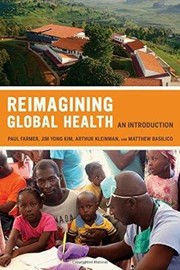
The Harvard survey textbook Farmer edited with Arthur Kleinman, Jim Kim and Matthew Basilico. It is the equity position turned into a syllabus, so read it directly after his own books and treat it as the argument's institutional form.

Mukherjee is Partners In Health's chief medical officer, so this is again the equity school — but it is the most practical book on the list, working through how a care delivery value chain is actually built in a weak health system.

The counterweight inside the discipline: Birn, Pillay and Holtz write political economy of health from an explicitly left, historical position, and cover colonial medicine and the World Bank era that the Harvard volume treats more briskly.

The story of Christopher Murray and the Global Burden of Disease study — where the DALY came from and why measuring everything at once was so contested. Read it here because every argument in the next stage is fought with these numbers.
The aid debate, both sides on the table
IntermediateHold the case for scaled-up aid and the case against it simultaneously, and see what evidence each side accepts
▸ Study plan for this stage
Pace: 7 weeks. Jeffrey Sachs's The End of Poverty is 416 pages, William Easterly's The White Man's Burden 436, Banerjee and Duflo's Poor Economics 320, and Angus Deaton's The Great Escape 376. Read Sachs and Easterly back to back — they are explicitly arguing with each other and lose force apart — then Po
- Sachs's case: a poverty trap that a large, coordinated financing push can break, with the Millennium Villages as his own demonstration project — he is the designer arguing for his design
- Easterly's counter: planners versus searchers, the absence of feedback and accountability in aid, and a long record of programmes failing on their own stated terms
- That Sachs and Easterly disagree not only about evidence but about what would count as evidence
- Banerjee and Duflo's methodological reframing: stop arguing about aid in aggregate, randomise specific interventions, and accept partial answers
- What randomised trials in development can and cannot establish — internal validity high, external validity contested, and no purchase on macro questions like state capacity
- Deaton's position: growth and health improved over two centuries largely without aid, and large aid flows can weaken the state's accountability to its own citizens — a serious economist arguing against the transfers, not against the goal
- Where each side actually agrees: none of the four denies that specific health interventions, cheaply delivered, save lives
- Why the debate remains open — the counterfactual for any aid programme is unobservable at national scale
- State Sachs's poverty trap argument in three sentences, then state Easterly's objection to it in three. Which of them has the better account of the other's position?
- What happened to the Millennium Villages evaluation, and how does that bear on Sachs's argument as he made it in 2005?
- What would Banerjee and Duflo say about the Sachs-Easterly dispute itself — is it a question their method can address?
- What is Deaton's specific mechanism for aid undermining state capacity, and what evidence does he offer for it?
- Which of Farmer's claims from stage two survives all four of these books intact, and which does not?
- Name one piece of evidence that would change your mind, and say which of the four authors could in principle produce it.
- Build a four-column table — Sachs, Easterly, Banerjee and Duflo, Deaton — with rows for: what causes persistent poverty, what aid does, what evidence counts, what should be done next. Fill it from the books, not from memory.
- Find the passages where Easterly quotes Sachs directly and check each quotation against The End of Poverty; then do the same for any of Sachs's public responses you can locate. This is the fastest way to see where the disagreement is real and where it is caricature.
- Take one intervention evaluated in Poor Economics — bed nets, deworming, or school-based programmes — and write out the trial design, the result, and precisely what the result does not tell you about a national programme.
- Return to the one-page case against Farmer that you wrote in stage two and revise it using Deaton and Easterly; then write the reply Farmer would give, using Pathologies of Power.
- Read Deaton's chapters on health and mortality alongside the Global Burden of Disease material from stage three and note where he accepts those numbers and where he questions them. Dambisa Moyo's Dead Aid, not on this path, makes the anti-aid case as polemic if you want a harder version.
Next up: The argument so far has been about poor countries; the last stage shows the same gradient inside rich ones and the same politics inside every epidemic.
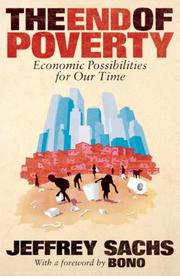
The maximalist case for a big financing push, by the economist who designed the Millennium Villages. Sachs is an advocate and this is an advocacy book; read it first so the critiques land on the actual argument rather than a caricature.
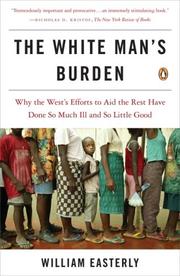
Easterly's direct rebuttal — planners versus searchers, and a long record of aid failing on its own terms. Read it immediately after Sachs; the two books are explicitly arguing with each other and lose force apart. Dambisa Moyo's Dead Aid makes the same case as polemic if you want it harder.
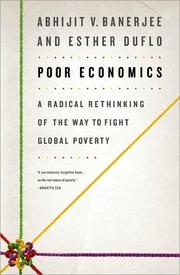
Banerjee and Duflo's answer to the whole framing: stop arguing about aid in aggregate and run trials on specific interventions. The methodological turn that reshaped the field, and the reason this debate looks different now.
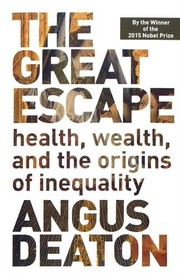
Deaton's account of health and wealth over two centuries, ending in a serious economist's argument that aid can undermine the state capacity it is meant to build. The strongest counter-position to stage two, and the reason this path holds both.
Equity as a general problem
IntermediateConnect global health equity to the social gradient in rich countries and to the long history of epidemic response
▸ Study plan for this stage
Pace: 4 weeks. Michael Marmot's The Health Gap is a synthesis of decades of social-determinants epidemiology written for a general reader; Frank Snowden's Epidemics and Society is a long historical survey running from plague to HIV and best read a few epidemics at a time. Snowden's chapters describe mass
- The social gradient: health outcomes worsen stepwise down a hierarchy, not only at the bottom, which is Marmot's central finding from the Whitehall studies onwards
- That Marmot chaired the WHO Commission on Social Determinants of Health, so The Health Gap is a policy advocate summarising and arguing from his own field's evidence
- Control and status as proposed mechanisms, and the difficulty of demonstrating them causally
- The same gradient inside a wealthy country as Farmer documents between countries — which either strengthens the structural argument or shows it is about hierarchy rather than absolute poverty
- Snowden's historical claim: every epidemic response has been organised around who was considered expendable
- Quarantine, cordon sanitaire and blame as recurring instruments, and how consistently they land on the poor and the foreign
- Why the historian's method makes the equity case without asserting it
- What is the evidence for the social gradient, and how does Marmot answer the objection that it reflects selection rather than causation?
- Where is Marmot summarising evidence and where is he recommending policy? Can you tell from the text?
- Which epidemics in Snowden show the clearest link between a group's social position and its mortality?
- Does Snowden's history support Farmer's structural violence thesis, complicate it, or simply predate the vocabulary?
- Having read both, would you now put the global and domestic health gaps down to the same cause?
- Take the Whitehall gradient as Marmot presents it and write out the causal story he proposes, then list what a critic would need to show to break it.
- Choose two epidemics from Snowden — cholera in the nineteenth century and HIV in the twentieth — and for each write down who was blamed, who was protected, and who died.
- Set Marmot's account of health inequality in Britain beside Farmer's account in Haiti and identify the one mechanism that appears in both.
- Write a closing two pages stating where you now stand on the aid debate from stage four, what evidence moved you, and what would move you back — and be explicit about which authors you are treating as advocates.
Next up: That completes the path: you have the practitioners, the discipline, the unresolved aid argument and the long history, which is the equipment for reading the next global health controversy on its own terms.

Marmot's synthesis of the social-determinants evidence, showing the same gradient inside wealthy countries that Farmer documents between them. He chaired the WHO Commission on Social Determinants of Health, so this is a policy advocate summarising decades of his own epidemiology.

The historian's long view, from plague to HIV, showing that every epidemic response has been shaped by who was thought expendable. The right closing book: it makes the equity argument without needing to assert it.
Discussion
Keep reading
Paths that share books, cover the same subject, or open a related topic.