Global health is not a settled body of knowledge; it is a long-running argument about what causes poor health in poor places and what outsiders should do about it. The books below take genuinely opposed positions — on whether aid works, on whether randomised trials are the right evidence, on whether the problem is resources or politics. Reading only one side of it produces confidence rather than understanding, so this path is arranged to make the disagreement visible.
The other thing to know as you read: several of these authors are participants in the systems they describe, not observers of them, and that is worth tracking case by case.
The way in
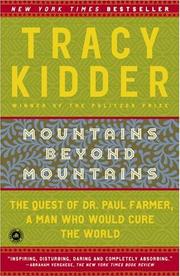
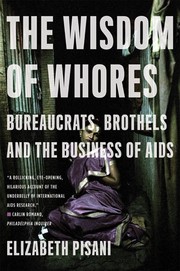
Tracy Kidder's Mountains Beyond Mountains is reported narrative about Paul Farmer, the physician and anthropologist who co-founded Partners In Health and spent his career arguing that the poor deserve the same standard of care as anyone else. It is about Farmer rather than by him, which makes it the right first book. Elizabeth Pisani's The Wisdom of Whores is an epidemiologist's account of how HIV prevalence figures are produced, funded and bent, written from inside the industry and unusually candid about the incentives. Frank Snowden's Epidemics and society supplies the long historical view, from plague through cholera to HIV, and shows how repeatedly the political response has mattered more than the pathogen.
Farmer and the structural argument
Infections and inequalities and Pathologies of power are Farmer's own books, and they make the case that disease distribution follows structural violence — poverty, racism, and political arrangements that decide who is exposed and who is treated. They are anthropological in method, angry in tone, and closely argued. Reimagining Global Health An Introduction is the textbook Farmer co-edited, and it is the best classroom version of that position.
Joia Mukherjee's An Introduction to Global Health Delivery comes from Partners In Health's chief medical officer and is the operational counterpart: how you actually build a treatment programme in a place with no functioning health system. Both books are written by people committed to a particular answer, which is a reason to read them and a reason to read the next section.
The argument about aid
Jeffrey Sachs's The End of Poverty argues that extreme poverty is solvable with a coordinated increase in aid targeted at the poverty trap. William Easterly's The White Man's Burden is the direct rejoinder, distinguishing planners from searchers and marshalling the record of failed large-scale interventions against exactly that kind of ambition. The two books are best read back to back; neither has conceded.
Abhijit Banerjee and Esther Duflo's Poor Economics proposes a third route — abandon the grand question, run randomised trials on specific interventions, and find out what works one programme at a time. Angus Deaton's The Great Escape is the historical and statistical account of how health and wealth improved together, and Deaton is sceptical both of aid at scale and, in later work, of the claims made for randomised trials. The disagreement between these authors is real and unresolved, and all four have Nobel recognition in economics; do not expect this path to adjudicate it for you.
Measurement and determinants
Epic measures by Jeremy N. Smith tells the story of the Global Burden of Disease project and Chris Murray's attempt to quantify, comparably, what people everywhere are dying and suffering from — the numbers everyone else in this list argues over. Anne-Emanuelle Birn's Textbook of Global Health is the genuine textbook of the group, heavy on political economy and colonial history, and the most systematic treatment of the structural position. Michael Marmot's The Health Gap takes the social-determinants case built from the Whitehall studies of British civil servants and applies it globally: the gradient in health follows the gradient in control over one's own life.
None of these books is clinical training, and none of them will tell you what to do in a specific setting. What the full path gives you is the ability to read a global health claim and know which tradition it comes from.
Follow the full ordered path here: Global Health and Health Equity: The Best Books to Read First.