Akira Reading Order and Reading Guide
Akira is short by manga standards — six collected volumes, read one to six, no side stories and no alternate order to argue about. The only real decision is whether you have seen the 1988 film first, because the film adapts roughly the first third of the manga and then invents its own ending; the back half of the book is material the film never touches. This path takes the six volumes in order and then points at the two comics most worth reading once you are done: Otomo's own earlier work and the manga that inherited its ideas.
Neo-Tokyo
BeginnerGet the setup — the bike gangs, the military project, and Tetsuo's accident — and adjust to Otomo's dense, architectural panel work.
▸ Study plan for this stage
Pace: A week for two volumes, and slower per page than you expect — Akira, Vol. 1 is 361 pages and Vol. 2 is 303, but Otomo's panels are architectural rather than decorative and rushing them wastes the book. Budget an hour or more per sitting and read in good light; the linework carries plot information t
- Neo-Tokyo as a character: Otomo draws the whole city, not just the sets the plot needs, and the density of background is the argument that this is a real place
- The bike gangs as social diagnosis — Kaneda's crew are not rebels with a cause but bored teenagers in a city with no room for them
- Tetsuo's resentment as the actual engine. His power is the accelerant; the grievance against Kaneda predates it and is the reason the book is a tragedy rather than a superhero story
- The wrinkled children — espers with old faces and children's bodies — as the visual statement of the whole series: power arriving in the wrong container
- Otomo's motion drawing, where speed is conveyed by consistent perspective and debris rather than by speed lines, which is why the bike sequence in Vol. 1 is still studied
- The military project and its bureaucracy: the Colonel is not a villain so much as a man managing a containment problem, and the book takes his position seriously
- Reading direction and panel flow — if you are new to manga, Vol. 1 is where you stop noticing right-to-left, usually around page fifty
- What happens on the road in Vol. 1, and why does Otomo stage the accident as an ordinary collision rather than as a revelation?
- What does Tetsuo want that he did not have before the accident, and how much of it is about Kaneda specifically?
- Why are the espers drawn as aged children, and what would be lost if they looked like ordinary kids?
- By the end of Vol. 2, what does the military actually know about Akira, and what are they hiding from whom?
- How much of Neo-Tokyo's politics — the protests, the corruption, the rebuilding — has Otomo established without ever stopping to explain it?
- Spend five minutes on any single full-page city view in Vol. 1 and count how many separate human activities Otomo has drawn into it. This is the fastest way to see why the book took eight years.
- If you have seen the 1988 film, list what the first two volumes contain that the film does not. The list is longer than most viewers expect and it is the reason to read on.
- Track Kaneda and Tetsuo's relationship in the flashbacks. Write one sentence on who owed what to whom before the story started.
- Read at least one long action sequence twice — once at speed, once panel by panel following the eye-line and the direction of motion. Otomo's staging is legible in a way most action comics are not, and noticing that changes how you read the rest.
Next up: With the city, the grievance and the military project all in place, the next two volumes stop building and start destroying — and you now have enough of Neo-Tokyo in your head for the destruction to cost something.
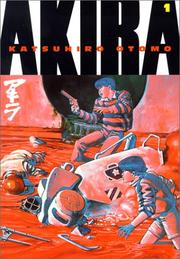
The only place to start. Kaneda's gang, the wrinkled child espers, and the collision that gives Tetsuo his power — everything the film opens with, told more slowly and with more of the city visible.
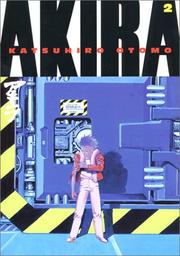
Tetsuo's abilities and his resentment both escalate, and the political machinery around the Akira project comes into view. Read straight on; the volumes are chapters, not instalments.
The Explosion
BeginnerReach the point the film ends at, and cross it — this is where the manga stops being a story you already know.
▸ Study plan for this stage
Pace: Ten days to two weeks for Vol. 3 (288 pages) and Vol. 4 (400). Vol. 4 is the longest so far and the least dialogue-driven, so it reads faster per page than its length suggests. A plain warning before you start: from here the series contains sustained, graphic violence — bodies destroyed at close ran
- The crossing point: Vol. 3 reaches roughly where the 1988 film's climax falls, so this is the volume that converts film viewers into manga readers or does not
- Akira himself as an anticlimax by design — the thing everyone has been chasing turns out to be small, quiet and mostly a container
- Ruin drawing as a discipline. Otomo's rubble is structurally coherent — you can see which floors collapsed onto which — and this is the technical achievement the book is famous for
- The cult growing in the ruins: Otomo's interest in how people organise around a catastrophe, which is entirely absent from the film
- Scale escalation as a story problem. Once the destruction is total, the book has to find new stakes, and Vol. 4 is where it starts looking for them in politics rather than in power levels
- Kaneda's persistence as the book's only stable value — he is outclassed in every scene from here and keeps going anyway
- What actually is Akira, and why does Otomo make the reveal so undramatic?
- If you have seen the film: where exactly does Vol. 3 diverge, and what did the film have to invent because the manga was unfinished when it was made?
- How does the story generate stakes in Vol. 4 once the city has already been destroyed?
- What does the cult offer the survivors that the surviving authorities cannot, and how sympathetically is it drawn?
- Why does Otomo keep Kaneda — a character with no powers and no plan — at the centre of a story about godlike force?
- Pick one two-page ruin spread in Vol. 4 and trace where a single building used to stand. Otomo's rubble is reconstructable, and doing this once will change how you look at the rest.
- Write a paragraph on what the 1988 film gains by ending where it does, and what it gives up. There is a real case for both, and having it in your own words is worth more than any video essay.
- Note every panel in Vol. 3 and 4 with no dialogue at all. Otomo runs long silent stretches, and the ratio tells you what he thinks pictures are for.
- If the violence is hard going, read these two volumes in daylight and in shorter sittings. Slowing down is a legitimate response to this material rather than a failure of nerve.
Next up: The city is gone and the powers have been fully revealed, so the last two volumes can spend themselves on what Otomo actually wanted to write about — the political order that forms in the wreckage.
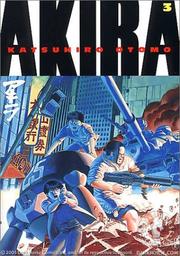
Akira himself is finally in play and Neo-Tokyo pays for it. Roughly where the 1988 film's climax falls, so this is the volume that tells you whether you want the other half.
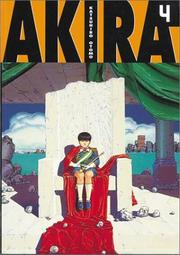
The ruined city and the cult that grows in it — pure manga, with no film equivalent. Otomo's drawing of rubble at this scale is the reason the book is famous.
The Great Tokyo Empire
IntermediateFinish the story and see the political satire the film had no room for.
▸ Study plan for this stage
Pace: Two to three weeks for the longest stretch in the path — Vol. 5 is 416 pages and Vol. 6 is 440. Vol. 6 is close to continuous action and reads quickly despite the count; Vol. 5 is the denser of the two and the bleakest thing in the series. Keep the same edition and read them consecutively; the polit
- The Great Tokyo Empire as satire — a teenager's regime built on nothing but force and merchandise, which is Otomo's actual comment on power
- Foreign intervention: the outside world finally enters the story, and the book's scope changes from a city to a geopolitical situation
- Tetsuo's deterioration, physical and mental, drawn as body horror that is also characterisation — the power is consuming its container
- Vol. 6's near-wordlessness. Otomo resolves a 2,000-page story largely in pictures, and the argument for the manga over the film rests substantially on this volume
- An ending on very different terms from the film's — where the film reaches for transcendence, the manga lands somewhere much more political and much more human
- Kei, Chiyoko and the resistance as the book's counterweight: ordinary competence against unlimited power, which is the value the ending finally endorses
- What is Tetsuo actually ruling, and what does the Empire's absurdity say about the kind of power the book has been describing?
- How does the arrival of foreign forces change the story's scale, and does the book handle it convincingly?
- What happens to Tetsuo's body across Vol. 5 and 6, and how is that drawn as consequence rather than as spectacle?
- How does the manga's ending differ from the film's, and which one do you think the story earned?
- Having finished, what do you now think Akira is about — power, adolescence, the postwar city, or something else?
- Read the final fifty pages of Vol. 6 in one uninterrupted sitting. The sequence is paced as a single movement and breaks badly.
- Write two hundred words on the ending immediately after finishing, before reading any commentary. This is the part of Akira most flattened by other people's summaries.
- Go back to a city panel in Vol. 1 and put it beside a comparable panel in Vol. 6. The two images are the whole story and make the case better than any argument.
- If you have seen the film, watch its last twenty minutes again now. It is a different work with the manga in your head, and the comparison is the single best exercise in this path.
Next up: Having seen what Otomo could do with six volumes and a city, the last stage puts the book in context: the earlier work it grew out of, and the manga that took its ideas in another direction.
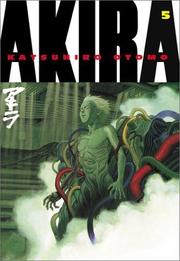
Tetsuo's regime, foreign intervention, and the book's bleakest stretch. Read fifth — the escalation only works cumulatively.

The final volume, longer than the others and almost entirely action. It resolves the manga on very different terms from the film, which is the whole argument for reading it.
After Akira
IntermediateRead the Otomo book that made Akira possible, and the manga that took its ideas somewhere else.
▸ Study plan for this stage
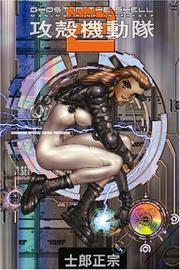
Pace: About two weeks. Domu is 240 pages and can be read in a single evening; Ghost In The Shell Volume 1 is 368 pages and is much slower going than Akira — Shirow crams technical footnotes and dense dialogue into the margins, and the plot is deliberately fragmented into episodes. Read Domu first; it is t
- Domu as Akira's rehearsal: the same psychic duel, the same concrete architecture, compressed into one volume and arguably better controlled for it
- The housing estate as a closed system — Otomo working at the scale of one building shows the technique that Akira applies to a city
- Otomo's realism of surface. Both books insist that the fantastic happens in an ordinary, badly maintained, thoroughly drawn Japan
- Ghost In The Shell as the other cornerstone of cyberpunk manga, and a deliberate contrast: talkative, technical and philosophical where Akira is kinetic and physical
- Shirow's episodic structure and marginal annotation, which make the book feel more like a technical document than a novel and take some adjustment
- The two inheritances of Akira — the visual one, which everyone copied, and the political one, which almost nobody did
- What does Domu do better than Akira, and what does it lose by being short?
- Both Otomo books put enormous psychic force inside ordinary Japanese concrete. Why does that combination work, and what would be lost in a more exotic setting?
- How does Shirow's approach to the future differ from Otomo's — what does each of them think is worth drawing?
- Ghost In The Shell is far more explicitly philosophical than Akira. Does that make it deeper, or is Akira making its argument in a different register?
- Having read all three, what do you think the actual influence of Akira has been — style, structure, subject, or something else?
- Read Domu in one sitting, then immediately reread the first thirty pages of Akira, Vol. 1. The continuity of method is unmistakable and instructive.
- In Ghost In The Shell, read one chapter while skipping every marginal note, then reread it with them. Decide which version you prefer — that decision tells you what you want from the genre.
- List three things later science fiction comics and films took from Akira. Then check whether they took the politics as well as the look.
- Pick the single page across all three books that you would show someone to explain why manga can do things prose cannot. Being forced to choose one is the point of the exercise.
Next up: This is the end of the path — six volumes of Akira, its origin and its most important sibling — and the natural next step is not another recommendation but a reread of Vol. 1 now that you know what the city is being built toward.
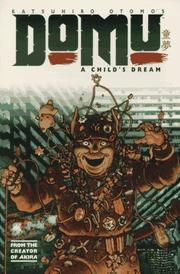
Otomo's earlier, self-contained story of a psychic duel inside a housing estate. It is Akira's rehearsal — same powers, same concrete — in a single volume, and many readers prefer it.

The obvious next step: the other cornerstone of cyberpunk manga, denser and more talkative than Akira. Read it after, not before, so you can see what Otomo established and what Shirow did differently.
Discussion
Keep reading
Paths that share books, cover the same subject, or open a related topic.