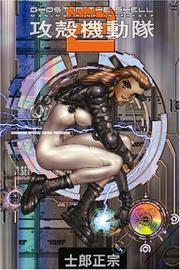
Start with Ghost In The Shell Volume 1 and know this first: the manga is exactly three books, numbered 1, 1.5 and 2. That is the entire work. If you have been hunting for volumes 3 and 4, or assumed the half-number meant something was missing, it does not — Masamune Shirow wrote three and stopped.
Read them 1, then 1.5, then 2. Volume 1, serialised at the end of the 1980s, is the book everything else descends from: Section 9, Major Kusanagi, the Puppeteer, and the question of what a self is when the body and the memories are both manufactured. Volume 1.5, subtitled Human-Error Processor, collects side stories that ran after the first volume and were never folded into a numbered book, which is where the half comes from. Volume 2, Man-Machine Interface, is a much later sequel and a genuinely different kind of book.
The warning about volume 2
Most readers who love volume 1 struggle with volume 2, and it is worth knowing why before you buy it. It is drawn largely in early digital colour and 3D, much of the page is dense technical annotation, and the bulk of the story takes place inside networks with a Kusanagi-derived protagonist rather than in the streets with a police unit. It is closer to an illustrated philosophical treatise than to a thriller.
That is not a reason to skip it — it is the most ambitious thing Shirow drew. It is a reason to read 1.5 in between, because the side stories keep the original register and give you a landing before the shift.
If you came from the film or the series
Expect a different tone. The 1995 Oshii film is cold, slow and elegiac. The manga is crowded, jokey, considerably cruder, full of author footnotes explaining hardware, and much more interested in police procedure. Stand Alone Complex splits the difference and invents its own continuity. None of them contradicts the others in any way that matters; they are separate treatments of the same premise, and the manga is the messiest and the funniest.
A note on the editions here
Several of these records are not English printings. The Ghost in the Shell 1.5 record is a Spanish edition, and among the related manga below there are Turkish, Japanese and French records. The catalogue matched them correctly by title and volume, which does not tell you what language the pages are in. Check the publisher and language before ordering — the English editions of all three volumes are from Dark Horse.
The rest of Shirow
Appleseed Book 1 is the other major work, and some readers rate its world-building above Ghost in the Shell — a post-war utopia staffed by engineered humans, with far more political machinery. Dominion Tank Police is the light one: broad comedy about an over-armed police unit, and the easiest Shirow to read cold. Orion is the outlier, a one-volume slapstick space opera built on Buddhist and Hindu cosmology, and it is the least essential thing here.
Where to go next in cyberpunk manga
Akira, Vol. 1 is the obvious companion and the more influential book of the two. Note that the collected English edition runs to six volumes; our list holds the first three.
BLAME! is the extreme version of the same impulse — an almost wordless walk through an infinite decaying megastructure, where the architecture is the story. Eden Volume 1: It's An Endless World! is bleaker and more political, and considerably more violent than anything Shirow drew. Pluto, Vol. 1 is Naoki Urasawa remaking a Tezuka robot story as a murder mystery about artificial people, and our record credits Tezuka because the underlying story is his.
Finally, Neuromancer. It is a prose novel from 1984 and it is the direct ancestor of all of this. If you want to see where the vocabulary came from, read it before volume 2 rather than after.
Follow the full ordered path here: Ghost in the Shell Reading Order: Which Manga to Read and in What Order.