Monster Reading Order and Reading Guide
Naoki Urasawa's Monster is a single thriller told across a fixed number of volumes, so the only question is which edition you commit to. This path uses the nine-volume Perfect Edition throughout, because it is the version currently in print, it collects two original volumes per book, and mixing it with the older eighteen-volume numbering is the fastest way to lose your place. Read straight through in order, then use the last stage to choose which Urasawa series to start next.
Start Here
IntermediateMeet Dr Tenma, the choice that destroys his life, and the boy he saved — and learn to read Urasawa's habit of introducing a stranger who turns out to matter two thousand pages later.
▸ Study plan for this stage
Pace: About a week for the first two volumes, roughly 400 pages each. A Perfect Edition volume takes 90 minutes to two hours to read properly — manga is faster than prose but this is a dense, dialogue-heavy thriller and skimming the panels will cost you a plot thread. One volume per sitting is the right u
- The premise: Kenzo Tenma, a Japanese neurosurgeon working in Düsseldorf, chooses to operate on a shot child instead of the city's mayor, and loses everything he has built for it
- Urasawa's core habit — a stranger introduced casually in one chapter turns out to be structurally essential a thousand pages later; nobody is scenery
- The Perfect Edition is nine volumes, each collecting two volumes of the original eighteen-volume release; commit to this numbering and do not mix editions or you will lose your place
- Post-reunification Germany is the setting for a reason: the story runs on records that were destroyed, borders that moved, and people who changed names
- Johan and Nina as twins is the structural centre, and volume two is where the scale of what Tenma is chasing first becomes visible
- The art is deliberately plain — realistic faces, unshowy panels — so that expression carries the tension rather than spectacle
- The moral question is stated early and never dropped: is a life a life, and was Tenma wrong?
- What exactly does Tenma choose in the operating theatre, and what does the hospital's reaction tell you about the institution he works in?
- By the end of volume two, what do you actually know about Johan, and how much of that is hearsay from frightened people?
- How does Urasawa introduce a character he intends to reuse? Find two examples and describe the tell.
- Why is a divided and recently reunified Germany necessary for this plot to work?
- Is Tenma a convincing protagonist for a thriller, given that his defining quality is that he will not kill?
- Start a name-and-face list from volume one. The cast becomes very large and this is the single practical thing that prevents readers stalling in the middle volumes.
- Mark the panel where you first believed Johan was dangerous rather than merely suspected. The book earns that moment carefully.
- Reread the opening twenty pages after finishing volume two, watching for what was planted.
- Decide now whether you are reading the Perfect Edition throughout, and write the volume count down. Mixing releases mid-series is the commonest way to double-read or skip a chunk.
Next up: With Tenma on the run and the twins established, the next stage watches the manhunt spread across Europe and the cast triple in size.
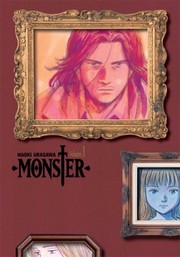
A Japanese neurosurgeon in Düsseldorf saves a child instead of the mayor, and nine years later the consequences arrive. Start with the Perfect Edition and stay in it; the older eighteen-volume Viz release covers the same story at half the pace per book.

Tenma on the run and the first serious look at Nina. Volume two is where the scale of the thing becomes visible, so judge the series here rather than after the first.
The Hunt Widens
IntermediateFollow the manhunt as it spreads across Germany and the Czech border, and watch Urasawa build a second and third protagonist without dropping the first.
▸ Study plan for this stage
Pace: 10–14 days for three volumes, roughly 1,240 pages. Keep to one volume a sitting. This is the stretch where readers most often lose track of who is who, so a slower pace with notes beats a fast pass.
- Inspector Lunge becomes a full antagonist: a man whose method — perfect recall, total logic — makes him wrong in a way no incompetent detective could be
- Two chases now run in opposite directions, Tenma pursuing Johan and the police pursuing Tenma, and Urasawa alternates them for the rest of the series
- Nina's independent investigation is a third track, and the series is unusually willing to leave the nominal protagonist off-page for whole chapters
- The supporting cast expands sharply — lawyers, orphanage survivors, ex-Stasi, a picture book with no author — and almost all of it returns
- The children's book that keeps recurring is the series' central symbolic object; note every appearance
- Urasawa's episodic structure means several chapters function as self-contained short stories about strangers, which are not filler: each one is a variation on the theme of a person who can be emptied out
- The Czech and East German material begins here and is the historical spine of everything that follows
- Why is Lunge more dangerous to Tenma than any criminal in the series?
- What is the picture book, and what has it done to the people who encountered it?
- Take one standalone chapter about a minor character. What is it arguing, and why is it placed where it is?
- How does Nina's investigation differ from Tenma's in method and in motive?
- What is Kinderheim 511, based only on what has been shown so far rather than what is later explained?
- Update the name list and add a column for who each character believes Johan is. The variance is the point.
- Draw the chase as a map: who is pursuing whom, across which borders, as of the end of this stage.
- Track every appearance of the picture book and note who is holding it.
- Pick the self-contained chapter you found weakest and argue for why it is in the book anyway.
Next up: The pursuit has been going forwards; the next two volumes turn it around and excavate the past that produced Johan, which is where Monster stops being a thriller.

Inspector Lunge becomes a full antagonist and the pursuit turns into two chases running in opposite directions. The structural blueprint for the rest of the series.

The cast widens sharply — lawyers, orphanage survivors, a children's book. Keep notes on names if you are reading slowly; this is the volume where that starts to pay.

The midpoint, and the first sustained answers about Kinderheim 511. Everything before it reads differently afterwards.
The Past Comes Up
IntermediateRead the two volumes that reconstruct the East German experiments and the childhood at the centre of the whole book, which is where Monster stops being a thriller and becomes an argument.
▸ Study plan for this stage
Pace: About a week for two volumes, roughly 800 pages, but read these slower than the rest — this is the densest material in the series. Allow two sittings per volume if the historical detail is unfamiliar.
- The East German experimental programmes are reconstructed here, and the horror is administrative rather than supernatural: this was policy, carried out by employed adults
- The twins' childhood is the centre the whole book has been circling, and the reveal is deliberately partial — Urasawa withholds the decisive detail even now
- Monster's argument surfaces in this stage: that a person can be systematically hollowed out, and that the question of whether they are still a person is not rhetorical
- The Prague material links the German plot to a wider network of people who were all made the same way
- Multiple unreliable accounts of the same childhood are given by different survivors; noticing the contradictions is the reading skill this stage demands
- The mid-series volumes end deliberately mid-motion, without the resolution beats the earlier volumes offered — this is structural, not a lapse
- What was Kinderheim 511 for, in the stated terms of the people who ran it?
- Which account of the twins' childhood do you believe, and what is your evidence for preferring it?
- Is Johan presented as a product of the programme, an anomaly it failed to contain, or something the series refuses to settle?
- How does Urasawa use the difference between what a character says and what the panel shows?
- What does the series gain by making the villains bureaucrats rather than monsters?
- Write out the twins' timeline as best you can from the evidence given, marking each item with its source and how reliable that source is.
- List every institution in the series — hospital, police, orphanage, state — and what each one failed to do.
- Reread the volume one operating-theatre scene now. Tenma's choice reads differently against this material.
- Note the three or four questions you still expect the ending to answer. You will check that list at the end of the next stage.
Next up: Everything now converges on one town and one confrontation, and the final two volumes are best read together.

The Prague material and the deepest excavation of the twins' history. The densest volume in the series and the one that most rewards a slow read.

The threads converge and the body count rises. Do not put the series down here; volume seven ends mid-motion by design.
The Ending
IntermediateFinish the story and form your own view of the final pages, which are the most argued-about ending in modern manga.
▸ Study plan for this stage
Pace: Two volumes, roughly 880 pages, and if you can manage it read them back to back in a single long session. The split between volumes eight and nine is an artefact of the edition rather than the story, and the convergence loses tension across a week-long gap. Budget four to five hours.
- The convergence on Ruhenheim brings almost every surviving character into one place, which is why the name list from stage one pays off here
- The final confrontation is deliberately anticlimactic in action terms; the resolution is a conversation and a decision, not a fight
- The epilogue refuses to settle the question the title asks, and this is the single most argued-about ending in modern manga
- Tenma's principle — that he will not kill — is tested to destruction, and whether the ending vindicates it is genuinely open
- Watch how many minor characters from earlier volumes are given a final beat; the structure rewards attentive readers rather than fast ones
- The last page changes the meaning of the preceding volume, and readers routinely disagree about how
- What happens on the final page, and what are the two most plausible readings of it?
- Does the ending answer the questions you listed at the end of the previous stage? Which does it deliberately refuse?
- Was Tenma right to save the child in volume one? Has the series argued a position, or only staged the question?
- Is Johan explained by the end, and would explaining him have made the book better or worse?
- Which minor character's final appearance landed hardest, and why did the structure make it land?
- Before reading any online discussion, write your own account of the last page in three sentences. It is worth having your reading on record first.
- Go back to your name list and mark who survives, who is resolved and who is simply dropped. The pattern is intentional.
- Reread the picture book sequences as a set, now that you know their origin.
- Argue the opposite reading of the ending to the one you hold. If you cannot, you have probably missed something in volume nine.
Next up: Having finished the series, the last stage is about choosing your next Urasawa deliberately rather than by whichever cover you see first.

The convergence on Ruhenheim begins. Read eight and nine together in one sitting if you can; the split between them is an artefact of the edition, not the story.

The final confrontation and an epilogue that deliberately refuses to settle the question the title asks. Whether it satisfies you is the whole conversation about this series.
What to Read Next
IntermediatePick your next Urasawa deliberately — one is a shorter, tighter science-fiction rework, the other is the sprawling epic Monster readers usually go to.
▸ Study plan for this stage
Pace: Open-ended. Pluto is eight volumes and reads quickly; 20th Century Boys is much longer. Sample volume one of each before committing — this stage is a decision, not a reading assignment.
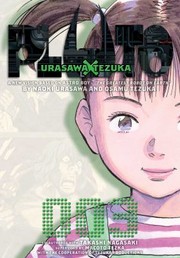
- Pluto is Urasawa's rebuild of an Osamu Tezuka Astro Boy arc as a robot murder mystery, and it is Monster's method at roughly half the length
- Pluto finishes cleanly, which makes it the safer next step for a reader who found Monster's ending frustrating
- 20th Century Boys is the sprawling one — childhood friends, a doomsday cult, a symbol drawn in 1969 — and is longer, stranger and more uneven than Monster
- The shared Urasawa signature across all three: an ordinary decent man against an unknowable antagonist, a cast that keeps returning, and a mystery about the past rather than the future
- 20th Century Boys is catalogued here starting from its first volume; the series has patchy volume-level availability in English catalogue data, so expect to source some volumes yourself
- Choose by appetite: tight and finished, or expansive and messy
- Which Urasawa habit from Monster do you most want repeated, and which would you rather he dropped?
- Does Pluto's shorter length make its ending stronger than Monster's?
- What does 20th Century Boys do with childhood that Monster does with childhood, and how do the two treatments differ?
- Having read Monster whole, what would you tell someone about to start it that nobody told you?
- Read volume one of Pluto and volume one of 20th Century Boys in the same week, then commit to one.
- Write a two-paragraph recommendation of Monster that gives away nothing after volume two. It is harder than it sounds and it sharpens what the series is actually about.
- Reread the first chapter of Monster once you have started your next Urasawa. His openings are extremely consistent.
Next up: This closes the path; from here either continue through Urasawa's other long series or move to another long-form manga with a comparable historical spine, such as Nausicaä of the Valley of the Wind.
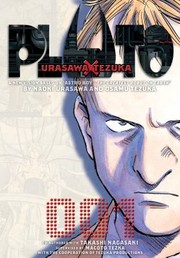
Osamu Tezuka's Astro Boy arc rebuilt as a robot murder mystery, in eight volumes. The best next step: it is Monster's method at half the length and it finishes cleanly.

Childhood friends, a doomsday cult and a symbol drawn in 1969. Longer and stranger than Monster, and the natural full-length follow-up once Pluto has confirmed you want more.
Discussion
Keep reading
Paths that share books, cover the same subject, or open a related topic.