Best Books on Geocaching, in Reading Order
Geocaching is a simple game with a surprisingly deep skill stack: you start by learning the rules and etiquette, then discover that everything hard about it is really navigation, hiding craft, or puzzle-solving. This path begins with the how-to guides that get you finding caches the same week, moves into real GPS and map-and-compass competence so you can trust your coordinates instead of your phone, then turns to the culture of hiding good caches and finally to the codes and ciphers that gate the puzzle-cache subculture.
Start playing this weekend
BeginnerUnderstand what geocaching is, the rules and etiquette of the game, and how to log your first dozen finds without frustrating yourself or other players
▸ Study plan for this stage
Pace: 1–2 weeks. Cameron's handbook is only 129 pages — read it in a single sitting before your first outing. Then work through Geocaching for Dummies (221 pages) at ~40 pages a night over a week, caching between chapters so each mechanic gets tested in the field.
- The cache types Cameron lays out — traditional, multi-cache, mystery/unknown, event, and virtual — and why the type on the listing page changes how you approach the hunt
- The two-axis difficulty/terrain (D/T) rating and how to read it as a pair: a 1.5/4 is an easy find on brutal ground, a 4/1.5 is a roadside puzzle
- Cache sizes from nano and micro up to regular and large, and why size predicts hiding style more than difficulty does
- Trade etiquette and the swag rule — take something, leave something of equal or greater value — plus the separate rules for trackables and travel bugs, which are moved on, never kept
- CITO (Cache In Trash Out) and the low-impact norms that keep landowners and park authorities willing to host caches
- Geocaching for Dummies' account of the listing site itself: logging finds and DNFs honestly, reading previous logs for hints, and decrypting the encrypted hint field
- Muggle awareness — McNamara's stealth advice for retrieving and re-hiding a cache in public without exposing it
- Why a phone's civilian GPS accuracy leaves you inside a 10–30 foot circle, so the last stretch is always searching, not navigating
- Given a listing rated 2/4.5 with a micro container and three recent DNF logs, what should you expect to be looking for and how long should you budget?
- You find a travel bug in a cache in your home town. What are you obligated to do with it, and what do you log?
- What does McNamara recommend checking, in order, when you are standing at zero and cannot find the cache?
- Why is logging a DNF valuable to the cache owner and to the next finder, and when does a run of DNFs mean the cache is genuinely missing?
- What distinguishes a multi-cache from a mystery cache in how you actually begin the hunt?
- Find ten traditional caches rated D1–D2 in one weekend, and log every one — including any DNF — with a sentence of substance rather than 'TFTC'
- Before leaving the house on the next hunt, read the last five logs and decrypt the hint on paper; note afterwards which of the two actually got you the find
- Assemble a caching kit from Cameron's list — pen, tweezers, spare log strips, small swag, a flashlight — and carry it for a full day to see what you never used
- Deliberately attempt one micro in a busy public spot and practise the muggle stealth McNamara describes: approach, retrieve, sign, and replace without an onlooker registering what you did
- Log one CITO bag of trash on a cache run and note it in the log so the owner sees it
Next up: Ten finds in, the failures stop being about the rules and start being about coordinates and terrain, which is exactly what the navigation stage addresses.

The shortest complete on-ramp to the game — what a cache is, cache types and sizes, terrain and difficulty ratings, and trade etiquette. Read this first because it gets you outside fastest.

Broader and more systematic than the handbook, covering the website, receivers, and troubleshooting a hunt that isn't working. Second because it fills in the mechanics once you know what the game feels like.
GPS and real navigation
BeginnerRead coordinates and datums correctly, understand what your receiver is actually telling you, and be able to find your way with map and compass when the signal or the battery fails
▸ Study plan for this stage
Pace: 4–5 weeks. GPS for Dummies is the long one at 386 pages — take two to three weeks at ~30 pages a day. Kjellström (175 pages) and Wilderness Navigation (141 pages) are both short and read in about a week each, but each needs field time with an actual compass between chapters.
- How a receiver computes a fix from satellite timing, and what McNamara says actually degrades it — canopy, canyon walls, urban multipath — so you can tell a bad fix from a bad hide
- Coordinate formats and the conversion between them: geocaching listings use degrees and decimal minutes (hddd mm.mmm), which is neither the decimal degrees nor the DMS most software defaults to
- Datums, and specifically why WGS84 is the geocaching standard — the same numbers under NAD27 can put you hundreds of feet off
- Kjellström's core skills: orienting the map to the ground, taking and following a field bearing, and the difference between true, magnetic, and grid north
- Declination and how to adjust for it, since the offset that is trivial in one region is a serious error in another
- Pacing, timing, and deliberate offset (aiming off) from Kjellström as the analog answer to the last hundred feet
- Burns's integrated system in Wilderness Navigation — using altimeter and terrain association alongside the GPS rather than treating the receiver as the only instrument
- Contour reading and terrain association well enough to predict what the ground will look like before you get there
- A cache listing gives N 47° 36.812 W 122° 20.418. What format is that, and what would it become in decimal degrees and in degrees-minutes-seconds?
- Why does entering the right numbers under the wrong datum put you in the wrong place, and how far off can it be?
- How do you take a bearing off a map with Kjellström's method, correct it for declination, and walk it?
- Your receiver says you are at ground zero but the accuracy figure reads 40 feet under heavy tree cover. What does that circle actually mean for how you search?
- What does Burns's book let you do that neither the GPS book nor the compass book covers on its own?
- Your batteries die two miles into a cache run. What do you need in your pocket and in your head to get back to the trailhead?
- Convert five real cache coordinates by hand between decimal minutes, decimal degrees, and DMS, then check each against your receiver's format setting
- Set your receiver to the wrong datum on purpose, navigate to a cache you have already found, and pace the resulting error so the abstraction becomes a distance
- Complete Kjellström's classic drill: walk a three-leg triangular course on bearings and paces alone, and measure how far from the start you finish
- Navigate to a known cache with the GPS switched off, using only a topographic map and compass, then switch it on at the end to score yourself
- Practise the last-hundred-feet routine Burns implies: stop at your fix, put the receiver away, and search by hiding-spot logic and terrain rather than by watching the arrow
- Adjust a compass for your local declination and record the value in your kit, then re-check it against the map's stated year of survey
Next up: Once you can trust your own coordinates rather than the arrow, you have the competence to place a cache others can actually find — which is where the culture stage begins.
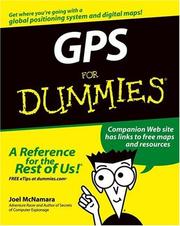
The same author as the geocaching guide, going a level deeper on how satellite positioning works, coordinate formats, datums, and accuracy. This is where most beginner failures actually come from.
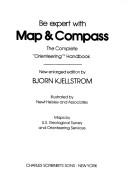
The canonical orienteering primer and the reason coordinates ever made sense to anyone. Read it after the GPS book so you can see what the receiver is automating for you.
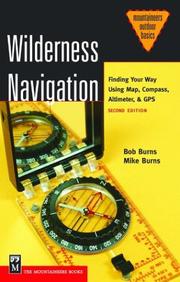
Combines map, compass, altimeter, and GPS into one working system for backcountry terrain. Placed last in this stage because it assumes you already grasp both the electronic and analog halves.
Hiding caches and joining the culture
IntermediatePlace caches that other players enjoy finding and maintaining, and understand the community, its norms, and why people log thousands of finds
▸ Study plan for this stage
Pace: 2–3 weeks. Gillin's The Joy of Geocaching is a narrative read of a few evenings; Sherman's Geocaching (224 pages) is the working manual — take about two weeks over it while scouting and placing your first hide.
- Sherman's container logic: waterproofing, camouflage, and the trade-off between a container that survives a winter and one that stays hidden
- Site selection and permission — public versus private land, proximity rules to other caches and to railways, and why a great spot with no permission is not a spot
- Maintenance as an ongoing obligation rather than a one-off placement, including what a run of DNF logs should trigger you to do
- What Gillin's portrait of the community shows about motivation: streaks, FTF (first-to-find) races, extreme hides, and why some players log thousands
- The difference between a hide that is hard because it is clever and one that is hard because it is cruel — Gillin's extreme cachers illustrate both
- Writing a listing that gives an honest D/T rating, a useful encrypted hint, and enough context to make the location worth the walk
- Event caches, geocaching gatherings, and the trackable economy as the social infrastructure Gillin describes
- Cache ownership etiquette: responding to logs, archiving gracefully, and how to hand a cache over rather than abandon it
- What makes a container survive a full year of weather in your climate, and what does Sherman recommend for the log itself?
- How would you rate your own first hide on the D/T scale, and what evidence from finders' logs would tell you the rating was wrong?
- What does Gillin identify as the thing that keeps long-term players engaged after the novelty of finding wears off?
- When several finders log DNFs on your cache in a row, what is your responsibility as owner and how quickly?
- What separates a memorable hide from one that annoys people — in placement, container, and hint?
- Scout three candidate locations, check each against the proximity and permission rules Sherman covers, and eliminate two with a written reason
- Build and place one cache: waterproof container, stamped log, honest D/T rating, and a hint that helps without giving it away
- Maintain it for a full season — visit after the first winter or storm, replace a soaked log, and respond to every finder's log
- Attend one event cache or local gathering and compare the community you meet to the one Gillin describes
- Move one trackable correctly: retrieve it, log it, carry it a meaningful distance toward its stated goal, and drop it with a note
- Rewrite the listing of your own hide after ten finds, using the logs to fix whatever the first version got wrong
Next up: Hiding well teaches you to think like a setter, which is exactly the perspective you need to attack a mystery cache whose coordinates are deliberately withheld.

The best portrait of the subculture — the personalities, the extreme hides, the rivalries, and what keeps people playing for years. Read it once the mechanics are automatic and you're wondering what the game is for.
Stronger than the beginner guides on hiding technique, container choice, and cache maintenance. Placed here because good hiding is a skill you can only develop after a few hundred finds.
Puzzle caches and ciphers
IntermediateRecognize and break the classic cipher families that puzzle-cache setters use, and know where to start on a cache page that shows no coordinates at all
▸ Study plan for this stage
Pace: 3–4 weeks. Singh's The Code Book is 416 pages of narrative history — about three weeks at 20–25 pages a day is comfortable. Blackwood's Mysterious Messages is short and heavily illustrated; read it in two or three sittings at the end as a reference sweep.
- Monoalphabetic substitution and frequency analysis — Singh's opening move, and still the first thing to try on an unknown ciphertext
- The Vigenère cipher and why a polyalphabetic key defeats naive frequency counting, plus how Babbage and Kasiski broke it anyway
- Caesar shifts, ROT13, and Atbash as the cheap classical tricks setters use for the encrypted hint field and for quick puzzle layers
- The Enigma chapter as a lesson in mechanised keying, and why setters lift its vocabulary (rotors, keys, cribs) even for simple puzzles
- Cribs and known-plaintext attacks — knowing that coordinates almost always contain N, W, degrees, and a bounded numeric range gives you a crib on every geocaching puzzle
- Blackwood's steganography material: hidden messages carried in images, invisible ink, microdots, and null ciphers, where the point is that nothing looks encrypted at all
- Encodings that are not ciphers at all — Braille, semaphore, Morse, binary, and base conversions — which Blackwood illustrates and which setters use constantly
- How to sanity-check a solve: plausible coordinates fall within a short distance of the listed posted coordinates, which is the built-in check every puzzle carries
- You have 400 characters of ciphertext with normal-looking letter frequencies for English. What does Singh's method say to do first, and what does an abnormally flat frequency distribution tell you instead?
- How does the Kasiski examination find the key length of a Vigenère cipher, and why does that reduce the problem to several simple substitutions?
- What crib does every geocaching mystery cache hand you for free, and how do you exploit it?
- What is the practical difference between cryptography and the steganography Blackwood describes, and which one leaves a cache page looking completely innocent?
- A cache page shows only a photograph and a checksum. Which of Blackwood's techniques would you test for, and in what order?
- Break a monoalphabetic substitution by hand using frequency analysis as Singh presents it, before touching a solver tool
- Encode a set of coordinates in Vigenère with a themed keyword, hand it to another cacher, and see whether the crib alone gets them in
- Work through five real mystery caches near you and, for each, write down which cipher family you suspected and what tipped you off
- Build a one-page cheat sheet of the encodings Blackwood illustrates — Morse, Braille, semaphore, binary, ROT13 — and carry it in your caching kit
- Set your own mystery cache whose puzzle uses exactly one technique from Singh, and rate it honestly on the D axis
- Take a solved coordinate and verify it against the posted coordinates' distance limit before driving anywhere, making the sanity check a habit
Next up: With ciphers, navigation, and hiding craft together you have the full skill stack the game rewards — the remaining depth comes from finds, not from further reading.
The single most useful book for puzzle caches, walking through substitution, Vigenere, and beyond as a narrative history so the techniques stick. Nearly every mystery cache draws on something in here.

A shorter, more visual companion covering steganography and hidden-message tricks that Singh treats lightly. Read it last as a quick reference for the sneakier hides.
Discussion
Keep reading
Paths that share books, cover the same subject, or open a related topic.