Rockhounding: The Best Books on Rocks, Minerals, and Gems
This curriculum takes a complete beginner from zero knowledge of rocks and minerals all the way to skilled field collector, progressing through four stages: building core identification vocabulary, mastering gemstone and mineral recognition, learning where and how to hunt in the field, and finally going deep on specialized collecting and lapidary craft. Each stage's books are ordered so that earlier titles supply the language and concepts needed to get full value from the ones that follow.
Foundations: Rocks & Minerals 101
BeginnerUnderstand the basic categories of rocks and minerals, learn the key physical properties used to identify them (hardness, cleavage, luster, streak, etc.), and build the vocabulary needed for every stage that follows.
▸ Study plan for this stage
Pace: 4–5 weeks, ~25–30 pages/day (approximately 700–800 pages total across both books)
- The three main rock types: igneous, sedimentary, and metamorphic—their formation processes and distinguishing characteristics
- Mineral definition and the difference between minerals and rocks; crystalline structure and atomic arrangement
- The Mohs hardness scale and how to perform hardness tests in the field using common reference objects
- Cleavage vs. fracture: how minerals break along planes of weakness versus irregular patterns, and how to identify each
- Luster (metallic, vitreous, resinous, etc.) and streak tests as diagnostic tools for mineral identification
- Crystal systems and how to recognize common crystal forms (cubic, hexagonal, orthorhombic, etc.) in hand specimens
- Specific gravity and density as identification aids; how to estimate and measure them practically
- Common mineral groups and their key members (feldspars, quartz, micas, amphiboles, pyroxenes, carbonates) with their properties and uses
- What are the three main types of rocks, and what geological processes form each one? Give an example of each.
- Explain the difference between a mineral and a rock. Why is quartz a mineral but granite is not?
- How would you use the Mohs hardness scale to identify an unknown mineral in the field? What are three reference objects you could use?
- What is the difference between cleavage and fracture, and why is this distinction important for mineral identification?
- Describe how to perform a streak test and explain why some minerals have a streak color different from their hand-specimen color.
- Name at least four common mineral groups found in rocks and give one key property that helps identify each group.
- How do crystal systems relate to mineral identification? Describe the appearance of at least two different crystal systems.
- What is specific gravity, and how can you estimate it in the field without a scale?
- Collect or obtain 10–15 common rock and mineral specimens (quartz, feldspar, mica, calcite, pyrite, etc.). Label each and practice identifying them using hardness, luster, and streak tests.
- Create a personal Mohs hardness reference kit using common household items (fingernail ~2.5, copper penny ~3.5, glass ~5.5, steel file ~6.5) and test at least 20 minerals against them.
- Perform streak tests on 8–10 minerals using a ceramic tile or porcelain streak plate. Record the color of each specimen versus its streak and note any surprises.
- Sketch or photograph crystal forms of at least 6 different minerals, labeling their crystal system (cubic, hexagonal, monoclinic, etc.) based on the Smithsonian Handbook's descriptions.
- Examine 5 different rock samples (granite, basalt, sandstone, slate, marble) and classify each as igneous, sedimentary, or metamorphic, explaining your reasoning based on texture and mineral content.
- Build a comparison chart of the feldspars, quartz, and micas—including hardness, cleavage, luster, and where each is commonly found—using both books as references.
Next up: Mastering these foundational properties and vocabulary equips you to move confidently into field identification techniques and the systematic use of identification keys, which will be essential for the next stage of rockhounding and collecting in the field.
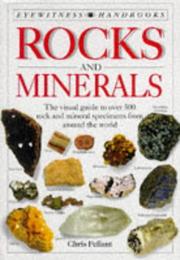
A highly visual, pocket-friendly DK field guide that introduces all three rock families and the most common minerals with clear photos and plain language — the perfect first reference for a total beginner.
Expands on Pellant with more species entries and richer descriptions of crystal systems and formation environments, cementing the identification vocabulary before moving to gemstones.
Gemstone Identification: Seeing Like a Collector
BeginnerRecognize the most collectible gemstones and minerals by sight and by simple tests, understand gem quality factors, and begin distinguishing valuable finds from common look-alikes.
▸ Study plan for this stage
Pace: 4–5 weeks, ~25–30 pages/day, with 2–3 days per week dedicated to hands-on testing and observation
- The four Cs of gemstone quality: color, clarity, cut, and carat weight, and how they affect value
- Crystal systems and how mineral structure determines physical properties (hardness, cleavage, specific gravity)
- Hardness scales (Mohs scale) and how hardness testing identifies and distinguishes gemstones
- Optical properties including luster, transparency, refractive index, and pleochroism as identification markers
- Common gemstone look-alikes and how to distinguish them using simple field tests (streak, specific gravity, birefringence)
- The most collectible gemstones by market demand and rarity (diamonds, rubies, sapphires, emeralds, and secondary gems)
- How to use a loupe, refractometer, and specific gravity tests as a collector's toolkit
- The relationship between geological origin, treatment, and authenticity in determining a gem's true value
- What are the four Cs of gemstone quality, and how does each factor influence a gem's market value?
- How do you use the Mohs hardness scale to identify an unknown gemstone in the field?
- What are the key optical properties that distinguish a ruby from a red spinel or garnet?
- How can you perform a simple specific gravity test to verify whether a stone is a genuine emerald or a look-alike?
- What is pleochroism, and why is it a useful diagnostic tool for identifying certain gemstones like tanzanite or sapphire?
- Name five of the most collectible gemstones and explain one key characteristic that makes each valuable to collectors
- Create a reference chart mapping the Mohs hardness scale to 10–15 common gemstones from Schumann's book, with one physical example or photo for each
- Perform hardness tests on 5–8 mineral samples using a hardness testing kit; record results and compare to Schumann's descriptions to verify identifications
- Collect or obtain 3–5 pairs of gemstone look-alikes (e.g., ruby vs. red spinel, emerald vs. green tourmaline) and document how to distinguish each pair using color, luster, and hardness
- Using a loupe, examine 8–10 gemstone samples and document their clarity, inclusions, and surface features; compare your observations to Schumann's clarity grading descriptions
- Perform specific gravity tests on 4–6 gemstones using water displacement or a density bottle; record results and verify against Schumann's reference data
- Write a one-page 'collector's profile' for three gemstones of your choice, including their crystal system, hardness, optical properties, common treatments, and why they are collectible
Next up: This stage equips you with the visual and tactile skills to confidently identify gemstones in the field and assess their basic quality, preparing you to move into the next stage where you'll learn advanced valuation techniques, treatment detection, and how to source and authenticate gems for a serious collection.
The single most-used gemstone reference in the hobby — exhaustive color photos, optical properties, and locality data make it the essential identification bible to own before heading into the field.
Advanced Collecting & Lapidary Craft
ExpertDeepen expertise in specific mineral groups, learn to cut and polish rough material into finished gems, and develop the connoisseur's eye for exceptional specimens.
▸ Study plan for this stage
Pace: 4–5 weeks, ~25–30 pages/day, with 2–3 dedicated lapidary practice sessions per week
- Crystal systems and mineral classification: understanding the structural properties that determine how minerals cleave, fracture, and respond to cutting
- Lapidary equipment and safety: proper use of saws, grinders, polishers, and protective gear for working with rough material
- Cutting and polishing techniques: tailoring approach to specific mineral hardness, cleavage planes, and optical properties
- Specimen evaluation and selection: assessing rough material for color, clarity, inclusions, and potential finished quality
- Finishing techniques: achieving professional polish, setting, and presentation of cut gems and polished specimens
- Mineral-specific expertise: deepening knowledge of high-value or challenging mineral groups (e.g., quartz varieties, feldspars, corundum, beryl)
- The connoisseur's eye: developing aesthetic judgment and recognizing exceptional specimens versus common material
- How do a mineral's crystal system and cleavage planes influence your cutting strategy and the final shape of a finished gem?
- What safety protocols and equipment setup are essential when working with a lapidary saw and polishing wheel, and why?
- How do you assess a piece of rough material to determine whether it has the potential to become a high-quality finished specimen?
- What are the key differences in cutting and polishing technique between a hard mineral like corundum and a softer mineral like fluorite?
- How do you recognize an exceptional specimen versus ordinary material in a specific mineral group, and what factors contribute to its value?
- What finishing and presentation techniques elevate a cut gem or polished specimen to professional or collector-grade quality?
- Select 3–5 pieces of rough material from your collection and write detailed assessment notes on each: color, clarity, hardness, cleavage, and potential finished form
- Practice basic lapidary cuts on inexpensive practice stones (quartz or feldspar) to develop technique before working with valuable material
- Cut and polish at least one complete specimen from rough to finished form, documenting each stage (planning, sawing, grinding, polishing, final inspection)
- Create a reference chart for 4–6 mineral groups in your collection, noting their hardness, cleavage, optimal cutting angles, and polishing compounds
- Examine 10–15 finished gems or polished specimens (from dealers, museums, or collectors) and write comparative notes on quality, finish, and aesthetic appeal
- Set up and safely operate your lapidary equipment (saw, grinder, polisher) under proper lighting and ventilation, practicing on scrap material first
Next up: Mastery of lapidary craft and specimen evaluation positions you to pursue specialized collecting in rare mineral groups, invest in high-value specimens with confidence, and potentially share your expertise through teaching, exhibiting, or professional gem-cutting work.
A comprehensive reference on collecting techniques, specimen preparation, storage, and display — the go-to manual for taking your collection from casual to serious.
Discussion
Keep reading
Paths that share books, cover the same subject, or open a related topic.