Geocaching is easy to start and surprisingly deep to get good at. You download an app, walk to a set of coordinates and find a container — and for the first fifty finds that really is the whole activity. Then you hit the two walls that every experienced cacher hits: a listing whose posted coordinates are deliberately false, and a hillside where tree cover and terrain make your phone confidently wrong by thirty metres.
Both walls have books behind them, and neither is obvious from the beginner literature. That is why this path is sequenced as three separate strands rather than as a stack of introductory guides: how the game works, how positioning and navigation actually work, and how to solve the puzzles that guard the more interesting caches.
Learn the game, then stop reading about it
Start with The geocaching handbook by Layne Cameron. It is short, and it covers the etiquette and conventions the apps do not explain: cache sizes and types, trackable items, what counts as a find, how not to be spotted by passers-by, and the unwritten rules about replacing a container exactly as you found it.
Geocaching for dummies by Joel McNamara is the more thorough treatment of the same ground, including hiding your own caches well. These two overlap heavily. If you buy only one, take the Dummies volume for completeness or the handbook for speed. Both predate the current app ecosystem, so treat every screenshot and website description as historical and every rule of the game as current — the conventions have proved remarkably stable.
Then learn how you are actually being located
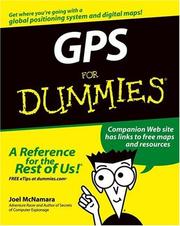
This is the strand most cachers skip, and it is the one that separates finding easy urban caches from finding hard ones. GPS for dummies, also by McNamara, explains what a receiver is doing: satellite geometry, why accuracy collapses in canyons and under canopy, what an error estimate really claims, and why standing still and waiting sometimes beats walking in circles. Written before smartphones took over, its hardware chapters are dated and its physics is not.
Be expert with map and compass by Björn Kjellström is the orienteering classic and the reason this path reaches beyond electronics. It teaches declination, pacing, terrain association and taking a bearing — the skills that let you finish a search after the battery dies or the signal bounces. Then Wilderness navigation by Bob Burns brings it up to date, integrating map, compass and GPS into one modern method rather than treating them as rivals. If you cache anywhere rural, read these two.
Why there are cryptography books on this list
This is the non-obvious part. A large share of the most rewarding caches are mystery or puzzle caches, where the coordinates posted on the listing are fake and the real ones are hidden behind a puzzle you must solve first. An enormous number of those puzzles are classical ciphers — Caesar shifts, ROT13, Vigenere, Morse, Baconian, book ciphers, simple substitutions with a keyword. Cache owners lean on them because they are solvable without specialist tools and recognisable once you know the shapes.
The Code Book by Simon Singh is the best possible preparation. It is a history of cryptography written for general readers, and by the end you can recognise and break every classical cipher a puzzle cache is likely to use, because Singh explains how each was broken historically. Mysterious messages by Gary Blackwood covers similar ground more briefly and is a fast reference for the same set of classical methods. Neither is a geocaching book, and that is exactly why they work — they teach the underlying skill rather than a list of tricks.
Round it out with the culture
Finish with The joy of geocaching by Paul Gillin for the community side — the extraordinary hides, the long-running caches, the people who plan trips around them — and Geocaching by Erik Sherman as an earlier snapshot of the same enthusiasm.
Follow the full path in order and you will be equipped for the caches most people log a DNF on. If the outdoor navigation strand is what interests you, wilderness navigation goes further down that road.
Follow the full reading path →