Learn General Relativity: The Best Books, in Order
This curriculum is designed for expert-level learners — those already fluent in classical mechanics, electrodynamics, and multivariable calculus — who want to achieve deep mastery of general relativity from its mathematical foundations through its most advanced physical applications. The four stages move from rigorous geometric foundations and the Einstein field equations, through exact solutions and observational tests, to the frontier topics of black hole physics, gravitational waves, and relativistic cosmology. Each book is chosen to sharpen a specific layer of understanding before the next demands it.
Mathematical & Geometric Foundations
ExpertAchieve fluency in differential geometry — manifolds, tensors, differential forms, covariant differentiation, curvature, and the Riemann tensor — as the indispensable language of GR.
▸ Study plan for this stage
Pace: 8–10 weeks, ~40–50 pages/day (Schutz: 4–5 weeks, ~25 pages/day; Nakahara: 4–5 weeks, ~50 pages/day)
- Manifolds as the geometric objects underlying spacetime: local charts, atlases, smooth structure, and the notion of a manifold as a topological space with differentiable structure
- Tangent spaces and vectors: directional derivatives, the tangent space at a point, and how vectors live in the tangent space rather than in the manifold itself
- Tensor fields and index notation: covariant and contravariant components, the metric tensor, raising and lowering indices, and Einstein summation convention
- Differential forms and exterior calculus: 1-forms, p-forms, the wedge product, exterior derivative, and Hodge duality as tools for coordinate-free computation
- Covariant differentiation and connection: the Christoffel symbols, how ordinary derivatives fail on curved spaces, and the covariant derivative as the correct notion of differentiation on manifolds
- Curvature and the Riemann tensor: the Riemann curvature tensor, Ricci tensor, scalar curvature, and how curvature measures the failure of parallel transport and the non-commutativity of covariant derivatives
- Lie groups and Lie algebras: symmetries of spacetime, infinitesimal generators, and the relationship between group structure and differential geometry
- Integration on manifolds: volume forms, integration of differential forms, and Stokes' theorem as the generalization of fundamental calculus theorems
- What is a smooth manifold, and how do charts and atlases define a differentiable structure on a topological space?
- Why is the tangent space essential in differential geometry, and how does the tangent vector differ from a vector 'in' the manifold?
- Explain the difference between covariant and contravariant tensor components, and demonstrate how to raise and lower indices using the metric tensor.
- What is the covariant derivative, why is it necessary on curved manifolds, and how do Christoffel symbols encode the connection?
- Define the Riemann curvature tensor and explain what it measures geometrically (e.g., parallel transport around a closed loop, non-commutativity of derivatives).
- How do differential forms and exterior calculus provide a coordinate-free language for geometry, and what is the significance of the exterior derivative?
- What role do Lie groups and Lie algebras play in the symmetries of spacetime, and how do infinitesimal generators relate to the Lie algebra?
- State and apply Stokes' theorem on a manifold, and explain how it generalizes classical integral theorems from multivariable calculus.
- Work through Schutz's derivation of the metric tensor in special relativity (Chapter 2) and compute the metric in different coordinate systems (Cartesian, spherical, etc.); verify metric invariance under Lorentz transformations.
- Construct a simple 2D manifold (e.g., the sphere S²), write down an explicit atlas with two charts, verify smooth overlap, and compute the Jacobian of coordinate transformations.
- Calculate Christoffel symbols for a given metric (e.g., Schwarzschild or FLRW metric from Schutz); verify that they vanish in inertial coordinates and reappear in non-inertial ones.
- Compute the Riemann tensor, Ricci tensor, and scalar curvature for a simple metric (e.g., 2D sphere, flat spacetime, or a toy 2D curved space); verify symmetries and contraction properties.
- Work through Nakahara's examples of differential forms (Chapter 2): compute wedge products, exterior derivatives, and verify d² = 0; apply these to compute curl and divergence in differential form language.
- Perform a parallel transport calculation along a closed curve on a curved surface (e.g., around a triangle on S²); compute the holonomy and relate it to integrated curvature using Stokes' theorem.
- Derive the commutator of covariant derivatives [∇_μ, ∇_ν] and verify that it yields the Riemann tensor; interpret the result geometrically.
- Solve a problem from Nakahara involving Lie groups (e.g., SO(3) or SU(2)): compute the Lie algebra, exponential map, and infinitesimal generators; relate to rotations or Lorentz boosts.
Next up: Mastery of differential geometry—manifolds, tensors, covariant derivatives, and curvature—provides the precise mathematical language needed to formulate Einstein's field equations and understand how spacetime curvature couples to matter and energy in the next stage.
Even for experts, Schutz's careful build-up of special relativity, tensor calculus, and the equivalence principle provides the cleanest on-ramp to the geometric language of GR without assuming prior exposure to curved-spacetime thinking.
Provides the rigorous mathematical backbone — differential manifolds, fiber bundles, de Rham cohomology, and Riemannian geometry — that separates a deep practitioner from a formula user. Read this alongside or immediately after Schutz to cement the formalism.
The Einstein Field Equations — Core Texts
ExpertDerive and deeply understand the Einstein field equations, the geodesic equation, the stress-energy tensor, linearized gravity, and the Newtonian limit; build the physical intuition to solve standard GR problems.
▸ Study plan for this stage
Pace: 12–14 weeks, ~40–50 pages/day (Misner ~800 pages over 6–7 weeks; Wald ~500 pages over 5–6 weeks). Allocate 1–2 weeks for problem-solving and integration.
- Derivation of the Einstein field equations from the Einstein-Hilbert action and the principle of least action
- The stress-energy tensor: definition, conservation laws (∇·T = 0), and physical interpretation of its components
- The Riemann curvature tensor, Ricci tensor, and scalar curvature as measures of spacetime geometry
- Geodesic equation and geodesic deviation: how curvature manifests as tidal forces and particle trajectories
- Linearized gravity: weak-field approximation, gravitational waves, and perturbation theory around flat spacetime
- The Newtonian limit: recovering Poisson's equation and Newton's law of gravitation from Einstein's equations
- Physical intuition: how matter curves spacetime and how curved spacetime determines motion (Einstein's dictum)
- Solving Einstein's equations for simple spacetimes (Schwarzschild, Reissner-Nordström, cosmological solutions)
- Derive the Einstein field equations from the Einstein-Hilbert action. What is the role of the cosmological constant?
- What are the ten independent components of the Einstein field equations, and how many are constrained by the Bianchi identities?
- Define the stress-energy tensor and explain the physical meaning of each component (T^00, T^0i, T^ij). Why must ∇_μ T^μν = 0?
- Derive the geodesic equation from the principle of extremal proper time. How does it differ for massive and massless particles?
- What is the geodesic deviation equation, and how does it relate tidal forces to the Riemann curvature tensor?
- Perform a linearized gravity analysis: expand the Einstein equations to first order in h_μν around flat spacetime. What are gravitational waves?
- Show that the Newtonian limit of Einstein's equations recovers Poisson's equation ∇²Φ = 4πGρ.
- Solve the Einstein equations for a spherically symmetric, static vacuum spacetime and derive the Schwarzschild metric.
- Work through Misner's detailed derivation of the Riemann tensor (Ch. 8–9) and compute Riemann components for simple metrics (flat space, sphere, torus).
- Derive the Ricci tensor and scalar curvature for the Schwarzschild metric by hand; verify using Misner's results.
- Construct the stress-energy tensor for a perfect fluid and verify that ∇·T = 0 in curved spacetime using the equations of motion.
- Solve the geodesic equation for timelike and null geodesics in Schwarzschild spacetime; compute orbital parameters and light deflection.
- Perform the linearized gravity calculation: expand Einstein's equations to O(h), solve the wave equation for h_μν in the Lorenz gauge, and identify gravitational wave solutions.
- Derive the Newtonian limit by taking the weak-field, slow-motion limit of the Einstein equations and recovering g_00 ≈ 1 + 2Φ/c².
- Work Wald's problems on the Bianchi identities and their role in constraining the Einstein equations.
- Solve for the Reissner-Nordström metric and interpret its physical meaning (charged black hole).
Next up: Mastery of the Einstein field equations and their solutions provides the foundation to explore specific applications—black hole thermodynamics, cosmological models, and gravitational collapse—where these equations determine the evolution of spacetime and matter.
The definitive encyclopedic reference — MTW covers every aspect of GR with unmatched depth and physical insight. Its 'track 1/track 2' structure lets experts dive directly into the hard material while its geometric pictures build lasting intuition.

Wald's mathematically precise treatment is the ideal complement to MTW: it develops GR from a rigorous differential-geometry standpoint, covers global methods, singularity theorems, and the initial-value formulation at a level MTW does not match.
Exact Solutions, Black Holes & Gravitational Waves
ExpertMaster the Schwarzschild, Kerr, and Reissner–Nordström solutions; understand black hole thermodynamics, Hawking radiation, causal structure, and the physics of gravitational wave generation and detection.
▸ Study plan for this stage
Pace: 12–14 weeks, ~40–50 pages/day (with 2–3 days/week for problem-solving and review). Hawking (Weeks 1–4), Shapiro (Weeks 5–9), Maggiore (Weeks 10–14).
- Schwarzschild metric: derivation, properties, event horizon, and geodesics in curved spacetime around non-rotating black holes
- Kerr metric and rotating black holes: angular momentum, ergosphere, frame-dragging, and the Penrose process
- Reissner–Nordström solution: charged black holes, inner and outer horizons, and extremal black hole limits
- Causal structure and Penrose diagrams: understanding horizons, singularities, and the global structure of black hole spacetimes
- Black hole thermodynamics: entropy, temperature, first law, and the Hawking radiation mechanism
- Stellar collapse and black hole formation: neutron stars, equation of state, and the transition to black holes
- Gravitational wave generation: quadrupole formula, linearized gravity, and sources of detectable waves
- Gravitational wave detection: interferometry, LIGO/Virgo principles, and analysis of binary merger signals
- Derive the Schwarzschild metric from the Einstein field equations and explain the physical significance of the event horizon radius r_s = 2GM/c²
- Compare and contrast the Schwarzschild, Kerr, and Reissner–Nordström solutions: what additional physics does each introduce, and how do their causal structures differ?
- Explain Hawking radiation from first principles: how does quantum field theory near the event horizon lead to black hole evaporation, and what are the thermodynamic implications?
- What is the ergosphere in a Kerr black hole, and how does the Penrose process allow energy extraction from rotating black holes?
- Describe the quadrupole formula for gravitational wave radiation: what types of sources produce detectable waves, and why are binary mergers particularly important?
- How do LIGO and Virgo detect gravitational waves, and what can we learn about black hole and neutron star properties from the observed signals?
- Work through the complete derivation of the Schwarzschild metric using the ansatz for a static, spherically symmetric spacetime; verify that it satisfies the vacuum Einstein equations
- Solve the geodesic equations in Schwarzschild spacetime for both timelike and null geodesics; plot the effective potential and identify stable/unstable orbits
- Construct Penrose diagrams for Schwarzschild, Kerr, and Reissner–Nordström black holes; identify the causal structure, horizons, and singularities in each
- Calculate the Hawking temperature and evaporation timescale for black holes of various masses (stellar, intermediate, primordial); discuss observational implications
- Derive the quadrupole formula for gravitational radiation and apply it to a simple binary system; estimate the power radiated and orbital decay timescale
- Analyze a real LIGO/Virgo gravitational wave event (e.g., GW150914): extract the masses, spins, and final state of the merger from the signal
Next up: This stage establishes the exact mathematical solutions and physical phenomena (black holes, gravitational waves) that form the foundation for exploring cosmological applications, quantum gravity approaches, and observational tests of general relativity in the next stage.
Hawking and Ellis develop the global, causal, and topological structure of GR — singularity theorems, trapped surfaces, and event horizons — providing the rigorous framework needed to understand black holes at the research level.
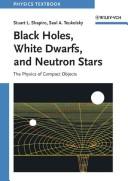
Bridges the gap between pure GR theory and astrophysical compact objects; covers stellar collapse, the Tolman–Oppenheimer–Volkoff equation, and black hole formation with quantitative depth.
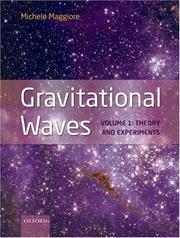
The authoritative two-volume treatment of gravitational wave physics — linearized theory, post-Newtonian approximations, source modeling, and detector physics — essential for anyone engaging with modern GR observations.
Relativistic Cosmology & Advanced Topics
ExpertApply GR to the universe as a whole: derive and solve the Friedmann equations, understand inflation, dark energy, perturbation theory, and connect GR to quantum field theory in curved spacetime.
▸ Study plan for this stage
Pace: 8–10 weeks, ~40–50 pages/day (with problem sets); allow 2–3 days per chapter for deep engagement with derivations
- The Friedmann equations: derivation from Einstein's equations for a homogeneous, isotropic universe; solutions for different matter/radiation/dark energy compositions
- Cosmological models: matter-dominated, radiation-dominated, and dark energy-dominated eras; the role of the scale factor a(t) and Hubble parameter H(t)
- Inflation: slow-roll dynamics, scalar field potentials, primordial perturbations, and how inflation solves the horizon and flatness problems
- Dark energy and the cosmological constant: observational evidence, equation of state, and the coincidence problem
- Perturbation theory in cosmology: scalar, vector, and tensor perturbations; gauge-invariant formalism; growth of density perturbations
- Quantum field theory in curved spacetime: particle creation, Hawking radiation, and the stress-energy tensor in cosmological backgrounds
- Observational cosmology: connecting theory to CMB, large-scale structure, and distance measures (luminosity distance, comoving distance)
- Derive the Friedmann equations from Einstein's field equations for a spatially flat FLRW metric, and explain the physical meaning of each term
- Solve the Friedmann equations for a universe dominated by matter, radiation, and dark energy separately; what is the scale factor a(t) in each case?
- What is slow-roll inflation, and how do the slow-roll parameters ε and η constrain the scalar field potential?
- Explain how inflation resolves the horizon problem and flatness problem; what initial conditions does it require?
- What are gauge-invariant perturbations, and why is gauge freedom important in cosmological perturbation theory?
- How does the growth of density perturbations differ in matter-dominated versus dark energy-dominated eras, and what does this imply for structure formation?
- Describe particle creation in curved spacetime and its connection to Hawking radiation; what is the physical origin of the Bogoliubov coefficients?
- Derive the Friedmann equations step-by-step from the FLRW metric and Einstein's equations; verify dimensional consistency and limits
- Solve the Friedmann equations numerically for a multi-component universe (matter + radiation + dark energy); plot a(t), H(t), and the equation of state parameter w(t)
- Work through Weinberg's derivation of the slow-roll conditions; compute the spectral index n_s and tensor-to-scalar ratio r for a power-law potential V(φ) ∝ φ^n
- Analyze gauge transformations in cosmological perturbations; convert between synchronous and Newtonian gauges for a simple perturbation mode
- Compute the growth function D(a) for density perturbations in a ΛCDM universe; compare growth rates in matter-dominated and dark energy-dominated epochs
- Derive the Bogoliubov coefficients for a scalar field in an expanding universe; compute the particle creation rate for a simple time-dependent background
- Use Weinberg's observational data (CMB, SNe, BAO) to constrain cosmological parameters; perform a χ² fit to determine Ω_m, Ω_Λ, and H_0
Next up: Mastery of relativistic cosmology and quantum field theory in curved spacetime provides the mathematical and conceptual foundation for exploring quantum gravity, the early universe (pre-inflationary physics), and the quantum-to-classical transition in cosmology—topics that naturally extend GR into the quantum regime.
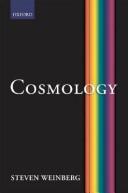
Weinberg's rigorous field-theoretic approach to cosmology — covering the FRW metric, nucleosynthesis, CMB, and structure formation — is the gold standard for physicists who want cosmology treated with the same precision as particle physics.
Discussion
Keep reading
Paths that share books, cover the same subject, or open a related topic.