Conservation biology is a mission-driven science: it applies ecology, genetics, and evolutionary biology to the problem of preserving life's diversity in an age of rapid loss. Because it is both rigorous and urgent, its best reading path alternates between science that explains how nature works and narratives that convey what is at stake, then turns toward what can actually be done.
Starting with the scale of the crisis gives the technical material its purpose. And ending with restoration and rewilding keeps the subject from being only a chronicle of loss.
Grasp the scale of the crisis
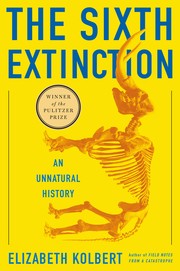
The Sixth Extinction by Elizabeth Kolbert is the essential, Pulitzer-winning account of the current wave of extinctions and their human cause; read it first to set the stakes. The Song of the Dodo by David Quammen deepens this with island biogeography, the science that explains why fragmentation is so deadly. The Diversity of Life by Edward O. Wilson makes the case for biodiversity itself with a master naturalist's authority.
Build the ecological and conservation foundations
The science underneath needs its own footing. Ecology: Concepts and Applications by Manuel Molles and James Cahill is the textbook grounding in how ecosystems function, and Conservation Biology: An Introduction to Nature and Its Conservation by James Gibbs and colleagues is the field-specific text on principles and practice. The Future of Life by Edward O. Wilson connects the science to a hopeful conservation agenda.
Turn toward action and restoration
Conservation is not only protection; it is repair. Rewilding the world by Caroline Fraser surveys efforts to reconnect and restore large landscapes. Saving nature's legacy by Reed Noss and Allen Cooperrider lays out reserve design and regional planning. Feral by George Monbiot argues for rewilding with real passion, and Resurrection science by M. R. O'Connor examines the frontier of trying to bring back what is nearly gone.
Read in this order and the crisis becomes a call with a plan. Follow the full path to keep the argument coherent.
Follow the full reading path →
Ready to learn something deeply?
Build a reading path — free