Learn astrophysics: the best books to read in order
This curriculum takes an intermediate learner — someone comfortable with basic physics and math — on a structured journey through astrophysics, from the life of stars and the structure of galaxies, through the physics of black holes and relativity, to the grand sweep of cosmology and the origin of the universe. Each stage builds the conceptual and quantitative vocabulary needed for the next, moving from accessible but rigorous overviews to graduate-level depth.
Foundations & Orientation
IntermediateBuild a solid, quantitative intuition for how stars, galaxies, and the cosmos work — the essential vocabulary and mental models for everything that follows.
▸ Study plan for this stage
Pace: 4–5 weeks, ~40–50 pages/day. Start with Pasachoff's comprehensive chapters (Weeks 1–3: ~300 pages covering light, stars, and galaxies), then transition to Tyson's concise synthesis (Weeks 4–5: ~200 pages reinforcing core concepts with modern perspective).
- The electromagnetic spectrum and how we observe the universe across wavelengths (radio, infrared, visible, UV, X-ray, gamma-ray)
- Stellar properties: luminosity, temperature, mass, and the Hertzsprung-Russell diagram as a map of stellar evolution
- Hydrostatic equilibrium and nuclear fusion as the engines powering stars throughout their lifetimes
- The life cycle of stars: formation, main sequence, and endpoints (white dwarfs, neutron stars, black holes)
- Galaxies as gravitationally bound systems: morphology, structure, and the role of supermassive black holes
- Cosmological distance scales and methods: parallax, standard candles, redshift, and the cosmic distance ladder
- The Big Bang, cosmic expansion, and evidence from the cosmic microwave background and Hubble's law
- Dark matter and dark energy as dominant components of the universe's mass-energy content
- Explain how the Hertzsprung-Russell diagram relates stellar temperature and luminosity, and what it reveals about stellar evolution
- Describe the process of hydrostatic equilibrium in stars and why it breaks down at the end of a star's life
- What are the three main endpoints of stellar evolution, and what physical conditions define each?
- How do astronomers measure distances to nearby stars, distant galaxies, and the most remote objects in the universe?
- What evidence supports the Big Bang theory, and how does the cosmic microwave background fit into our understanding of cosmic history?
- Explain the difference between dark matter and dark energy, and why both are necessary to explain observations of the universe
- Plot sample stars on an H-R diagram using real data (e.g., Sirius, Betelgeuse, the Sun) and predict their evolutionary stages and lifetimes
- Calculate the luminosity and surface temperature of a star using the Stefan-Boltzmann law and Wien's displacement law with provided spectral data
- Work through a cosmic distance ladder problem: use parallax to find a nearby star's distance, then use that to calibrate a standard candle for galaxies
- Analyze a galaxy image (provided or from public databases like Hubble Legacy Archive) and classify it by morphology; estimate its distance using redshift
- Derive the age of the universe using Hubble's constant and the expansion rate; compare to independent estimates from stellar ages
- Create a timeline of the universe from the Big Bang to present, marking key epochs (recombination, reionization, galaxy formation) and their observational signatures
Next up: This stage equips you with the quantitative language and mental models—distance scales, stellar lifecycles, and cosmic structure—necessary to dive into specialized topics like stellar atmospheres, galactic dynamics, or observational techniques in the next stage.

A comprehensive, well-illustrated survey of modern astronomy and astrophysics that establishes the full landscape — stars, galaxies, and cosmology — at an intermediate level. Reading this first ensures no major topic is unfamiliar when deeper books treat it rigorously.

A concise, concept-dense primer on the biggest ideas in astrophysics — dark matter, dark energy, the Big Bang, and more. Read second to sharpen the key vocabulary and themes that will recur throughout the curriculum.
Stars, Stellar Physics & Compact Objects
IntermediateUnderstand the life cycle of stars in quantitative detail — nuclear burning, stellar structure, supernovae, neutron stars, and black holes — using real physics.
▸ Study plan for this stage
Pace: 8–10 weeks, ~40–50 pages/day (mix of dense physics and worked examples)
- Stellar structure equations (hydrostatic equilibrium, energy transport, mass continuity) and how they constrain stellar models
- Nuclear fusion processes in stars (pp-chain, CNO cycle) and their temperature dependence, determining which burns at which stellar mass
- The Hertzsprung–Russell diagram as a map of stellar evolution and the physical meaning of main-sequence lifetime scaling with mass
- Post-main-sequence evolution: red giants, helium burning, asymptotic giant branch, and the final fates of different mass stars
- Supernovae as endpoints: Type Ia (white dwarf accretion) vs. Type II (core collapse), their physics, and their role as cosmological distance markers
- Compact objects: white dwarfs (electron degeneracy pressure, Chandrasekhar limit), neutron stars (neutron degeneracy, equation of state), and pulsars
- Black holes: event horizons, Schwarzschild geometry, formation channels, and observational signatures in binary systems
- Accretion physics: how matter spirals onto compact objects, radiative efficiency, and the connection to observed X-ray binaries and AGN
- Derive or explain the hydrostatic equilibrium equation and show how it relates pressure gradients to gravity in a stellar interior.
- Compare the pp-chain and CNO cycle: under what temperature conditions does each dominate, and why does this affect the mass-luminosity relation?
- Use the Hertzsprung–Russell diagram to explain why a 1 M☉ star spends ~10 Gyr on the main sequence while a 10 M☉ star spends only ~10 Myr.
- Describe the physical mechanism behind the Chandrasekhar limit for white dwarfs and explain why neutron stars can be more massive.
- What distinguishes Type Ia and Type II supernovae in terms of progenitor systems and explosion mechanisms, and why are Type Ia used as standard candles?
- Explain how a neutron star's equation of state (relating pressure to density) constrains its maximum mass and internal structure.
- Derive the Schwarzschild radius and explain what happens at the event horizon from both an external observer's and infalling observer's perspective.
- Describe how accretion onto a neutron star or black hole in a binary system produces observable X-rays, and what determines the accretion rate.
- Work through Carroll's stellar structure equations (Chapters 10–11): solve the hydrostatic equilibrium and energy transport equations numerically for a simple polytropic model; compare your results to tabulated solar models.
- Calculate the main-sequence lifetime of stars with masses 0.5, 1, 5, and 20 M☉ using the mass-luminosity relation; plot them on an HR diagram and verify they match observed main-sequence ages.
- Derive the Eddington luminosity and explain why it sets an upper limit on stellar luminosity; apply it to a 10 M☉ star and discuss implications for stellar winds.
- Using Shapiro's treatment, calculate the Chandrasekhar mass for a carbon-oxygen white dwarf; then compute the maximum mass of a neutron star using a realistic equation of state (e.g., from Shapiro's tables) and compare.
- Model Type Ia supernova ignition: estimate the central density and temperature needed for thermonuclear runaway in an accreting white dwarf; use this to predict the accretion rate required.
- Solve the Tolman–Oppenheimer–Volkoff (TOV) equation for a neutron star with a given equation of state (Shapiro provides examples); plot mass vs. radius and identify the maximum mass.
- Construct a simple accretion disk model around a black hole or neutron star: calculate the disk temperature profile, radiative efficiency, and expected X-ray luminosity as a function of accretion rate.
- Analyze observational data from an X-ray binary (e.g., Cygnus X-1): use the measured orbital period, radial velocity, and X-ray flux to estimate the compact object's mass and accretion rate; discuss whether it is consistent with a black hole or neutron star.
Next up: This stage equips you with the quantitative physics of individual stars and compact objects, providing the foundation to understand how populations of stars evolve, interact in binary systems, and power galaxies and the universe at large.
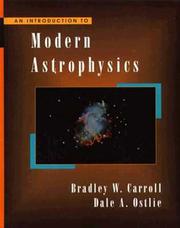
The definitive undergraduate textbook covering stellar structure, stellar evolution, binary systems, and compact objects with full mathematical treatment. This is the backbone of the curriculum — work through the stellar chapters carefully before moving on.

The canonical graduate-level treatment of compact objects and their physics. Reading it after Carroll provides the deeper theoretical machinery — general relativistic stellar structure, accretion, and pulsars — needed for advanced cosmology.
Galaxies & the Large-Scale Universe
IntermediateUnderstand how galaxies form, evolve, and cluster, and how astronomers measure the structure of the universe on the largest scales.
▸ Study plan for this stage
Pace: 8–10 weeks, ~40–50 pages/day. Start with Binney's foundational chapters (1–6) over 4 weeks, then move to Sparke's observational and evolutionary material (chapters 1–8) over 4–6 weeks. Allocate 1–2 weeks for review, problem sets, and synthesis.
- Gravitational dynamics and orbital mechanics in galactic potentials—how stars move within galaxies and how this reveals mass distribution
- Galaxy morphology, classification, and the physical basis for the Hubble sequence—understanding why galaxies have different shapes
- Galaxy formation and evolution—from primordial gas to mature systems, including mergers, star formation history, and feedback mechanisms
- Galactic structure: bulges, disks, halos, and dark matter—how to decompose galaxies into components and measure their properties
- Large-scale structure and galaxy clustering—the cosmic web, voids, filaments, and how galaxies trace the matter distribution
- Observational techniques and distance measurements—redshift, luminosity distance, and methods to map the universe in three dimensions
- Dynamical modeling and N-body simulations—how to test theories of galaxy formation and evolution against observations
- How do astronomers use stellar kinematics and dynamics to infer the mass distribution and dark matter content of galaxies?
- What are the main morphological types of galaxies, and what physical processes determine whether a galaxy becomes elliptical, spiral, or irregular?
- Explain the role of mergers in galaxy evolution and how they can transform galaxy morphology and trigger star formation or quenching.
- How do we measure distances to galaxies and map the large-scale structure of the universe? What are the strengths and limitations of different methods?
- What is the cosmic web, and how does galaxy clustering reveal the underlying distribution of dark matter on cosmological scales?
- How do feedback processes (supernovae, AGN) regulate star formation and shape galaxy evolution over cosmic time?
- Work through Binney's orbital mechanics problems (Chapters 2–3): solve for circular and elliptical orbits in simple potentials, then in realistic galactic potentials; plot phase-space diagrams.
- Analyze rotation curves: use observational data (e.g., from SDSS or local galaxies) to construct rotation curves and decompose them into disk, bulge, and dark matter components following Sparke's methods.
- Perform a morphological classification exercise: obtain images of 20–30 galaxies from online surveys (SDSS, HST) and classify them using the Hubble sequence; compare your classifications with published catalogs.
- Model a simple galaxy merger: use a basic N-body code (e.g., GADGET, GIZMO, or a simplified Python simulation) to simulate the collision of two disk galaxies and observe morphological transformation.
- Extract and interpret galaxy clustering data: download galaxy positions from a redshift survey (e.g., SDSS or 2dFGRS), compute the two-point correlation function, and compare with theoretical predictions.
- Estimate galaxy distances using multiple methods: apply Cepheid variables, Tully–Fisher relation, and redshift-distance relations to a sample of nearby galaxies and assess consistency.
Next up: This stage equips you with the dynamical and observational foundations to understand how galaxies populate the universe and evolve within it, preparing you to explore cosmology, the early universe, and structure formation from first principles in the next stage.
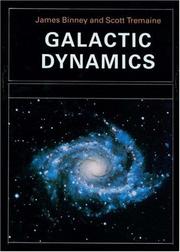
The authoritative text on the physics of galaxies — orbits, dark matter halos, spiral structure, and galaxy interactions. Placed here because it requires the stellar physics foundation built in Stage 2 and sets up the cosmological structure formation in Stage 4.

A more accessible but still rigorous companion to Binney, covering galaxy types, active galactic nuclei, and large-scale structure. Reading it alongside or just after Galactic Dynamics consolidates intuition before tackling full cosmology.
Cosmology & the Physics of the Universe
ExpertMaster the theoretical framework of modern cosmology — general relativity, the expanding universe, the CMB, inflation, dark matter, and dark energy — at a graduate level.
▸ Study plan for this stage
Pace: 12–14 weeks, ~40–50 pages/day (mix of main text and problem sets). Ryden: 4 weeks; Weinberg: 6 weeks; Kolb: 2–3 weeks for selected reprints.
- The Friedmann equations and their solutions for different matter/energy compositions (matter-dominated, radiation-dominated, dark-energy-dominated universes)
- General relativity fundamentals: the metric, curvature, and Einstein field equations as they apply to cosmology
- The expanding universe: Hubble's law, redshift, scale factor evolution, and observational evidence from supernovae and galaxy surveys
- The cosmic microwave background (CMB): its origin, power spectrum, temperature anisotropies, and what it reveals about early universe conditions and geometry
- Cosmic inflation: the inflationary paradigm, slow-roll dynamics, primordial perturbations, and how inflation solves the horizon and flatness problems
- Dark matter: observational evidence (rotation curves, gravitational lensing, structure formation), candidates (WIMPs, axions), and role in structure growth
- Dark energy: observational evidence from Type Ia supernovae, the cosmological constant, equation of state, and implications for the universe's fate
- Structure formation and perturbation theory: linear growth of density perturbations, transfer functions, and the connection between inflation and large-scale structure
- Derive the Friedmann equations from the Einstein field equations for a homogeneous, isotropic universe, and explain what each term represents physically.
- How does the cosmic microwave background constrain cosmological parameters (Ω_m, Ω_Λ, H_0, spectral index n_s)? What does the power spectrum tell us about inflation?
- Explain the horizon and flatness problems of the big bang and how inflation resolves them. What are the predictions of slow-roll inflation for primordial perturbations?
- What observational evidence supports the existence of dark matter and dark energy? How do Type Ia supernovae measurements constrain the dark energy equation of state?
- Describe the growth of linear density perturbations in an expanding universe. How do dark matter and dark energy affect structure formation on different scales?
- What is the connection between primordial perturbations generated during inflation and the large-scale structure we observe today?
- Work through Ryden's end-of-chapter problems on the Friedmann equations (Chapters 2–3): solve for scale factor evolution in pure matter, radiation, and Λ-dominated universes; calculate age and size of the universe for different compositions.
- Reproduce key CMB results: use Weinberg's treatment to understand how temperature anisotropies arise from density perturbations, and interpret a mock power spectrum (e.g., identify acoustic peaks and what they constrain).
- Derive the slow-roll parameters (ε, η) for a given inflationary potential (e.g., φ^n, exponential) and calculate predictions for n_s and r; compare to observational constraints from Planck.
- Solve perturbation equations for density contrast growth in matter and dark-energy-dominated eras; plot growth factor D(a) and explain the suppression of growth at late times.
- Analyze observational data: use Hubble diagram data (distance modulus vs. redshift) from Type Ia supernovae to constrain Ω_m and Ω_Λ; reproduce the 1998 discovery plot.
- Work through Kolb's reprints on early universe physics: focus on one key paper (e.g., on inflation or nucleosynthesis) and write a 2–3 page summary explaining its significance and how it fits into modern cosmology.
Next up: Mastery of modern cosmology's theoretical framework and observational foundations prepares you to specialize in advanced topics—whether observational cosmology (large-scale structure surveys, weak lensing), inflation model-building, dark matter detection, or early universe physics—by providing the unified language and constraints that guide all contemporary research.

The ideal bridge into cosmology: mathematically honest but pedagogically clear, covering the Friedmann equations, thermal history, nucleosynthesis, and the CMB. Read this first in the stage to build the framework before the heavier texts.

A rigorous, graduate-level treatment by a Nobel laureate, covering perturbation theory, structure formation, inflation, and observational cosmology in full depth. The capstone quantitative text of the curriculum.

The classic reference on the physics of the very early universe — baryogenesis, phase transitions, inflation, and relic abundances. Placed last because it demands everything built in prior stages and takes the reader to the frontier of the field.
Discussion
Keep reading
Paths that share books, cover the same subject, or open a related topic.