Funeral directing is an unusual profession — equal parts technical science, small business, and profound human care. Preparing for it means confronting mortality honestly, mastering demanding clinical skills, and learning to support people at their most vulnerable. A good reading order eases that arc: understand the field and your own relationship to death first, then the science, then the grief work, then the business.
This path is built to do that. It begins with candid, humane accounts of the profession, moves into the technical texts of mortuary science, turns to the emotional work of serving the bereaved, and ends with the practicalities of running a funeral home. These books complement accredited mortuary-science education, apprenticeship, and licensure — they are not a substitute for them.
Face the profession honestly
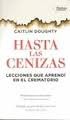
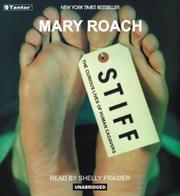
Start with Smoke gets in your eyes by Caitlin Doughty, a mortician's candid, funny, and moving memoir that demystifies the work and death itself. Then The American way of death revisited by Jessica Mitford is the classic, unsparing critique of the funeral industry — essential for understanding the ethics you'll navigate. And Stiff by Mary Roach brings curious, respectful science to what happens to the body, an ideal bridge into the technical material.
Learn the science
Now the clinical core. The principles and practice of embalming by Clarence Strub and Embalming by Robert Mayer are the foundational and standard textbooks of the craft. Color atlas of anatomy by Johannes Rohen gives you the anatomical grounding the work requires, and Restorative Art by Andrew Nunnamaker covers the delicate skill of restoring appearance after trauma or illness.
Serve the grieving
The heart of the job is people. Funeral Home Customer Service A-Z by Alan Wolfelt addresses the service dimension directly, and The Understanding Your Grief Journal, also by Wolfelt, deepens your grasp of mourning. On death and dying by Elisabeth Kübler-Ross is the landmark work on how people process dying, and The Grief Recovery Handbook by John James offers a practical framework for supporting the bereaved.
Run the business
Close with the practical trade. De Speak: The Language of the Funeral Service Profession by Gail Rubin orients you to the field's vocabulary and culture, and The E-myth revisited by Michael Gerber is the classic on building a small business that runs well — because most funeral homes are exactly that.
Read in order, you build honesty, skill, compassion, and business sense in turn. Follow the full path to keep the arc, alongside accredited training and licensure.
Follow the full reading path →
Ready to learn something deeply?
Build a reading path — free