The Best Books on a Foreign Service and Diplomacy Career
This curriculum takes a beginner from zero knowledge of diplomacy all the way to mastering the Foreign Service Officer Test (FSOT), understanding embassy operations, and thinking like a seasoned diplomat. Each stage builds on the last: you first absorb the history and culture of diplomacy, then study statecraft and policy, and finally drill the exam and career mechanics—so no concept arrives before you have the vocabulary to understand it.
Foundations: What Diplomacy Is and Why It Matters
BeginnerUnderstand the history, purpose, and culture of diplomacy and the U.S. Foreign Service before committing to the career path.
▸ Study plan for this stage
Pace: 4–5 weeks, ~25–30 pages/day. Start with "The Ambassadors" (1 week), move to "Inside a U.S. Embassy" (1.5 weeks), then "The Naked Diplomat" (1.5 weeks), with 3–4 days for review and synthesis.
- The historical evolution of diplomacy and its role in statecraft from Lerner's account
- The structure, hierarchy, and daily operations of a U.S. Embassy as detailed by Dorman
- The formal vs. informal dimensions of diplomatic work and relationship-building
- The personal qualities and soft skills required for diplomatic success
- How technology and modern communication are reshaping diplomatic practice (Fletcher's perspective)
- The intersection of policy, culture, and individual agency in diplomatic decision-making
- The ethical dimensions and constraints diplomats face in representing national interests
- What are the key historical turning points in diplomacy that Lerner identifies, and how do they shape modern Foreign Service practice?
- How is a U.S. Embassy organized, and what are the primary functions of different departments within it?
- What does Dorman reveal about the gap between the public perception of embassy work and the reality of daily operations?
- According to Fletcher, how are digital communication and social media changing the nature of diplomatic engagement?
- What personal and interpersonal skills does Fletcher emphasize as essential for modern diplomats, and why?
- How do the three authors collectively illustrate the tension between formal diplomatic protocol and authentic human connection?
- Create a timeline of major diplomatic shifts discussed in Lerner, annotating how each changed the role of ambassadors and Foreign Service officers
- Draw an organizational chart of a U.S. Embassy based on Dorman's descriptions, then research a real embassy's structure to compare
- Write a 500-word reflection on one embassy function Dorman describes (e.g., consular services, political reporting) and its real-world impact
- Conduct a 'digital diplomacy audit': identify 3–5 ways Fletcher's examples of social media and online engagement differ from traditional diplomatic methods, then find a current example of each
- Interview a Foreign Service officer or diplomat (in person, by phone, or email) about one concept from the three books; synthesize their answer with the authors' perspectives
- Develop a personal diplomatic scenario: choose a hypothetical conflict or negotiation, then write how you would approach it using principles from all three authors
Next up: This stage establishes the foundational knowledge, culture, and mindset of diplomacy, preparing you to dive into the specific skills, regional expertise, and strategic frameworks needed to actually practice diplomacy in the next stage.

A readable, narrative-driven introduction to what American ambassadors actually do day-to-day, giving beginners an honest picture of embassy life before diving into theory.

Published by the American Foreign Service Association, this is the single best primer on every role inside an embassy—from political officers to consular staff—and is essential reading before the FSOT.

A former British ambassador explains diplomacy in the modern, digital age in plain language, building intuition for why the profession still matters and how it is changing.
Statecraft and the Art of Negotiation
BeginnerGrasp the principles of statecraft, negotiation, and foreign policy strategy that underpin every diplomatic action and that the FSOT's job knowledge section tests.
▸ Study plan for this stage
Pace: 4–5 weeks, ~40–50 pages/day. Week 1–3: "Diplomacy" by Kissinger (approximately 600 pages); Week 4–5: "Getting to Yes" by Fisher (approximately 200 pages). Allocate 2–3 days for review and synthesis at the end.
- Balance of power as the foundational principle of international relations and statecraft
- The role of national interest and strategic objectives in shaping diplomatic decisions
- Historical case studies demonstrating how great powers navigate conflicts and alliances (Kissinger's examples from European history)
- Principled negotiation: separating people from the problem, focusing on interests rather than positions
- BATNA (Best Alternative to Negotiated Agreement) and how to evaluate negotiating leverage
- Creating value in negotiations through integrative bargaining rather than zero-sum thinking
- The importance of clear communication, active listening, and building rapport in diplomatic contexts
- How does Kissinger define the balance of power, and why is it central to understanding statecraft?
- What historical examples does Kissinger use to illustrate successful and failed diplomatic strategies, and what lessons do they offer?
- How do the negotiation principles in 'Getting to Yes' differ from traditional positional bargaining, and why does this matter for diplomacy?
- What is a BATNA, and how would you apply it to a hypothetical foreign policy negotiation?
- How would you distinguish between a negotiator's stated position and their underlying interests, and why is this distinction crucial in diplomatic contexts?
- How can a diplomat use the principles from both books to navigate a conflict between national interests while maintaining relationships?
- Close-read 3–4 key historical case studies from Kissinger (e.g., Congress of Vienna, Bismarck's diplomacy, Cold War détente) and write a 2-page analysis of the balance-of-power dynamics at play
- Create a negotiation matrix for a real or hypothetical diplomatic scenario: identify each party's stated position, underlying interests, and BATNA
- Role-play a bilateral negotiation using 'Getting to Yes' principles: practice separating people from the problem and identifying integrative solutions with a study partner
- Write a comparative analysis (3–4 pages) of how Kissinger's historical examples illustrate or contradict the negotiation principles Fisher advocates
- Develop a personal negotiation strategy guide for FSOT scenarios: outline how you would apply balance-of-power thinking and principled negotiation to a trade dispute, territorial claim, or alliance negotiation
- Annotate 2–3 passages from each book that you find most relevant to foreign service work, and explain in 1–2 paragraphs why each passage matters for diplomatic practice
Next up: This stage equips you with the strategic and interpersonal foundations of diplomacy, preparing you to move into the next stage where you'll study specific regional conflicts, international institutions, and contemporary foreign policy challenges that require applying these principles in real-world contexts.
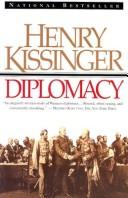
The canonical text on how great powers have conducted foreign policy from Richelieu to the Cold War; it builds the historical and conceptual vocabulary every aspiring diplomat needs.
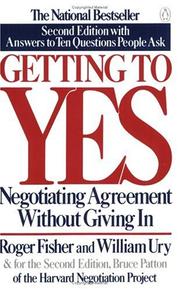
The foundational text on principled negotiation, directly applicable to consular interviews, treaty talks, and every interaction a Foreign Service Officer has with foreign counterparts.
U.S. Foreign Policy in Practice
IntermediateUnderstand how American foreign policy is actually made and executed, and develop the analytical thinking required for the FSOT essay and structured interview.
▸ Study plan for this stage
Pace: 4–5 weeks, approximately 40–50 pages per day. Week 1–2: "The Limits of Power" (approximately 400 pages); Week 3–4: "The Spy Who Couldn't Spell" (approximately 300 pages); Week 5: Review, synthesis, and practice essays.
- The structural constraints on U.S. foreign policy: military overstretch, fiscal limitations, and the gap between commitments and resources (Bacevich's core argument)
- How American military interventionism shapes and limits diplomatic options and long-term strategic interests
- The role of intelligence agencies and individual actors in executing foreign policy, and how bureaucratic failures cascade into operational consequences (Bacevich + Bhattacharjee)
- The tension between ideological justifications for foreign policy and the material realities that constrain implementation
- How organizational culture, institutional incentives, and individual competence (or incompetence) affect foreign policy outcomes in practice
- The importance of accountability, oversight, and institutional checks in preventing foreign policy disasters
- Strategic thinking vs. tactical execution: understanding how policy intentions diverge from on-the-ground results
- According to Bacevich, what are the three primary constraints limiting U.S. foreign policy, and how do they interact with one another?
- How does Bacevich argue that American military power has become both an asset and a liability in achieving long-term foreign policy objectives?
- What does 'The Spy Who Couldn't Spell' reveal about how intelligence failures occur within institutional systems, and what does this suggest about foreign policy execution?
- How would you explain the gap between stated U.S. foreign policy goals and the actual resources and capabilities available to achieve them?
- What role do individual actors and organizational culture play in determining whether foreign policy is executed effectively or fails?
- How do the two books together illustrate the difference between making foreign policy and implementing it successfully?
- Write a 500-word analytical essay: 'How does Bacevich's concept of imperial overstretch apply to a specific U.S. military intervention discussed in 'The Limits of Power'?' (Practice for FSOT essay format)
- Create a policy constraint matrix: List three major U.S. foreign policy objectives from Bacevich's analysis, then map the military, fiscal, and political constraints limiting each one. Use specific examples from the text.
- Case study analysis: Using the Nada Prouty case from 'The Spy Who Couldn't Spell,' identify the institutional failures, incentive misalignments, and individual errors that led to the security breach. How could better oversight have prevented this?
- Debate preparation: Argue both sides—'Does U.S. military strength enhance or constrain American diplomatic influence?' Use evidence from both books.
- Structured interview practice: Record yourself answering this prompt: 'Describe a foreign policy challenge where the stated goals and available resources were misaligned. What would you do differently?' (Use examples from the books)
- Comparative timeline: Create a side-by-side timeline showing major U.S. military commitments (Bacevich) and corresponding intelligence/bureaucratic challenges (Bhattacharjee) to identify patterns of institutional strain.
Next up: This stage equips you with concrete understanding of how foreign policy actually fails in practice—the constraints, the institutional dynamics, and the human factors—preparing you to analyze more sophisticated policy frameworks and develop your own strategic recommendations in the next stage.
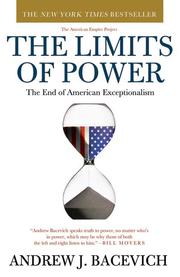
A critical, evidence-based look at American foreign policy overreach that sharpens analytical thinking and prepares you to write nuanced FSOT essays on U.S. global strategy.

Illustrates the intersection of intelligence, security clearances, and diplomacy—topics directly relevant to understanding the national security context Foreign Service Officers work within.
Mastering the Foreign Service Exam
IntermediatePass the FSOT (written exam, essay, and Qualifications Evaluation Panel) and succeed in the oral assessment by knowing exactly what is tested and how to prepare.
▸ Study plan for this stage
Pace: 4–5 weeks, ~25–30 pages/day, with dedicated review sessions for exam-specific content
- The Foreign Service as an institution: its history, structure, and role in U.S. foreign policy execution
- Career progression and specialization tracks within the Foreign Service (generalist, specialist roles)
- The diplomatic skill set: negotiation, cultural awareness, political analysis, and crisis management
- How Foreign Service officers operate in real-world contexts: embassy dynamics, interagency coordination, and decision-making under pressure
- The relationship between policy formulation and diplomatic implementation on the ground
- Personal qualities and professional competencies valued by the State Department and tested in FSOT/QEP
- Practical examples of diplomatic challenges and how experienced officers navigate them
- What are the core functions of the Foreign Service, and how does it differ from other U.S. government agencies?
- What career tracks exist within the Foreign Service, and what specialized skills does each require?
- What are the key diplomatic competencies and personal qualities that Kralev identifies as essential for Foreign Service success?
- How do Foreign Service officers balance policy guidance from Washington with on-the-ground realities and local relationships?
- What real-world scenarios and case studies does Kralev present, and what diplomatic lessons do they illustrate?
- How can you articulate your own fit for the Foreign Service based on the professional standards and challenges described in the book?
- Create a detailed profile of 3–4 Foreign Service career tracks mentioned in the book, listing required skills, typical assignments, and advancement paths; use this to identify which aligns with your strengths
- Analyze 2–3 diplomatic scenarios or case studies from the book; for each, identify the core challenge, the officer's approach, and what competencies were demonstrated
- Write 3–4 short essays (250–300 words each) addressing FSOT-style prompts (e.g., 'Describe a time you navigated cultural differences' or 'How would you handle conflicting guidance from headquarters?'), grounding examples in real situations from the book
- Conduct a self-assessment against the competencies Kralev highlights; for each competency, document specific examples from your own experience that demonstrate it
- Create a one-page 'diplomatic toolkit' summarizing the key skills, mindsets, and strategies Kralev emphasizes; use this as a reference for QEP preparation
- Role-play or simulate a diplomatic negotiation or crisis scenario inspired by examples in the book; record your approach and reflect on how it aligns with Foreign Service values
Next up: This stage grounds you in the authentic culture, challenges, and competencies of the Foreign Service, providing concrete examples and language to articulate your fit—essential preparation for the next stage, which will focus on targeted FSOT test-taking strategies, QEP panel dynamics, and oral assessment techniques.

Written by a veteran diplomatic correspondent, this book demystifies the Foreign Service career track, the oral assessment, and what selection panels look for—read it alongside your exam prep.
Advanced Statecraft: Thinking Like a Senior Diplomat
ExpertDevelop the strategic depth, ethical reasoning, and long-view perspective expected of mid- and senior-level Foreign Service Officers and required for the hardest oral assessment scenarios.
▸ Study plan for this stage
Pace: 4–5 weeks, ~40–50 pages/day (approximately 200 pages total, allowing time for reflection and note-taking on complex diplomatic scenarios)
- The role of back-channel diplomacy in resolving intractable conflicts and bypassing public posturing
- How personal relationships and trust-building underpin successful high-stakes negotiations
- Strategic patience and the long-view perspective: knowing when to push, when to wait, and when to pivot
- Ethical decision-making under pressure: balancing national interests, humanitarian concerns, and diplomatic integrity
- Reading the room and understanding unstated interests: the intelligence work behind diplomacy
- Crisis management and improvisation within a framework of clear strategic objectives
- The intersection of personal credibility and institutional authority in advancing national interests
- What are the key advantages and risks of back-channel diplomacy compared to official negotiations, and when should a senior diplomat choose one over the other?
- How does Burns illustrate the role of personal relationships in breaking diplomatic deadlocks? Provide specific examples from his career.
- What ethical dilemmas does Burns face in his case studies, and how does he navigate competing loyalties between national interest, humanitarian concerns, and diplomatic principle?
- How does Burns demonstrate strategic patience in his negotiations? What does he do differently in situations where patience pays off versus where it fails?
- What does Burns mean by 'reading the room' and how does this skill inform his approach to understanding the true interests of other parties?
- How does Burns balance personal credibility with institutional authority, and why does this distinction matter in senior-level diplomacy?
- Case study analysis: Select three major diplomatic scenarios from *The Back Channel* (e.g., Iran nuclear negotiations, Russia relations, Middle East conflicts). For each, map out the stated positions, unstated interests, key relationships, and turning points. Write a 2–3 page memo analyzing what Burns did differently in each case and why.
- Negotiation simulation: Role-play a back-channel negotiation with a peer, using a real-world diplomatic scenario (e.g., trade dispute, territorial claim, sanctions regime). Debrief on how you built trust, signaled flexibility without appearing weak, and managed the gap between public and private positions.
- Ethical decision tree: For three difficult moments in *The Back Channel*, construct a decision tree showing the competing interests, stakeholders, and values at stake. Write a brief reflection on how you would have decided differently, and why Burns's choice was or wasn't justified.
- Strategic memo: Write a 4–5 page strategic assessment of a current or historical diplomatic crisis (not covered in the book). Apply Burns's framework: identify the back-channel opportunities, key relationships to cultivate, ethical constraints, and long-term objectives. Include a 90-day action plan.
- Credibility audit: Identify a moment in *The Back Channel* where Burns's personal credibility was crucial to an outcome. Write a reflection on how he built that credibility, what could have damaged it, and how a Foreign Service Officer can protect and deploy credibility strategically.
- Oral preparation: Prepare a 10-minute extemporaneous response to a senior-level oral assessment scenario (e.g., 'You are deputy chief of mission in a country experiencing political instability. How do you advise the ambassador on whether to use back channels with opposition figures?'). Record yourself and review for strategic clarity, ethical reasoning, and long-view perspective.
Next up: This stage equips you with the strategic depth, ethical reasoning, and real-world judgment needed to navigate the most complex diplomatic scenarios; the next stage will likely focus on either specialized regional expertise, crisis leadership under extreme constraints, or the institutional and political dimensions of Foreign Service leadership at the highest levels.

Written by a career Foreign Service Officer who rose to CIA Director, this memoir is the gold-standard insider account of modern American diplomacy and the definitive capstone for this curriculum.
Discussion
Keep reading
Paths that share books, cover the same subject, or open a related topic.