Buying a business: an ordered reading path for first-time buyers
This curriculum takes a complete beginner from "what is buying a business?" all the way to confidently executing a search, valuing a target, conducting due diligence, structuring financing, and managing the company post-close. Each stage builds the mental models and vocabulary needed for the next, moving from big-picture mindset through analytical rigor and finally into operational mastery.
Foundations: The Mindset & the Map
BeginnerUnderstand why buying an existing business beats starting from scratch, how the acquisition process works end-to-end, and whether entrepreneurship through acquisition is the right path for you.
▸ Study plan for this stage
Pace: 4–5 weeks, ~40–50 pages/day. "Buy Then Build" (~320 pages) takes 2 weeks; "The E-Myth Revisited" (~300 pages) takes 2–3 weeks, with 3–4 days for reflection and exercises between books.
- Acquisition as a viable path to entrepreneurship: Why buying an existing business with revenue and systems is often faster and lower-risk than starting from zero
- The 7-step acquisition framework: How to identify, evaluate, negotiate, and integrate a business acquisition from initial search through post-acquisition optimization
- The E-Myth principle: Understanding that most small businesses fail because founders focus on doing the work rather than building systems and processes that scale without them
- Business systems and documentation: The critical importance of standardized operating procedures, delegation, and creating a business that runs independently of the owner
- Buyer psychology and due diligence: What to look for in an acquisition target—profitability, customer concentration, recurring revenue, and operational health
- The difference between a job and a business: Recognizing when you're self-employed versus owning a scalable enterprise, and how acquisition helps bridge that gap
- Post-acquisition integration: How to preserve what works in an acquired business while implementing systems and processes to improve profitability and reduce owner dependency
- What are the main advantages of buying an existing business compared to starting from scratch, according to 'Buy Then Build'?
- Walk through the 7-step acquisition process outlined in 'Buy Then Build.' What happens at each stage, and why is due diligence critical?
- What is the E-Myth, and how does it explain why most small businesses plateau or fail?
- How would you distinguish between a 'job' and a 'business' as Gerber defines them? Why does this distinction matter for someone considering acquisition?
- What are the key systems and processes that Gerber argues must be documented and delegated in a scalable business?
- If you were evaluating a business for acquisition, what red flags would you look for based on the principles in both books?
- Read 'Buy Then Build' Part 1 (The Case for Acquisition) and write a 1-page personal reflection: Why are you considering buying a business? What are your top 3 fears or hesitations?
- Create a 'Business Scorecard' template based on Deibel's evaluation criteria (revenue, profitability, customer concentration, growth trajectory, owner dependency). Use it to analyze a real business listing or case study.
- After finishing 'Buy Then Build,' map out the 7-step framework on a single page. For each step, write 2–3 specific questions you'd ask a business broker or seller.
- Read 'The E-Myth Revisited' and identify one business you know personally (or research online). Write a 2-page analysis of how well it follows Gerber's systems principles. Where are the gaps?
- Document a process you do regularly (e.g., how you manage email, plan your week, or make a decision). Then rewrite it as a standard operating procedure (SOP) that someone else could follow. Reflect on how this exercise reveals the gap between doing work and building systems.
- Interview a small business owner (15–20 minutes) about their biggest operational challenges. Map their answers to the E-Myth framework. Are they stuck in the 'technician' role? Do they lack documented systems?
Next up: This stage equips you with the strategic rationale for acquisition and the foundational systems mindset; the next stage will dive into financial analysis, valuation, and deal mechanics—teaching you how to actually evaluate and price a business opportunity.

The single best starting point for acquisition entrepreneurship — it reframes the buy-vs-build decision and gives a clear, jargon-free overview of the entire process from search to ownership.
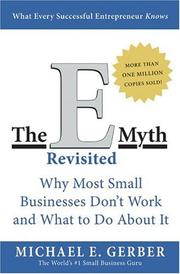
Before buying any business, you must understand how businesses actually function as systems; this book builds the operational intuition that every later stage of due diligence and management depends on.
The Search: Finding & Evaluating Targets
BeginnerKnow how to source deal flow, screen opportunities, approach sellers, and perform initial qualitative evaluation before spending money on advisors or due diligence.
▸ Study plan for this stage
Pace: 4–5 weeks, ~25–30 pages/day. Read HBR Guide first (2–3 weeks), then Buying a Business That Makes You Rich (2 weeks). Allocate 2–3 days per week for exercises and deal sourcing practice.
- Deal sourcing channels: brokers, direct outreach, online marketplaces, industry networks, and off-market deals
- Screening criteria: revenue, profitability, growth trajectory, customer concentration, and owner dependency
- Initial qualitative evaluation: assessing business model, competitive position, management quality, and growth potential without deep financial analysis
- Seller motivation and psychology: understanding why owners sell and how to position yourself as a credible buyer
- Valuation frameworks for small businesses: EBITDA multiples, SDE (Seller's Discretionary Earnings), and comparable transactions
- Red flags and deal-breakers: identifying warning signs early to avoid wasting time and money
- Building a target list: creating a systematic approach to prioritize and track potential acquisitions
- Approach strategy: crafting effective initial contact and building trust with sellers before formal negotiations
- What are the primary sources of deal flow for small business acquisitions, and which channels are most effective for different business types?
- How do you screen opportunities quickly using qualitative criteria before engaging advisors or conducting formal due diligence?
- What are the key differences between SDE and EBITDA multiples, and when should each be used to evaluate a small business?
- What are the most common red flags that indicate a business is not worth pursuing further?
- How should you approach a seller to maximize the likelihood of getting access to detailed information and eventually making a deal?
- What role does owner dependency play in valuation, and how do you assess it during initial evaluation?
- Build a target list of 20–30 potential acquisition targets in an industry or geography of interest using broker listings, BizBuySell, or direct research; document basic info (revenue, asking price, owner contact if available)
- Practice screening 10 deals using a simple scorecard based on revenue, profitability, growth, and owner dependency; rank them and document your reasoning for passing on 5 of them
- Draft 3 different cold outreach emails to business owners or brokers; get feedback on tone, credibility, and likelihood of response
- Analyze 5 real business listings (from brokers or online) and calculate rough valuation ranges using both SDE and EBITDA multiples; compare results and identify which metric feels more appropriate for each
- Conduct a mock seller conversation (with a friend or mentor playing the seller) focused on understanding motivation, business model, and key metrics without asking for financials
- Create a one-page 'deal scorecard' template that you will use to evaluate opportunities; include sections for sourcing channel, basic metrics, red flags, and next steps
Next up: This stage equips you to identify and qualify promising acquisition targets; the next stage will deepen your financial analysis and due diligence skills, teaching you how to validate your initial impressions with detailed accounting review, legal assessment, and advisor-led investigation.

Written by Harvard Business School professors who created the 'search fund' model, this is the most rigorous yet accessible guide to the search process, deal criteria, and initial screening.

A practitioner's guide focused on finding the right fit and avoiding common traps during the search phase — reads naturally after the HBR Guide's framework is in place.
Valuation & Deal Structuring
IntermediateBuild the financial literacy to value a small or mid-size business, understand seller financing, earnouts, and equity structures, and negotiate a deal that protects your downside.
▸ Study plan for this stage
Pace: 8–10 weeks, ~40–50 pages/day (DePamphilis is dense; allow 2–3 days per chapter for absorption and note-taking)
- Discounted Cash Flow (DCF) valuation: projecting future cash flows and applying appropriate discount rates to determine enterprise value
- Comparable company analysis and precedent transactions: using market multiples (EV/EBITDA, P/E, etc.) to benchmark valuations
- Asset-based and income-based valuation methods: understanding when to apply each approach depending on business type and circumstances
- Seller financing mechanics: how seller notes, earnouts, and contingent payments reduce buyer risk and bridge valuation gaps
- Deal structure optimization: tax implications, equity vs. debt allocation, and how structure affects both buyer and seller economics
- Due diligence financial review: identifying hidden liabilities, working capital adjustments, and normalized earnings
- Negotiation leverage points: using valuation analysis and deal structure as tools to protect downside and align incentives
- How would you value a small manufacturing business using DCF, and what discount rate would you apply—and why?
- A seller wants $2M for their business; comparable sales suggest $1.6M. How could seller financing or an earnout structure bridge this gap while protecting your downside?
- What is the difference between enterprise value and equity value, and why does it matter when structuring a deal?
- Walk through a working capital adjustment: why might a buyer require a post-closing true-up, and how do you calculate it?
- You're negotiating with a seller who insists on an all-cash deal. What financial arguments would you make for seller financing, and what terms would you propose?
- How do earnout provisions protect a buyer, and what metrics would you tie an earnout to for a service-based business?
- Build a three-statement financial model (P&L, balance sheet, cash flow) for a hypothetical small business, then calculate DCF valuation using 3–5 year projections and a 12–15% discount rate
- Find 3–5 publicly traded comparables for a business you're interested in; pull their EV/EBITDA, P/E, and revenue multiples; then apply those multiples to a target business to estimate valuation range
- Model a seller financing scenario: assume a $1.5M purchase price with 30% down and a 5-year seller note at 6%; calculate the seller's effective return and the buyer's debt service coverage ratio
- Draft an earnout provision for a service business: specify the metric (e.g., revenue retention, EBITDA growth), the earn-out period (e.g., 2 years), the payout formula, and the cap/floor
- Perform a working capital analysis on a real or hypothetical business: identify current assets and liabilities, calculate normalized working capital, and model a post-closing adjustment scenario
- Create a deal structure comparison: model the same acquisition three ways (all cash, 60% cash + seller note, 50% cash + earnout) and compare tax impact, buyer IRR, and seller proceeds
Next up: This stage equips you with the financial tools and frameworks to value a business and structure a deal defensively; the next stage will likely focus on operational integration, post-acquisition value creation, and managing the human and cultural dimensions of the acquisition to realize the returns you've negotiated.
The canonical text on business valuation — introduces DCF, multiples, and value drivers in depth; reading it here gives the analytical backbone needed before tackling deal structuring.
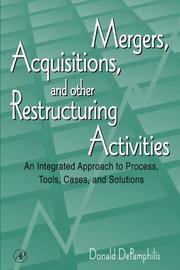
Covers deal structuring, financing options (SBA loans, seller notes, PE roll-ups), and legal frameworks in a practical, step-by-step way that builds directly on valuation fundamentals.
Due Diligence: Verifying What You're Buying
IntermediateConduct thorough financial, legal, operational, and commercial due diligence so you can confirm the business is what the seller claims — and walk away or renegotiate if it isn't.
▸ Study plan for this stage
Pace: 4–5 weeks, ~25–30 pages/day (approximately 150–180 pages total for the due diligence sections)
- The four pillars of due diligence: financial, legal, operational, and commercial verification
- How to read and interpret financial statements (P&L, balance sheet, cash flow) to spot red flags and validate seller claims
- Legal due diligence essentials: contracts, liabilities, litigation history, regulatory compliance, and intellectual property
- Operational due diligence: assessing management quality, systems, customer concentration, supplier relationships, and scalability
- Commercial due diligence: validating market position, competitive advantage, customer satisfaction, and revenue sustainability
- The role of professional advisors (accountants, lawyers, consultants) and how to leverage their expertise
- Identifying deal-breakers vs. negotiable issues and when to walk away
- Creating a due diligence checklist and timeline to stay organized and thorough
- What are the four main areas of due diligence, and why is each one critical to confirming the business is what the seller claims?
- How would you identify financial red flags in a business's P&L, balance sheet, or cash flow statements, and what questions would you ask the seller?
- What legal risks should you investigate during due diligence, and how do you verify that the business has no hidden liabilities or compliance issues?
- How do you assess whether the business's operations are sustainable and scalable, and what role do key employees and systems play?
- What commercial factors validate that the business has a genuine competitive advantage and sustainable revenue streams?
- When should you hire professional advisors during due diligence, and what specific expertise should you seek?
- Create a comprehensive due diligence checklist for a hypothetical business acquisition, organized by financial, legal, operational, and commercial categories
- Obtain sample financial statements (P&L, balance sheet, cash flow) and practice identifying red flags, unusual trends, and questions to ask
- Draft a list of 20–30 critical questions to ask a seller about their business across all four due diligence pillars
- Role-play a due diligence conversation with a peer: one plays the seller, the other the buyer, using your checklist and question list
- Research and document the professional advisors (accountant, lawyer, business consultant) you would hire for a specific business type, and outline what you'd ask each
- Analyze a real or fictional business scenario and write a due diligence report identifying deal-breakers, negotiable issues, and your recommendation to proceed or walk away
Next up: Mastering due diligence equips you to confidently validate (or reject) a business opportunity; the next stage will focus on negotiating the deal structure and terms based on what you've learned during this verification process.

Covers the legal and contractual side of due diligence and closing — letters of intent, purchase agreements, representations and warranties — completing the picture before you sign anything.
Financing, Closing & Running the Business
ExpertSecure the right financing stack, close the deal cleanly, and transition into an owner-operator who can stabilize, grow, and eventually exit the acquired company.
▸ Study plan for this stage
Pace: 8–10 weeks, ~40–50 pages/day (accounting for dense financial content and case study analysis)
- Debt vs. equity financing structures and how to optimize your capital stack for acquisition deals
- Working capital management and cash flow forecasting post-acquisition to ensure operational stability
- Seller financing, earnouts, and creative deal structures that align incentives and reduce buyer risk
- Owner-operator mindset: balancing financial discipline with operational execution and team management
- Capital allocation discipline: how exceptional acquirers (like the Outsiders) prioritize reinvestment, debt paydown, and shareholder returns
- Due diligence on financial health and integration planning to avoid post-acquisition value destruction
- Building sustainable competitive advantages and operational improvements that drive long-term value creation
- What are the pros and cons of debt vs. equity financing for a business acquisition, and how do you determine the right mix for your specific deal?
- How do you forecast and manage working capital in the first 12–24 months after acquiring a business to ensure cash flow stability?
- What is seller financing and earnouts, and how can these structures reduce your risk while aligning the seller's interests with your success?
- What does it mean to be an owner-operator, and how does financial discipline differ from operational execution in that role?
- How did the Outsiders approach capital allocation differently from typical corporate acquirers, and what can you learn from their playbook?
- What are the key financial metrics and red flags you should monitor in the first 90 days post-acquisition to catch problems early?
- Build a three-scenario financial model (conservative, base, optimistic) for a hypothetical acquisition, including debt service, working capital needs, and 3-year cash flow projections
- Analyze a real acquisition deal (from news, case studies, or your network) and reverse-engineer the likely financing structure, earnout terms, and integration risks
- Create a 100-day post-acquisition action plan for a target business, including cash flow checkpoints, operational metrics, and key hires or changes
- Compare two different capital stacks for the same acquisition (e.g., 70% debt/30% equity vs. 40% debt/60% equity) and model the impact on returns, risk, and flexibility
- Interview a business owner or M&A professional about their actual financing experience and deal structure decisions; document lessons learned
- Draft a seller financing proposal for a hypothetical deal, including terms, earnout triggers, and contingencies that protect both buyer and seller
Next up: This stage equips you with the financial and operational frameworks to execute an acquisition and stabilize the business; the next stage will likely focus on scaling, competitive positioning, and long-term value creation strategies beyond the first year of ownership.

Demystifies SBA loans, working capital management, and cash flow planning — essential reading before finalizing your financing structure and taking over operations.

Profiles eight exceptional CEOs who created extraordinary shareholder value through disciplined capital allocation — the perfect capstone for thinking like an owner-operator once the deal is closed.
Discussion
Keep reading
Paths that share books, cover the same subject, or open a related topic.