Learn French: an ordered reading path from first words to real fluency
This curriculum takes an absolute beginner from zero French to confident, fluent conversation and reading across four carefully sequenced stages. Each stage builds on the last — first establishing grammar and pronunciation foundations, then expanding vocabulary and reading ability, then developing real comprehension through graded stories, and finally achieving immersion-level fluency through authentic French literature and method.
Foundations: Grammar & Survival French
BeginnerUnderstand French sentence structure, core grammar rules, basic pronunciation, and the 500–1000 most essential words needed to form simple sentences and questions.
▸ Study plan for this stage
Pace: 8–10 weeks, ~25–30 pages/day (alternating between both books; start with "Easy French Step-by-Step" for foundational grammar, then reinforce with "French Demystified" for deeper understanding and vocabulary)
- French sentence structure: subject-verb-object word order and inversion for questions
- Present tense conjugation of regular (-er, -ir, -re) and essential irregular verbs (être, avoir, aller, faire)
- Gender and number agreement: masculine/feminine nouns, singular/plural articles (le, la, les, un, une, des)
- Basic pronouns (je, tu, il/elle, nous, vous, ils/elles) and their verb conjugations
- Essential vocabulary: 500–1000 high-frequency words organized by theme (greetings, numbers, family, food, daily activities)
- French pronunciation rules: silent letters, nasal vowels, accent marks, and liaisons
- Simple question formation: intonation, est-ce que, and subject-verb inversion
- Negation: ne...pas and other basic negative constructions
- How do you form the present tense of regular -er, -ir, and -re verbs, and what are the conjugations of être, avoir, aller, and faire?
- What is the difference between masculine and feminine nouns in French, and how do articles (le, la, un, une) change accordingly?
- How do you form questions in French using intonation, est-ce que, and subject-verb inversion?
- What are the French subject pronouns and how do verb conjugations change for each?
- How do you construct a simple negative sentence using ne...pas?
- What are the 500–1000 most essential French words, and how are they organized by theme or frequency?
- Conjugate 20–30 regular and irregular verbs in the present tense across all six subject pronouns; practice daily with flashcards or spaced repetition apps (Anki, Quizlet)
- Write 50 simple sentences (5–8 words each) using the sentence structure and vocabulary from each chapter; focus on subject-verb-object order and gender agreement
- Convert 30 declarative sentences into questions using all three methods: intonation, est-ce que, and inversion; practice speaking aloud
- Build vocabulary by creating themed word lists (greetings, numbers 1–100, family members, food, daily activities) and use them in 2–3 sentence contexts daily
- Listen to and repeat French pronunciation drills from the books' audio resources or supplementary materials; focus on nasal vowels, silent letters, and liaisons
- Complete all grammar exercises and fill-in-the-blank activities embedded in both books; review mistakes and redo them weekly
Next up: Mastery of these foundational grammar rules and essential vocabulary equips you to move into conversational French, where you'll learn to construct longer sentences, use past and future tenses, and engage in real-world dialogues beyond survival phrases.
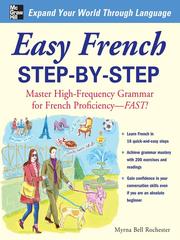
A rigorously structured beginner grammar book that builds French from the ground up using a logical, step-by-step approach — the ideal first book for absolute beginners who want real grammatical understanding, not just phrases.

Reinforces and expands on core grammar with clear explanations and abundant exercises; reading this after Step-by-Step cements beginner grammar and introduces more vocabulary in context before moving to reading practice.
Vocabulary & Intuition: Building the Mental Lexicon
BeginnerInternalize the most frequent French words and phrases, develop an ear for natural French patterns, and begin thinking in French rather than translating from English.
▸ Study plan for this stage
Pace: 4–5 weeks, ~40–50 pages/day. Start with "Fluent Forever" (2–3 weeks, ~350 pages), then transition to "Word by Word" (2 weeks, ~300 pages). Allocate 3–4 days between books for consolidation exercises.
- Memory palace (method of loci) and spaced repetition as core tools for internalizing vocabulary without rote memorization
- The primacy of sound and pronunciation: how hearing French patterns naturally before reading accelerates intuition
- Etymology and word families as memory anchors: understanding how French words connect to Latin roots and English cognates
- The living, evolving nature of language: how dictionaries capture usage rather than prescribe rules, informing how you should learn naturally
- Semantic fields and word associations: learning words in thematic clusters rather than isolated lists to build mental networks
- The gap between dictionary definitions and real-world usage: why context and native speaker patterns matter more than literal translations
- Chunking and formulaic sequences: internalizing common French phrases and collocations as whole units, not word-by-word
- Metacognitive awareness: understanding your own learning process so you can optimize vocabulary retention and pattern recognition
- How does the method of loci (memory palace) work, and why is it more effective than flashcard drilling for long-term vocabulary retention?
- What role does pronunciation and listening play in developing intuition for French, according to Wyner, and how should this influence your study approach?
- How can understanding etymology and word families help you remember French vocabulary more deeply, and what examples does Wyner provide?
- According to Stamper's 'Word by Word,' how do dictionaries actually work, and why is this understanding important for learning French naturally rather than through prescriptive rules?
- What is the difference between learning isolated vocabulary and learning words in semantic fields or formulaic sequences, and why does context matter?
- How should you approach the gap between dictionary definitions and real-world French usage, and what does this teach you about language learning?
- Build a memory palace for 20–30 high-frequency French words (e.g., common verbs, nouns, adjectives) using Wyner's method; visualize vivid, bizarre associations in a familiar physical space and mentally walk through it daily for one week.
- Create a pronunciation anchor for 15 French words: listen to native speakers (Forvo, YouTube), record yourself pronouncing them, and listen back daily to internalize the sound patterns before memorizing spelling.
- Map out 3–4 semantic fields (e.g., food, family, travel) with 10–15 related French words each; draw connections between words to see how they cluster, then practice recalling them as families rather than isolated items.
- Track 10 common French collocations or phrases (e.g., 'avoir faim,' 'prendre un café') from Wyner's examples; use them in 3 original sentences each and record yourself saying them naturally.
- Analyze 5 French words using etymology: trace their Latin roots, identify English cognates, and explain how this connection helps you remember them (e.g., 'comprendre' → 'comprehend').
- Read a short French text (children's story, news article, ~300 words) and identify 10 words you don't know; look them up in a French-French dictionary (not English translation) and note how the definition differs from what you might have guessed, then use each word in a new sentence.
Next up: This stage equips you with a mental lexicon and intuitive grasp of French sound and structure, preparing you to move into the next stage where you'll apply these internalized words and patterns to reading comprehension, grammar in context, and sustained engagement with authentic French texts.

Teaches a science-backed system (spaced repetition, phonetics, image association) for permanently memorizing vocabulary — applied here specifically to French, this method dramatically accelerates word acquisition before tackling real texts.
A bridge read that deepens appreciation for how language and words work, sharpening the learner's attention to meaning and nuance — valuable mindset preparation before diving into graded French reading.
Graded Reading: From Simple Stories to Real French
IntermediateRead progressively more complex French texts with growing independence, build reading fluency, and absorb grammar and vocabulary naturally through comprehensible input.
▸ Study plan for this stage
Pace: 8–10 weeks, ~25–35 pages/day (approximately 2–3 weeks per book with active reading practices)
- Recognizing and internalizing common French narrative patterns and sentence structures through repeated exposure to graded texts
- Building active vocabulary in context by encountering words multiple times across different stories and themes
- Understanding French grammar (past tenses, subjunctive, reflexive verbs) through natural comprehension rather than explicit rules
- Developing reading fluency by reducing reliance on translation and learning to infer meaning from context
- Appreciating French literary voice and style, from simple contemporary stories to the poetic prose of Le petit prince
- Recognizing cultural references and values embedded in French narratives
- What are the main narrative techniques used in 'Short Stories in French for Beginners' and how do they differ from those in the intermediate collection?
- How does Saint-Exupéry's use of metaphor and symbolism in 'Le petit prince' compare to the straightforward storytelling in the Olly Richards collections?
- Can you summarize the plot and key themes of at least three stories from each Olly Richards book without translating into English?
- What grammatical structures (tenses, moods, sentence patterns) appear most frequently across these texts, and how do they function in narrative?
- How has your reading speed and comprehension improved from the first book to the third?
- What French words or phrases have you encountered repeatedly across multiple stories, and what do they reveal about common themes?
- Read 25–35 pages daily from the assigned book, marking unfamiliar words but attempting to understand them from context first before consulting a dictionary
- After each story in the Olly Richards books, write a 5–7 sentence summary in French (not English) without looking back at the text
- Create a personal vocabulary journal organized by theme (e.g., emotions, actions, descriptions) and note which stories each word appears in
- Retell one story aloud in French, focusing on fluency rather than perfection, then record yourself to track improvement over the stage
- Identify and list 3–5 examples of past tense usage (passé composé, imparfait) in each book and explain why the author chose that tense
- Compare and contrast two stories from different books (one from Olly Richards, one from Le petit prince) in a short written analysis (200–300 words in French) focusing on character, conflict, and resolution
Next up: This stage transitions you from guided, comprehensible input to more independent engagement with authentic French texts, preparing you to tackle longer novels, essays, and media with minimal scaffolding while maintaining the vocabulary and grammatical foundations you've internalized.

Eight compelling short stories written in controlled, beginner-friendly French with glossaries — the perfect first graded reader that makes reading feel rewarding while reinforcing all grammar learned so far.
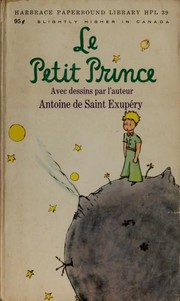
A beloved, short, and poetic French classic written in simple, elegant prose — the ideal first authentic French literary text, bridging graded readers and real literature while remaining accessible to motivated intermediates.

Steps up the complexity from the beginner volume with richer vocabulary and longer narratives, consolidating intermediate reading skills and preparing the learner for fully authentic French texts.
Immersion & Fluency: Authentic French and Conversational Mastery
ExpertRead and understand authentic French literature and media without a dictionary, hold confident conversations on complex topics, and develop a lasting personal immersion practice.
▸ Study plan for this stage
Pace: 12–14 weeks, ~40–50 pages/day (including re-reading and annotation). Week 1–3: "Fluent in 3 Months"; Weeks 4–9: "L'étranger"; Weeks 10–14: "Breaking into Japanese Literature" with ongoing immersion practice.
- Immersion principles and psychological barriers to fluency from Lewis's methodology
- Existential themes, absurdism, and narrative voice in Camus's minimalist prose
- Authentic French syntax, idiomatic expressions, and literary register through close reading
- Sustained personal immersion practice: media consumption, conversation, and journaling in French
- Comparative literary analysis: how different authors use language to convey meaning
- Building confidence in unprepared conversation and complex topic discussion
- What are the core immersion principles Lewis advocates, and how can you apply them to your own French learning?
- How does Camus use sparse, direct language and repetition to create the sense of absurdism in L'étranger, and what does this reveal about Meursault's character?
- What are the key differences in narrative perspective, tone, and vocabulary between Lewis's instructional prose and Camus's literary French?
- How does Murray's analysis of literary techniques in 'Breaking into Japanese Literature' help you understand how to deconstruct and learn from French literary texts?
- Can you discuss a complex philosophical or social topic (e.g., meaning, justice, alienation) in French without preparation, drawing on vocabulary and concepts from your reading?
- What immersion practices have you established, and how will you sustain them beyond this stage?
- Read 'Fluent in 3 Months' actively: annotate Lewis's key strategies and translate his core advice into a personalized 90-day immersion action plan in French.
- Read L'étranger twice: first for plot comprehension, second for linguistic analysis—mark unfamiliar idioms, subjunctive constructions, and stylistic patterns.
- Create a vocabulary journal organized by theme (justice, emotion, alienation) from L'étranger; use each word in 3 original French sentences.
- Engage in weekly 30-minute unscripted French conversations (language exchange partner, tutor, or voice journal) discussing abstract topics from L'étranger (e.g., Meursault's indifference, social conformity).
- Analyze Murray's literary techniques in 'Breaking into Japanese Literature' and apply his framework to a chapter of L'étranger—identify symbolism, narrative structure, and authorial voice.
- Write a 500–750 word French literary essay comparing Lewis's approach to language acquisition with Camus's portrayal of Meursault's disconnection from society and language.
- Listen to French audiobook versions of L'étranger and/or film adaptations; note how actors interpret tone and emotion that the written text conveys subtly.
- Consume French media (podcasts, films, news, literature) for 1–2 hours daily; maintain a reflection log in French on what you understood, what challenged you, and new expressions you encountered.
Next up: This stage transforms you from a grammar-focused learner into a confident, independent reader and speaker who can engage with authentic French culture and literature; you now have the tools, confidence, and immersion habits to pursue specialized French study (literary criticism, professional French, regional dialects) or maintain fluency through self-directed cultural engagement.

A practical, motivating guide to accelerating spoken fluency through immersion, conversation practice, and output — essential at this stage to convert reading knowledge into real conversational confidence.
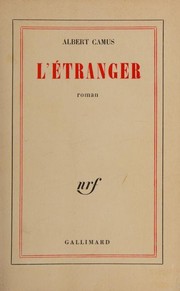
Camus's spare, direct prose style makes this existentialist masterpiece one of the most readable works of serious French literature — a rigorous but achievable test of advanced reading comprehension and cultural depth.
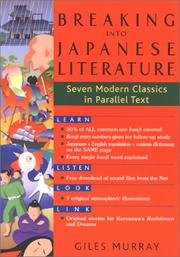
Though focused on Japanese, Murray's dual-text immersion method — reading the original alongside a word-for-word gloss — is a transferable technique; pairing this mindset with French texts like Camus cements the final leap to true reading fluency.
Discussion
Keep reading
Paths that share books, cover the same subject, or open a related topic.