Best Books to Learn Toxicology, in Order
This curriculum builds a rigorous, professional-level understanding of toxicology across four progressive stages. Starting from intermediate-level principles of dose-response and mechanisms, it advances through environmental and forensic applications, then culminates in risk assessment and regulatory science — giving the learner both scientific depth and real-world analytical power.
Core Principles & Dose-Response
IntermediateEstablish a solid command of fundamental toxicological concepts: dose-response relationships, mechanisms of toxicity, target organ systems, and the language professionals use across all sub-disciplines.
▸ Study plan for this stage
Pace: 4–5 weeks, ~40–50 pages/day (focusing on Chapters 1–8 of Casarett and Doull's, with 2–3 days per chapter for deep engagement)
- Dose-response relationships and the fundamental principle that 'the dose makes the poison'—including threshold concepts, potency, and efficacy
- ADME framework (Absorption, Distribution, Metabolism, Excretion) and how chemical properties determine toxicokinetics
- Mechanisms of toxicity at the molecular, cellular, and organ levels—including receptor interactions, oxidative stress, and genotoxicity
- Target organ toxicity and organ-specific vulnerabilities (liver, kidney, nervous system, reproductive system)
- Dose-response curve interpretation: LD50, NOAEL, LOAEL, and safety margins in risk assessment
- Species and individual variation in toxicological response—genetic, age, sex, and environmental factors
- The role of biotransformation (Phase I, II, III reactions) in detoxification and bioactivation
- Professional toxicological terminology and classification systems (acute, subchronic, chronic toxicity; hazard vs. risk)
- What is the dose-response relationship, and why is understanding the shape and position of the dose-response curve critical to toxicology?
- Explain the ADME process and how each phase influences whether a chemical becomes toxic or is safely eliminated.
- What are the major mechanisms of toxicity, and how do they differ at the molecular versus organ-system level?
- Why do certain organs (liver, kidney, nervous system) become preferential targets for toxicity, and what makes them vulnerable?
- How do you interpret LD50, NOAEL, and LOAEL values, and what is their role in establishing safe exposure levels?
- What factors cause variation in toxicological response between individuals and species, and how are these accounted for in safety assessments?
- Plot and interpret a dose-response curve from a published toxicology study; identify the threshold, ED50, and slope, and explain what these reveal about the chemical's toxicity profile
- Create a detailed ADME pathway diagram for a specific chemical (e.g., acetaminophen, benzene) using Casarett and Doull's examples, tracing absorption through excretion and noting where biotransformation occurs
- Compare dose-response data for two chemicals with different potencies and efficacies; calculate and explain the safety margin (NOAEL/uncertainty factor) for each
- Analyze a case study of organ-specific toxicity (e.g., liver injury from acetaminophen, kidney damage from heavy metals) and map the mechanism of toxicity to the molecular and cellular level
- Construct a biotransformation pathway for a xenobiotic, identifying Phase I, II, and III reactions and predicting whether metabolites are more or less toxic than the parent compound
- Review a regulatory toxicology summary (e.g., EPA or ATSDR) and extract key dose-response parameters (NOAEL, LOAEL, RfD); explain how uncertainty factors were applied
Next up: Mastery of these core principles—especially dose-response logic, ADME, and mechanism-based reasoning—provides the conceptual foundation needed to move into specialized toxicology domains (e.g., environmental, occupational, clinical, or regulatory toxicology), where these principles are applied to real-world exposure scenarios and risk management decisions.

The definitive reference textbook in the field — reading it first anchors every subsequent topic in authoritative, mechanistic detail. Its dose-response chapters are the gold standard for intermediate learners.
Poisons, Antidotes & Clinical Toxicology
IntermediateUnderstand the specific chemistry and biology of major poison classes, how the body responds to them, and how antidotes and clinical interventions work at a mechanistic level.
▸ Study plan for this stage
Pace: 8–10 weeks, ~40–50 pages/day. Start with "The Poisoner's Handbook" (2–3 weeks, lighter pace for narrative context), then transition to "Goldfrank's Toxicologic Emergencies" (5–7 weeks, slower pace for dense clinical material).
- Dose-response relationships and the concept that 'the dose makes the poison'—how toxicity scales with exposure and individual factors
- Mechanisms of toxin absorption, distribution, metabolism, and elimination (ADME) in the human body
- Organ-specific toxicity: how poisons target the liver, kidney, nervous system, cardiovascular system, and other organs at the cellular level
- Chemical structure and reactivity of major poison classes (heavy metals, organic compounds, gases, biologics) and how structure determines toxicological behavior
- Antidote mechanisms: chelation, competitive antagonism, enzyme inhibition, and metabolic intervention—how they reverse or mitigate poisoning at a molecular level
- Clinical assessment and management: recognizing poisoning syndromes, stabilizing patients, and selecting appropriate interventions based on toxin identity and kinetics
- Historical context and forensic toxicology: how analytical chemistry and toxicology evolved to identify poisons and support legal/medical investigations
- Explain the dose-response curve and why two people exposed to the same poison may have different outcomes. What factors modify individual susceptibility?
- Describe the ADME pathway for a specific poison (e.g., cyanide, arsenic, or acetaminophen) and identify which phase is most critical to interrupt with an antidote.
- How does the chemical structure of a heavy metal poison (e.g., lead or mercury) determine its mechanism of toxicity and which organs it damages?
- Compare and contrast three different antidote mechanisms (e.g., chelation vs. competitive antagonism vs. enzyme inhibition) and give a clinical example of each.
- What are the hallmark signs and symptoms of poisoning by a major toxin class (e.g., organophosphates, opioids, or cyanide), and how do they reflect the poison's mechanism of action?
- How did forensic toxicology techniques described in 'The Poisoner's Handbook' enable the identification and prosecution of poisoning cases, and how do modern clinical toxicologists apply similar principles?
- Create a detailed ADME flowchart for 3–4 major poisons (e.g., cyanide, strychnine, arsenic) from 'The Poisoner's Handbook', then cross-reference with Goldfrank's clinical data to identify intervention points.
- Build a 'poison-antidote matching' table: list 10 poisons discussed in both books, their primary mechanism of toxicity, target organ(s), and the specific antidote or clinical intervention with its mechanism.
- Write a case study analysis: select a real poisoning case from 'The Poisoner's Handbook' (e.g., a Sacco & Vanzetti-era case or a Prohibition-era poisoning) and apply Goldfrank's modern clinical toxicology framework to explain how it would be managed today.
- Diagram the molecular mechanism of 3 different antidotes (e.g., N-acetylcysteine for acetaminophen, pralidoxime for organophosphates, methylene blue for methemoglobinemia), showing how each reverses poisoning at the cellular level.
- Conduct a comparative toxicity analysis: choose 2 poisons with similar chemical structures (e.g., different heavy metals or different organophosphates) and explain why their toxicological profiles differ based on their chemistry.
- Develop a clinical decision tree for managing an unknown poisoning: use Goldfrank's symptom-based approach to create a flowchart that guides diagnosis and treatment selection based on presenting signs and syndromes.
Next up: This stage grounds you in the mechanistic foundations of how specific poisons harm the body and how antidotes work, preparing you to advance to applied toxicology—such as environmental toxicology, drug metabolism and pharmacokinetics, or regulatory toxicology—where you will apply these principles to broader public health, industrial, and regulatory contexts.
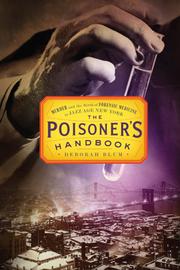
A narrative history of forensic toxicology's birth in early 20th-century New York — reads accessibly but builds genuine intuition about specific poisons and the detective work of identifying them.
The clinical bible for poison management; after Blum's narrative context, this provides rigorous antidote mechanisms, treatment protocols, and poison-specific pharmacology for serious study.
Environmental & Forensic Toxicology
IntermediateApply toxicological principles to real-world environmental contamination, wildlife, and forensic investigation — learning how toxicants move through ecosystems and how exposure is detected and proven.
▸ Study plan for this stage
Pace: 8–10 weeks, ~40–50 pages/day. Start with "Ecotoxicology" (weeks 1–5, ~250 pages), then transition to "Principles of Forensic Toxicology" (weeks 6–10, ~200–250 pages). Allocate 1–2 days per week for review, case studies, and practical exercises.
- Bioaccumulation and biomagnification: how toxicants concentrate in organisms and move up food chains
- Exposure pathways and routes: inhalation, ingestion, dermal absorption, and how environmental media (soil, water, air) deliver toxicants to organisms
- Dose-response relationships in ecological contexts: threshold effects, NOAEL/LOAEL, and population-level impacts
- Ecosystem dynamics: how toxicants affect species interactions, community structure, and ecosystem services
- Forensic toxicology principles: specimen collection, chain of custody, analytical methods (GC-MS, LC-MS), and interpretation of results
- Post-mortem toxicology: how drug/toxicant distribution and metabolism differ after death, and implications for cause-of-death determination
- Legal and regulatory frameworks: how toxicological evidence is validated, reported, and used in court
- Environmental monitoring and risk assessment: sampling strategies, biomarkers, and translating lab findings to real-world contamination scenarios
- How do toxicants move through environmental compartments (air, water, soil) and what factors determine whether they bioaccumulate in organisms?
- Explain the difference between bioaccumulation and biomagnification, and give an example of a toxicant that exhibits each in an ecosystem.
- What are the key exposure pathways in ecotoxicology, and how would you design a study to measure exposure in a wildlife population exposed to industrial contamination?
- Describe the process of forensic specimen collection, chain of custody, and why these procedures are critical for legal admissibility of toxicological evidence.
- How do post-mortem changes (redistribution, decomposition, bacterial metabolism) affect toxicant concentrations in biological samples, and how do forensic toxicologists account for these?
- Given a contaminated site with multiple toxicants, how would you prioritize which ones to investigate, and what ecological or forensic endpoints would you measure?
- Bioaccumulation modeling: Use data from 'Ecotoxicology' to calculate bioconcentration factors (BCF) and biomagnification factors (BMF) for a real toxicant (e.g., PCBs, mercury); plot the concentration gradient across a food chain.
- Environmental exposure assessment: Select a contaminated site (real or hypothetical) and map exposure pathways for a target organism; estimate daily intake using soil/water concentrations and behavioral data.
- Case study analysis: Work through a published ecotoxicology case (e.g., DDT in raptors, lead in waterfowl) using Newman's framework; identify the toxicant, exposure route, dose-response evidence, and ecological outcome.
- Forensic specimen protocol: Design a complete chain-of-custody and specimen collection protocol for a hypothetical forensic toxicology case; include labeling, storage, and transport requirements per Levine's standards.
- Analytical method comparison: Review GC-MS vs. LC-MS approaches in Levine's text; select the appropriate method for detecting a specific drug or toxicant in blood, urine, or tissue, and justify your choice.
- Post-mortem redistribution exercise: Analyze a case scenario where ante-mortem and post-mortem toxicant concentrations differ; calculate the likely redistribution and explain how this affects interpretation of cause of death.
Next up: This stage equips you with the ecological principles and forensic methodology to detect and quantify toxicant exposure and harm—preparing you to advance to specialized applications such as occupational toxicology, clinical toxicology, or regulatory risk assessment, where you'll apply these detection and dose-response frameworks to human health and workplace safety.
Deepens environmental toxicology into population and ecosystem-level effects, building the quantitative and ecological thinking needed to evaluate large-scale contamination events.
The standard forensic toxicology reference — covers analytical methods, specimen interpretation, and legal standards, completing the environmental-to-forensic arc of this stage.
Risk Assessment & Regulatory Science
ExpertMaster the quantitative and policy frameworks used to translate toxicological data into regulatory decisions — including hazard identification, dose-response modeling, exposure assessment, and risk characterization.
▸ Study plan for this stage
Pace: 4–5 weeks, ~25–30 pages/day, with 2–3 days per week dedicated to working through case studies and quantitative exercises
- Hazard identification: how to systematically evaluate whether a substance can cause adverse health effects and under what conditions
- Dose-response assessment: constructing and interpreting dose-response curves, identifying NOAELs/LOAELs, and applying uncertainty factors to derive safe exposure levels
- Exposure assessment: quantifying human exposure pathways (inhalation, ingestion, dermal) and characterizing exposure distributions across populations
- Risk characterization: integrating hazard and exposure data to calculate risk quotients and margins of safety for regulatory decision-making
- Uncertainty and variability: distinguishing between knowledge gaps (uncertainty factors) and natural population differences, and how to incorporate both into risk estimates
- Regulatory frameworks and policy: understanding how the NRC paradigm shapes EPA, FDA, and other agency decision-making and the role of risk assessment in standard-setting
- Benchmark dose (BMD) modeling: moving beyond NOAEL/LOAEL to probabilistic dose-response methods for more defensible risk estimates
- Risk communication: translating quantitative risk assessments into policy-relevant language for regulators, industry, and the public
- What are the four core steps of the NRC risk assessment paradigm, and how do they differ from risk management?
- How do you construct a dose-response curve from animal toxicity data, and what are the key differences between NOAEL-based and BMD-based approaches?
- Describe the three main human exposure pathways and explain how you would estimate exposure for a chemical used in consumer products.
- What is the difference between uncertainty factors and variability factors, and how should each be applied when deriving a reference dose (RfD)?
- Given a hazard summary and an exposure assessment, walk through the calculation of a hazard quotient and explain what it means for regulatory decision-making.
- How does the NRC framework account for sensitive subpopulations (e.g., children, pregnant women) in risk assessment, and why is this important for standard-setting?
- Construct a dose-response curve from a published animal toxicity study: plot the data, identify the NOAEL and LOAEL, and calculate a reference dose (RfD) using standard uncertainty factors (10× for inter-species, 10× for intra-species variation).
- Perform a simple exposure assessment for a chemical in drinking water: estimate daily intake based on consumption rates, body weight, and measured concentrations; compare to the RfD to calculate a hazard quotient.
- Critique a published risk assessment (e.g., an EPA IRIS assessment or a pesticide risk characterization): identify the hazard data used, the dose-response model chosen, the exposure scenarios, and evaluate whether the uncertainty factors were appropriately justified.
- Benchmark dose (BMD) modeling exercise: use freely available software (e.g., EPA's BMDS) to fit a dose-response model to a small dataset and compare the BMD-derived point of departure to a traditional NOAEL; discuss the advantages and limitations.
- Population exposure variability exercise: given a distribution of body weights, consumption rates, and chemical concentrations, calculate the range of individual hazard quotients and identify which subpopulations are at highest risk.
- Regulatory decision-making case study: review a real EPA or FDA standard-setting document and trace how the risk assessment data (hazard, dose-response, exposure) were used to justify the final regulatory limit or recommendation.
Next up: This stage establishes the quantitative and policy foundation for translating raw toxicological data into actionable regulatory decisions; the next stage will deepen expertise in specialized risk assessment domains (e.g., carcinogen risk assessment, developmental toxicity, ecological risk) and advanced modeling techniques that build on this core paradigm.

The landmark 'Red Book' that defined the four-step risk assessment paradigm still used today — essential reading before any quantitative risk modeling work.
Discussion
Keep reading
Paths that share books, cover the same subject, or open a related topic.