Forensic pathology reading splits cleanly into four kinds of book, and knowing which you are picking up saves a lot of disappointment. There are popular accounts written for general readers, memoirs by practising pathologists, professional textbooks with autopsy photography and a working vocabulary assumed, and a small analytical literature about how death investigation functions as an institution. Only the third kind will teach you the discipline, and only the fourth will tell you why its conclusions are shaped the way they are.
One statement of scope first, since this subject attracts career questions: no book leads to this job. Forensic pathology in most countries requires medical school, a pathology residency and a subspecialty fellowship, and the memoirs on this list are honest about how long that takes and how few posts exist.
The way in
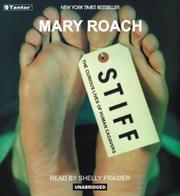
Stiff by Mary Roach is not about forensic pathology, strictly — it is about what happens to donated human bodies, from anatomy labs to crash testing to decomposition research — and it remains the best on-ramp to the whole subject because it is funny without being flippant and it makes the material approachable. Forensic Science by Jim Fraser is a short, sober overview of the wider discipline that also does something the memoirs do not: it takes seriously the evidentiary weaknesses in several forensic techniques, which is the necessary corrective to any book that presents the science as settled.
The practitioners
Working stiff by Judy Melinek, written with T.J. Mitchell, follows her fellowship in the New York City medical examiner's office, including the identification work after the September 11 attacks. It is the clearest account of the daily job rather than the notable cases. Unnatural Causes by Richard Shepherd covers a British Home Office pathologist's career across Hungerford, the Marchioness, the July 7 bombings and the Princess of Wales inquiry, and it is unusually candid about the psychological cost, including his own post-traumatic stress.
Coroner by Thomas T. Noguchi is the Los Angeles book, covering the deaths of Marilyn Monroe, Robert Kennedy, Sharon Tate and John Belushi. Read it with the context that Noguchi was a contested figure who was twice removed from his post amid disputes about his conduct, and that this is his own account of his own controversies. When the Dogs Don't Bark by Angela Gallop is by a forensic scientist rather than a pathologist — trace evidence and cold-case review, including work on the Stephen Lawrence case — and it shows how a body is only one part of a case file.
The professional texts
Two books here are for practitioners and read like it. Handbook of forensic pathology by Vincent Di Maio and Suzanna Di Maio is the condensed working reference: patterns of injury, gunshot wounds, time of death, asphyxia. It assumes anatomical vocabulary and it contains autopsy photographs. Knight's Forensic Pathology, now edited by Pekka Saukko, is the field's standard comprehensive text, expensive and encyclopedic, and it is what a trainee actually works from. Neither is unreadable for a determined outsider, but both assume medical background and neither softens anything.
Adjacent sciences
The poisoner's handbook by Deborah Blum is the history of how forensic toxicology was invented in Jazz Age New York by Charles Norris and Alexander Gettler, and it is the most purely enjoyable book on the list while being genuinely informative about method.
The next four are forensic anthropology rather than pathology — bones rather than tissue — and they belong here because in practice the two disciplines share cases. Death's acre by William M. Bass founded and describes the Tennessee decomposition research facility and the experimental study of what happens to a body over time. Dead men do tell tales by William R. Maples is a case-led account of what a skeleton can establish. All That Remains by Sue Black is an anatomist's memoir that moves between teaching, casework and the war-crimes investigation in Kosovo. The Bone Woman by Clea Koff is the hardest of the four: a young forensic anthropologist's account of exhuming mass graves for the United Nations tribunals in Rwanda and the former Yugoslavia. Those two books deal with genocide and with the remains of children, stated here as a plain fact about their content.
Why the conclusions look the way they do
Finish with Postmortem by Stefan Timmermans, which is a sociologist's study of medical examiners at work and — despite the title — not Patricia Cornwell's crime novel. It is the only book on the path that examines cause-of-death determination as an institutional product: how examiners handle uncertainty, negotiate with families and police, and produce a definitive-sounding classification from ambiguous evidence. Read after the memoirs, when you have enough of a picture of the work for the analysis to land.
The full sequence is on the path; other science subjects are on Discover.
Follow the full ordered path here: Forensic Pathology: The Best Books on the Autopsy and the Medical Examiner, in Order.