Presentation skills: books to speak, slide, and command a room
This curriculum takes you from the core fundamentals of confident speaking all the way to mastering storytelling, slide design, and elite stage presence. Each stage builds on the last — you'll first develop a solid mental framework and overcome fear, then layer in narrative craft, visual communication, and finally the advanced performance and persuasion techniques used by world-class presenters.
Foundations: Confidence & Core Craft
BeginnerOvercome speaking anxiety, understand the basic structure of a compelling talk, and build the foundational habits of an effective presenter.
▸ Study plan for this stage
Pace: 8–10 weeks, ~25–30 pages/day, with 2–3 days per week dedicated to practice exercises
- The 18-minute rule and why constraint breeds clarity in presentation design
- The importance of a single, clear 'big idea' as the anchor of your talk
- How to use storytelling and emotional connection to make ideas memorable
- The role of body language, vocal variety, and authentic presence in reducing anxiety
- Techniques for managing nervousness and building genuine confidence through preparation
- The structure of a compelling presentation: opening hook, idea development, and memorable close
- How to connect with your audience by understanding their perspective and needs
- The habit-building approach to becoming a natural, relaxed speaker over time
- What is the 18-minute rule, and why does Gallo argue that constraint improves presentation quality?
- How do you identify and articulate the single 'big idea' that should anchor your talk?
- What role does storytelling play in making an idea stick with an audience, and what makes a story effective in a presentation?
- What specific techniques can you use to manage speaking anxiety and build authentic confidence?
- How should you structure the opening, middle, and closing of a presentation to maximize impact?
- What does Dale Carnegie mean by 'conversational delivery,' and how does it differ from formal or scripted speaking?
- How can you use body language, eye contact, and vocal variety to enhance your message and engage your audience?
- What daily or weekly habits should you develop to become a more natural and confident speaker?
- Identify the 'big idea' of three TED talks you admire, then write a one-sentence summary of each; compare your summaries to the speakers' stated themes
- Record yourself delivering a 2–3 minute personal story (aim for conversational tone, not scripted), then review for pacing, filler words, and authenticity
- Outline a 5–7 minute talk on a topic you know well using the TED structure: hook, single big idea, supporting story/example, memorable close
- Practice a 3-minute version of your talk in front of a mirror, focusing on eye contact, hand gestures, and vocal variety; record and self-critique
- Deliver your 5–7 minute talk to a small group (2–3 trusted friends or colleagues) and ask for specific feedback on clarity, engagement, and presence
- Create a 'confidence checklist' based on Carnegie's anxiety-reduction techniques, then use it before each practice session or real presentation
- Analyze a TED talk transcript, highlighting the storytelling moments and how they connect to the speaker's central idea
- Give a 2-minute impromptu talk on a random topic in front of a mirror or camera to build comfort with thinking on your feet and managing nervousness
Next up: This stage equips you with the foundational confidence, structural clarity, and core delivery habits needed to move into the next stage, where you'll refine advanced techniques like persuasion, audience psychology, and sophisticated storytelling methods.

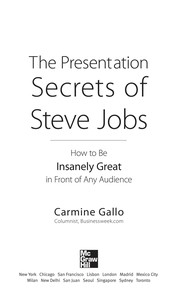
A perfect entry point that reverse-engineers the world's most-watched talks into nine actionable habits — gives beginners a clear, inspiring framework before anything else.

A timeless classic that directly addresses fear, confidence, and the fundamentals of connecting with an audience — essential groundwork before tackling style or structure.
Structure & Storytelling
BeginnerLearn how to architect a presentation with a clear narrative spine and use storytelling to make ideas memorable and emotionally resonant.
▸ Study plan for this stage
Pace: 4–5 weeks, ~25–30 pages/day (approximately 200 pages total across both books)
- The Hero's Journey framework and how to apply it to presentation structure (Duarte's core model)
- The contrast principle: using tension between 'what is' and 'what could be' to create narrative momentum
- Emotional resonance through vulnerability, authenticity, and personal storytelling
- The three-act structure: setup, confrontation, and resolution in presentations
- How to identify and craft your 'big idea' as the central spine of your presentation
- The role of metaphor and analogy in making abstract concepts concrete and memorable
- Audience-centric storytelling: understanding your audience's perspective and aspirations
- Pacing, rhythm, and the strategic use of silence and pauses to enhance impact
- How does the Hero's Journey framework (as described in Resonate) help you structure a presentation, and what are the key stages you must hit?
- What is the 'contrast principle' and how does it create narrative tension that keeps audiences engaged?
- How do you identify and articulate your presentation's 'big idea' or central message?
- What role does vulnerability and personal storytelling play in making your ideas emotionally resonant (per Gallo's examples)?
- How can you use metaphor and analogy to make complex or abstract ideas more memorable?
- What does it mean to be 'audience-centric' in your storytelling, and how do you discover what your audience truly cares about?
- Map the Hero's Journey onto a presentation you've given or plan to give: identify the hero (audience), the challenge, the guide (you), and the transformation
- Analyze a TED talk or professional presentation and identify the 'what is' vs. 'what could be' contrast that drives its narrative
- Write a 2–3 minute personal story that illustrates a key idea you want to communicate; practice delivering it with authentic emotion
- Identify the central 'big idea' of a presentation you're working on and write it in one sentence; then outline how every section supports or reinforces this idea
- Create a metaphor or analogy for a complex concept you need to explain, and test it with a peer to see if it clarifies or confuses
- Conduct a brief audience interview or survey to uncover what your audience actually cares about, fears, or aspires to; then reframe your presentation's narrative around those insights
- Record yourself delivering a 5-minute section of a presentation and review it for pacing, rhythm, and moments where you could add strategic pauses for impact
Next up: This stage equips you with the narrative architecture and emotional tools to engage audiences; the next stage will focus on translating these story structures into visual design and delivery techniques that amplify your message.

Introduces the powerful concept of the 'presentation as story' and the hero's journey framework — best read after you have basic confidence so you can immediately apply the structure.

Deepens the storytelling layer by studying how great leaders and entrepreneurs use narrative to persuade — builds directly on the structural thinking introduced in Resonate.
Visual Communication & Slide Design
IntermediateDesign slides that clarify rather than clutter, and learn the visual grammar that makes information stick with an audience.
▸ Study plan for this stage
Pace: 4–5 weeks, ~25–30 pages/day. Start with "slide:ology" (2–3 weeks), then "Presentation Zen" (2 weeks). Allocate 2–3 days between books for reflection and initial design practice.
- The visual hierarchy principle: using contrast, alignment, and white space to guide audience attention to what matters most
- Duarte's assertion that slides should clarify ideas through design, not replace the speaker—the relationship between visual and verbal communication
- Color theory and typography fundamentals: how font choice, size, and color combinations affect readability and emotional impact
- The concept of visual grammar: understanding how composition, balance, and spatial relationships create meaning independent of text
- Zen principles applied to slides: simplicity, restraint, and the power of negative space to reduce cognitive load
- Storytelling through visual design: using images, diagrams, and data visualization to support narrative arc rather than decorate
- The audience's cognitive capacity: designing for how people actually process visual information, not how designers think they should
- What is the relationship between a slide and the speaker? Why does Duarte argue that slides should not contain everything the speaker will say?
- How do contrast, alignment, and white space work together to create visual hierarchy, and why does this matter for audience comprehension?
- What are the key principles of visual grammar, and how do they differ from written grammar?
- How does Zen design philosophy (as presented in Reynolds) challenge conventional presentation practices, and what specific design choices embody this philosophy?
- When and why should you use images, data visualizations, or diagrams instead of bullet points? What does each communicate differently?
- How do color, typography, and layout choices influence the emotional tone and clarity of a presentation, and how do you make intentional choices in these areas?
- Redesign a cluttered slide: Take a real presentation slide (yours or a peer's) with dense text and bullet points. Redesign it using visual hierarchy, white space, and one strong visual element. Document your design decisions.
- Typography exploration: Create three versions of the same message using different font combinations (serif/sans-serif, sizes, weights). Present them to a peer and discuss how each feels different and why.
- Color palette study: Build 2–3 cohesive color palettes for different presentation contexts (corporate, creative, educational). Explain your choices based on color theory and audience psychology.
- Visual grammar analysis: Collect 5–10 slides from well-designed presentations (TED, design conferences, etc.). Annotate them to identify how contrast, alignment, balance, and white space guide the eye and reinforce the message.
- Storyboard a presentation: Take a 5–7 minute talk you know well. Create a visual storyboard (rough sketches or wireframes) that shows how slides should support the narrative arc—what visuals go where and why.
- Simplification challenge: Take a complex data set or concept. Design a single slide that communicates it clearly using only one visual approach (chart, diagram, or image) plus minimal text. Iterate based on feedback.
Next up: This stage equips you with the visual design language and principles to create slides that enhance your message; the next stage will focus on delivering those slides with presence, vocal variety, and body language that together create a cohesive, persuasive presentation experience.
The definitive guide to presentation design from a world-leading expert — pairs naturally with Resonate since you now apply visual thinking to the story structures you've already learned.
Introduces a Zen-inspired philosophy of simplicity and restraint in slide design, reinforcing and expanding Duarte's principles with a different aesthetic lens and real-world examples.
Persuasion & Audience Psychology
IntermediateUnderstand the cognitive and emotional levers that make presentations persuasive, and learn to tailor your message to move audiences to action.
▸ Study plan for this stage
Pace: 8–10 weeks, ~25–30 pages/day (approximately 4–5 hours/week of reading plus exercises)
- The SUCCESs framework (Simplicity, Unexpectedness, Concreteness, Credibility, Emotional appeal, Stories) for making ideas stick in audience memory
- How to strip ideas to their core and eliminate jargon to maximize retention and persuasiveness
- The role of concrete examples and sensory details in making abstract concepts memorable and compelling
- The six universal principles of influence: reciprocity, commitment/consistency, social proof, authority, liking, and scarcity
- How to ethically leverage psychological triggers to align audience interests with your call to action
- The difference between peripheral and central routes to persuasion and when each is effective
- How to build credibility and trust as a presenter to increase receptiveness to your message
- The power of narrative and emotional resonance in overcoming audience resistance and driving behavior change
- What are the six elements of the SUCCESs framework, and how would you apply each to make a presentation about a new product or policy more memorable?
- How do the principles of reciprocity, commitment/consistency, and social proof differ, and which would be most effective for persuading an audience to adopt a new behavior?
- Why do concrete, sensory-rich stories outperform statistics and abstract arguments in changing audience beliefs, and how would you construct one for your own presentation?
- How can you establish authority and credibility early in a presentation, and what role does this play in the six principles of influence?
- What is the difference between making an idea 'sticky' (memorable) and making it persuasive, and how do both contribute to moving an audience to action?
- How would you ethically use scarcity or social proof in a presentation without manipulating your audience, and what are the boundaries?
- Take a presentation you've given or will give and audit it against the SUCCESs framework—identify which elements are present and which are missing, then rewrite one section to include at least three SUCCESs elements
- Collect three statistics or claims from your field and rewrite each as a concrete, sensory-rich story or example that conveys the same insight; practice delivering both versions and note which feels more persuasive
- Identify the core message of a presentation and strip it down to a single sentence, then remove all jargon and technical terms—test this simplified version on a colleague unfamiliar with your field
- Record yourself delivering a 5-minute pitch and analyze which of Cialdini's six principles you naturally invoke; deliberately add two principles you didn't use and re-record
- Design a 10-minute presentation where you intentionally build credibility and authority in the first 2 minutes using specific techniques from 'Influence,' then deliver it to a peer group and gather feedback
- Create a 'story bank' of 5–8 personal or case-study stories that illustrate key points in your field, tag each with the emotional appeal it creates and the principle of influence it leverages, and practice delivering them until they feel natural
Next up: This stage equips you with the psychological and narrative foundations to move audiences; the next stage will focus on the delivery mechanics—vocal variety, body language, visual design, and real-time audience management—that amplify these persuasive principles in live performance.
Explains the six principles (SUCCESs) that make ideas memorable and spreadable — a crucial layer of persuasion science that elevates everything you've built so far.
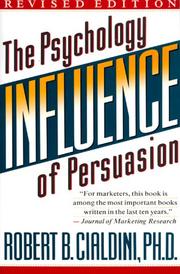
The landmark book on the psychology of persuasion; reading it here lets you consciously embed proven influence principles into your talk's content and calls to action.
Stage Presence & Elite Performance
ExpertDevelop commanding stage presence, master voice and body language, and synthesize everything into a polished, high-stakes delivery style.
▸ Study plan for this stage
Pace: 4–5 weeks, ~40–50 pages/day. Week 1–2: "Speak With No Fear" (complete). Week 3–5: "TED Talks" (complete), with overlap days for integration exercises.
- Fear deconstruction: identifying and neutralizing the psychological roots of speaking anxiety through Acker's evidence-based techniques
- Vocal mastery: controlling pace, tone, pitch, and breathing to project authority and emotional resonance in high-stakes settings
- Somatic presence: using posture, gesture, eye contact, and spatial awareness to command attention and establish credibility
- The TED framework: structuring ideas around a central theme, building narrative arcs, and using multimedia/visuals strategically
- Authenticity under pressure: balancing polish with genuine emotion and vulnerability to create memorable, persuasive moments
- Audience psychology: reading room dynamics, managing energy shifts, and adapting delivery in real-time to maximize impact
- Synthesis of technique and intuition: moving beyond mechanics to deliver with confidence, spontaneity, and executive presence
- What are the core psychological mechanisms behind speaking anxiety according to Acker, and which specific techniques from 'Speak With No Fear' directly address them?
- How do vocal elements (pace, pitch, breathing, silence) work together to establish authority and emotional connection in a high-stakes presentation?
- What does Chris Anderson identify as the essential structure of a TED Talk, and how does it differ from traditional business or academic presentations?
- How can you use body language, spatial positioning, and eye contact to create stage presence that reinforces rather than distracts from your message?
- What role does vulnerability and authenticity play in elite performance, and how do you balance it with technical polish?
- How do you read and adapt to audience energy in real-time, and what are the key signals that your delivery is landing or losing impact?
- Record yourself delivering a 5-minute segment using Acker's anxiety-reduction techniques (grounding, breathing, reframing), then analyze the video for vocal and physical changes.
- Practice a 10-minute presentation with deliberate vocal variation: record three versions with different pacing, pitch patterns, and silence placement; compare which feels most commanding.
- Deliver the same 3-minute section three times: once with minimal movement, once with purposeful gestures, once with strategic spatial movement; identify which body language choices reinforce your key points.
- Restructure an existing presentation or speech using the TED Talk framework from Anderson's book: identify your central idea, build a narrative arc, and map where visuals or stories should land.
- Practice 'vulnerability moments' in a 5-minute talk: identify 1–2 places where you reveal a genuine struggle or limitation, then deliver it with full vocal and physical presence (no hedging or apologizing).
- Deliver a 7-minute presentation to a live audience (friends, colleagues, or online) and ask them to note: moments where your energy dipped, where they felt most engaged, and where your message was clearest. Adjust and re-deliver.
Next up: This stage equips you with the psychological resilience, technical mastery, and audience awareness needed to handle any presentation scenario; the next stage will likely focus on specialized contexts (executive presence, persuasion, crisis communication) or on building a personal brand and sustained impact through repeated, refined delivery.

Revisits performance anxiety at an advanced level — now that you have content and design mastered, this book fine-tunes the physical and psychological performance layer.

Written by the curator of TED, this is the ultimate capstone — a comprehensive, insider guide to crafting and delivering a world-class talk that synthesizes every skill in this curriculum.
Discussion
Keep reading
Paths that share books, cover the same subject, or open a related topic.