How to learn Public speaking
This curriculum takes a complete beginner from managing fear and basic delivery all the way to advanced persuasion, storytelling, and rhetorical mastery. Each stage builds on the last: you first conquer anxiety and learn the fundamentals, then develop structure and style, and finally study the deepest principles of influence and oratory that separate good speakers from truly unforgettable ones.
Foundations: Confidence & Core Delivery
BeginnerOvercome the fear of public speaking, understand basic delivery mechanics (voice, body, eye contact), and give a competent, composed short talk.
▸ Study plan for this stage
Pace: 6–8 weeks total. Week 1–3: Read "Talk Like TED" (~20–25 pages/day, ~15 min/session); Week 4–7: Read "The Quick And Easy Way To Effective Speaking" (~15–20 pages/day, ~20 min/session); Week 8: Review, reflect, and complete capstone exercise.
- Passion as the foundation of compelling delivery — Gallo's principle that the best TED speakers present ideas they genuinely love, making authenticity the #1 delivery tool
- The 18-minute rule and the power of brevity — from Talk Like TED, understanding why constraining your talk forces clarity and respects your audience's attention
- Storytelling as structure — Gallo's analysis of how TED speakers open with narrative, use the 'jaw-dropping moment,' and build emotional connection before presenting data
- The three delivery channels: voice (pace, pitch, volume, pause), body (posture, gesture, movement), and eye contact — the physical mechanics Carnegie breaks down as learnable skills
- Fear normalization and action-based confidence — Carnegie's core argument that courage in speaking comes not from eliminating nervousness but from speaking repeatedly until confidence is earned through experience
- Preparation over perfection — Carnegie's insistence that thorough knowledge of your subject and genuine desire to share it are more important than polished technique
- The conversational tone — both authors converge on the idea that the best public speaking feels like an elevated, enthusiastic conversation, not a performance
- Audience-first thinking — understanding that every delivery choice (eye contact, pace, structure) is made in service of the listener's comprehension and engagement
- According to Gallo in Talk Like TED, what three qualities do the world's greatest communicators share, and how do they show up in delivery?
- What does Carnegie mean when he says fear of speaking is conquered by speaking — and what practical system does he recommend for building that courage incrementally?
- How does Gallo's concept of the 'jaw-dropping moment' function structurally within a talk, and why does he argue it must come early?
- What are Carnegie's specific recommendations for using voice variety (pace, pause, emphasis) to hold an audience's attention, and how do they differ from everyday conversation?
- Both Gallo and Carnegie emphasize authenticity over performance. How do their approaches to achieving that authenticity differ given their different eras and audiences?
- After reading both books, how would you design a 3–5 minute talk from scratch — what structural and delivery choices would you make, and which author's advice would guide each decision?
- 'Passion inventory' (Week 1, Talk Like TED): List 5 topics you could talk about with genuine enthusiasm. For each, write 2–3 sentences explaining WHY you care. This mirrors Gallo's first principle and becomes the seed of your capstone talk.
- TED Talk deconstruction (Week 2, Talk Like TED): Watch 2 TED Talks of your choice and annotate them: Where is the jaw-dropping moment? When does the speaker use story vs. data? How do they open and close? Map each observation to a chapter in Gallo.
- Mirror delivery drill (Week 3, Talk Like TED): Record yourself delivering a 60-second story about a personal experience. Watch it back and evaluate your eye contact (are you reading?), gesture (natural or frozen?), and pace. No script — only bullet points.
- Carnegie's 'speak at every opportunity' log (Weeks 4–7, Carnegie): Keep a weekly log of every speaking opportunity you take — a comment in a meeting, a toast, a question in class. Carnegie's method is volume-based; aim for at least 3 logged instances per week.
- Voice variation exercise (Week 5–6, Carnegie): Take any paragraph from a book or article. Read it aloud three times: once at a slow, deliberate pace with long pauses; once with high energy and fast pace; once conversationally. Record each version and identify which elements you want to blend into your natural style.
- Capstone talk (Week 8): Deliver a 3–5 minute talk on one of your 'passion inventory' topics to a real audience (a friend, family member, or recorded to camera). Apply Gallo's structure (open with a story, include one surprising fact, close with a call to action) and Carnegie's delivery mechanics (eye contact, voice variety, no reading). Review the recording against both books' checklists.
Next up: Mastering the foundational mechanics of delivery and confidence here gives the reader a stable platform to shift focus outward — from 'how do I survive speaking?' to 'how do I craft a message that persuades, moves, or changes my audience?' — which is the central challenge of the next stage.

A highly accessible, example-rich introduction that decodes what makes great speakers compelling — perfect for a beginner who needs both inspiration and concrete first principles.

The classic foundational text on overcoming fear and building speaking habits; read second to reinforce delivery basics with Carnegie's time-tested, practical drills.
Structure & Storytelling
BeginnerLearn how to organize a talk logically, open and close powerfully, and use storytelling to make any message memorable and emotionally resonant.
▸ Study plan for this stage
Pace: 6–8 weeks total: Weeks 1–4 for "Resonate" (~20–25 pages/day, ~5 days/week); Weeks 5–8 for "The Storyteller's Secret" (~15–20 pages/day, ~5 days/week). Reserve one day per week for reflection, note review, and exercises.
- The Hero's Journey applied to presentations: In 'Resonate', Duarte reframes the audience — not the speaker — as the hero, and the speaker as the mentor who guides them through a transformation.
- The S.T.A.R. moment (Something They'll Always Remember): Duarte's framework for engineering one unforgettable, dramatic peak moment inside a talk that crystallizes the core message.
- The Sparkline structure: Duarte's signature presentation shape that alternates between 'what is' (current reality) and 'what could be' (the ideal future), creating dramatic tension that compels the audience to act.
- The power of contrast and tension: Both books emphasize that great talks create an emotional gap between the present state and a desired future — this gap is what moves audiences.
- Opening and closing with purpose: 'Resonate' teaches that the opening must disrupt the audience's status quo and the closing must issue a clear call to action or vision of the new bliss.
- Story as the universal delivery mechanism: Gallo's 'The Storyteller's Secret' demonstrates through real-world examples (Jobs, Branson, Bryan Stevenson, etc.) that every great communicator wraps their message in a personal or borrowed story.
- The three-part story structure for speakers: Gallo breaks down how the most persuasive communicators use a villain (the problem), a hero (the solution/person), and a transformation (the outcome) to make any idea stick.
- Emotional authenticity and vulnerability: Gallo shows that the stories that resonate most are rooted in genuine personal struggle, passion, or purpose — audiences connect with truth, not polish.
- According to Duarte's 'Resonate', why is the audience the hero and not the speaker — and how should that shift change the way you design an entire talk?
- What is the Sparkline, and how does alternating between 'what is' and 'what could be' create the emotional tension that drives an audience to change?
- How do you engineer a S.T.A.R. moment? What makes one effective, and where in a talk's structure should it typically live?
- Based on Gallo's 'The Storyteller's Secret', what are the three structural elements (villain, hero, transformation) and how can they be applied to a non-narrative topic like a business proposal or a data-driven report?
- Both Duarte and Gallo stress the importance of a powerful opening. What specific techniques do they each recommend, and where do their advice overlap or differ?
- How does emotional authenticity, as described by Gallo, interact with Duarte's concept of the mentor role? What happens to a talk when the speaker lacks genuine connection to their material?
- Sparkline mapping: Choose a talk you admire (a TED Talk, a famous speech) and draw Duarte's Sparkline on paper — label every moment as 'what is' or 'what could be'. Then do the same for a talk you need to give soon.
- Hero audit: Take a presentation you have already written or delivered and rewrite the opening paragraph so that the audience is explicitly positioned as the hero and you as the guide. Read both versions aloud and note the difference in tone.
- S.T.A.R. moment workshop: Brainstorm three possible S.T.A.R. moments for a talk topic of your choice (a bold demo, a shocking statistic, a vivid metaphor, a memorable prop). Write a 60-second script for each and test them on a friend or colleague.
- Story spine drill (Gallo's villain–hero–transformation): Pick a problem you care about and write a 200-word story using the three-part structure. The villain must be concrete, the hero must be a real person (you or someone else), and the transformation must be specific and visual.
- Opening and closing rewrite: Take any existing talk outline and rewrite only the first 90 seconds and the last 90 seconds using one technique from 'Resonate' (disrupt the status quo / paint the new bliss) and one from 'The Storyteller's Secret' (open with a personal story or a 'what if' question). Deliver both versions to a mirror or record yourself.
- Cross-book synthesis journal: After finishing both books, write a one-page 'talk blueprint' that combines Duarte's Sparkline structure with Gallo's villain–hero–transformation arc. Annotate where each element appears in the blueprint and why.
Next up: Mastering logical structure and emotional storytelling gives the reader a solid architectural foundation for a talk — the next natural stage is learning how to physically and vocally deliver that structure with confidence, presence, and persuasive body language.

Introduces the narrative arc of great presentations — the contrast between 'what is' and 'what could be' — giving beginners a powerful structural framework to build every talk around.

Deepens the storytelling layer introduced in Resonate by studying how world-class communicators use personal and brand stories; read after Duarte to apply narrative to your own material.
Intermediate Craft: Presence, Style & Persuasion
IntermediateDevelop a commanding stage presence, refine vocal and physical expressiveness, and understand the psychology of persuasion to move audiences to action.
▸ Study plan for this stage
Pace: 10–12 weeks total: Week 1–2 — "Speak With No Fear" (~20–25 pages/day, short book); Week 3–7 — "The Art of Public Speaking" (~30–35 pages/day, dense textbook); Week 8–12 — "Influence" (~25–30 pages/day). Reserve the final 3–4 days of each book for review and exercises before moving on.
- Fear reframing (Speak With No Fear): transforming performance anxiety from a threat into fuel — Acker's core mindset shifts and pre-speech rituals that replace avoidance with confident action
- Vocal variety and delivery mechanics (The Art of Public Speaking): mastering rate, pitch, volume, pause, and articulation as deliberate expressive tools rather than accidental habits
- Physical presence and nonverbal communication (The Art of Public Speaking): purposeful eye contact, gesture, posture, and movement that reinforce rather than contradict the spoken message
- Audience analysis and adaptation (The Art of Public Speaking): Lucas's framework for profiling an audience's demographics, attitudes, and knowledge level to tailor content and tone in real time
- Structural persuasion (The Art of Public Speaking): Monroe's Motivated Sequence and other organizational patterns designed specifically to move audiences toward a desired action or belief
- Cialdini's six (and seventh) principles of influence: Reciprocity, Commitment & Consistency, Social Proof, Authority, Liking, Scarcity — and Unity — as the psychological levers underlying every persuasive speech
- Ethical persuasion: distinguishing legitimate influence (evidence + psychology aligned with audience interests) from manipulation, a thread running through both Lucas and Cialdini
- Integrating presence with persuasion: how the credibility and warmth projected through delivery (Acker + Lucas) amplifies the psychological principles (Cialdini) to produce speeches that are both compelling and trustworthy
- According to Acker, what are the root causes of stage fright, and what specific pre-speech mental and physical routines does he recommend to neutralize them before you reach the podium?
- How does Lucas define the four core elements of vocal delivery, and how can a speaker deliberately manipulate each one within a single speech to sustain audience attention and underscore key points?
- What is Monroe's Motivated Sequence, and how does each of its five steps map onto a specific psychological need in the listener that moves them closer to taking action?
- How does Cialdini's principle of Social Proof operate differently in a live speaking context versus a written or digital one, and how can a speaker ethically activate it during a presentation?
- Where do Lucas's principles of ethical persuasion and Cialdini's influence framework agree — and where do they create tension — when a speaker is crafting a call to action?
- How can a speaker use the principle of Liking (Cialdini) in combination with strong eye contact and open body language (Lucas) to build rapid rapport with a skeptical audience?
- Fear inventory & reframe journal (Acker): Before your next practice speech, write down every fear you have about it. Then, following Acker's method, rewrite each fear as a neutral fact or an opportunity. Deliver the speech immediately after and note the difference in your internal state.
- Vocal variety drill (Lucas): Record yourself reading the same two-paragraph passage four times — once varying only rate, once only pitch, once only volume, and once using deliberate pauses. Listen back and identify which version felt most engaging; then combine all four in a fifth recording.
- Mirror & camera presence audit (Lucas): Deliver a 3-minute speech to a mirror, then to a camera. Review the footage and mark timestamps where your gestures felt forced, your eye contact broke, or your posture collapsed. Redeliver only those segments until they feel natural.
- Audience analysis worksheet (Lucas): Pick a real upcoming presentation. Write a one-page profile of your audience covering demographics, prior knowledge, likely attitudes, and what's in it for them. Rewrite your opening and call-to-action specifically for that profile.
- Influence principle mapping (Cialdini): Take a speech you've already written or delivered and annotate it: highlight every sentence or moment where one of Cialdini's principles is (or could be) at work. Identify which principles are absent and draft one new element for each gap.
- Full integrated rehearsal: Deliver a 5–7 minute persuasive speech structured with Monroe's Motivated Sequence, incorporating at least three of Cialdini's principles explicitly, while applying Lucas's delivery guidelines. Record it, then self-evaluate on a rubric covering fear management (Acker), delivery mechanics (Lucas), and persuasive architecture (Cialdini).
Next up: Mastering presence, delivery, and persuasion psychology at the individual speech level sets the foundation for the next stage, where these skills scale up to high-stakes contexts — such as leadership communication, storytelling for large audiences, and building a long-term public speaking brand.

Bridges the gap from beginner to intermediate by tackling the psychological roots of speaking anxiety with actionable techniques, preparing you to take bigger risks with style and presence.
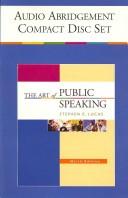
The most widely used university-level public speaking textbook; at this stage it serves as a comprehensive reference for rhetoric, audience analysis, evidence, and persuasive structure.
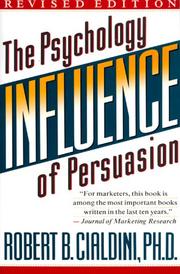
Essential reading on the psychology of persuasion — understanding Cialdini's six principles lets you consciously embed them into your talks to ethically move audiences to action.
Advanced Mastery: Rhetoric, Leadership & Gravitas
ExpertCommand any room with authority and authenticity, master classical and modern rhetorical techniques, and communicate with the gravitas of a world-class leader.
▸ Study plan for this stage
Pace: 6–8 weeks total: Weeks 1–3 on "Speak like Churchill, Stand like Lincoln" (~20–25 pages/day, including re-reading key chapters on rhetorical devices); Weeks 4–6 on "The Charisma Myth" (~20–25 pages/day with journaling after each chapter); Week 7–8 reserved for integration practice — combining rhetori
- The Power of the Pause: Humes' central lesson that silence, used deliberately, commands attention and projects authority far more than rushing to fill space
- Churchill's Five Secrets of a Spellbinding Speech: short words, short sentences, imagery, alliteration, and the 'hook' opening — all drawn directly from Humes' analysis of Churchill's and Lincoln's speeches
- The Podium Presence Triad: posture, eye contact, and the commanding stance Humes attributes to Lincoln — physical stillness as a signal of confidence and gravitas
- Rhetorical Devices as Tools, Not Ornaments: anaphora, tricolon, antithesis, and the 'rule of three' as studied through Humes' dissection of historical speeches
- The Charisma Myth's Core Premise (Cabane): charisma is not an innate trait but a learnable set of behaviors rooted in Presence, Power, and Warmth — the three pillars
- Presence as the Foundation of Charisma: Cabane's emphasis on full, mindful attention in the moment as the single most impactful charismatic behavior, and practical techniques to achieve it
- Body Language as the Broadcast of Internal State: Cabane's argument that the body cannot fake what the mind does not feel — and how to use visualization and mental reframing to authentically project power and warmth
- Overcoming Internal Obstacles to Charisma: Cabane's tools for dissolving self-doubt, imposter syndrome, and anxiety (responsibility transfer, reframing, body-scan techniques) so authentic gravitas can emerge
- According to Humes, what specific vocal and physical techniques did Churchill use to dominate a room, and how can you apply at least three of them in your next prepared speech?
- Humes argues that Lincoln's physical presence was as persuasive as his words — what were the key elements of Lincoln's 'stance,' and why does stillness project authority?
- Cabane identifies Presence, Power, and Warmth as the three pillars of charisma — how do these three interact, and what happens to your perceived charisma when one pillar is missing?
- Cabane claims that body language cannot be sustainably faked — what is her proposed alternative, and what mental/physical techniques does she offer to genuinely shift your internal state before a high-stakes speaking moment?
- How do the lessons from Humes (rhetorical craft and historical modeling) and Cabane (internal state and behavioral presence) complement each other to create a complete model of leadership communication?
- What is one specific charisma obstacle Cabane describes that you personally recognize in yourself, and what is her prescribed technique for overcoming it?
- The Churchill Drill: Select one of your own upcoming talks or emails and rewrite it applying Humes' five secrets — strip to short words and sentences, add one vivid image, one alliterative phrase, and a strong hook opening. Deliver it aloud and record yourself.
- The Lincoln Pause Exercise: Record a 3-minute speech on any topic. Watch it back and mark every moment you rushed or filled silence with filler words ('um,' 'uh,' 'so'). Re-record the same speech, replacing every filler with a deliberate 2-second pause. Compare the authority projected in each version.
- The Tricolon Builder: Write five original sentences using the rule of three (tricolon) on topics relevant to your professional life. Practice delivering each with rising emphasis on the third element, as modeled in Humes' speech analyses.
- The Charisma Pillar Audit (Cabane): After your next three real conversations or presentations, score yourself 1–5 on Presence, Power, and Warmth separately. Identify your consistently weakest pillar and design one daily micro-habit (e.g., a 60-second body-scan before meetings for Presence) to strengthen it over two weeks.
- The Responsibility Transfer Ritual (Cabane): Before a high-stakes speech or meeting, practice Cabane's responsibility transfer technique — write down your anxieties, then physically and mentally 'hand them off' to a higher force or larger purpose. Journal how your body language and vocal tone changed as a result.
- Integration Speech: Prepare and deliver (live or recorded) a 5-minute speech that consciously fuses both books — use at least two Humes rhetorical devices (e.g., anaphora + the pause), and enter the room having completed Cabane's pre-performance internal state reset. Get feedback specifically on gravitas, warmth, and rhetorical impact.
Next up: Mastering rhetorical craft and personal charisma at this stage equips the reader with the commanding presence and persuasive language needed to tackle the next level — where these skills are stress-tested in adversarial, high-stakes, or large-scale leadership contexts such as negotiation, crisis communication, and organizational influence.
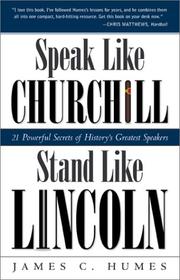
Distills the rhetorical secrets of history's greatest orators into learnable techniques — ideal at the advanced stage when you're ready to add gravitas, wit, and memorable phrasing.

Deconstructs charisma as a learnable skill set rooted in presence, power, and warmth — the final layer of mastery that transforms a technically skilled speaker into a truly captivating one.
Discussion
Keep reading
Paths that share books, cover the same subject, or open a related topic.