Greek mythology, Homer to modern retellings
This four-stage curriculum moves from accessible modern overviews of the myths themselves, through the ancient Homeric epics in the best contemporary translations, into the cultural and religious world the Greeks built around these stories, and finally into today's finest literary retellings. Each stage builds the character knowledge, narrative fluency, and thematic depth needed to fully savour the next, so that by the end the reader can move freely between ancient and modern, text and context.
The Myths Themselves
BeginnerLearn the full cast of gods, heroes, and monsters, and the essential stories — the raw material everything else builds on.
▸ Study plan for this stage
Pace: 6–8 weeks total: Weeks 1–4 for "Mythos" (~25–30 pages/day), Weeks 5–8 for "Heroes" (~20–25 pages/day). Read each chapter in one sitting where possible, as Fry structures them as self-contained stories. Reserve 15–20 minutes after each session for notes.
- The Greek cosmogony — how Chaos, Gaia, Tartarus, and Eros give rise to the Titans and eventually the Olympians, as laid out in Mythos
- The Olympian family tree — the relationships, rivalries, domains, and personalities of the twelve Olympians (Zeus, Hera, Poseidon, Demeter, Athena, Apollo, Artemis, Ares, Aphrodite, Hephaestus, Hermes, Dionysus) as characterized by Fry
- The nature of divine power and its limits — how gods are bound by fate (Moira), oaths (especially by the Styx), and the will of the Fates (Moirai), a recurring tension in Mythos
- The role of hubris and nemesis — the pattern in which mortal or divine overreach (hubris) is met with divine retribution (nemesis), illustrated across dozens of myths in both books
- The hero's defining traits and obligations — as Heroes establishes, the Greek hero is defined not just by strength but by a specific code: completing labors, honoring the gods, and accepting a tragic fate
- The major hero cycles — Perseus, Heracles (his Twelve Labors), Bellerophon, Atalanta, and Theseus as presented sequentially in Heroes, each illustrating a different heroic archetype
- Monsters as mythological symbols — creatures like Medusa, the Hydra, the Minotaur, and the Chimera function not just as obstacles but as embodiments of chaos, fear, and the untamed world
- The relationship between gods and mortals — patronage, punishment, transformation, and love affairs between Olympians and humans, the engine driving most plots in both Mythos and Heroes
- After reading Mythos, can you trace the Greek creation sequence from Chaos to the reign of Zeus, naming the key figures and conflicts at each stage?
- How does Fry characterize the individual personalities of at least six Olympians in Mythos, and how do those personalities drive the myths they appear in?
- What is the pattern of hubris and nemesis, and can you identify at least three specific examples — one from Mythos and two from Heroes — where a character's overreach leads directly to their downfall?
- In Heroes, what distinguishes each of the major heroes (Perseus, Heracles, Theseus) from one another in terms of character, divine support, and the nature of their trials?
- How do the Twelve Labors of Heracles in Heroes function as a unified narrative arc rather than a random list of tasks — what is Heracles being punished for, and what does completion represent?
- What role do monsters play across both books — pick two creatures from Mythos and two from Heroes and explain what each one represents beyond being a physical threat?
- Build a living family tree: Starting from Chaos, draw the Greek genealogy by hand as you read Mythos, adding each new god, Titan, or creature the moment Fry introduces them. By the end of the book you should have a single connected diagram you drew yourself.
- Write a one-paragraph 'character profile' for each Olympian as you encounter them in Mythos — domain, symbol, key personality trait, and one myth that best defines them. Compile these into a personal 'Olympian dossier'.
- After each hero's story in Heroes, write a three-sentence verdict: (1) What was the hero's fatal flaw or greatest strength? (2) Which god helped or hindered them most, and why? (3) How did their story end, and was it just? This forces active reading rather than passive absorption.
- Monster mapping exercise: Create a two-column list — left column names a monster from either book, right column explains its symbolic meaning (e.g., the Minotaur = the shameful secret hidden at the heart of power). Aim for at least ten entries across both books.
- Retell one myth from each book entirely from memory in writing, without looking at the text. Then re-read Fry's version and note what you missed, misremembered, or changed — this reveals which story elements your brain found meaningful.
- Create a 'hubris scorecard': as you read Heroes, log every instance where a character (mortal or god) oversteps, recording who did it, what the overreach was, and what the consequence was. By the end you should have 8–12 entries that reveal the myth's moral logic.
Next up: Having absorbed the full cast of characters and their essential stories through Fry's accessible retellings, the reader now has the raw mythological vocabulary needed to encounter the original ancient sources — the poetry of Homer, Hesiod, and the tragedians — where these same figures appear in their oldest, most complex, and most challenging forms.
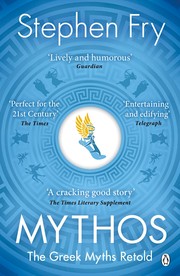
Fry retells the creation myths and Olympian stories in warm, witty prose that makes an enormous cast of characters instantly memorable — the perfect first map of the Greek mythological universe.
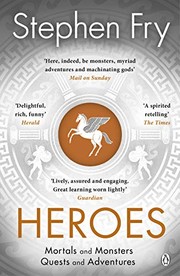
The natural sequel, covering the great hero cycles (Perseus, Heracles, Jason, Theseus) in the same accessible voice, so the reader arrives at the epics already knowing who these figures are and why they matter.
The Homeric Epics
BeginnerExperience the Iliad and the Odyssey as living literature — understanding their plots, their moral world, and why they were the Greeks' defining cultural texts.
▸ Study plan for this stage
Pace: 8–10 weeks total: ~5 weeks for The Iliad (~30 pages/day, using a prose or verse translation such as Fagles or Lattimore), then ~4–5 weeks for The Odyssey (~25 pages/day). Read in the morning when focus is fresh; allow one "catch-up and reflect" day per week.
- The Homeric hero code (aristeia): the pursuit of glory (kleos) and honor (timē) as the supreme moral drive in the Iliad
- The wrath of Achilles (mēnis) as the Iliad's central engine — how one man's wounded pride sets the entire war in motion and leads to catastrophic loss
- The gods as active characters: Olympian factionalism, divine favoritism, and the tension between fate (moira) and free will in both epics
- Epic conventions: the invocation of the Muse, in medias res openings, extended similes, epithets, and the oral-formulaic tradition that shaped both poems
- The moral world of the Odyssey vs. the Iliad: a shift from collective battlefield glory to individual cunning (mētis), endurance (polytlas), and homecoming (nostos)
- Xenia (guest-friendship) as a sacred social contract — its observance and violation as a moral compass throughout the Odyssey
- Character foils and mirrors: Achilles vs. Hector in the Iliad; Odysseus vs. the suitors (and vs. Achilles' shade) in the Odyssey
- The role of women and the domestic world: Andromache, Hecuba, and Helen in the Iliad; Penelope, Circe, Calypso, and Nausicaa in the Odyssey
- In the Iliad, what specific insult triggers Achilles' withdrawal from battle, and how does Homer show that this personal grievance has cosmic consequences for the Greek army?
- How does Homer use the deaths of Patroclus and Hector to transform Achilles — what does Achilles value at the end of the Iliad that he did not at the beginning?
- What does the encounter between Achilles and Priam in Iliad Book 24 reveal about the poem's ultimate moral vision — is it a poem about war's glory, its grief, or both?
- In the Odyssey, how does Odysseus' use of cunning (mētis) rather than brute strength mark a different heroic ideal from the Iliad — and where does Homer suggest this quality has a cost?
- How does the violation of xenia (guest-friendship) by the suitors justify Odysseus' violent revenge in the Odyssey, and how does Homer make sure the reader agrees with that justification?
- Compare Penelope and Andromache as portraits of women in wartime and its aftermath — what agency, if any, does each woman exercise within the constraints of her world?
- **Character map (Iliad):** After Book 1, draw a diagram of the Greek and Trojan sides listing every named character you meet. Update it each week with brief notes on their fate — this forces active reading and reveals Homer's ensemble structure.
- **Epithet journal:** Keep a running list of repeated epithets (e.g., 'swift-footed Achilles,' 'grey-eyed Athena,' 'much-enduring Odysseus'). After finishing both epics, write a short paragraph explaining what each epithet reveals about the character's core identity and why oral poets relied on them.
- **Scene comparison essay (1–2 pages):** Write a close comparison of the farewell scene between Hector and Andromache (Iliad, Book 6) and the reunion of Odysseus and Penelope (Odyssey, Book 23). What does each scene say about what the epic values — glory, home, loyalty, grief?
- **Odyssey route map:** As you read the Odyssey, sketch Odysseus' journey on a blank map of the Mediterranean, marking each stop (Lotus-Eaters, Cyclops, Circe's island, the Underworld, Scylla and Charybdis, etc.). Annotate each stop with the temptation or obstacle it represents — this reveals the Odyssey's underlying moral geography.
- **Socratic self-quiz:** At the end of each major book (aim for every 3–4 books), pause and write three sentences: (1) what happened, (2) why it matters to the plot, and (3) what it reveals about a character's values. This builds the habit of reading mythologically, not just narratively.
- **'Gods' debate:** After finishing both epics, write a one-page reflection answering: 'Are the Homeric gods moral agents or dramatic devices?' Use at least two specific scenes from each epic as evidence — this forces synthesis across both texts.
Next up: Mastering the Homeric epics gives you the canonical characters, values, and story-patterns (the hero's journey, divine intervention, the fall of Troy) that every later Greek author — tragedian, lyric poet, and philosopher alike — assumed their audience already knew, making the next stage's texts immediately richer and more legible.
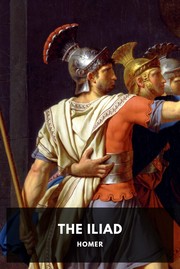
Emily Wilson's 2023 translation (or Fagles' celebrated version) renders the poem in natural, propulsive English; read first because the Trojan War is the event the entire mythological tradition orbits.
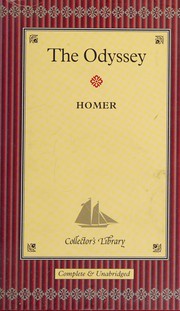
Emily Wilson's landmark translation — the first by a woman — is precise, swift, and modern without losing grandeur; reading it after the Iliad lets you feel the deliberate tonal shift from war to homecoming.
What the Myths Meant
IntermediateUnderstand the religious, psychological, and cultural frameworks the Greeks used to make sense of their own myths — moving from story to meaning.
▸ Study plan for this stage
Pace: 8–10 weeks total: Weeks 1–5 on "The Greek Myths" by Graves (~30–35 pages/day, reading both the myth narratives and his commentary notes — the notes are essential and should never be skipped); Weeks 6–10 on "The Greeks and the Irrational" by Dodds (~15–20 pages/day, slower pace to absorb the dense sc
- Graves's euhemerism and his method of reading myths as distorted historical records of real events, invasions, and religious upheavals in pre-Hellenic Greece
- The two-tier structure of Graves's entries: the narrative retelling vs. the analytical commentary notes — and why the notes are where the interpretive work actually lives
- Matriarchal vs. patriarchal religious systems as Graves's master key: the displacement of goddess-worship by Olympian, male-dominated religion encoded in the myths
- Dodds's concept of the 'shame culture' vs. 'guilt culture' distinction and how it reframes Homeric psychology and moral responsibility
- The irrational in Greek life: divine madness (ate), possession, shamanism, and the Dionysiac — Dodds's argument that the Greeks were far less 'rational' than the Enlightenment assumed
- Pattern of inherited guilt and the demonology of the psyche in Dodds: how later Greeks (especially in the 5th–4th centuries BCE) internalized anxiety and projected it onto daemonic forces
- The tension between Apollo and Dionysus as cultural and psychological poles — not just mythological figures but frameworks for Greek self-understanding
- How both authors, despite very different methods (Graves: anthropological/historical; Dodds: psychological/historical), converge on the idea that myths are functional — they do cultural and psychological work, not merely decorative storytelling
- According to Graves, what does the myth of the Olympians overthrowing the Titans encode about actual historical and religious change in ancient Greece — and what evidence does he use in his notes to support this reading?
- What is the difference between reading Graves's narrative retellings and reading his commentary notes, and why would relying only on the narratives give you an incomplete or even misleading picture of his argument?
- How does Dodds define 'shame culture,' and in what specific ways does it differ from a 'guilt culture'? Which Greek texts and characters does he use as primary evidence?
- What does Dodds mean by 'ate,' and how does the concept challenge the modern assumption that the Greeks held individuals straightforwardly responsible for their own actions?
- In what ways does Dodds's portrait of the irrational in Greek religion (shamanism, Dionysiac possession, inherited curse) complicate or contradict the myths as Graves retells them?
- By the end of both books, what would you say is the relationship between myth and anxiety in Greek culture — how did myth-making serve as a psychological and social coping mechanism?
- The Notes Audit (Graves): Choose any 10 myths from Graves that you find compelling. Read the narrative first, then read only the notes. Write a one-paragraph summary of how the notes change or deepen the meaning of the story. Track whether Graves's interpretation feels convincing or speculative — and why.
- Myth Genealogy Map: Pick one major deity cycle (e.g., Zeus, Demeter/Persephone, or Dionysus) and build a visual diagram tracing Graves's claims about the pre-Hellenic, matriarchal origins of that deity's myths. Annotate with page references from his notes.
- Shame vs. Guilt Close Reading (Dodds): Select a passage from Homer's Iliad or Odyssey (even a summary will do) and apply Dodds's shame-culture framework to it. Write 300–400 words arguing whether the character's behavior makes more sense under Dodds's model than under a modern moral framework.
- Irrational Inventory (Dodds): As you read 'The Greeks and the Irrational,' keep a running log of every example Dodds gives of irrational belief or behavior in Greek culture (dreams, possession, curses, inherited guilt, etc.). At the end, group them into categories and reflect: which surprised you most, and why?
- Comparative Myth Analysis: Choose one myth that appears in Graves and that Dodds also references or touches on (e.g., myths around Dionysus, or the Oresteia tradition). Write a 500-word comparison: how does each author interpret it, what framework do they use, and where do they agree or diverge?
- Personal Synthesis Essay: After finishing both books, write a one-page response to this prompt: 'What did myths mean to the Greeks who told them?' Draw explicitly on at least three specific examples from Graves and two arguments from Dodds. This essay will serve as your anchor document for the next stage.
Next up: By grounding myths in religious, psychological, and cultural function through Graves and Dodds, the reader is now equipped to engage with how individual Greek authors — poets, playwrights, and philosophers — consciously shaped, challenged, and transformed those mythic meanings for their own audiences and purposes.
The most comprehensive single-volume retelling with interpretive commentary; now that you know the stories, Graves's notes reveal the ritual, historical, and symbolic layers beneath each myth.

A landmark scholarly work that examines the role of dream, madness, and divine possession in Greek thought — it reframes the myths as windows into a genuinely different psychology and worldview.
Brilliant Modern Retellings
IntermediateSee how contemporary authors transform ancient myth into urgent, original literature — and appreciate exactly what each writer keeps, changes, and illuminates.
▸ Study plan for this stage
Pace: 8–10 weeks total: ~3 weeks for The Song of Achilles (~25–30 pages/day), ~3 weeks for Circe (~25–30 pages/day), and ~2–3 weeks for The Penelopiad (~20–25 pages/day, shorter but dense with irony and layered voice). Allow 2–3 days between books for reflection journaling and comparative notes.
- Mythic fidelity vs. creative license — identifying exactly which plot points, characters, and details each author preserves from ancient sources and which they deliberately alter or invent
- Perspective as transformation — how shifting the narrator (Patroclus in The Song of Achilles, Circe in Circe, Penelope and the Maids in The Penelopiad) fundamentally changes the moral and emotional meaning of a myth
- Humanization of the divine and heroic — Miller's and Atwood's shared technique of grounding gods, demigods, and epic heroes in intimate, fallible, embodied experience
- The 'silenced voice' as feminist strategy — how all three books deliberately amplify characters (Patroclus, Circe, Penelope, the twelve hanged maids) who are marginal or voiceless in Homer and Hesiod
- Anachronism and contemporary urgency — how modern language, psychology, and values (consent, identity, power, gender) are woven into ancient settings without breaking the mythic spell
- Intertextuality — reading each retelling against its source texts (the Iliad, the Odyssey, the Homeric Hymns) to appreciate the dialogue the modern author is conducting with antiquity
- Genre hybridization — The Song of Achilles as romantic tragedy, Circe as a bildungsroman / feminist epic, The Penelopiad as tragicomic metafiction with a Greek chorus
- The ethics of retelling — what responsibilities (if any) a modern author has to myth, to history, and to the audiences who already know the story
- In The Song of Achilles, how does narrating the Iliad through Patroclus's perspective reframe the nature of Achilles's heroism and his choice of a 'short glorious life'? What do we gain — and lose — by seeing Achilles entirely through a lover's eyes?
- Circe is structured as a bildungsroman: a story of growth and self-discovery. What specific trials (with Scylla, Medea, Odysseus, Telegonus, and others) mark stages in Circe's development, and how does Miller use her witchcraft as a metaphor for female power claimed rather than granted?
- Margaret Atwood gives the twelve hanged maids a collective voice in The Penelopiad. Why does this choice indict Odysseus and Penelope as well as the suitors? How does Atwood use the chorus format to implicate the reader in the maids' erasure?
- All three books center characters who wait, watch, or are acted upon in their source myths. How do Miller and Atwood convert passivity into agency, and where do they allow their protagonists to remain constrained — and why?
- Compare the portrayal of Odysseus across Circe and The Penelopiad. How do Miller and Atwood each use him as a foil, and what does the contrast between their two versions reveal about each author's central argument?
- What does each book suggest about the relationship between storytelling and power? Consider Patroclus's posthumous narration, Circe's act of writing her own story, and Penelope's insistence on correcting Homer's version.
- Source comparison log: For each book, find the corresponding ancient passage (Iliad Books 16–24 for Song of Achilles; Odyssey Book 10 and the Homeric Hymns for Circe; Odyssey Books 1–4 and 21–24 for The Penelopiad). Keep a two-column log — 'Ancient text says…' vs. 'Modern retelling changes/adds…' — and annotate WHY the change likely serves the author's purpose.
- Perspective swap exercise: Choose one scene from The Song of Achilles (e.g., Achilles's rage after Patroclus's death) and rewrite a single paragraph from Achilles's own first-person point of view. Reflect in 150 words on how the emotional truth shifts.
- Character rehabilitation essay (500–700 words): Argue whether Circe, by the end of Miller's novel, has fully escaped the 'monstrous witch' archetype of her ancient sources — or whether Miller strategically retains elements of it, and why.
- Chorus imitation: Write a 12–16 line choral ode in the style of Atwood's maids in The Penelopiad, giving voice to another silenced group from Greek myth (e.g., the Trojan women, the Minotaur, Cassandra's ignored audience). Focus on collective 'we' voice, dark irony, and a refrain.
- Comparative theme matrix: Create a table with rows for 'Treatment of female power,' 'Role of prophecy/fate,' 'Portrayal of male heroism,' and 'Narrative reliability,' and columns for each of the three books. Fill each cell with a specific textual example and a one-sentence interpretation.
- Final synthesis discussion or essay prompt: 'These three books do not simply retell Greek myths — they put ancient stories on trial.' Using evidence from all three books, agree or disagree with this statement in 800–1,000 words, addressing what verdict, if any, each author delivers.
Next up: Mastering how modern authors interrogate and transform myth prepares the reader to engage with primary ancient texts directly — encountering the Iliad, Odyssey, or Oresteia with fresh critical eyes, already trained to ask whose perspective is centered, whose is suppressed, and what the storytelling itself is doing.
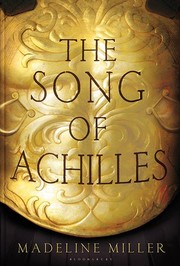
A deeply felt retelling of the Iliad through Patroclus's eyes; having read Homer, you'll catch every echo and feel the full weight of Miller's departures from the original.

Miller gives a minor Odyssey character an entire interior life and feminist arc — a masterclass in how myth can be expanded rather than merely retold.
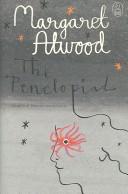
Atwood's razor-sharp novella lets Penelope and her twelve hanged maids speak back to the Odyssey; it crystallises everything the curriculum has built about whose voices ancient myth silences.
Discussion
Keep reading
Paths that share books, cover the same subject, or open a related topic.