Growth marketing: the best books to run experiments that scale
This curriculum takes a beginner from the foundational mindset and mental models of growth, through the mechanics of funnels, experimentation, and virality, and finally into advanced data-driven scaling and retention strategies. Each stage builds the vocabulary and intuition needed to absorb the next, so that by the end the reader can design, run, and scale a full growth marketing system.
Foundations: Mindset & the Growth Framework
BeginnerUnderstand the growth mindset, the concept of product-market fit, and how modern companies think about growth as a system rather than a department.
▸ Study plan for this stage
Pace: 4–5 weeks, ~40–50 pages/day. Start with "The Lean Startup" (2–3 weeks, ~40 pages/day), then move to "Traction" (2 weeks, ~50 pages/day). Build in 2–3 days for review and reflection between books.
- The Build-Measure-Learn feedback loop as the core engine of validated learning and iterative product development
- Pivot vs. persevere decisions: how to use validated learning to decide whether to change strategy or double down
- Product-market fit as the north star metric—understanding when a product truly resonates with customers
- The 19 traction channels (from Traction) and how to systematically test which channels work for your business
- Growth as a system: moving beyond siloed departments to integrate product, marketing, and data into a cohesive growth machine
- Vanity metrics vs. actionable metrics: learning to measure what actually matters for decision-making
- The importance of experimentation culture and rapid iteration over lengthy planning cycles
- How startups and established companies can adopt lean, growth-focused thinking to compete and scale
- What is the Build-Measure-Learn loop, and why is it central to the lean startup methodology?
- How do you distinguish between a pivot and perseverance, and what role does validated learning play in that decision?
- What is product-market fit, and why is it more important than early revenue or user growth metrics?
- What are the 19 traction channels outlined in 'Traction,' and how would you approach systematically testing them for a specific business?
- How does thinking about growth as a system (rather than a department) change the way a company operates and makes decisions?
- What is the difference between vanity metrics and actionable metrics, and why does it matter for growth decisions?
- Map out a Build-Measure-Learn cycle for a real or hypothetical product you're familiar with: define the hypothesis, describe what you'd build to test it, what you'd measure, and what you'd learn.
- Identify a company or product you know well and assess whether it has achieved product-market fit. What evidence supports your conclusion, and what metrics would you use to validate it?
- Choose a business idea or existing product and rank the 19 traction channels from 'Traction' by likelihood of success. Write a 1–2 paragraph justification for your top 3 channels.
- Design a simple experiment to test one assumption about a product or service you use regularly. Define the hypothesis, the test, the metric, and what you'd learn from the result.
- Audit a company's marketing efforts and identify examples of vanity metrics vs. actionable metrics. Propose how they could refocus on metrics that drive better decisions.
- Create a one-page growth system diagram for a startup or company showing how product, marketing, data, and customer feedback loops connect (rather than operating in silos).
Next up: This stage establishes the foundational mindset and frameworks for viewing growth systematically; the next stage will dive into specific growth channels, tactics, and tools to operationalize these principles and execute growth experiments at scale.
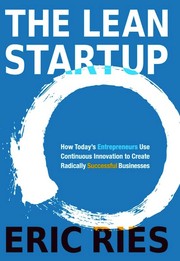
Establishes the build-measure-learn loop and the culture of validated experimentation — the philosophical bedrock every growth marketer must internalize before touching a single metric.
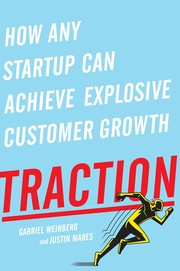
Introduces the 19 acquisition channels and the Bullseye Framework, giving beginners a structured map of where growth can come from before diving into any single tactic.
Funnels & the Customer Journey
BeginnerMaster the AARRR funnel (Acquisition, Activation, Retention, Referral, Revenue) and learn how to diagnose where a growth model is leaking.
▸ Study plan for this stage
Pace: 4–5 weeks, ~40–50 pages/day (approximately 10–12 hours/week)
- The AARRR funnel framework: Acquisition, Activation, Retention, Referral, and Revenue as interconnected stages of the customer journey
- Growth loops and feedback mechanisms: how each stage feeds into the next and where bottlenecks occur
- Activation as the critical bridge: turning acquired users into engaged, value-realizing customers (Hacking Growth's core insight)
- The Hook Model: Trigger → Action → Variable Reward → Investment as the engine of habit formation and retention (Hooked's framework)
- Metrics and diagnostics: identifying which funnel stage is leaking and why, using data to pinpoint problems
- Psychological drivers of user behavior: intrinsic vs. extrinsic motivation, variable rewards, and investment mechanics that drive retention and referral
- Experimentation mindset: running small, rapid tests to optimize each funnel stage rather than relying on intuition
- The relationship between habit formation and growth: how Hooked's Hook Model directly enables the Retention and Referral stages of AARRR
- What are the five stages of the AARRR funnel, and why is Activation often the most critical bottleneck in a growth model?
- How do you diagnose where a customer journey is leaking, and what metrics would you use to measure performance at each AARRR stage?
- Explain the Hook Model (Trigger, Action, Variable Reward, Investment) and describe how it directly supports the Retention and Referral stages of AARRR.
- What is the difference between intrinsic and extrinsic motivation in the Hook Model, and why does this distinction matter for sustainable growth?
- How do growth loops and feedback mechanisms work across the AARRR funnel, and what happens when one stage is optimized without considering the others?
- Design a simple growth experiment: identify a product, map its current AARRR funnel, pinpoint the leakiest stage, and propose a hypothesis-driven test to improve it.
- Map the AARRR funnel for a product you use daily (e.g., Slack, Spotify, TikTok). Identify the key action or metric at each stage and estimate where the biggest drop-off occurs.
- Read Hacking Growth's case studies (Dropbox, Pinterest, Instagram) and extract the specific Activation mechanism each used. Write a one-page summary of why Activation was the growth lever.
- Apply the Hook Model to the same product: identify the Trigger (internal or external), the Action, the Variable Reward, and the Investment. Diagram how these create a habit loop.
- Conduct a mini-audit: interview 3–5 users of a product and ask them to describe their journey from first awareness to regular use. Identify where they almost dropped off and why they stayed—map this to AARRR and Hook Model concepts.
- Design a growth experiment for a real or hypothetical product: state the AARRR stage you're targeting, write a clear hypothesis, define success metrics, and outline the test you'd run over 2 weeks.
- Create a 'leakage diagnosis' document for a product: calculate conversion rates between each AARRR stage, identify the biggest drop-off, and propose 2–3 Hook Model–informed interventions to improve Retention or Referral at that stage.
Next up: This stage equips you with the mental models and diagnostic tools to understand *how* users move through a product and *why* they stick around; the next stage will teach you how to systematically test and optimize each lever at scale using advanced analytics, cohort analysis, and experimentation frameworks.

Coined the term 'growth hacking' and lays out the full cross-functional growth process — from finding your must-have moment to running a growth team — making it the definitive beginner-to-intermediate bridge.

Explains the habit-forming product loop (Trigger → Action → Variable Reward → Investment), which is essential for understanding activation and early retention within the funnel.
Experimentation: A/B Testing & Data-Driven Decisions
IntermediateDesign statistically sound A/B tests, interpret results correctly, and build a repeatable experimentation engine that avoids common pitfalls.
▸ Study plan for this stage
Pace: 8–10 weeks, ~40–50 pages/day (mix of dense technical content and practical case studies)
- Statistical foundations of A/B testing: power, significance, sample size, and effect size calculations
- Threats to validity in online experiments: selection bias, novelty effects, carryover effects, and multiple comparisons
- Designing experiments for actionable results: hypothesis formation, metric selection, and guardrail metrics
- Interpreting results correctly: p-values, confidence intervals, and avoiding false positives/negatives
- Building a repeatable experimentation engine: infrastructure, governance, and organizational culture
- Lean Analytics framework: choosing the right metrics for your business model and stage of growth
- Common pitfalls and how to avoid them: peeking, stopping rules, segment analysis, and external validity
- From experiments to decisions: translating statistical significance into business impact and scaling winners
- What is statistical power, and why is it critical to design experiments with adequate power before running them?
- How do you determine the minimum sample size needed for an A/B test, and what factors influence this calculation?
- What are the main threats to validity in online controlled experiments, and how can you design your test to mitigate them?
- Why is it dangerous to peek at results during an experiment, and what is the correct way to handle early stopping?
- How do you select the right primary metric and guardrail metrics for an experiment, and what makes a metric actionable?
- What is the difference between statistical significance and practical significance, and when should you ship a statistically significant result?
- How does your business model and growth stage determine which metrics you should focus on in your experimentation program?
- What organizational structures and processes are needed to build a sustainable experimentation engine?
- Calculate the required sample size for a hypothetical A/B test using power analysis (e.g., testing a 5% conversion rate improvement with 80% power and 5% significance level)
- Design a complete experiment plan for a real or hypothetical product change: state the hypothesis, define primary and guardrail metrics, specify the sample size, and outline success criteria
- Analyze a published A/B test result (from case studies in the books or online): identify the metrics reported, check for statistical validity, and assess whether the conclusion is justified
- Build a simple experimentation dashboard or spreadsheet that tracks: experiment name, hypothesis, metrics, sample size, duration, results, and decision
- Conduct a mini A/B test on a small scale (e.g., email subject lines, landing page copy, or a feature in a side project) and document the full process from hypothesis to decision
- Identify the AARRR metrics (Acquisition, Activation, Retention, Revenue, Referral) for a specific product or business model, then select which ones are most important to test at different growth stages
Next up: This stage equips you with the statistical rigor and operational discipline to run trustworthy experiments; the next stage will focus on scaling winning experiments into growth programs and integrating experimentation into broader growth strategy.
The definitive, practitioner-written guide to running A/B tests at scale — covers sample sizes, novelty effects, and pitfalls that invalidate results, written by the team behind experimentation at Microsoft and Google.
Teaches which metric to focus on at each stage of a startup (the One Metric That Matters) and how to use data to make decisions, providing the analytical framework that makes experimentation meaningful.
Viral Loops, Referral & Organic Acquisition
IntermediateUnderstand the mechanics of virality, referral programs, and network effects, and learn how to engineer word-of-mouth growth into a product.
▸ Study plan for this stage
Pace: 8–10 weeks, ~25–30 pages/day. "Contagious" (4–5 weeks, ~20 pages/day), then "The Cold Start Problem" (4–5 weeks, ~25–30 pages/day). Allocate 1 week for review, synthesis, and exercises.
- STEPPS framework (Social currency, Triggers, Emotion, Public, Practical value, Stories) as the foundation for contagious ideas and products
- Network effects and how they create exponential growth through user-to-user acquisition
- The Cold Start Problem: why new networks struggle and the specific strategies to overcome it (seeding, single-player mode, asymmetric networks)
- Referral mechanics: designing incentive structures, friction points, and viral loops that encourage word-of-mouth
- The role of social proof, word-of-mouth, and organic acquisition in reducing customer acquisition costs
- Product-market fit for virality: embedding shareability and network effects into product design, not just marketing
- Liquidity and density in networks: understanding why some networks reach critical mass while others stall
- Measuring virality: viral coefficient, K-factor, and how to track and optimize referral loops
- What are the six STEPPS principles from 'Contagious,' and how would you apply each to make a product or feature more shareable?
- What is the Cold Start Problem, and what are the three main strategies Chen outlines to solve it?
- How do network effects differ from traditional marketing, and why do they create exponential rather than linear growth?
- Design a referral loop for a hypothetical product: what are the key friction points, incentives, and mechanisms you'd need to optimize?
- What is the viral coefficient (K-factor), and how would you calculate it for a real product? What K-factor is required for sustainable viral growth?
- How do you balance single-player value with network effects to avoid the Cold Start Problem?
- Analyze three existing products (e.g., Slack, Dropbox, TikTok) and map each STEPPS principle to their growth strategy. Document which principles they emphasize most.
- Audit a product you use regularly for its referral mechanics: identify the viral loop, measure friction, and propose 2–3 optimizations to increase K-factor.
- Design a referral program from scratch for a hypothetical SaaS or consumer product. Include incentive structure, messaging, and a projected viral coefficient.
- Create a Cold Start Problem diagnosis for a real or fictional network product: identify which of Chen's three strategies (seeding, single-player mode, asymmetric networks) would work best and why.
- Calculate the viral coefficient for a real product (or estimate based on public data). Work backward to understand what changes would be needed to reach K > 1.
- Write a case study (2–3 pages) analyzing how one product from the books (e.g., Hotmail, PayPal, Slack) used STEPPS principles and network effects to achieve viral growth.
Next up: This stage equips you with the mechanics of organic, user-driven growth; the next stage will focus on retention, monetization, and scaling—turning viral acquisition into sustainable, profitable business models.

Decodes the six psychological principles (STEPPS) that make ideas and products spread organically — essential intuition before engineering any referral or viral loop.

Provides a rigorous, modern framework for network effects and viral growth, explaining how companies like Uber, Airbnb, and Slack bootstrapped and scaled their networks — the best contemporary book on organic acquisition loops.
Retention, Scaling & Advanced Growth Systems
ExpertBuild long-term retention systems, understand cohort analysis and LTV, and design scalable growth engines that compound over time.
▸ Study plan for this stage
Pace: 4–5 weeks, ~40–50 pages/day. Week 1–2: "Obviously Awesome" (complete); Week 3–5: "Subscribed" (complete), with 2–3 days for integration exercises and case study analysis.
- Positioning as the foundation for retention and growth—how to frame your product so customers understand its value and stay engaged
- The subscription economy model and recurring revenue mechanics—why subscriptions create compounding retention and predictable growth
- Cohort analysis and customer lifecycle stages—tracking how different customer groups behave over time to identify retention leaks
- Jobs to be Done framework applied to retention—understanding what customers actually need to stay loyal and expand usage
- Churn reduction and expansion revenue—designing systems that reduce customer loss and increase lifetime value through upsells and cross-sells
- Scalable growth engines—building repeatable, automated systems that compound retention and revenue without proportional cost increases
- Positioning strategy for different customer segments—tailoring messaging and product experience to maximize retention across cohorts
- How does clear positioning (from 'Obviously Awesome') directly impact customer retention and reduce churn?
- What are the key differences between transactional and subscription business models, and why does the subscription model create stronger retention incentives?
- How do you conduct cohort analysis to identify which customer segments have the highest lifetime value and which are at risk of churning?
- What is the relationship between understanding Jobs to be Done and designing retention features that keep customers engaged long-term?
- How can you design a scalable growth engine that compounds retention and expansion revenue without requiring linear increases in marketing spend?
- What role does positioning play in reducing churn and enabling upsells within a subscription or recurring revenue model?
- Map your product's positioning statement using April Dunford's framework (competitive context, target customer, value proposition, proof). Then audit how this positioning is communicated to existing customers and identify gaps that may be causing churn.
- Conduct a cohort analysis of your customer base (or a case study company): segment customers by acquisition month/channel, track their monthly retention rates, and calculate LTV for each cohort. Identify which cohorts have the best retention and why.
- Design a retention dashboard that tracks: churn rate by cohort, expansion revenue per customer segment, and leading indicators of churn (e.g., feature adoption, engagement frequency). Document what actions you'd take based on each metric.
- Interview 5–10 customers (or analyze existing feedback) to identify their Jobs to be Done. Map these jobs to your current retention features and identify 2–3 gaps where you could improve engagement and reduce churn.
- Build a 12-month LTV model for your business (or a case study): project customer acquisition, cohort retention curves, expansion revenue, and CAC payback period. Stress-test it by varying churn and expansion rates.
- Design a scalable growth engine for one key retention lever (e.g., onboarding, feature adoption, expansion upsells). Document the system, automation, and metrics that would allow it to compound without manual intervention.
Next up: This stage equips you with the strategic frameworks (positioning, cohort analysis, LTV modeling) and operational systems (retention engines, subscription mechanics) needed to move into the next level, where you'll apply these systems to emerging channels, advanced analytics, and international scaling.

Mastering positioning is the prerequisite for retention at scale — this book shows how to frame a product so the right customers arrive and stay, reducing churn at its root cause.

Shifts the reader's mental model from one-time acquisition to recurring revenue and lifetime value, covering the metrics (MRR, churn, NPS) and strategies that define retention-first growth at scale.
Discussion
Keep reading
Paths that share books, cover the same subject, or open a related topic.