Digital marketing: the best books to master the whole funnel
This curriculum takes a beginner from zero digital marketing knowledge to a confident, full-funnel practitioner across four progressive stages. Each stage builds on the last — starting with mindset and strategy, moving through the core channels (SEO, content, paid ads), then tying everything together with analytics and conversion optimization so the learner can measurably turn online strangers into paying customers.
Foundations: Mindset & Strategy
BeginnerUnderstand how digital marketing works as a system, adopt a customer-centric mindset, and learn the vocabulary needed to study every channel that follows.
▸ Study plan for this stage
Pace: 4–5 weeks, ~25–30 pages/day (approximately 2 weeks per book, accounting for reflection and exercise time)
- Marketing as a system of creating change in the world through connection, not manipulation or deception
- The importance of identifying your smallest viable audience and serving them with intention
- Customer-centric thinking: understanding your customer's worldview, desires, and friction points before designing your message
- The StoryBrand framework: positioning your customer as the hero of the story, with your brand as the guide
- Narrative structure in marketing: how to craft a clear message that resonates emotionally and drives action
- The difference between features (what you offer) and benefits (how it changes the customer's life)
- Permission marketing: earning attention through value, not demanding it through interruption
- Empathy as the foundation of effective digital marketing strategy
- According to Seth Godin, what is the core purpose of marketing, and how does it differ from traditional advertising?
- What is a 'smallest viable audience' and why does Godin argue it's more effective than trying to appeal to everyone?
- Explain the StoryBrand framework: what role does your customer play, and what role does your brand play in the narrative?
- How does Donald Miller define the relationship between clarity and conversion in marketing messaging?
- What are the key elements of a clear marketing message, and how do they address customer friction?
- Why is understanding your customer's worldview and desires essential before creating any marketing material?
- Identify your smallest viable audience: write a 1-page profile of the specific customer segment you want to serve, including their frustrations, aspirations, and where they currently seek solutions.
- Map your customer's journey: create a timeline showing the key moments of friction or desire in your customer's life that your product/service addresses.
- Rewrite a current marketing message using the StoryBrand framework: take an existing tagline, ad copy, or elevator pitch and restructure it so the customer is the hero and your brand is the guide.
- Conduct an empathy interview: have a conversation with 1–2 real or ideal customers about their challenges and desires; document their exact words and emotional reactions.
- Audit your current messaging for clarity: review your website, social media, or marketing materials and identify where the message is unclear, feature-focused instead of benefit-focused, or brand-centric instead of customer-centric.
- Create a 'before and after' narrative: write a short story (2–3 paragraphs) showing how a customer's life changes after using your product/service, emphasizing emotional transformation, not just functional benefits.
Next up: This stage establishes the strategic and psychological foundation—the *why* and *how* of customer-centric thinking—that you'll apply to every digital channel ahead, ensuring that whether you're building email campaigns, social media strategies, or paid ads, every tactic is grounded in genuine customer understanding and narrative clarity.
Reframes marketing around serving a specific audience rather than shouting at everyone — the mental model every channel-level tactic should rest on. Read first so every later book has a 'why' behind it.

Gives a repeatable messaging framework (the customer as hero, the brand as guide) that will inform copy, ads, and content throughout the rest of the curriculum.
Organic Growth: SEO & Content Marketing
BeginnerBe able to research keywords, plan and produce content that ranks, and understand how SEO and content marketing work together to attract strangers at the top of the funnel.
▸ Study plan for this stage
Pace: 8–10 weeks, ~25–30 pages/day. Read "Content Machine" (weeks 1–4, ~200 pages), then "The Art of SEO" (weeks 5–10, ~600 pages). Allocate 2–3 days per week for hands-on exercises and keyword research projects.
- Content as a strategic business asset: how consistent, valuable content builds authority and attracts an audience over time (Norris's 'Content Machine' framework)
- Keyword research methodology: identifying search intent, volume, and competition to target the right audience (Enge's core SEO principle)
- On-page SEO fundamentals: title tags, meta descriptions, headers, and content optimization to signal relevance to search engines
- Technical SEO essentials: site structure, crawlability, page speed, and mobile-friendliness as ranking factors
- Content planning and production systems: creating repeatable workflows to publish quality content consistently without burnout
- Search engine algorithms and ranking factors: understanding how Google evaluates and ranks pages to inform content strategy
- Link building and authority: how backlinks and domain authority influence rankings and how to earn them through content quality
- Measuring SEO success: tracking rankings, organic traffic, conversions, and ROI to validate your content and SEO efforts
- How does Dan Norris define a 'Content Machine' and what are the key components required to build one?
- What is search intent and why is it critical to keyword research? How do you identify the intent behind a search query?
- Explain the relationship between on-page optimization and technical SEO. How do both contribute to ranking potential?
- What are the main ranking factors discussed in 'The Art of SEO' and how do they differ in importance?
- How can you create a sustainable content production system that balances quality with consistency?
- What metrics should you track to measure whether your SEO and content marketing efforts are working?
- Conduct a keyword research project for a real or hypothetical business: identify 20–30 target keywords using tools (Google Keyword Planner, SEMrush, Ahrefs), categorize by search intent, and document volume and competition for each.
- Analyze 3–5 top-ranking pages for your target keywords: document their title tags, meta descriptions, headers, word count, and backlink profiles to reverse-engineer what's working.
- Create a 12-week content calendar for a blog or website: plan 12 pieces of content aligned with your keyword research, assign topics to search intent buckets (informational, navigational, transactional), and outline each piece.
- Write and optimize 2–3 pieces of content (800–1,500 words each): apply on-page SEO best practices from Enge (headers, keyword placement, internal links, meta descriptions) and have them reviewed against a checklist.
- Audit a website (yours or a case study) for technical SEO issues: check site structure, mobile-friendliness, page speed, crawlability, and XML sitemaps; document findings and prioritize fixes.
- Set up SEO tracking: establish a baseline for 5–10 target keywords using Google Search Console or a rank tracking tool; document current rankings and plan to monitor progress monthly.
Next up: This stage equips you with the ability to attract strangers through organic search by mastering keyword research, content production, and SEO fundamentals—preparing you to move into the next stage where you'll learn how to convert and nurture those visitors into leads and customers through email, landing pages, and conversion optimization.

A practical, no-fluff introduction to building a content marketing engine from scratch — ideal for beginners before diving into the technical side of SEO.

The most comprehensive and widely respected SEO reference available; read after content fundamentals so the technical depth lands in context rather than in a vacuum.
Paid Acquisition & Email: Accelerating the Funnel
IntermediateDesign and run paid ad campaigns (search and social), write converting email sequences, and understand how paid and owned channels complement organic efforts across the full funnel.
▸ Study plan for this stage
Pace: 8–10 weeks, ~40–50 pages/day (accounting for dense technical content and hands-on campaign setup)
- Google Ads keyword research, bidding strategies, and Quality Score optimization to maximize ROI on search campaigns
- Sales funnel architecture and the role of paid traffic in moving prospects through awareness, consideration, and decision stages
- Email segmentation, list-building mechanics, and sequence design to nurture leads and drive repeat purchases
- Cost per acquisition (CPA) and lifetime value (LTV) metrics to evaluate paid channel profitability
- Landing page psychology and copywriting principles that convert paid traffic into subscribers and customers
- Integration of paid, owned (email), and organic channels to create a cohesive customer journey
- A/B testing frameworks for ads, emails, and landing pages to continuously improve campaign performance
- Funnel-specific email strategies: welcome sequences, product launches, cart abandonment, and re-engagement campaigns
- How do you structure a Google Ads account (campaigns, ad groups, keywords) to maximize Quality Score and minimize cost per click?
- What is a sales funnel, and how do paid ads, landing pages, and email sequences work together to move prospects from awareness to purchase?
- What are the key metrics (CTR, conversion rate, CPA, LTV) you should track to determine if a paid campaign is profitable?
- How do you build an email list using lead magnets and landing pages, and what makes a welcome sequence effective?
- What are the core principles of email segmentation and automation, and how do they improve open rates and conversions?
- How should you design and test landing pages to maximize the conversion of paid traffic into email subscribers or customers?
- Set up a Google Ads account and build a small search campaign for a real or hypothetical product: conduct keyword research, create ad groups, write 3 ad variations, and set bids based on target CPA.
- Map out a complete sales funnel for a product or service: define each stage (awareness, consideration, decision), identify which paid channels serve each stage, and sketch the customer journey.
- Create a lead magnet (e-book, checklist, template) and design a landing page to promote it; drive 50–100 clicks from Google Ads or social media and measure conversion rate.
- Write and launch a 5-email welcome sequence for a new subscriber list: include a thank-you email, product education, social proof, and a soft offer; measure open rates and click-through rates.
- Conduct an A/B test on a Google Ads campaign: test two different ad headlines or landing pages, run for at least 1 week, and analyze which variation performs better based on CTR and conversion rate.
- Build an email automation workflow for a specific scenario (e.g., cart abandonment, post-purchase follow-up, or re-engagement); set up triggers and measure performance metrics.
Next up: This stage equips you with the tactical skills to drive qualified traffic and nurture it into customers; the next stage will likely focus on retention, customer lifetime value optimization, and building a sustainable growth engine through data analysis and scaling.
The canonical beginner-to-intermediate guide for paid search; establishes the logic of intent-based advertising before moving to broader paid social.
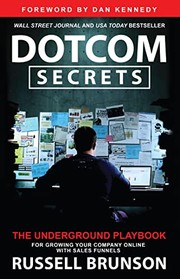
Introduces funnel architecture, value ladders, and email follow-up sequences — the connective tissue that links paid traffic to actual revenue.

Provides the strategic and tactical depth on email marketing that Dotcom Secrets introduces, covering list hygiene, segmentation, and deliverability.
Analytics, Conversion & Optimization: Closing the Loop
ExpertMeasure every stage of the funnel with confidence, run structured experiments to improve conversion rates, and make data-driven decisions that compound results over time.
▸ Study plan for this stage
Pace: 8–10 weeks, ~40–50 pages/day. Allocate roughly 3 weeks to Web Analytics 2.0 (establish measurement foundations), 2.5 weeks to Landing Page Optimization (apply analytics to conversion), and 2.5 weeks to Hacking Growth (systematize experimentation at scale).
- Segmentation and audience analysis: moving beyond aggregate metrics to understand behavior by user cohorts, traffic sources, and customer journeys
- Conversion funnel mapping and bottleneck identification: visualizing where users drop off and why, using Web Analytics 2.0's framework
- Multivariate and A/B testing methodology: designing controlled experiments with clear hypotheses, success metrics, and statistical significance thresholds
- Landing page psychology and persuasion principles: applying behavioral insights to optimize copy, design, and call-to-action placement for higher conversion
- Growth loops and feedback systems: building repeatable, data-driven processes that compound improvements across acquisition, activation, and retention
- Actionable metrics vs. vanity metrics: distinguishing KPIs that drive business outcomes from surface-level numbers that mask real performance
- Experimentation culture and velocity: running rapid, low-cost tests and learning from failures to accelerate optimization cycles
- Attribution and causality: understanding how to connect user actions across touchpoints to revenue and lifetime value, not just last-click conversions
- How do you segment your audience in Web Analytics 2.0, and what insights can you extract from comparing behavior across segments that aggregate data would hide?
- Walk through a conversion funnel for a real product or service: where are the critical drop-off points, and what hypotheses would you test to improve each stage?
- What is the difference between a vanity metric and an actionable metric, and how would you redesign a dashboard to focus on metrics that drive business decisions?
- Design a multivariate test for a landing page: what elements would you vary, what is your primary success metric, and how would you determine statistical significance?
- Explain the relationship between landing page optimization and conversion rate improvement: how do psychological principles from Landing Page Optimization translate into measurable gains?
- Describe a growth loop: how do you identify the key feedback mechanisms in your funnel, and what metrics would you track to ensure the loop compounds over time?
- What role does experimentation velocity play in growth, and how would you structure a team or process to run more tests faster without sacrificing rigor?
- Set up a segmentation analysis in Google Analytics (or similar tool) for a real or hypothetical website: create at least 4 segments (by traffic source, device, geography, user behavior) and document 2–3 insights per segment that aggregate data would miss.
- Map a complete conversion funnel for a product you use regularly: identify each step, estimate drop-off rates, and hypothesize the top 3 reasons users abandon at each stage.
- Audit your own (or a competitor's) landing page against the persuasion principles in Landing Page Optimization: score each element (headline, social proof, CTA, form fields, etc.) and draft 3 specific optimization recommendations with rationale.
- Design a multivariate test plan for a landing page: define your hypothesis, list 2–3 elements to vary, specify your primary and secondary metrics, calculate required sample size, and outline how you'd interpret results.
- Build a simple growth loop for a hypothetical SaaS product: identify the core user action that drives retention and referral, map the feedback mechanism, and specify 4–5 metrics you'd track weekly to validate the loop is compounding.
- Conduct a competitive analysis of 3 landing pages in the same vertical: compare their use of copy, design, social proof, and CTAs; identify patterns in high-converting pages and draft a hypothesis for your own landing page test.
Next up: This stage equips you with the analytical rigor and experimentation discipline to measure and optimize every funnel stage; the next stage will likely expand this foundation to channel-specific strategies, advanced attribution models, or scaling acquisition and retention systems across multiple channels and markets.
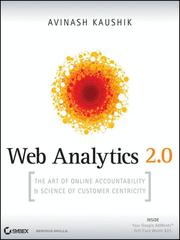
The definitive guide to thinking analytically about digital data — teaches how to ask the right questions before touching any dashboard or tool.
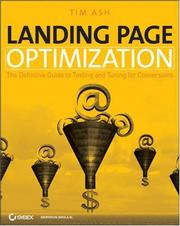
Focuses on converting the traffic all previous channels deliver, bridging analytics insight with concrete page-level and UX improvements.

Caps the curriculum by showing how world-class teams run cross-channel growth experiments systematically — the advanced mindset that ties SEO, paid, content, email, and analytics into one continuous improvement loop.
Discussion
Keep reading
Paths that share books, cover the same subject, or open a related topic.