Eastern Philosophy: Best Books to Read, in Order
This curriculum moves from accessible, panoramic introductions to Eastern thought, through the primary scriptures and classical texts of each tradition, and finally into deeper philosophical and comparative analysis. Each stage builds the conceptual vocabulary—karma, dharma, the Tao, emptiness, ren—needed to engage meaningfully with the more demanding texts that follow.
The Big Picture: Orienting Yourself
BeginnerGain a clear, bird's-eye map of all four traditions—Hindu, Buddhist, Taoist, and Confucian—so that later deep dives have context and don't feel isolated.
▸ Study plan for this stage
Pace: 4–5 weeks, ~25–30 pages/day (approximately 150–180 pages/week)
- The four major Eastern philosophical traditions (Hinduism, Buddhism, Taoism, Confucianism) and their historical origins and geographical contexts
- Core metaphysical assumptions in each tradition: the nature of reality, the self, and the ultimate goal (moksha, nirvana, the Tao, harmony)
- The role of sacred texts and foundational figures in each tradition (Vedas, Buddha, Laozi, Confucius) and how they shaped philosophical development
- Key differences in how each tradition approaches ethics, spirituality, and the human condition
- The interconnections and cross-pollinations between traditions, particularly how Buddhism adapted to different cultures
- How Eastern philosophy contrasts with Western philosophical assumptions about knowledge, truth, and human purpose
- What are the four major Eastern philosophical traditions, and what are their approximate origins and geographical centers?
- How does each tradition define the ultimate goal or highest good (moksha in Hinduism, nirvana in Buddhism, alignment with the Tao in Taoism, social harmony in Confucianism)?
- What are the core metaphysical differences between how Hinduism and Buddhism view the self and reality?
- How do the ethical frameworks of Confucianism and Taoism differ in their approach to human conduct and society?
- What role do sacred texts and founding figures play in establishing the authority and direction of each tradition?
- How did Buddhism transform as it spread from India to China, Tibet, Japan, and Southeast Asia, and why?
- Create a four-column comparison chart (one column per tradition) listing: founding figure(s), key sacred texts, core metaphysical beliefs, and ultimate goal. Update it as you read both books.
- Write a one-page 'origin story' for each tradition summarizing how it emerged, what problem it was trying to solve, and who its key early figures were.
- Draw or diagram the 'family tree' of how Buddhism branched into different schools (Theravada, Mahayana, Vajrayana) as it spread geographically; note which regions adopted which forms.
- After finishing Smith, create a 'worldview snapshot' for each tradition answering: What is real? What is the self? What is the goal? What is the path? Compare these snapshots across traditions.
- Read the introductory chapters of Smith's book aloud or summarize them verbally to someone else; this forces you to organize ideas coherently and reveals gaps in understanding.
- Identify 3–4 key quotes from each tradition (one from each book) that best capture its essential philosophy, and write a 2–3 sentence explanation of why each quote matters.
Next up: This stage equips you with a mental scaffold of all four traditions' core assumptions and historical trajectories, so that the next stage's deeper exploration of specific texts, figures, and philosophical problems will feel like zooming in on a map you've already studied, rather than encountering isolated fragments."
The single best starting point for any newcomer: Smith writes with clarity and genuine reverence, giving each tradition a fair, accessible chapter that introduces core concepts without oversimplifying. Read this first to build a shared vocabulary for everything that follows.

A compact, chronological survey that profiles the key figures—from the Upanishadic sages to Confucius to Nagarjuna—giving the learner a timeline and cast of characters before diving into primary texts.
Hindu & Vedic Foundations
BeginnerUnderstand the core ideas of Hinduism—Brahman, Atman, dharma, karma, moksha, and the paths of yoga—through its most beloved and accessible scriptures.
▸ Study plan for this stage
Pace: 4–5 weeks, ~25–30 pages/day. Week 1–2: The Upanishads (primary text ~200 pages); Week 3: Upanishads conclusion & review; Week 4–5: The Bhagavad Gita (~200 pages) with reflection time.
- Brahman as ultimate reality—the infinite, eternal consciousness underlying all existence
- Atman as the individual self, identical with Brahman (Tat Tvam Asi—'Thou Art That')
- Dharma as righteous duty and cosmic order; karma as the law of cause and effect governing all actions
- Moksha as liberation from the cycle of rebirth (samsara) through self-realization
- The three yogas—Karma Yoga (action), Bhakti Yoga (devotion), and Jnana Yoga (knowledge)—as paths to liberation
- The Upanishads as philosophical inquiry into the nature of reality and self through dialogue and meditation
- The Bhagavad Gita as practical guidance on dharma, duty, and spiritual practice in the midst of worldly life
- What is Brahman, and how does the Upanishadic concept of Tat Tvam Asi ('Thou Art That') relate Atman to Brahman?
- Explain the relationship between karma, dharma, and moksha in Hindu philosophy as presented in these texts.
- What are the three main yogas described in the Bhagavad Gita, and how does each offer a path to liberation?
- How does Krishna's teaching to Arjuna in the Bhagavad Gita address the tension between duty (dharma) and personal desire or fear?
- What role does meditation and self-inquiry play in the Upanishads' approach to realizing Brahman?
- How do the Upanishads and the Bhagavad Gita differ in their approach—one philosophical, one practical—yet complement each other?
- Daily meditation practice (10–15 minutes): Sit quietly and contemplate one Upanishadic teaching, such as 'Aham Brahmasmi' ('I am Brahman'), allowing it to settle into awareness.
- Journaling reflection: After each major Upanishad section, write 1–2 pages exploring how the concept of Atman-Brahman identity challenges your sense of separate self.
- Study the Bhagavad Gita's three yogas in practice: Spend one week emphasizing Karma Yoga (mindful action in daily tasks), one week Bhakti Yoga (devotion through gratitude/service), and one week Jnana Yoga (study and contemplation).
- Dialogue practice: Re-read key passages from the Upanishads (e.g., the Chandogya Upanishad's teaching between Uddalaka and Svetaketu) and write out your own questions and answers to deepen understanding.
- Create a personal dharma map: Identify your core duties and responsibilities (family, work, community) and reflect on how the Bhagavad Gita's teaching on dharma applies to your life.
- Comparative analysis chart: Create a table comparing how the Upanishads and Bhagavad Gita each address the same core concepts (Brahman, karma, liberation), noting which resonates more with you and why.
Next up: This stage establishes the philosophical and spiritual foundations of Hindu thought—the metaphysical framework (Brahman, Atman, karma, moksha) and the practical paths (yoga) that all subsequent Hindu and broader Eastern philosophical traditions build upon, preparing you to explore how these ideas develop, diversify, and interact with other Eastern philosophies.
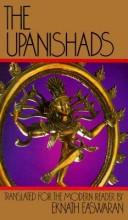
Easwaran's translation of the principal Upanishads is the most reader-friendly available; his introductions explain the Atman-Brahman identity and the nature of consciousness in plain language. Start here to grasp the metaphysical bedrock of all Hindu thought.
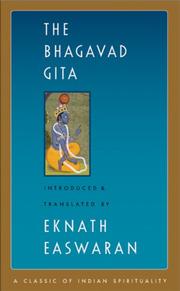
The Gita synthesizes the Upanishadic philosophy into a dramatic, practical dialogue on duty, devotion, and liberation. Easwaran's translation again provides essential context, and reading it after the Upanishads makes Krishna's teachings land with full force.
Buddhist & Taoist Classics
IntermediateEngage directly with the foundational texts of Buddhism and Taoism, understanding the Four Noble Truths, the nature of the self, the Tao, and wu-wei as philosophical positions rather than mere beliefs.
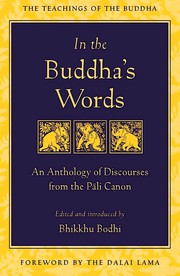
A masterfully curated anthology drawn directly from the Pali Canon, organized thematically so the reader encounters the Buddha's own teachings on suffering, the path, and nirvana in a logical progression. This is the most authoritative beginner-to-intermediate entry into early Buddhism.

Complements Bodhi's anthology by explaining core Buddhist concepts—the Five Aggregates, interbeing, the Noble Eightfold Path—in warm, modern prose. Read it alongside or just after Bodhi to consolidate understanding.
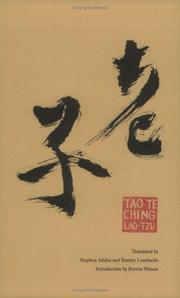
The founding text of Taoism; Stephen Mitchell's widely praised translation makes the 81 verses approachable. After the structured ethics of the Gita and Buddhism, the Tao Te Ching's paradoxical, poetic style deliberately challenges the reader to think differently about knowledge and action.
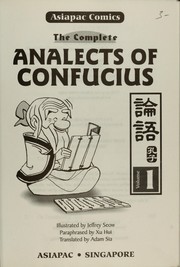
The primary source for Confucian thought on virtue, ritual, relationships, and governance. D.C. Lau's translation with commentary is the standard scholarly yet readable edition; placing it here lets the reader contrast Confucius's social ethics directly with the more inward-looking traditions just studied.
Going Deeper: Advanced Texts & Schools
ExpertWrestle with the more rigorous philosophical arguments within each tradition—Madhyamaka emptiness, Zen, Neo-Confucianism, and Taoist inner cultivation—developing the ability to think critically within and across these systems.
▸ Study plan for this stage
Pace: 4–5 weeks, ~20–25 pages/day (with re-reading of dense passages)
- The doctrine of sudden enlightenment (tun wu) and its rejection of gradual cultivation
- Mind-only (cittamatra) philosophy: the nature of consciousness and the unreality of external objects
- The concept of 'no-mind' (wu-hsin) and the dissolution of subject-object duality
- Buddha-nature as universal and instantaneous rather than something to be attained
- The paradox of language and transmission: how teaching points beyond words
- Negation as a philosophical method—what Zen rejects and why
- The relationship between emptiness and the absolute mind in Huang Po's system
- What does Huang Po mean by 'sudden enlightenment,' and how does it differ from gradual spiritual practice?
- How does Huang Po use the concept of 'Mind' (with capital M), and what is its relationship to individual consciousness?
- Explain the paradox of transmission in Zen: if enlightenment cannot be taught, why does Huang Po teach?
- What role does negation and rejection play in Huang Po's philosophical arguments?
- How does Huang Po's 'mind-only' doctrine compare to the idealism you've encountered in earlier Buddhist philosophy?
- What does Huang Po mean when he says there is 'nothing to attain'? How does this relate to the concept of Buddha-nature?
- Close-read one of Huang Po's most paradoxical passages (e.g., on the unreality of external objects) and write a 2–3 page exegesis explaining how his negations build a coherent philosophical position
- Create a comparison chart: map Huang Po's key claims against the Madhyamaka emptiness doctrine from your earlier readings—where do they align and diverge?
- Practice Zen-style questioning: for each major teaching, write out the objection a skeptical student might raise, then draft Huang Po's likely response based on the text
- Meditative exercise: sit for 15–20 minutes daily and attempt to observe the 'no-mind' state Huang Po describes; journal afterward on whether the philosophical concept illuminates or complicates the experience
- Write a dialogue between Huang Po and a Neo-Confucian interlocutor (from your later readings) debating the nature of human nature and self-cultivation—use textual evidence from Huang Po
- Identify and analyze 3–4 instances where Huang Po explicitly rejects a common Buddhist or philosophical assumption; explain why rejection serves his pedagogical purpose
Next up: Huang Po's radical negation and mind-only philosophy establish the Zen critique of conceptual understanding, preparing you to examine how other Eastern schools (Neo-Confucianism, Taoism) either embrace or resist this anti-intellectual stance in their own approaches to self-cultivation and enlightenment.

A direct record of a Tang-dynasty Zen master's dialogues, this text pushes the reader beyond conceptual Buddhism into the experiential logic of non-duality. It rewards the groundwork laid in Stage 3 and shows how Buddhist philosophy becomes a living practice.
Brook Ziporyn's translation of the Zhuangzi takes Taoist philosophy far beyond the Tao Te Ching into playful, radical arguments about perspective, language, and the limits of knowledge. Reading it after the Tao Te Ching reveals the full philosophical depth of the Taoist tradition.
Synthesis & Comparative Mastery
ExpertStep back and view all four traditions together through a philosophical lens, identifying shared themes, key differences, and the enduring relevance of Eastern thought for contemporary life.
▸ Study plan for this stage
Pace: 4–5 weeks, ~25–30 pages/day. The book is ~350 pages; allow time for reflection on cross-tradition connections and rereading dense comparative passages.
- Parallels between quantum mechanics and Eastern philosophical concepts (complementarity, interconnectedness, observer-dependent reality)
- The Taoist view of nature as dynamic, flowing, and non-dualistic—and its resonance with modern physics
- Buddhist concepts of impermanence and emptiness as frameworks for understanding subatomic phenomena
- The limits of Western reductionist thinking and the holistic worldview embedded in Eastern traditions
- How Eastern philosophy anticipated or aligns with 20th-century scientific discoveries (uncertainty principle, relativity, systems thinking)
- The role of consciousness and observation in both Eastern mysticism and quantum theory
- Practical implications: moving from fragmented to integrated understanding of reality
- What are the key parallels Capra draws between Taoist philosophy and the findings of modern physics? How do concepts like wu wei (non-action) relate to quantum indeterminacy?
- How does the Buddhist concept of dependent origination compare to the interconnectedness described in quantum field theory and systems biology?
- What does Capra mean by the 'bootstrap hypothesis' and how does it reflect Eastern ideas about the self-consistency of reality?
- In what ways does the observer effect in quantum mechanics validate the Eastern philosophical emphasis on the role of consciousness in shaping reality?
- How does Capra argue that Eastern holism offers a corrective to Western scientific reductionism? What are the strengths and limitations of this argument?
- How might the insights from this synthesis change the way you approach problems in your own life or field of work?
- Create a two-column comparison chart: list key Eastern philosophical concepts (from all four traditions studied so far) on one side and corresponding modern physics principles on the other. Annotate with page references from Capra.
- Write a 2–3 page reflection essay: 'How does understanding the physics-philosophy connection deepen or challenge my previous understanding of Eastern thought?' Ground it in specific examples from the book.
- Select one major scientific discovery or principle (e.g., uncertainty principle, relativity, systems theory) and trace its conceptual roots in Eastern philosophy using Capra's analysis. Present your findings in a short outline or diagram.
- Engage in a 'reverse reading' exercise: take a passage from Capra on quantum mechanics and rewrite it using only Taoist or Buddhist language, then compare how much meaning is preserved or lost.
- Conduct a personal thought experiment: identify a real-world problem (personal, professional, or social) and apply both reductionist Western thinking and holistic Eastern thinking to it. Document how each approach yields different insights.
- Facilitate or participate in a discussion group: present one key parallel from Capra to peers and debate whether the analogy is genuine insight or metaphorical overreach. Record counterarguments and refine your own position.
Next up: This stage synthesizes all four Eastern traditions through the lens of modern science, establishing that Eastern philosophy is not merely historical wisdom but a living framework for understanding contemporary reality—positioning the reader to apply these integrated insights to practical, real-world challenges in the final stage.
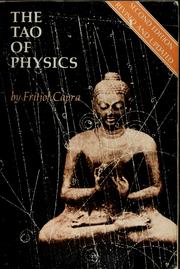
A thought-provoking capstone that draws parallels between Eastern philosophical concepts—Tao, Brahman, sunyata—and modern physics, challenging the reader to synthesize everything learned and consider its broader implications. Best read last, when all traditions are already well understood.
Discussion
Keep reading
Paths that share books, cover the same subject, or open a related topic.