How to learn Meditation & mindfulness
This curriculum takes a complete beginner from their very first breath of mindfulness all the way to a deep, practice-grounded understanding of meditation's philosophical and neuroscientific roots. Each stage builds on the last: you first develop a stable daily practice, then deepen your understanding of the mind, then explore the traditional and scientific frameworks that explain why it all works.
First Breaths — Building a Daily Practice
BeginnerEstablish a consistent, comfortable meditation habit and understand the core vocabulary of mindfulness (breath, attention, awareness, non-judgment).
▸ Study plan for this stage
Pace: 8–10 weeks total, reading roughly 20–25 pages per day on weekdays with weekends reserved for reflection and practice. Suggested pacing: Weeks 1–3 for "Wherever You Go, There You Are" (~160 pages, leisurely and contemplative — re-read favourite chapters); Weeks 4–6 for "The Miracle of Mindfulness" (~
- Breath as anchor: all three authors return to the breath as the primary object of attention — Kabat-Zinn calls it 'the most portable meditation object you own,' and Thích Nhất Hạnh's dishwashing and tangerine exercises show it applies to any moment.
- Present-moment awareness: Kabat-Zinn's central thesis that 'wherever you go, there you are' means the present is the only place practice can happen; past and future are mental constructs.
- Non-judgmental observation: Kabat-Zinn's foundational attitude of watching thoughts and sensations without labeling them good or bad — a skill Harris discovers painfully through his own anxious, self-critical inner monologue.
- Formal vs. informal practice: Thích Nhất Hạnh distinguishes sitting meditation (formal) from mindful dishwashing, walking, and eating (informal), showing that practice is not confined to a cushion.
- The 'monkey mind' and its manageability: Harris borrows this concept to describe the restless, narrative-spinning default mind, and all three books offer the same antidote — gentle, repeated return of attention without self-punishment.
- Beginner's mind (Shoshin): Kabat-Zinn emphasises approaching each breath, each moment, as if for the first time — a stance that prevents boredom and keeps practice alive.
- Consistency over intensity: Harris's secular, skeptic-friendly framing makes the case that even 5–10 minutes daily compounds into measurable change, lowering the bar for beginners intimidated by long retreats.
- Non-striving: Kabat-Zinn's paradox that meditation has no goal — the moment you try to 'achieve' calm, you introduce the very tension you hoped to dissolve — is echoed in Thích Nhất Hạnh's gentle instruction to 'just wash the dishes to wash the dishes.'
- In your own words, what does Kabat-Zinn mean by 'full catastrophe living,' and why does he argue that ordinary daily life — not a retreat — is the ideal training ground for mindfulness?
- Thích Nhất Hạnh uses the image of washing dishes as if they were 'the baby Buddha.' What principle does this illustrate, and how does it redefine what counts as 'meditation time'?
- Dan Harris describes himself as a skeptic who resisted meditation for years. What specific experiences and evidence finally convinced him, and what does his journey reveal about common beginner misconceptions?
- All three books address what happens when the mind wanders during meditation. How does each author instruct the reader to respond to distraction, and what do their answers have in common?
- What is the difference between 'awareness' and 'attention' as used by Kabat-Zinn, and why does that distinction matter for a beginner trying to understand what they are actually doing on the cushion?
- After reading all three books, how would you explain 'non-judgment' to someone who has never meditated — using at least one concrete example drawn from any of the three texts?
- Daily breath anchor (5 → 15 min ramp): Starting in Week 1, sit for 5 minutes each morning focusing only on the physical sensation of breathing — the rise of the chest, the pause, the fall. Add 2 minutes each week until you reach 15 minutes by Week 8. Log the date, duration, and one-word mood before and after in a notebook.
- The Thích Nhất Hạnh 'one task' drill: Once per day, choose a routine chore (washing dishes, brushing teeth, folding laundry) and perform it with complete, unhurried attention as instructed in 'The Miracle of Mindfulness.' Afterward, write two sentences: what you noticed, and what your mind tried to pull you toward instead.
- Monkey-mind inventory (Harris-inspired): At the end of each day, spend 3 minutes writing down the top 3 recurring thoughts or worries that hijacked your attention. After two weeks, review the list — notice patterns without trying to fix them. This mirrors Harris's own self-observation practice before he began formal meditation.
- Beginner's mind object meditation (Kabat-Zinn): Once per week, pick an ordinary object (a raisin, a stone, a glass of water) and spend 5 minutes examining it as if you have never seen it before — texture, weight, colour, smell. Reflect in your journal on how 'beginner's mind' felt different from your usual automatic perception.
- Weekly 'non-judgment' journaling: After each sitting session, write for 5 minutes about whatever arose — boredom, restlessness, calm, sleepiness — using only descriptive language (no 'good session' or 'bad session'). Practice replacing evaluative words with neutral ones, directly applying Kabat-Zinn's non-judgmental attitude.
- End-of-stage integration sit: In Week 10, do a single 20-minute unguided sitting session. Afterward, write a one-page reflection answering: Which of the three authors' voices felt most natural to you as an inner guide, and why? This surfaces your personal learning style and points toward the next stage of reading.
Next up: ">Having built a stable daily habit and absorbed the core vocabulary of mindfulness through these three accessible, experience-first books, the reader is now ready to move into a more structured or tradition-grounded stage — exploring the psychological mechanisms behind why practice works (e.g., neuroscience of mindfulness) or deepening into a specific lineage — without being overwhelmed, because

The perfect first book: short, warm, and jargon-free. Kabat-Zinn coined the clinical definition of mindfulness and gently introduces the reader to informal and formal practice without overwhelming them.
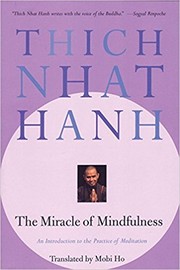
A slim, poetic guide that teaches mindfulness through everyday activities like washing dishes and walking. Read second to reinforce Kabat-Zinn's ideas with a more contemplative, story-driven voice.

A skeptic's honest memoir of discovering meditation. Its conversational tone and humor help beginners overcome resistance and self-doubt before moving to more structured instruction.
Going Deeper — Structured Technique & the Wandering Mind
BeginnerLearn specific, repeatable meditation techniques (breath, body scan, loving-kindness) and understand why the mind wanders and how to work with it skillfully.
▸ Study plan for this stage
Pace: 6–8 weeks total. Week 1–4: "Mindfulness in Plain English" (~20–25 pages/day, reading one chapter per sitting and pausing to practice before moving on). Week 5–8: "Real Happiness" (~15–20 pages/day, following Salzberg's 28-day program structure as closely as possible — ideally one week of her program
- The three characteristics of existence (impermanence, unsatisfactoriness, no-self) as the philosophical backbone of mindfulness practice, introduced by Gunaratana
- Bare attention: observing experience without adding commentary, judgment, or preference — Gunaratana's central instruction
- The mechanics of breath meditation: posture, the anchor point of the breath, and how to return attention without self-criticism (Mindfulness in Plain English, Ch. 7–8)
- The nature of the wandering mind: Gunaratana's explanation that distraction is not failure but the very material of practice — noticing, naming, and returning
- Hindrances to meditation (desire, aversion, sloth, restlessness, doubt) and Gunaratana's practical antidotes for each
- The body scan as a systematic technique for grounding awareness in physical sensation, introduced through Salzberg's Week 2 program in Real Happiness
- Loving-kindness (metta) meditation: Salzberg's four-phrase framework, the sequence of recipients (self → loved ones → neutral → difficult → all beings), and why self-compassion is the foundation
- Working skillfully with distraction: Salzberg's 'begin again' instruction as a reframe — every return of attention is a moment of awakening, not a recovery from failure
- According to Gunaratana, what is 'bare attention' and how does it differ from ordinary, reactive awareness?
- What are the five hindrances Gunaratana describes, and what is at least one practical strategy he offers for working with each?
- Why do both Gunaratana and Salzberg insist that a wandering mind is not a sign of doing meditation wrong — and what should a meditator do the moment they notice they have wandered?
- How does Salzberg structure the loving-kindness practice in Real Happiness, and why does she begin with directing metta toward oneself before others?
- What role does the body scan play in Salzberg's 28-day program, and how does it complement breath meditation rather than replace it?
- How do the philosophical ideas in Mindfulness in Plain English (impermanence, no-self) connect to the practical instructions in Real Happiness — can you trace one idea across both books?
- Daily sit (start at 10 minutes, build to 20–25 minutes by week 6): use Gunaratana's breath-anchor instructions from Ch. 7–8 as your primary technique for the first four weeks
- Distraction log: after each sit, jot down the top 2–3 recurring distractions (planning, memory, physical discomfort, etc.) and identify which of Gunaratana's five hindrances each belongs to — review patterns weekly
- Body scan practice: during weeks 5–6, replace one breath-meditation sit per day with Salzberg's body scan (Week 2 of Real Happiness), moving slowly from feet to crown and noting sensation without trying to change it
- Loving-kindness rotation: in weeks 7–8, practice Salzberg's four-phrase metta sequence for 10 minutes at the end of each sit — keep a brief journal noting which recipient category (self, loved one, neutral, difficult person) feels easiest and hardest, and why
- 'Begin again' tally: for one full week, place a small mark on paper each time you notice you have wandered and return — at the end of the week, reread Salzberg's framing of this moment and reflect on whether your attitude toward the tally has shifted
- Concept-bridge reflection: after finishing both books, write one page connecting a single idea from Gunaratana (e.g., impermanence or a specific hindrance) to a specific instruction or story in Salzberg — articulate how the theory and the technique illuminate each other
Next up: Mastering these foundational techniques and understanding the wandering mind prepares the reader to explore how sustained practice reshapes attention, emotion, and identity over time — the territory of deeper, insight-oriented stages of the curriculum.
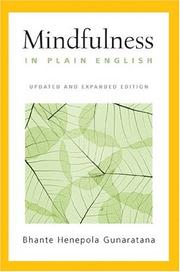
The most practical step-by-step manual for insight (vipassana) meditation available in English. Now that you have motivation from Stage 1, this book gives you the exact 'how' of sitting practice.
A structured 28-day program covering breath, body, emotions, and loving-kindness. Salzberg's clear instructions and weekly progression make it the ideal companion workbook to Gunaratana's theory.
The Mind Examined — Psychology & the Nature of Thought
IntermediateUnderstand the psychological mechanisms behind mindfulness — how thoughts arise, how emotions are processed, and how practice rewires habitual mental patterns.
▸ Study plan for this stage
Pace: 6–8 weeks total: Weeks 1–3 cover "The Mind's Own Physician" (~25–30 pages/day, including pausing to reflect on the dialogue-based format); Weeks 4–7 cover "Altered Traits" (~20–25 pages/day, with slower reading around the neuroscience chapters); Week 8 is a dedicated integration and review week with
- The mind-body connection as a scientific and clinical reality — Kabat-Zinn's dialogues with scientists and clinicians reveal how mindfulness bridges subjective experience and measurable biology
- MBSR (Mindfulness-Based Stress Reduction) as a structured psychological intervention — understanding its design logic, not just its techniques
- The difference between 'state' effects and 'trait' effects of meditation — Goleman & Davidson's central distinction between temporary shifts during practice vs. lasting changes in baseline personality and cognition
- How thoughts arise and pass — the psychological model of automatic, habitual thought patterns (rumination, reactivity) and how awareness interrupts them
- Neuroplasticity as the mechanism of lasting change — how sustained practice physically rewires attention networks, the amygdala's threat response, and the default mode network
- The hierarchy of meditators (novice, long-term, Olympic-level) — Goleman's framework for understanding dose-dependent effects and what the research actually proves at each level
- Emotional regulation vs. emotional suppression — the critical distinction between mindfulness-based processing of emotion and mere avoidance or control
- The 'deep' vs. 'wide' research problem — Goleman & Davidson's honest critique of weak methodology in mindfulness science, teaching the reader to read studies critically
- According to Kabat-Zinn and the scientists he dialogues with in 'The Mind's Own Physician,' what are the proposed biological pathways through which mindfulness practice influences physical and mental health outcomes?
- What is the core distinction Goleman and Davidson draw in 'Altered Traits' between a 'state' and a 'trait,' and why does this distinction matter for evaluating mindfulness research claims?
- How do both books characterize the role of attention — its trainability, its default tendencies, and its relationship to suffering — and where do their perspectives converge or diverge?
- What methodological flaws does 'Altered Traits' identify as most common in mindfulness research, and how should an informed practitioner use this critique when reading popular mindfulness claims?
- How does the concept of the default mode network (mind-wandering, self-referential thought) connect the psychological mechanisms described in 'The Mind's Own Physician' to the neuroscientific findings in 'Altered Traits'?
- Based on both books, what level and consistency of practice does the evidence suggest is required to produce genuine, lasting trait-level changes — and what does that imply for a personal practice?
- Thought-labeling journal (ongoing, daily): After each sitting practice, spend 5 minutes writing down the categories of thoughts that arose (planning, judging, remembering, fantasizing). Track whether patterns shift over the 8 weeks — this directly operationalizes the 'automatic thought patterns' concept from both books.
- Research claim audit: Select 3 popular mindfulness articles or app marketing claims and evaluate them using Goleman & Davidson's methodological checklist from 'Altered Traits' (active control group? long-term follow-up? replication?). Write a one-paragraph verdict on each.
- State vs. trait self-assessment: At the start of Week 4 and again at the end of Week 8, rate yourself on 5 emotional traits (reactivity, patience, focus, compassion, rumination tendency) on a 1–10 scale. Reflect in writing on whether any shifts feel like temporary states or emerging traits.
- Dialogue reconstruction exercise: 'The Mind's Own Physician' is structured as conversations. Choose one scientist's perspective from the book and write a one-page imagined follow-up dialogue between that scientist and Goleman/Davidson — forcing integration of both books' frameworks.
- Neuroplasticity mapping: Draw a simple diagram connecting a mindfulness practice (e.g., breath focus) → the psychological mechanism it targets (e.g., mind-wandering) → the brain structure involved (e.g., default mode network) → the trait-level outcome (e.g., reduced rumination). Use only evidence cited in the two books.
- Dose-response reflection: Using Goleman's hierarchy of novice/long-term/Olympic meditators as a framework, honestly place yourself on the spectrum and write a concrete 3-month practice plan that is calibrated to what the evidence says is achievable at your level.
Next up: By establishing how thoughts and emotions are psychologically and neurologically processed — and what rigorous practice actually changes — this stage equips the reader to engage meaningfully with deeper contemplative traditions and philosophy, where the next stage will ask not just *how* the mind changes, but *what the mind fundamentally is*.

A dialogue between leading neuroscientists and the Dalai Lama, this book bridges clinical psychology and contemplative tradition, giving the reader a richer mental model of what meditation actually does.

A rigorous, myth-busting review of the scientific research on meditation. Reading it here prevents the intermediate practitioner from holding inflated expectations and grounds the practice in evidence.
The Roots — Buddhist Philosophy & Contemplative Depth
ExpertEngage with the original philosophical framework from which mindfulness emerged — impermanence, suffering, non-self — and understand how classical teachings map onto modern practice.
▸ Study plan for this stage
Pace: 12–16 weeks total, roughly 20–25 pages/day. Allocate ~5 weeks to "In the Buddha's Words" (it is dense Pali Canon source material — read slowly, journal daily), ~4 weeks to "The Heart of the Buddha's Teaching" (more accessible but rich; re-read key chapters), and ~4–5 weeks to "The Mind Illuminated"
- The Three Marks of Existence (tilakkhaṇa): impermanence (anicca), suffering/unsatisfactoriness (dukkha), and non-self (anattā) — the philosophical bedrock underlying all mindfulness practice, drawn directly from the suttas in 'In the Buddha's Words'.
- The Four Noble Truths and the Eightfold Path as a complete diagnostic-and-prescriptive framework, explored in both canonical form (Bhikkhu Bodhi) and accessible synthesis (Thích Nhất Hạnh's 'The Heart of the Buddha's Teaching').
- Dependent Origination (paṭicca-samuppāda): the twelve-link chain showing how suffering arises and ceases — understanding this moves practice beyond stress-reduction into genuine liberation-oriented inquiry.
- The Five Aggregates (khandhas): form, feeling-tone, perception, mental formations, and consciousness — the Buddhist 'map' of what we take to be a self, essential for non-self contemplation.
- Satipaṭṭhāna — the four foundations of mindfulness (body, feeling-tones/vedanā, mind states, and dhammas) as laid out in the suttas and unpacked by Thích Nhất Hạnh, providing the canonical basis for all formal mindfulness technique.
- Culadasa's two-component model of attention and peripheral awareness, and his ten-stage map of samatha-vipassanā integration in 'The Mind Illuminated' — showing how classical jhāna theory translates into a structured, stagewise training system.
- The role of śīla (ethical conduct) as the indispensable foundation for samādhi and paññā — Thích Nhất Hạnh's treatment of the Five Mindfulness Trainings grounds this practically.
- Insight (vipassanā) vs. tranquility (samatha): understanding how these two wings of practice are distinguished in the canonical texts yet unified in Culadasa's model, and why both are necessary for awakening.
- After reading 'In the Buddha's Words,' can you explain — in your own words and without jargon — what the Buddha meant by 'dukkha,' and why the translation 'suffering' is considered incomplete by Bhikkhu Bodhi?
- How does Thích Nhất Hạnh's presentation of the Eightfold Path in 'The Heart of the Buddha's Teaching' differ in tone and emphasis from the canonical suttas in 'In the Buddha's Words,' and what does that difference reveal about the role of a teacher in transmitting the Dharma?
- What is the relationship between vedanā (feeling-tone: pleasant, unpleasant, neutral) and the arising of craving (taṇhā)? How does understanding this link change the way you practice moment-to-moment mindfulness?
- Using Culadasa's framework in 'The Mind Illuminated,' what is the functional difference between attention and peripheral awareness, and why does conflating them stall progress in meditation?
- How does the doctrine of anattā (non-self) challenge the common modern framing of mindfulness as a tool for 'self-improvement,' and how do the three books together address — or leave open — this tension?
- Across all three books, what conditions are described as necessary for deep meditative stability (samādhi) to arise, and how do ethical conduct, right effort, and the quality of intention each contribute?
- 'Sutta Slow-Read' journaling: Each time you finish a discourse in 'In the Buddha's Words,' write a one-paragraph plain-language summary, then a second paragraph noting one thing that surprised or challenged your existing assumptions. Accumulate these as a personal 'translation' of the canon.
- Three Marks contemplation sit: After reading each of the three marks of existence in Bhikkhu Bodhi, sit for 20–30 minutes and deliberately direct attention to one mark per session — notice impermanence in breath sensations, locate dukkha in subtle resistance, and investigate where exactly 'the meditator' is located. Write brief field notes immediately after.
- Eightfold Path audit (from 'The Heart of the Buddha's Teaching'): Using Thích Nhất Hạnh's chapter structure, spend one day per path factor observing how it manifests (or fails to) in ordinary life — speech, livelihood, intention. Keep a pocket notebook for real-time observations.
- Vedanā labeling practice: For two weeks during formal sits, add a silent micro-label — 'pleasant,' 'unpleasant,' or 'neutral' — to every distinct sensation or thought that arises, as taught in the Satipaṭṭhāna framework. At week's end, review your notes and map patterns to the dependent origination chain.
- Stage-by-stage self-assessment using 'The Mind Illuminated': After completing Culadasa's introductory chapters, honestly place yourself on his 10-stage map using the diagnostic criteria he provides. Re-assess at the end of the book. Write a one-page reflection on what shifted in your self-understanding of where you actually are as a practitioner.
- Comparative synthesis essay: After finishing all three books, write 600–800 words answering: 'How does the philosophical framework in the suttas (Bhikkhu Bodhi) inform the practical instructions in Culadasa, and where does Thích Nhất Hạnh serve as the bridge between them?' This forces integration across all three authors and surfaces any remaining confusion before moving to the next stage.
Next up: By grounding practice in the canonical philosophy of impermanence, non-self, and the mechanics of samādhi, the reader is now equipped to engage critically and experientially with contemporary mindfulness research, secular adaptations, and somatic approaches — understanding both what modern frameworks inherit from this tradition and what they deliberately leave behind.
A carefully curated anthology of the Buddha's original discourses (suttas). With a solid practice foundation, the reader can now encounter the source texts and see exactly where modern mindfulness comes from.

Translates core Buddhist concepts — the Four Noble Truths, the Eightfold Path, the Five Aggregates — into clear, modern language. Read after Bhikkhu Bodhi to consolidate and humanize the primary sources.

A landmark advanced manual that integrates Theravada meditation stages with cognitive neuroscience. The capstone of the curriculum: it rewards everything learned in prior stages with a precise, complete map of the contemplative path.
Discussion
Keep reading
Paths that share books, cover the same subject, or open a related topic.