How to learn Buddhism
This curriculum takes you from zero knowledge of Buddhism to a deep, nuanced understanding of its history, philosophy, and practice. Each stage builds on the last: you first absorb the story and basic teachings, then explore core texts and meditation practice, then grapple with the major philosophical schools, and finally engage with scholarly and critical perspectives that reveal Buddhism's full intellectual depth.
Foundations: The Story and the Basics
BeginnerUnderstand who the Buddha was, what the core teachings are (Four Noble Truths, Eightfold Path, impermanence, no-self), and how Buddhism spread across Asia — building the vocabulary needed for everything that follows.
▸ Study plan for this stage
Pace: 10–12 weeks total. Week 1–3: "What the Buddha Taught" (~20–25 pages/day, including re-reading Rahula's chapter summaries); Week 4–7: "In the Buddha's Words" (~15–20 pages/day — read slowly, pausing after each sutta to reflect); Week 8–12: "Old Path White Clouds" (~30–35 pages/day — this is narrative
- The Three Jewels (Buddha, Dhamma, Sangha) as the foundation of Buddhist identity and practice
- The Four Noble Truths: dukkha (suffering/unsatisfactoriness), its origin in craving (tanhā), its cessation (nibbāna), and the path leading to cessation — the backbone of Rahula's entire exposition
- The Noble Eightfold Path as a practical, integrated training in wisdom (paññā), ethical conduct (sīla), and mental cultivation (samādhi), not a linear checklist
- Impermanence (anicca), unsatisfactoriness (dukkha), and no-self (anattā) as the Three Marks of Existence — Rahula's Chapter 6 and the suttas in Bodhi's anthology are the primary sources here
- The doctrine of Dependent Origination (paṭicca-samuppāda): how suffering arises and ceases through a chain of conditioned links, introduced by Rahula and illustrated in Bodhi's selected suttas
- No-self (anattā) as a distinctively Buddhist claim — not nihilism, not eternalism — and why Rahula devotes a full chapter to distinguishing it from a 'soul'
- The historical Buddha (Siddhārtha Gautama): his life arc from prince to ascetic to Awakened teacher, made vivid and human in Thích Nhất Hạnh's narrative retelling in 'Old Path White Clouds'
- The spread of the Dhamma: how the Buddha's teaching community (Sangha) grew, how lay and monastic roles differed, and the seeds of Buddhism's later spread across Asia — threaded throughout 'Old Path White Clouds'
- In your own words, what are the Four Noble Truths, and why does Rahula insist the First Truth is not mere pessimism but a clear-eyed diagnosis?
- What is the Noble Eightfold Path, and how do its eight factors group into the three trainings of sīla, samādhi, and paññā as presented in 'What the Buddha Taught'?
- Using at least one sutta from 'In the Buddha's Words', explain what the Buddha means by anattā (no-self) — what is he denying, and what is he NOT denying?
- How does 'Old Path White Clouds' portray the relationship between the Buddha and his early disciples (e.g., the five ascetics, Ānanda, Mahāpajāpatī)? What does this reveal about the role of the Sangha?
- What is Dependent Origination, and why is it central to understanding both how suffering arises and how liberation is possible?
- How does reading the suttas in 'In the Buddha's Words' change or deepen your understanding of the doctrines summarized in Rahula's 'What the Buddha Taught'? Where do the two books complement each other?
- Doctrine map: After finishing 'What the Buddha Taught', draw a single diagram connecting the Three Marks of Existence → the Four Noble Truths → the Eightfold Path → Nibbāna. Annotate each node with a key Pali term and Rahula's one-sentence definition.
- Sutta journal: Each time you finish a chapter-cluster in 'In the Buddha's Words', write a 3–5 sentence summary in plain language — as if explaining it to a curious friend who has never heard of Buddhism. Focus on what the Buddha is actually saying, not just the topic.
- Vocabulary flashcards: Build a running deck of at least 20 Pali/Sanskrit terms encountered across all three books (e.g., dukkha, tanhā, anattā, anicca, nibbāna, paṭicca-samuppāda, sīla, samādhi, paññā, Sangha). Write the term, its literal meaning, and a one-line example from the text.
- Narrative-to-doctrine bridge: Choose any three scenes from 'Old Path White Clouds' (e.g., the First Sermon at Deer Park, the admission of women into the Sangha, a healing encounter) and write one paragraph per scene identifying which core doctrine or Eightfold Path factor is being dramatized.
- Contemplative sit: Once per week during the 'Old Path White Clouds' reading, sit quietly for 10–15 minutes and observe the breath. Afterward, free-write for 5 minutes on whether you noticed anything that resonates with anicca, dukkha, or anattā as described in Rahula or the suttas. No meditation experience required — observation is the point.
- Comparative reflection essay (500–700 words): At the end of the stage, write a short essay answering: 'What does the Buddha's story in Old Path White Clouds add to the doctrinal understanding I built from Rahula and Bodhi?' Use specific passages from all three books.
Next up: Mastering the core vocabulary, doctrinal framework, and historical narrative in this stage gives you the conceptual scaffolding to explore how Buddhism evolved into distinct schools — Theravāda, Mahāyāna, and Vajrayāna — each of which reinterprets and builds directly upon the foundations of the Four Noble Truths, no-self, and the Sangha you have just studied.

The single best concise introduction to the Buddha's original teachings, written by a monk-scholar. It defines every foundational term clearly and is the standard starting point for serious students worldwide.
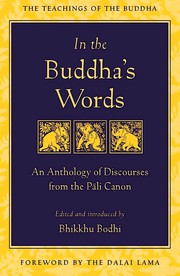
A carefully curated anthology of suttas (discourses) from the Pali Canon, organized thematically. Reading it after Rahula lets you hear the Buddha's actual words with enough context to understand them.
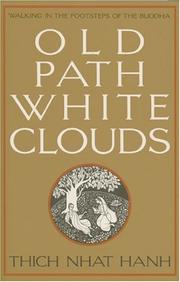
A narrative retelling of the Buddha's life drawn directly from the Pali Canon. It humanizes the teachings and makes the biographical and historical context vivid before you dive into philosophy.
Practice: Meditation and the Living Tradition
BeginnerConnect the doctrinal foundations to actual contemplative practice — understanding how mindfulness, insight meditation, and ethical training work together as a lived path, not just a philosophy.
▸ Study plan for this stage
Pace: 6–8 weeks total. Weeks 1–3: "Mindfulness in Plain English" (~20–25 pages/day, reading slowly and re-reading practical chapters). Weeks 4–7: "The Heart of the Buddha's Teaching" (~15–20 pages/day, pausing to reflect on each of the Noble Eightfold Path factors). Reserve Week 8 as a consolidation week
- Sati (mindfulness) as bare, non-judgmental attention — Gunaratana's foundational argument that mindfulness is not thinking about experience but directly observing it as it arises and passes
- The mechanics of breath meditation: posture, the anchor of the breath, handling distraction, and the instruction to 'begin again' without self-criticism (core practical chapters of Mindfulness in Plain English)
- The five hindrances (sensual desire, ill-will, sloth-torpor, restlessness-worry, doubt) and Gunaratana's concrete strategies for recognizing and working with each during sitting practice
- Impermanence (anicca), unsatisfactoriness (dukkha), and non-self (anatta) as insights that arise naturally through sustained mindfulness practice, not merely as doctrines to believe
- Thích Nhất Hạnh's 'interbeing' lens: how the Four Noble Truths, the Noble Eightfold Path, and the other core teachings are not sequential steps but mutually containing, living realities
- The Noble Eightfold Path as an integrated ethical-meditative-wisdom training: Right View and Right Intention (wisdom), Right Speech, Right Action, Right Livelihood (ethics/sīla), Right Effort, Right Mindfulness, Right Concentration (meditation/samādhi)
- The role of the Five Mindfulness Trainings (precepts) as the ethical ground that supports and is deepened by meditation — Thích Nhất Hạnh's treatment of sīla as practice, not rule-following
- The unity of study, ethics, and meditation: both books converge on the idea that the path is a single, lived whole rather than compartmentalized subjects
- According to Gunaratana, what distinguishes mindfulness from ordinary thinking or concentration, and why does he insist it cannot be fully captured in words?
- What are the five hindrances, and how does Gunaratana recommend a meditator work with each one when it arises on the cushion?
- How does Thích Nhất Hạnh reframe the Four Noble Truths so they feel like an ongoing, present-tense practice rather than a historical doctrine to be memorized?
- In what specific ways do Right Speech, Right Action, and Right Livelihood function as meditation practice in daily life, according to Thích Nhất Hạnh's treatment of the Eightfold Path?
- Both books address the relationship between formal sitting practice and everyday life. How do Gunaratana and Thích Nhất Hạnh each approach the challenge of carrying mindfulness off the cushion?
- How do the three characteristics — impermanence, dukkha, and non-self — show up as direct meditative insights in Gunaratana's framework, and how does Thích Nhất Hạnh's concept of interbeing relate to the characteristic of non-self?
- Daily sitting practice (non-negotiable): Establish a daily breath-meditation session using Gunaratana's instructions — start with 10 minutes in Week 1 and build to 25–30 minutes by Week 4. Keep a brief practice log noting what arose (hindrances, quality of attention, any moments of clarity).
- Hindrance journaling: Each week, choose one of the five hindrances Gunaratana describes and deliberately watch for it — both on the cushion and in daily life. Write 3–5 sentences each day on how it manifested and what, if anything, shifted your relationship to it.
- Eightfold Path audit (from Thích Nhất Hạnh): After finishing 'The Heart of the Buddha's Teaching,' spend one full day tracking one Path factor in real time. For example, on 'Right Speech day,' notice every instance of speech and ask: was this helpful, true, timely, kind? Write a short reflection at day's end.
- Slow re-reading of one chapter: Choose either Gunaratana's chapter on the 'Basic Technique of Meditation' or Thích Nhất Hạnh's chapter on 'Right Mindfulness,' and read it a second time with a pencil — underlining only sentences that describe something you can do right now. Then do it.
- Comparative concept map: Draw a simple diagram connecting the Noble Eightfold Path (from Thích Nhất Hạnh) to the practical instructions in Gunaratana's book. Where does breath meditation live on the path? Where do the hindrances fit? Where does the practice log you've been keeping fit? This makes the doctrinal-practical link visible.
- End-of-stage 'letter to a friend': Write a one-page, jargon-free explanation of what mindfulness meditation is and why someone might practice it, drawing only on what you've genuinely understood from these two books. If you can't explain something simply, mark it as a question to carry into the next stage.
Next up: By grounding doctrine in lived practice through these two books, the reader has a working experiential vocabulary — impermanence, the hindrances, the Eightfold Path as daily life — that makes the more advanced philosophical and historical dimensions of Buddhism (such as Abhidharma, Mahayana thought, or Buddhist ethics in social context) immediately relatable rather than abstract.
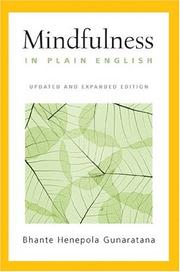
The most widely read practical guide to Vipassana (insight) meditation, written in clear modern English. It bridges theory and practice and shows how the Pali teachings translate into daily sitting.

A thorough yet accessible walk through the core doctrines — the Four Noble Truths, the Eightfold Path, the Five Aggregates — framed explicitly as tools for practice. It deepens what Rahula introduced.
Expanding the Map: Mahayana and Zen
IntermediateUnderstand how Buddhism evolved beyond the early Theravada school into the Mahayana tradition — including the Bodhisattva ideal, emptiness (śūnyatā), and Zen — and why these developments matter philosophically.
▸ Study plan for this stage
Pace: 6–8 weeks total. Week 1–3: "Zen Mind, Beginner's Mind" (~15–20 pages/day, reading slowly and reflectively — Suzuki's short chapters reward re-reading). Week 4–8: "The Bodhicaryavatara" (~10–15 pages/day with journaling pauses; the philosophical density of chapters 6 and 9 warrants at least two passe
- Beginner's Mind (shoshin): approaching practice and life without the rigidity of expert assumptions, keeping openness and eagerness in every moment
- Non-attachment to results and the 'no gaining idea': Suzuki's insistence that practice is complete in itself, not a means to an end
- Posture, breath, and zazen as expressions of Buddha-nature, not techniques to acquire it — form and emptiness unified in sitting
- The Bodhisattva ideal: the vow to attain awakening not for oneself alone but for the liberation of all sentient beings
- The six perfections (pāramitās): generosity, ethics, patience, energy, meditation, and wisdom as the Bodhisattva's path
- Śūnyatā (emptiness): Śāntideva's argument in Chapter 9 that all phenomena, including the self, lack inherent independent existence — the philosophical heart of Mahayana
- Patience (kṣānti) as a transformative practice: Śāntideva's radical case in Chapter 6 that anger is the greatest obstacle and patience the antidote
- The evolution from Theravada to Mahayana: the shift in soteriological scope from individual liberation (arhat ideal) to universal compassion (bodhicitta)
- In 'Zen Mind, Beginner's Mind,' what does Suzuki mean by 'In the beginner's mind there are many possibilities, but in the expert's mind there are few'? How does this relate to the Zen attitude toward practice?
- How does Suzuki use the concept of 'no gaining idea' to challenge goal-oriented approaches to meditation, and what does this imply about the nature of enlightenment in Zen?
- What is bodhicitta as presented in 'The Bodhicaryavatara,' and how does Śāntideva distinguish between aspiring bodhicitta and venturing bodhicitta?
- How does Śāntideva's argument for patience in Chapter 6 logically dismantle the justification for anger? What role does the concept of dependent origination play in his reasoning?
- In Chapter 9 of 'The Bodhicaryavatara,' how does Śāntideva use the doctrine of emptiness (śūnyatā) to deconstruct the notion of a permanent, independent self, and why is this deconstruction essential to the Bodhisattva path?
- How do Suzuki's Zen teachings and Śāntideva's Mahayana philosophy complement each other — and where, if anywhere, do they appear to tension?
- 'Beginner's Mind' journaling: After each sitting session (even 10 minutes), write 3–5 sentences from the perspective of someone encountering your mind for the very first time. Notice where expert assumptions or habitual narratives creep in.
- Posture audit (Suzuki): Spend one week following Suzuki's precise instructions on posture and breathing in the 'Posture' and 'Breathing' chapters. Log daily what you notice — not whether it feels 'good,' but simply what arises.
- Bodhisattva vow reflection: Write your own version of the four Bodhisattva vows in plain, personal language. Revisit and revise it after finishing 'The Bodhicaryavatara' — note what changed and why.
- Anger audit (Śāntideva Chapter 6): Keep a one-week log of moments of irritation or anger. For each entry, apply Śāntideva's analysis: identify the causes and conditions that produced the situation, and ask whether a permanent 'wrongdoer' truly exists. Write a short reflection.
- Emptiness contemplation (Śāntideva Chapter 9): Choose one ordinary object (a cup, a chair). Write a one-page philosophical analysis arguing, in Śāntideva's style, that it lacks inherent existence. Then do the same for 'yourself as the meditator.'
- Comparative synthesis essay: Write 500–700 words answering: 'How do Suzuki's Zen and Śāntideva's Mahayana philosophy each address the problem of the ego/self? Where do their methods differ, and what shared ground do they stand on?'
Next up: Mastering the Bodhisattva ideal and emptiness through Suzuki and Śāntideva equips the reader with the Mahayana philosophical vocabulary and contemplative orientation needed to engage more advanced or tradition-specific texts — whether diving deeper into Madhyamaka philosophy, Tibetan Buddhism, or the intersection of Buddhist ethics and Western thought.
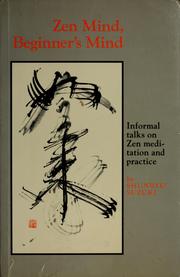
A classic of Zen literature that conveys the spirit and practice of Soto Zen. Reading it after the Mahayana sutra shows how the philosophy of emptiness becomes a living, embodied practice.
The definitive Mahayana text on the Bodhisattva path — cultivating compassion and wisdom for the benefit of all beings. It is the intellectual and ethical heart of Tibetan and East Asian Buddhism.
Philosophy: Emptiness, Mind, and the Schools
IntermediateEngage rigorously with the major Buddhist philosophical schools — Madhyamaka, Yogācāra, and Abhidharma — and understand how they debate the nature of reality, consciousness, and liberation.
▸ Study plan for this stage
Pace: 6–8 weeks, ~8–12 pages/day (including Garfield's commentary); read each chapter of the Mūlamadhyamakakārikā twice — once for the verse text alone, then again alongside the commentary — before moving on
- Śūnyatā (emptiness): all phenomena lack inherent, independent existence (svabhāva)
- Dependent origination (pratītyasamutpāda) as the positive counterpart to emptiness — things exist only in dependence on causes, conditions, and conceptual designation
- The two truths doctrine: conventional truth (samvrti-satya) vs. ultimate truth (paramārtha-satya) and their non-duality
- Svabhāva (own-nature/self-existence) and why Nāgārjuna systematically refutes it across every ontological category
- Prasaṅga (reductio ad absurdum) as Nāgārjuna's primary dialectical method — he does not assert a positive thesis but exposes internal contradictions in opponents' views
- The tetralemma (catuṣkoṭi): the fourfold negation — neither existent, non-existent, both, nor neither — and what it implies about the limits of conceptual thought
- Refutation of causation, motion, time, the self, and nirvāṇa as independently existing entities
- The identity of saṃsāra and nirvāṇa at the ultimate level, and what liberation actually means in a Madhyamaka framework
- What is the relationship between emptiness and dependent origination in the Mūlamadhyamakakārikā, and why does Nāgārjuna treat them as equivalent rather than opposed?
- How does Nāgārjuna use the prasaṅga method, and why does he insist he is not advancing a positive metaphysical thesis of his own?
- What is svabhāva, and what are the consequences — logical, ethical, and soteriological — of its refutation?
- How do the two truths function together: can conventional truth be affirmed without contradiction after the ultimate truth of emptiness is accepted?
- What does Nāgārjuna's argument in Chapter 25 (Nirvāṇa) reveal about the relationship between saṃsāra and nirvāṇa, and how does this reframe the goal of Buddhist practice?
- Which specific chapters target causation, motion, and the self, and what structural pattern do these refutations share?
- Verse mapping: for each chapter, write a one-sentence summary of the target concept being refuted and the core logical move Nāgārjuna makes — build a running 'refutation log' across all 27 chapters
- Two-truths journal: after each reading session, write one paragraph explaining a mundane phenomenon (e.g., a table, a decision, an emotion) first from the conventional perspective, then from the ultimate perspective, practicing the distinction without collapsing one into the other
- Prasaṅga drill: pick any three metaphysical claims (e.g., 'motion requires a mover,' 'the self is the agent of karma') and practice constructing a reductio ad absurdum argument in Nāgārjuna's style — no positive counter-thesis allowed
- Comparative annotation: flag every passage where Garfield's commentary invokes an Abhidharma or Yogācāra position as the implied opponent; annotate the margin with the school's name and the specific doctrine being targeted — this builds the inter-school map you will need later
- Catuṣkoṭi practice: take five propositions from the text and explicitly apply all four corners of the tetralemma, then write a short reflection on why none of the four positions is ultimately defensible
- Synthesis essay (500–700 words): after finishing the book, argue in your own words why Nāgārjuna's equation of emptiness with dependent origination is not nihilism — use only textual evidence from the Mūlamadhyamakakārikā
Next up: Mastering Nāgārjuna's Madhyamaka critique of svabhāva establishes the philosophical baseline against which the Yogācāra school's mind-only (vijñaptimātratā) response and the Abhidharma's dharma realism can be understood as direct engagements, making the next stage's inter-school debates immediately intelligible rather than abstract.

Nagarjuna's Mulamadhyamakakarika is the foundational text of Madhyamaka philosophy. Jay Garfield's translation with commentary makes the argument for emptiness of all phenomena rigorously followable.

A scholarly anthology covering all major schools — Abhidharma, Madhyamaka, Yogācāra, and more — with expert introductions. It provides the comparative map needed to see how the schools relate and argue.
Deep Mastery: History, Critique, and Synthesis
ExpertSituate Buddhism in its full historical, cross-cultural, and critical context; understand modern scholarship, the encounter with Western thought, and the ongoing debates about what Buddhism really is and means.
▸ Study plan for this stage
Pace: 10–13 weeks total: ~2 weeks for "Buddhism Without Beliefs" (~20–25 pages/day), ~3 weeks for "Why Buddhism Is True" (~25–30 pages/day), and ~5–6 weeks for "The Shape of Ancient Thought" (~30–35 pages/day, given its density and scholarly apparatus). Plan for 1–2 slower review days per week to write no
- Secular Buddhism and the distinction between Buddhism as religion vs. Buddhism as pragmatic existential path (Batchelor's 'agnostic Buddhism')
- The Four Noble Truths reframed as injunctions for practice rather than metaphysical dogmas, per Batchelor's re-reading
- Evolutionary psychology as a lens for Buddhist claims: how natural selection shaped the 'deluded' mind and why Buddhist practices counteract those distortions (Wright)
- The convergence of cognitive science, evolutionary biology, and Buddhist phenomenology — particularly around concepts of 'not-self' (anatta), impermanence, and the unreliability of subjective experience (Wright)
- The Axial Age and the parallel philosophical revolutions in Greece and India: how similar historical pressures produced analogous metaphysical and ethical systems (McEvilley)
- Specific doctrinal and conceptual parallels between pre-Socratic/Platonic thought and early Buddhist/Upanishadic thought — e.g., the One, the Logos, dharma, karma, metempsychosis — and the debate over diffusion vs. independent invention (McEvilley)
- Critical historiography: how modern Western categories (religion, philosophy, mysticism, ethics) have been projected onto Buddhist texts, and what is lost or distorted in translation (across all three books)
- Synthesis thinking: holding Batchelor's existentialist critique, Wright's scientific validation, and McEvilley's historical contextualization simultaneously to form a nuanced, non-dogmatic understanding of what Buddhism 'is'
- According to Batchelor, what must be bracketed or discarded to recover a 'Buddhism without beliefs,' and what remains once those elements are removed? Do you find his distinction between 'belief' and 'practice' philosophically coherent?
- How does Wright use the concept of 'non-zero-sum' evolutionary logic and the modular mind to explain why the Buddhist diagnosis of suffering is, in his view, literally true? What are the strongest objections to his scientific framing?
- Where do Batchelor and Wright agree and disagree about the role of metaphysics (rebirth, karma, nirvana) in a modern engagement with Buddhism? Construct a dialogue between them.
- McEvilley argues for extensive cultural contact and possible transmission between Greece and India in the ancient world. What is his primary evidence, and what methodological challenges does this kind of comparative intellectual history face?
- Identify three specific philosophical concepts that McEvilley traces across both Greek and Indian traditions. For each, explain the parallel he draws and evaluate whether the similarity reflects diffusion, convergence, or coincidence.
- After reading all three books, how would you answer the question: 'Is Buddhism a religion, a philosophy, a psychology, or something else?' Use evidence from all three authors to support a position of your own.
- Debate journal: After finishing Batchelor, write a 1–2 page steelman of the opposing view — i.e., argue why the metaphysical elements he wants to discard (rebirth, karma as cosmic law) might be essential rather than incidental to Buddhist practice. Then write Batchelor's rebuttal.
- Concept-mapping Wright's science: Draw a diagram linking at least six evolutionary/cognitive science concepts from 'Why Buddhism Is True' (e.g., modular mind, negativity bias, hedonic treadmill, illusion of self) to their corresponding Buddhist terms (dukkha, anatta, anicca, tanha). Annotate each link with one sentence explaining the correspondence and one sentence noting where the analogy breaks
- Comparative timeline: Using McEvilley as your primary source, construct a parallel chronological timeline of key Greek philosophers and key Indian Buddhist/Upanishadic thinkers (700 BCE–300 CE). For each figure, note one idea McEvilley connects across traditions. Identify at least two points where the historical evidence for contact is strong and two where it is speculative.
- Primary source cross-reference: Choose one concept McEvilley discusses (e.g., metempsychosis/rebirth, the void, the One) and locate a passage from an original Buddhist text (e.g., Pali Canon, Nagarjuna) and a Greek text (e.g., Plato's Phaedo, Heraclitus fragments) that illustrate the parallel. Write a 500-word close reading comparing the two passages.
- Synthesis essay: Write a 700–1000 word essay titled 'What Buddhism Really Is' that draws on all three books. You must represent Batchelor's existentialist lens, Wright's scientific lens, and McEvilley's historical lens, and then stake out your own informed position. Cite specific arguments or passages from each book.
- Critical review exercise: Identify one significant scholarly criticism or limitation of each book (e.g., Batchelor's selective reading of the Pali Canon, Wright's conflation of correlation and causation in neuroscience, McEvilley's reliance on circumstantial evidence for diffusion). Write a paragraph for each that acknowledges the book's strengths while articulating the critique precisely — practi
Next up: By situating Buddhism historically, scientifically, and cross-culturally through these three books, the reader has developed the critical and synthetic tools needed to engage with primary Buddhist texts, advanced philosophical commentaries, or specialized scholarly literature entirely on their own terms — the natural next step toward independent research or practice-integrated mastery.
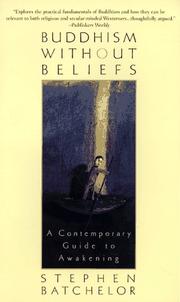
A provocative, rigorously argued case for a secular, agnostic Buddhism stripped of metaphysical dogma. It forces the advanced student to examine which elements of Buddhism are essential and which are cultural accretion.

Brings evolutionary psychology and cognitive science into dialogue with Buddhist teachings on the self and suffering. It represents the cutting edge of how Buddhism is being tested and validated by modern science.
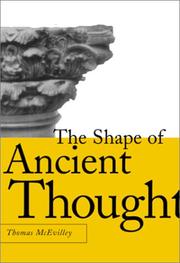
A monumental comparative study of Greek and Indian philosophy that places Buddhist thought in its widest intellectual context. Reading it last reveals how Buddhist ideas connect to the global history of human thought.
Discussion
Keep reading
Paths that share books, cover the same subject, or open a related topic.