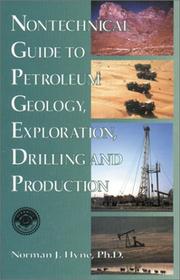
Start with Nontechnical guide to petroleum geology, exploration, drilling, and production. Norman Hyne's book covers the entire upstream chain with almost no mathematics, and it is the book most petroleum engineers read before their first technical course. It is also the only book on this path worth reading cover to cover; everything after it is worked, not read.
Petroleum engineering is three problems stacked on each other — work out what is in the rock, work out how much of it will come out, and build something that lifts it to surface without hurting anyone — and the reading order follows that sequence. A note on prerequisites, because this is a genuinely technical subject: the first stage assumes nothing, the second assumes basic physics, and from the reservoir stage onward the books assume calculus, fluid mechanics and thermodynamics at undergraduate engineering level. And an honest one on scope: no book substitutes for supervised field training or for the licensing and well-control certification the work requires. Well control in particular is taught with simulators and drills for a reason.
Plain-English orientation
Alongside Hyne, Fundamentals of petroleum is the University of Texas PETEX training text, written for people entering the industry without an engineering degree; it is the shortest route to knowing what a casing string, a separator and a rig floor actually are. A Primer of Oilwell Drilling is another PETEX title and the classic introduction to the rig itself — drillstring, mud, blowout preventer stack, tripping. Both are inexpensive and both are still revised; our catalogue records are old ones, so buy the current printing rather than the year listed here.
Where the oil is, and how you know
Elements of Petroleum Geology is the standard geology text written for petroleum people rather than for geology majors: source rock, migration, trap, seal, reservoir quality. Skipping this stage is why reservoir engineers make confident bad assumptions about the subsurface. Our record is an older edition; Selley and Sonnenberg have revised it since, and the later edition is the one to buy.
Basic well log analysis is the AAPG methods volume and the fastest route to actually interpreting gamma ray, resistivity, density and neutron logs — it is full of worked examples and it is worth doing them rather than reading them. Well Logging for Earth Scientists is the physics underneath those tools, and belongs second, once you know what a log looks like and want to know why the measurement behaves as it does. Ellis and Singer is a graduate-level book and reads like one.
Reservoir engineering
Fundamentals of reservoir engineering is the core text of the discipline and still the clearest derivation of material balance anywhere. Dake writes as an engineer arguing with the reader; work it. Reservoir engineering handbook is broader and far more example-driven, with the PVT and fluid-property treatment Dake assumes you already have — read the two alongside each other rather than in sequence. Tarek Ahmed's handbook has gone through several editions and our record is an early one.
The practice of reservoir engineering is Dake's later book and his attack on the profession's drift into unexamined simulation. It is the most opinionated book on the path and the most useful for judgement, but it only lands once you have the theory from Fundamentals. Enhanced Oil Recovery is Larry Lake's graduate text on displacement, miscible and chemical flooding, and thermal methods — the two-thirds of the oil that primary and secondary recovery leave in the ground.
Drilling, completions and production
Applied drilling engineering is the SPE textbook and the standard drilling course text worldwide: hydraulics, bit mechanics, casing design, well control. Our record lists Millheim and Chenevert rather than Bourgoyne first, but it is the same book. Mitchell and Miska's Fundamentals of Drilling Engineering is the modern SPE successor if you want a more recent treatment. Well completion design covers the gap most curricula leave — perforating, sand control, tubing and packer selection, completion fluids — and is written from operating experience.
Petroleum production systems closes the path with nodal analysis, treating reservoir, completion, tubing and surface facilities as one coupled system, which is what ties the earlier stages together. Reservoir stimulation is the multi-author reference on hydraulic fracturing and matrix acidising, dense and best used as a reference. Larry Lake's Petroleum Engineering Handbook and Lyons's Standard Handbook of Petroleum and Natural Gas Engineering are the multi-volume desk references to keep beside it. Build your own version of this sequence at /create.
Follow the full ordered path here: How to Learn Petroleum Engineering from Books, in Order.