Best Books on Corrosion Engineering and Corrosion Control
Corrosion is electrochemistry that happens to be structural, and the field's literature splits accordingly: teaching texts built on thermodynamics and kinetics, and practitioner handbooks organised by material and environment. This path works through the classic teaching texts first, then the second-course books, then the electrochemistry underneath, and ends with the reference volumes and the specific failure modes — stress-corrosion cracking, pipelines, reinforced concrete — that account for most of the cost. Basic chemistry and materials science are assumed.
The Teaching Texts
IntermediateLearn the eight forms of corrosion, the electrochemical basis of each, and the standard prevention methods — materials selection, coatings, inhibitors and cathodic protection.
▸ Study plan for this stage
Pace: 8-10 weeks. Fontana and Greene (512 pp) in three weeks, Jones's Principles and Prevention of Corrosion (572 pp) in four, Ahmad (656 pp) skimmed in two for its worked examples. All three are undergraduate engineering texts, not popular science: they assume general chemistry, thermodynamics and a firs
- Fontana's eight forms of corrosion - uniform, galvanic, crevice, pitting, intergranular, selective leaching, erosion, stress-corrosion cracking - as the field's standard classification scheme
- The corrosion cell: anodic dissolution, the cathodic partner reaction (hydrogen evolution or oxygen reduction), and why both must balance
- Nernst equation, EMF and galvanic series, and the difference between the two series that Fontana insists on
- Mixed potential theory and Evans diagrams: how E-log i plots locate Ecorr and icorr, which Jones develops far further than Fontana
- Passivity - the active-passive transition, critical current density, and what breaks a passive film
- Corrosion rate arithmetic: converting current density to mpy or mm/yr through Faraday's law and equivalent weight
- The prevention toolkit - materials selection, design geometry, coatings, inhibitors, anodic and cathodic protection - and which form of attack each actually addresses
- Environmental variables that change the answer: oxygen concentration, velocity, temperature, pH and chloride
- Given a described failure, which of Fontana's eight forms is it, and what evidence in the description settles it?
- Why does the area ratio of cathode to anode dominate the severity of a galvanic couple, and what does that imply about fasteners?
- How does Tafel extrapolation yield a corrosion rate, and under what conditions does the extrapolation break down?
- What is mechanistically different about crevice corrosion and pitting, given that both are occluded-cell attack?
- Why can a more corrosion-resistant alloy be the wrong choice in a specific service environment?
- Take Fontana's eight-form table and classify every failure photograph and case in Ahmad's chapters against it, writing down the diagnostic feature you used each time
- Work Jones's development of mixed potential theory with pencil and paper: construct an Evans diagram for iron in deaerated acid, then redo it with oxygen present, and locate Ecorr and icorr in each
- Convert one of Jones's measured corrosion current densities to mm/yr using Faraday's law and check your answer against Fontana's conversion table
- Read Fontana's and Jones's chapters on passivity side by side and write half a page on where their explanations of film breakdown differ
- Do Ahmad's end-of-chapter problems on inhibitor dosing and coating selection - he supplies more problem sets than either of the other two
Next up: With the eight forms and the polarisation apparatus in hand, you can move from the general mechanism to how specific alloys behave in specific service environments, which is what the second-course books are organised around.
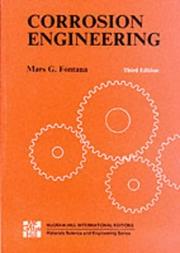
Fontana and Greene, the classic teaching text and still the clearest organising scheme in the field: the eight forms of corrosion, each with mechanism, recognition and prevention. Start here. Note that a second book on this path carries the identical title by a different author — keep Fontana and Roberge distinct.
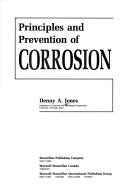
The other standard undergraduate text, and the better of the two on electrochemical kinetics — mixed potential theory, polarisation diagrams, passivity. Read it second; it supplies the quantitative apparatus Fontana treats more descriptively.
A broader and more recent course text with worked examples and good coverage of coatings and inhibitors. Useful as a third pass, particularly if you want more problem sets than Fontana provides.
The Second Course
IntermediateBroaden into materials-specific behaviour, high-temperature oxidation, and the engineering economics of corrosion control.
▸ Study plan for this stage
Pace: 8-9 weeks. Revie and Uhlig's Corrosion and Corrosion Control across four weeks, Talbot and Talbot (552 pp) in three, and Roberge's Corrosion basics (693 pp) read selectively over two - it is a practitioner volume organised for reference, so read the inspection, monitoring and management chapters clo
- Alloy-by-alloy behaviour: sensitisation and weld decay in austenitic stainless, chloride sensitivity, the behaviour of aluminium, copper alloys and titanium in service
- High-temperature oxidation: Wagner's theory, parabolic rate law, and the Pilling-Bedworth ratio as a first screen on scale protectiveness
- Environment-specific corrosion - atmospheric, seawater, soil, concrete, process chemicals - and why the same alloy ranks differently in each
- Microbiologically influenced corrosion and why it defeats purely electrochemical prediction
- Corrosion monitoring in practice: weight-loss coupons, ER and LPR probes, inspection intervals, and what each method can and cannot detect
- Design against corrosion - drainage, crevice geometry, dissimilar-metal separation, weld detailing
- The economics of corrosion control: life-cycle costing, and Roberge's framing of corrosion management as an engineering programme rather than a set of fixes
- Why does sensitisation occur in a heat-affected zone, and which of the standard fixes - low carbon, stabilisation, solution annealing - suits which situation?
- What does a parabolic oxidation rate tell you about the scale, and what does a linear or breakaway rate tell you instead?
- How would you select a material for one of Talbot's industrial sectors, and what would you have to know about the service environment first?
- Which monitoring technique would detect localised attack that a weight-loss coupon would miss, and why?
- How do you justify a coating programme financially against an alloy upgrade?
- Work through Revie's stainless steel chapter and predict where weld decay would appear on a described weldment, then check against his account
- Use Talbot and Talbot's sector chapters to write a one-page materials-selection memo for a food-processing line, naming the alloy and the failure mode you are designing against
- Specify a monitoring programme - coupon locations, probe type, inspection interval - for a described system using Roberge's Corrosion basics chapters on inspection and monitoring
- Compute a life-cycle cost comparison of a coating-plus-maintenance strategy against a higher alloy, using Roberge's economics chapter as the template
- Take one alloy covered in both Revie and Fontana and list what Revie's metallurgical treatment adds
Next up: These books tell you what happens; the next stage supplies the electrode kinetics that explain why, and the laboratory methods used to measure it.
Revie and Uhlig — the successor to Uhlig's original text and the standard intermediate reference. Strongest on the metallurgical side: alloy behaviour, high-temperature oxidation, and corrosion in specific service environments.
Talbot and Talbot, and unusually good at connecting the science to industrial practice sector by sector — automotive, aerospace, construction, food processing. Read it after Revie for the applications.
The NACE-derived introductory volume, pitched at practitioners rather than students, and the best short account of inspection, monitoring and corrosion management as an engineering discipline. Read it here as the bridge to the reference stage.
The Electrochemistry Underneath
BeginnerWork at the level of the underlying electrode kinetics, and be able to run and interpret the standard electrochemical measurements.
▸ Study plan for this stage
Pace: 10-12 weeks, and the hardest stage on the path. Stansbury and Buchanan (487 pp) is a graduate-level treatment - it assumes physical chemistry, calculus and the polarisation material from stage one, and four to five weeks is realistic. Kelly, Scully, Shoesmith and Buchheit (440 pp) is a laboratory me
- Butler-Volmer kinetics: exchange current density, transfer coefficient, and the Tafel approximation as its high-overpotential limit
- Pourbaix diagrams - how they are constructed from thermodynamic data, and the sharp limits on what a thermodynamic map can predict about rate
- Mixed potential theory at full rigour, including multiple simultaneous cathodic reactions and diffusion-limited current
- Passivity and breakdown: critical pitting potential, repassivation potential, and the statistics of pit initiation
- Linear polarisation resistance and the Stern-Geary relation connecting Rp to icorr
- Electrochemical impedance spectroscopy: the Randles circuit, Nyquist and Bode presentation, and what a coated system's spectrum looks like
- Electrochemical noise measurement and its interpretation for localised attack
- Evans's differential aeration cell as the physical picture underneath crevice and under-deposit attack
- How is the Stern-Geary constant B derived from the two Tafel slopes, and what happens to it when one reaction is diffusion-controlled?
- What does a Pourbaix diagram not tell you about a real system, and how would you correct for it?
- Which experimental artefacts does Kelly et al. warn about in potentiodynamic scanning, and how does scan rate affect a measured pitting potential?
- How do you read a two-time-constant EIS spectrum from a coated metal, and what does each time constant correspond to physically?
- What does Evans's differential aeration experiment demonstrate that a polarisation curve does not?
- Derive the Stern-Geary equation from Butler-Volmer following Stansbury and Buchanan, and confirm your B value against one of their worked cases
- Construct the Fe-H2O Pourbaix diagram from the thermodynamic data Stansbury tabulates, then mark on it the conditions of a real system you know
- Fit one of the EIS spectra reproduced in Kelly, Scully, Shoesmith and Buchheit to a Randles circuit by hand and extract Rp and the double-layer capacitance
- Run or trace a potentiodynamic polarisation scan following their stated protocol, deliberately varying scan rate, and record how the measured pitting potential moves
- Reproduce Evans's salt-drop experiment on a clean steel coupon with ferroxyl indicator and photograph the anode and cathode regions where he predicts them
Next up: Having the kinetics and the measurements, the last stage puts them to work on the reference data and the four failure modes that account for most of the money spent on corrosion.
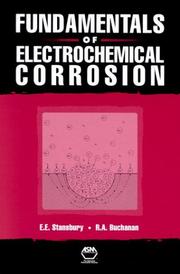
Stansbury and Buchanan, and the most rigorous treatment of the thermodynamics and kinetics — Pourbaix diagrams, mixed potentials, passivity — of any book on this path. Read it first at this level.

Kelly, Scully, Shoesmith and Buchheit on the experimental methods: potentiodynamic polarisation, electrochemical impedance spectroscopy, noise analysis, and the pitfalls in each. The book to have beside the potentiostat.
Evans's classic. It predates most modern instrumentation and is included for the physical insight rather than the technique — the differential aeration cell and the mechanism of localised attack are still best explained here.
Reference, and the Failure Modes That Cost Most
BeginnerWork from the practitioner handbooks and handle the four service problems that dominate infrastructure spend.
▸ Study plan for this stage
Pace: 12-14 weeks, but the two handbooks are not read cover to cover. Roberge's Handbook of Corrosion Engineering (1072 pp) and Revie's Uhlig's Corrosion Handbook (1296 pp) are desk references - work through their organising chapters, then use them by lookup. Read the three focused volumes properly: the A
- Stress-corrosion cracking mechanisms: anodic dissolution paths versus hydrogen embrittlement, and the specific alloy-environment pairs that produce each
- Fracture-mechanics treatment of SCC: KISCC, threshold stress intensity, and crack growth rate plateaus
- Chloride SCC of austenitic stainless steels, and why temperature and chloride concentration are the controlling variables
- Cathodic protection design: current demand, anode sizing and life, attenuation along a pipeline, and the -850 mV criterion with its IR-drop qualification
- How coating and cathodic protection are designed to work together, and what happens when a coating disbonds
- Reinforced concrete corrosion: the chloride threshold, carbonation depth, and why the alkaline pore solution normally passivates steel
- Assessment of concrete structures: half-cell potential mapping against ASTM C876, resistivity, and chloride profiling
- Repair and electrochemical treatment - patch repair and the incipient anode problem, chloride extraction, realkalisation
- Which alloy-environment pairs produce SCC, and what would you change first to eliminate one of them?
- How do you size a sacrificial anode bed for a coated buried pipeline, and what does coating quality do to the calculation?
- Why is the -850 mV criterion insufficient on its own, and what measurement corrects it?
- What causes an incipient anode after a concrete patch repair, and how is it prevented?
- When Roberge and Uhlig's Handbook disagree about a material's performance in an environment, how do you decide which to follow?
- Size a sacrificial anode cathodic protection system for a described buried pipeline using Peabody's current-density tables and worked example, then repeat it for impressed current and compare cost
- Interpret a half-cell potential survey against Broomfield's ASTM C876 criteria, and compute from a chloride profile whether the threshold has been reached at rebar depth
- Take one documented failure in the ASM stress-corrosion cracking volume, then find the same alloy-environment pair in Roberge's Handbook tables and check the guidance against the failure
- Look up titanium in seawater in both Roberge's Handbook and Uhlig's Corrosion Handbook and write down every point where the two accounts differ in emphasis or number
- Build a one-page materials-and-protection specification for a coastal reinforced-concrete structure, citing the specific table or chapter behind each decision
Next up: This is the end of the path; the natural continuation is the standards themselves - the AMPP/NACE and ASTM test methods and design practices that every book above cites but none reproduces in full.
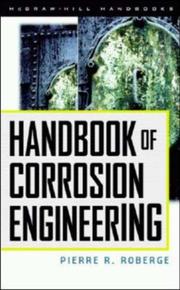
The single most useful desk reference: data tables, materials selection guidance, environment-by-environment coverage, and worked engineering economics. This is the book you keep, not the book you read through.
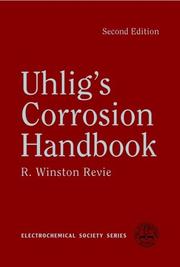
The larger edited handbook, with specialist chapters by different authors on individual metals, environments and industries. Use it where Roberge is too compressed.
The ASM volume on the failure mode that produces the least warning and the most catastrophic results, covering mechanisms, evaluation and testing across alloy systems. The catalogue files it with its Materials Performance and Evaluation subtitle appended by a slash.
The standard work on cathodic protection and coating of buried and submerged pipelines — still the reference the industry actually uses. Read it as the fullest single treatment of cathodic protection anywhere on this path.
Chloride and carbonation attack on reinforcement, plus assessment, repair and electrochemical treatment of structures. Read it last: it is the one failure mode on this list that most engineers meet on a bridge rather than in a plant.
Discussion
Keep reading
Paths that share books, cover the same subject, or open a related topic.