Best Books on Antennas and RF Engineering, in Order
Antenna work sits on top of electromagnetic field theory, and the standard failure mode is to open Balanis first, hit the vector calculus in chapter two, and conclude the subject is inaccessible. It is not — but the order matters. This path starts with the amateur-radio and practical-design literature, which gets you building and measuring with almost no mathematics, then does the field theory the university texts assume, then the antenna texts themselves, and finishes with the circuits, amplifiers and propagation that turn an antenna into a radio system. Expect graduate-level electromagnetics from stage three onward.
The Practical Entry
BeginnerGet physical intuition for radiation, resonance, feedlines and SWR by building and measuring, before any of it has to be derived.
▸ Study plan for this stage
Pace: Two to three months, running in parallel with actual building. Mathematically this stage assumes almost nothing: algebra, trigonometry, decibels, and complex numbers only to the extent that impedance is written as R + jX. No calculus is required anywhere in it. The ARRL Antenna Book is a reference o
- Resonance, electrical length and the relationship between physical length and wavelength
- Feedpoint impedance and why a half-wave dipole in free space is nominally 73 ohms while a real one at real height is not
- SWR as a symptom of mismatch, not a measure of radiated power, and what a tuner does and does not fix
- Balanced versus unbalanced feed, common-mode current, and what a balun is actually for
- Radiation pattern, gain over an isotropic radiator and over a dipole, front-to-back ratio, and takeoff angle
- Ground effects: how height above ground and ground conductivity reshape the pattern of a real antenna
- The receiver and transmitter chain — filters, mixers, oscillators, matching — as Rutledge builds it, so the antenna has a system to connect to
- Decibel arithmetic as the working language of every later stage
- Why does a quarter-wave vertical need a ground system, and what happens to efficiency when it does not have one?
- What does an SWR of 3:1 tell you about a feedline, and what does it not tell you about how much power is being radiated?
- How does raising a horizontal dipole from a quarter wavelength to a half wavelength above ground change its pattern?
- What does adding a director to a Yagi do to gain, bandwidth and feedpoint impedance, and what is the trade?
- In Rutledge's transceiver, where is impedance matching required and what would happen at each of those points without it?
- Build one antenna from the ARRL Antenna Book — a dipole for a band you can use is enough — and measure its SWR across the band. Then find the published curve for the same design in the book and account for every difference between your measurement and theirs in terms of height, ground and feedline.
- Take one design that appears in both the ARRL Antenna Book and Carr's Practical Antenna Handbook and write out where the two disagree about dimensions, feed arrangement or expected performance. They disagree often, and reconciling one disagreement teaches more than reading either chapter twice.
- Work Rutledge's chapters on filters and matching and actually build the stage he specifies, then measure it. The Electronics of Radio is designed to be executed, and reading it without building leaves the systems context it exists to supply undelivered.
- Using only the ARRL Antenna Book's tables, compute the loss in a specific length of a specific coax at two widely separated frequencies, and then work out how much of your transmitter power reaches the antenna in each case.
- Take a published Yagi design and tabulate its claimed gain, front-to-back ratio and feedpoint impedance; then find the same antenna family in Carr and note which of those three numbers the two sources treat as the design target.
Next up: You now have physical intuition for radiation, resonance and matching from measurement; the next stage supplies the field theory that explains where every one of those behaviours comes from, and without which the antenna texts are unreadable.

The amateur-radio standard, continuously revised since the 1930s: dipoles, verticals, Yagis, baluns, feedlines and real measured patterns, with the theory kept to what a builder needs. The single most useful book here and the right first purchase regardless of where you are heading.
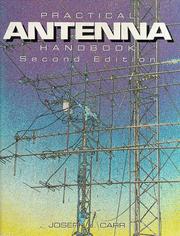
Carr covers the same ground more discursively and is better on why a design behaves as it does. Read it alongside the ARRL book — the two disagree often enough to be instructive.

A Caltech course built around actually assembling a working transceiver, teaching filters, mixers, oscillators and impedance matching as you go. Read it third: it supplies the systems context that the antenna books deliberately leave out.
The Field Theory Underneath
IntermediateWork through Maxwell's equations, waveguides, boundary conditions and radiation from first principles, so that the antenna texts are readable rather than opaque.
▸ Study plan for this stage
Pace: Six to nine months, and this is where the mathematics arrives in full. Jordan and Balmain's Electromagnetic Waves and Radiating Systems (710 pages) assumes vector calculus — gradient, divergence, curl, line and surface integrals, the divergence and Stokes theorems — and phasor notation; it develops
- Maxwell's equations in differential and integral form, and the boundary conditions at a conductor and at a dielectric interface
- The wave equation, plane waves, polarisation, intrinsic impedance and the Poynting vector
- Retarded potentials and the vector potential A as the actual route from a current distribution to a radiated field
- Near field, induction field and far field, and why the far-field approximation is what makes antenna analysis tractable
- Transmission lines and waveguides: modes, cutoff, dispersion, and the Smith chart as a conformal map of the reflection coefficient
- Duality, reciprocity, image theory and the equivalence principles — the tools that let one solved problem answer several
- The frequency-domain (time-harmonic) formulation as the framework the entire field works in, which is Harrington's subject
- Integral-equation formulations and the method of moments as the foundation of every numerical antenna solver
- Starting from Maxwell's equations, derive the wave equation in a source-free region and state every assumption you used.
- How do you get from a specified current distribution on a wire to a far-field pattern, in steps, using the vector potential?
- What distinguishes the near field from the far field quantitatively, and at what distance does the boundary sit for an antenna of a given size at a given frequency?
- What is the physical content of the equivalence principle, and how does it let you replace an aperture with equivalent sources?
- Why does the method of moments reduce an integral equation to a matrix problem, and what determines the size of that matrix?
- Work Jordan and Balmain's derivation of the fields of an infinitesimal current element all the way through by hand, then take the far-field limit and recover the sin-theta pattern and the radiation resistance. Every antenna result in the next stage is built on this one derivation, and doing it once is worth reading it five times.
- Derive the radiation resistance of a short dipole from Jordan and Balmain's own expressions and check the number against the value the ARRL Antenna Book quotes for a real short antenna. The gap between the two is the loss resistance you measured in the first stage.
- Take a rectangular waveguide of the dimensions used in Ramo, Whinnery and Van Duzer's worked example, compute the cutoff frequencies of the first three modes with their numbers, and confirm you reproduce their table.
- Do a transmission-line matching problem twice: once algebraically from Ramo's equations, and once graphically on a Smith chart. Getting the same answer both ways is what makes the chart usable rather than mysterious.
- Set up, by hand, the method-of-moments matrix for a dipole divided into three or four segments following Harrington's formulation. You will not solve anything useful, but you will know exactly what a solver is doing when it fills a matrix.
- Prove reciprocity for a two-antenna system from Harrington's statement of it, and then state what it licenses you to assume about a receiving antenna's pattern.
Next up: With Maxwell, the vector potential and the far-field approximation in hand, the canonical antenna texts stop being opaque — they are applications of exactly this machinery to particular geometries.
The classic bridge text: vector analysis into Maxwell, then straight into radiation and antennas. Older and more patient than modern books, and the gentlest route into the mathematics.
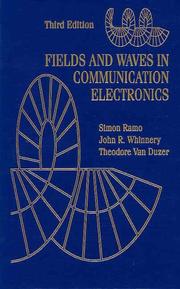
Ramo, Whinnery and Van Duzer — the standard graduate treatment of transmission lines, waveguides and resonators, and the source most later books cite. Read it second, once Jordan has fixed the notation.

The rigorous treatment of the frequency-domain formulation the whole field actually works in, including equivalence principles and the method of moments. The hardest book in this stage and the one that makes computational antenna work make sense.
The Antenna Texts
BeginnerRead the canonical antenna references — radiation patterns, gain, impedance, arrays, apertures — and be able to move between their differing notations.
▸ Study plan for this stage
Pace: Nine to twelve months across three books; this is the longest stage and it is a graduate one. Kraus's Antennas (733 pages) first: he derives physically rather than formally and assumes the vector calculus and Maxwell of stage two but leans on geometry and intuition wherever he can. Stutzman and Thie
- Radiation pattern, beamwidth, directivity, gain, efficiency, and the exact relationship between directivity and effective aperture
- Antenna impedance, bandwidth, Q, and the fundamental size-bandwidth limits on an electrically small antenna
- Wire antennas: dipole current distributions, loops, helices, and the traveling-wave and frequency-independent families
- Array theory — array factor, pattern multiplication, uniform and tapered excitations, beam steering, grating lobes, mutual coupling
- Aperture antennas: horns, reflectors, aperture efficiency, illumination taper and the spillover-versus-taper trade
- Microstrip and printed antennas, which is where most modern commercial antenna work actually happens
- Numerical methods — moment method, finite difference, geometrical and physical optics — and which is appropriate at which electrical size
- That Kraus, Stutzman and Balanis use different symbols, normalisations and even sign conventions for the same quantities
- Derive the far-field pattern of a half-wave dipole and state the assumed current distribution and why it is an approximation.
- Given a required beamwidth and sidelobe level, what array length and amplitude taper do you specify, and what did the taper cost you in directivity?
- What is the relationship between effective aperture and directivity, and why does it make a small antenna's collecting area independent of its physical size?
- Why do grating lobes appear, and what element spacing avoids them for a beam steered to a given angle?
- For a parabolic reflector, how do you choose an illumination taper, and what are you trading against what?
- When would you reach for physical optics rather than the method of moments, and what determines the crossover?
- Derive the half-wave dipole pattern and radiation resistance from Kraus, then locate the same result in Stutzman and Thiele and in Balanis and write a three-column table of the symbols, normalisations and conventions each uses. Keep the table; it is the translation key for the rest of your career with these books.
- Take a uniform linear array example from Balanis with his own element count, spacing and phase, reproduce his computed pattern by hand or in a few lines of code, and confirm you get his printed nulls and sidelobe levels. If you do not, the discrepancy is almost always a convention from your translation table.
- Work one of Stutzman and Thiele's design problems end to end — from a specification to physical dimensions — and then check the resulting geometry against a comparable published design in the ARRL Antenna Book from the first stage. Textbook design and practical design should land close; where they do not, work out which effect the textbook idealised away.
- Compute the directivity of a rectangular horn using Balanis's aperture formulation with his own dimensions, and confirm his tabulated value.
- Design a microstrip patch for a given frequency on a specified substrate using Balanis's transmission-line model, then compute its bandwidth and compare with his cavity-model result for the same patch.
- Take one antenna Kraus treats physically and Balanis treats formally, and write half a page on what each approach shows that the other conceals.
Next up: An antenna is only ever part of a radio; the last stage connects it to the matching networks, amplifiers and propagation path that decide whether the link closes at all.
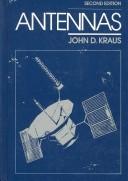
The founding textbook of the field, by the man who built the Big Ear. Kraus derives everything physically rather than formally, which makes him the best first antenna text. Later editions were retitled Antennas for All Applications and coauthored with Marhefka — same lineage, so buy only one.
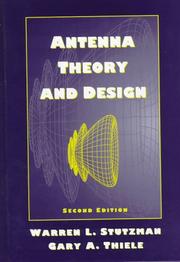
Stutzman and Thiele are the design-oriented counterweight to Kraus: shorter derivations, more attention to what an engineer actually specifies. Read it second as the practical bridge to Balanis.

The most complete and most assigned graduate text, covering arrays, apertures, microstrip and numerical methods exhaustively. Read it last of the three — it assumes the field theory of stage two and rewards being approached as a reference rather than a narrative.

Balanis's companion volume, and where the scattering, diffraction and asymptotic methods live that Antenna Theory only gestures at. Catalogued as Balanis' Advanced Engineering Electromagnetics; take it only if you are going into research or numerical modelling.
From Antenna to Radio System
BeginnerConnect the antenna to the rest of the chain — matching networks, amplifiers, noise and the propagation path that determines whether any of it closes a link.
▸ Study plan for this stage
Pace: Six to nine months, and the mathematical level varies sharply inside the stage. Pozar's Microwave Engineering (720 pages) is a graduate text assuming the transmission-line theory and field theory of stage two, and it is effectively required before the others — work its problems. Bowick's RF Circuit
- S-parameters and the two-port representation as the universal currency of RF design
- The Smith chart used for real work: matching networks, stability circles, gain circles, noise circles
- Impedance matching by lumped elements, stubs and quarter-wave transformers, and the bandwidth each achieves
- Amplifier design: stability, conjugate versus available gain matching, and the noise-figure-versus-gain trade at the first stage
- Cascaded noise figure and the Friis noise formula, which is why the first amplifier after the antenna dominates system sensitivity
- Free-space path loss, the link budget, and the Friis transmission equation connecting antenna gain to received power
- Fading and its statistics — multipath, log-normal shadowing, Rayleigh and Rician distributions, fade margin and outage probability
- Terrain, atmospheric absorption, refraction and diffraction as the effects that decide whether a real link works
- What do the four S-parameters of a two-port mean physically, and why are they used at microwave frequencies instead of Z or Y parameters?
- How do you test a transistor for unconditional stability, and what do you do if it fails?
- Why does the noise figure of the first stage dominate a receiver chain, and what does that imply about where to put the low-noise amplifier relative to the antenna?
- Write down a complete link budget and state which terms come from the antenna design of the previous stage and which from the propagation environment.
- What fade margin does a given outage probability require under Rayleigh fading, and where does that number come from?
- Given a computed link budget that fails by 6 dB, what are your options and what does each cost?
- Take a matching problem from Pozar with his own source and load impedances and solve it three ways: lumped L-network algebraically, single-stub graphically on a Smith chart, and quarter-wave transformer. Compare the bandwidth of each solution, and confirm your answers against his worked result.
- Work a full amplifier design from Gonzalez using a device's published S-parameters as he gives them: check stability, plot the stability circles, choose source and load reflection coefficients, and compute the resulting gain and noise figure. Reproduce his numbers before changing anything.
- Do the same matching design twice — once from Pozar's field-theoretic framing and once from Bowick's algebraic recipe — and write a paragraph on what Bowick omits and when the omission would matter. This is the honest comparison of a graduate text and a practical handbook.
- Compute a complete link budget for a real link using Seybold's own worked example numbers, then substitute the gain and pattern of an antenna you designed in the previous stage and see whether the link still closes.
- Using Seybold's distributions, compute the fade margin required for 99 percent availability on a Rayleigh-fading link, then work out how much antenna gain would be needed to buy the same margin instead. That comparison is the practical bridge between the last two stages of this path.
Next up: This closes the path: from a measured dipole in a back garden, through Maxwell and the canonical antenna texts, to a link budget that says whether the system you designed will actually work.
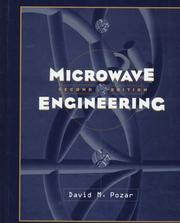
The standard text for transmission lines, S-parameters, matching networks and the Smith chart, and the book most working RF engineers keep within reach. Effectively required before the two that follow.

Compact and practical: filters, matching, transistor biasing and small-signal design, aimed at engineers who need a working circuit rather than a proof. Read it directly after Pozar as the applied counterpart.
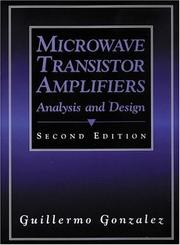
The classic treatment of amplifier design in S-parameter terms — stability circles, gain circles, noise figure. The natural next step once Pozar has established the two-port framework.

Path loss, fading, atmospheric and terrain effects, and link budgets. Read it last: it is the book that decides whether the antenna you designed in stage three is adequate for the system you are actually building.
Discussion
Keep reading
Paths that share books, cover the same subject, or open a related topic.