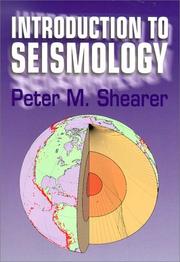
Introduction to seismology
Peter M. Shearer · 1999 · 260 pages
As an Amazon Associate we earn from qualifying purchases. Some book links are affiliate links; you pay the same price and we may earn a small commission.
About this book
This book provides an approachable and concise introduction to seismic theory, designed as a first course for undergraduate students. It clearly explains the fundamental concepts, emphasizing intuitive understanding over lengthy derivations. Incorporating over 30% new material, this second edition includes all the topics needed for a one-semester course in seismology. Additional material has been added throughout including numerical methods, 3-D ray tracing, earthquake location, attenuation, normal modes, and receiver functions. The chapter on earthquakes and source theory has been extensively revised and enlarged, and now includes details on non-double-couple sources, earthquake scaling, radiated energy, and finite slip inversions. Each chapter includes worked problems and detailed exercises that give students the opportunity to apply the techniques they have learned to compute results of interest and to illustrate the Earth's seismic properties. Computer subroutines and datasets
Appears in these reading paths


The Best Seismology Books on Earthquakes
Best Books to Learn Earthquake Engineering and Seismic Design

The Best Geophysics Books, in Order
Related reading guides
Reader reviews
Ratings and notes from readers — tagged with how deep into the subject they were.
Loading reviews…