Sing with better pitch and confidence
This curriculum takes a beginner singer from zero body awareness to confident, healthy performance. Each stage builds on the last: first you learn how the voice works and how to use it safely, then you develop pitch and ear skills, then you deepen technique and artistry, and finally you tackle the mental and performative side of singing in front of others.
Foundations: How the Voice Works
BeginnerUnderstand the anatomy and mechanics of the singing voice, establish healthy posture and breath support, and avoid the habits that cause vocal damage.
▸ Study plan for this stage
Pace: 8–10 weeks total. Weeks 1–5: "The Voice Book" by Kate DeVore (~20–25 pages/day, 4–5 days/week) — read slowly and revisit anatomical diagrams. Weeks 6–10: "The Naked Voice" by W. Stephen Smith (~15–20 pages/day, 4–5 days/week) — pause frequently to attempt the vocal exercises described in each chapte
- Vocal anatomy: the roles of the larynx, vocal folds, resonating cavities (chest, pharynx, mouth, sinuses), and articulators in producing sound (DeVore)
- The breath cycle: how the diaphragm, intercostal muscles, and abdominal support work together to power the voice (DeVore)
- Phonation: how the vocal folds adduct, vibrate via the Bernoulli effect, and produce a fundamental pitch (DeVore)
- Vocal registers: chest voice, head voice, and the passaggio (break) between them, and why smooth registration matters for singers (DeVore & Smith)
- Posture as the foundation of technique: spinal alignment, released shoulders, and a free neck as prerequisites for efficient breath and resonance (DeVore)
- Healthy vs. harmful vocal habits: the difference between pressed/breathy phonation and balanced onset; identifying and eliminating tension patterns (DeVore)
- Smith's 'Naked Voice' philosophy: stripping away compensatory tension to reveal the voice's natural resonance and expressive freedom (Smith)
- The concept of 'forward resonance' and placement: directing tone into the mask/forward facial resonators for a ringing, projected sound without strain (Smith)
- Can you trace the journey of a single sung note from diaphragmatic breath support through vocal fold vibration to resonance in the body — naming the key anatomical structures at each step, as described in The Voice Book?
- What is the passaggio, why does it present a challenge for beginner singers, and what does W. Stephen Smith say about navigating it without tension or register 'flipping'?
- According to DeVore, what are the most common posture and tension habits that damage the voice, and what physical adjustments correct them?
- How does Smith define 'naked voice,' and how does his approach to releasing compensatory tension differ from simply 'trying harder' to produce a better sound?
- What is the difference between a pressed onset, a breathy onset, and a balanced (simultaneous) onset, and why does DeVore identify balanced onset as the cornerstone of vocal health?
- After working through both books, how would you explain 'breath support' to a fellow beginner — what it is, what it is not, and what it physically feels like?
- Body mapping & diagram journaling (DeVore): After each anatomical chapter in The Voice Book, sketch the relevant structures from memory (larynx, diaphragm, resonators), label them, and write two sentences on how each contributes to singing — no tracing allowed.
- Posture check routine (DeVore): Before every practice session, run through DeVore's alignment sequence — feet hip-width, knees soft, spine long, shoulders released, head floating. Record a 30-second spoken sentence before and after the adjustment and listen back for any change in tone or ease.
- Breath management exercise (DeVore): Practice 'sipping' breath low into the body (feeling the lower ribs expand), then sustain a hiss on the exhale for 20 seconds while keeping the ribs open. Gradually extend to 30 seconds over the course of the stage, tracking progress in a log.
- Onset awareness drill (DeVore): On a comfortable mid-range pitch, produce the vowel 'ah' three ways — breathy, pressed, and balanced. Record each attempt, label the files, and listen critically to identify the quality differences DeVore describes.
- Tension-release scan (Smith): Before singing any exercise from The Naked Voice, do a full body scan from feet to face, consciously releasing the jaw, tongue root, neck, and shoulders. Journal which areas habitually hold tension and note whether releasing them changes your sound.
- Forward resonance humming (Smith): Using Smith's humming exercises, place a hum on 'm' and feel vibration in the lips and mask of the face. Slide the hum up and down a five-note scale, keeping the sensation forward. Record weekly and compare across the stage to track growing consistency.
Next up: Mastering how the voice physically works and establishing tension-free posture, breath, and onset creates the stable, healthy instrument that the next stage — focused on developing tone, range, and basic repertoire — will begin to artistically shape and expand.

A clear, accessible introduction to vocal anatomy, breath, and resonance written for non-specialists. It gives beginners the vocabulary and body-awareness framework everything else builds on.
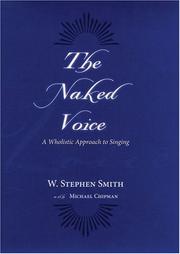
Focuses on freeing the natural voice through simple, principle-based exercises. Reading this second reinforces the breath and resonance concepts from DeVore with practical, singer-specific application.
Ear Training & Pitch Mastery
BeginnerDevelop reliable pitch recognition, sight-singing skills, and a musical ear so that technical vocal work is always grounded in accurate intonation.
▸ Study plan for this stage
Pace: 10–12 weeks total. Weeks 1–6: "Ear Training for the Contemporary Musician" by Keith Wyatt (~20–25 pages/day, 4–5 days/week), working through intervals, rhythms, and melodic dictation chapters sequentially while pausing to complete all listening and singing drills before moving on. Weeks 7–12: "Sight
- Interval recognition (ascending and descending) by ear and by voice, as systematically drilled in Wyatt's interval chapters
- Rhythmic ear training: subdivisions, syncopation, and dictation as covered in Wyatt's rhythm modules
- Melodic dictation: transcribing short melodies from a single hearing, a core skill built progressively in Wyatt
- Solfège (movable-do) and scale-degree awareness as the foundation of Carr's sight-singing method
- Diatonic sight-singing in major and minor modes, developed unit by unit in Carr
- Chromatic and modal inflections in sight-singing, introduced in the later units of Carr
- Intonation awareness: matching a pitch center and self-correcting in real time, threaded through both books
- The connection between active listening (Wyatt) and active singing (Carr): ear and voice as a feedback loop
- After completing Wyatt, can you identify all diatonic and chromatic intervals both ascending and descending by ear alone, without an instrument?
- Can you accurately transcribe a short (4–8 bar) diatonic melody after two hearings, as Wyatt's dictation exercises require?
- Using Carr's solfège system, can you sight-sing a previously unseen diatonic melody in both major and natural minor without a pitch reference beyond the starting note?
- How does Wyatt's approach to rhythmic dictation differ from purely melodic dictation, and why does mastering rhythm independently matter for overall intonation?
- What strategies does Carr provide for approaching a difficult chromatic leap in a sight-singing exercise, and how do you apply them in real time?
- How do the ear-training skills built in Wyatt directly support the accuracy and confidence demanded by Carr's progressive sight-singing units?
- Daily interval singing drill (Wyatt-based): each morning, pick two random pitches on a piano or app, identify the interval by ear, then sing it back — log your accuracy rate weekly to track improvement
- Melodic dictation practice (Wyatt): use the book's audio examples or a free tool like musictheory.net to transcribe one 4–8 bar melody per session; check, correct, and re-sing your transcription aloud
- Rhythm-clapping sessions (Wyatt): isolate the rhythm chapters and clap or tap every exercise before adding pitch, building the habit of separating rhythmic and melodic challenges
- Solfège mapping (Carr): before sight-singing any new exercise in Carr, speak the solfège syllables in rhythm without pitch first, then add pitch — this two-pass method is embedded in Carr's unit structure
- Sight-singing cold reads (Carr): once per week, open Carr to a random page one level below your current unit and sight-sing the excerpt in one take, recording yourself on your phone to review intonation objectively
- Ear-to-voice loop exercise (both books): after completing a Wyatt listening drill, immediately find the same melodic fragment in Carr and sing it with solfège — this actively bridges the two books and reinforces that hearing and singing are the same skill
Next up: Mastering pitch recognition and sight-singing through Wyatt and Carr gives the singer a reliable internal pitch reference and rhythmic accuracy, which are the essential prerequisites for applying technical vocal work — such as breath support, resonance, and registration — with musical intention rather than guesswork in the next stage.
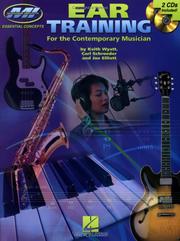
The most widely used ear-training method for contemporary styles; it pairs reading with listening drills and builds interval recognition from the ground up — essential before tackling advanced pitch work.
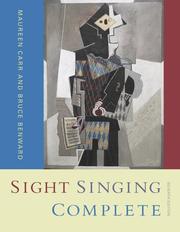
A canonical academic sight-singing text that systematically trains the eye-to-voice connection. Working through it after Wyatt turns passive ear skills into active, reliable pitch production.
Core Vocal Technique
IntermediateBuild a consistent, healthy technique across the full vocal range — including registers, resonance, vowel shaping, and dynamic control — using proven pedagogical methods.
▸ Study plan for this stage
Pace: 12–16 weeks total. Week 1–6: "The Structure of Singing" by Richard Miller (~20–25 pages/day, reading slowly and analytically — this is dense, technical material). Week 7–10: "Singing for the Stars" by Seth Riggs (~15–20 pages/day alongside daily speech-level singing exercises). Week 11–16: "Vocal Wo
- Appoggio (breath management & support): Miller's foundational principle that the torso, intercostal muscles, and diaphragm work together to create a stable, pressurized column of air — the engine of all healthy technique.
- Registers & register transitions (passaggio): Understanding the primo and secondo passaggio as physiological events, and how to navigate them smoothly rather than forcing a flip or a break, as detailed by Miller and reinforced by Riggs.
- Speech-Level Singing (SLS): Riggs's core method — keeping the larynx in a relaxed, speech-level position through the entire range so that registration events happen automatically without muscular interference.
- Resonance & formant tuning: Miller's treatment of the vocal tract as a resonating instrument, including the 'singer's formant,' vowel modification, and how cavity shaping amplifies or dampens overtones.
- Vowel modification & cover: How pure vowels must be acoustically adjusted (not distorted) as pitch rises to maintain resonance and avoid constriction — a concept bridging Miller's classical framework and Peckham's contemporary application.
- Onset & release: The three onset types (glottal, breathy, balanced/simultaneous) and why a clean, balanced onset protects the vocal folds and produces a centered tone, addressed across all three books.
- Dynamic control & agility: Peckham's workout-based approach to building messa di voce (swell), staccato precision, melismatic runs, and stylistic flexibility without sacrificing the technical foundation built in the earlier books.
- Healthy practice habits & vocal hygiene: Warm-up/cool-down protocols, recognizing fatigue vs. damage, hydration, and structuring daily practice sessions — woven throughout Riggs and Peckham.
- According to Miller, what is appoggio, and how does the relationship between the diaphragm, intercostal muscles, and abdominal wall create the 'breath support' that underlies every other technical element?
- How does Riggs define 'speech-level singing,' and what specific laryngeal and muscular conditions must be maintained for a singer to pass through the passaggio without a register break?
- What is the 'singer's formant' as described by Miller, and how does deliberate vowel modification (e.g., [a] toward [ɔ] as pitch rises) preserve resonance rather than compromise it?
- Using Peckham's framework, how should a contemporary singer structure a daily vocal workout — what is the purpose of each phase (warm-up, range extension, agility, cool-down), and how does it differ from a classical warm-up?
- How do the three books collectively address the problem of the passaggio: where do Miller's anatomical explanation, Riggs's laryngeal-stability approach, and Peckham's genre-specific exercises agree, and where do they differ in emphasis?
- What are the warning signs of vocal fatigue or misuse that all three authors flag, and what immediate corrective actions or rest protocols do they recommend?
- Appoggio breath-suspension drill (Miller): Inhale to 75% capacity, then suspend the breath (neither inhaling nor exhaling) for 4–6 seconds while maintaining an expanded rib cage. Sustain a single pitch on [a] for as long as possible with no chest collapse. Journal the sensation of 'leaning into' the breath column. Repeat daily before any singing.
- Lip trill / straw phonation through the passaggio (Riggs): Using Riggs's SLS methodology, slide a five-note scale (1–2–3–2–1) on a lip trill or through a coffee stirrer straw from your comfortable speaking range up through your first passaggio and back. The goal is zero laryngeal tension and no audible 'flip.' Record yourself weekly to track smoothness.
- Vowel modification ladder (Miller): Choose a single vowel — start with [a]. Sing a major scale ascending. At each half-step above your primo passaggio, consciously shade the vowel toward [ɔ], then [o] in the upper range. Use a piano to check pitch accuracy. Reverse descending. Then repeat with [e] → [ɛ] → [ə] and [i] → [ɪ].
- Onset precision exercise (all three books): On a comfortable mid-range pitch, practice all three onsets back-to-back on the syllable 'ah': (1) breathy onset, (2) hard glottal onset, (3) balanced/simultaneous onset. Record each. Train your ear to identify the balanced onset as the default, then apply it to the opening note of three songs you are currently learning.
- Peckham full workout session (3×/week): Follow one complete Peckham audio workout track per session — do not skip the cool-down. After each session, annotate your score sheet: which exercises felt easy, which caused tension, and which range areas need more attention. After four weeks, compare annotations to identify patterns.
- Integrated song application: Choose one song per book-phase and apply that phase's primary concept to it. During Miller's phase: mark every passaggio crossing in the score and plan your vowel modification. During Riggs's phase: sing the entire song on a lip trill before adding text. During Peckham's phase: isolate any melismatic or dynamic passage and drill it as a standalone exercise using her ag
Next up: By internalizing healthy register navigation, resonance shaping, and consistent breath support across all three books, the reader has built the technical infrastructure needed to move into the next stage — where stylistic interpretation, performance practice, and genre-specific artistry can be layered on top of a reliable, injury-resistant vocal instrument.

The definitive scientific-pedagogical text on classical and contemporary vocal technique. It is dense but rewards careful reading; the earlier stages provide exactly the vocabulary needed to absorb it.
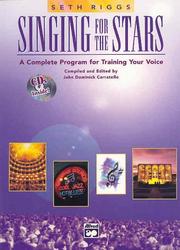
Introduces Speech Level Singing, the method behind many professional pop and musical-theatre voices. It complements Miller by offering a practical, genre-flexible approach to bridging registers smoothly.
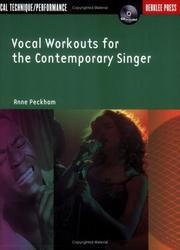
A Berklee Press staple that bridges classical principles and contemporary styles. It consolidates technique with genre-specific exercises and is the ideal capstone for this stage.
Performance Confidence & Stage Presence
ExpertOvercome performance anxiety, develop authentic stage presence, and integrate all technical skills into compelling, confident live performance.
▸ Study plan for this stage
Pace: 6–8 weeks total: Weeks 1–3 on "The Inner Game of Music" (~20–25 pages/day, including journaling time); Weeks 4–6 on "Performing in the Zone" (~20–25 pages/day); Week 7–8 reserved for integration — revisiting key chapters from both books, consolidating exercises, and applying concepts in live or reco
- Self 1 vs. Self 2 (the interfering inner critic vs. the natural performer) as introduced in The Inner Game of Music — learning to quiet Self 1 to let Self 2 perform freely
- Awareness without judgment: observing technical and expressive elements during performance without evaluation or correction in the moment
- The three core inner game skills from Green: Will (intention/focus), Trust (releasing control to Self 2), and Awareness (non-judgmental noticing)
- Interference patterns: identifying personal mental habits — perfectionism, fear of judgment, self-consciousness — that block peak performance
- The concept of 'the Zone' as defined by Gorrie: a neurological and psychological state of optimal performance flow, and the conditions that reliably produce it
- Pre-performance routines and mental preparation strategies from Performing in the Zone: breath control, centering, visualization, and attentional focus cues
- Authentic stage presence: integrating technical mastery with genuine musical intention and emotional communication so that performance feels natural rather than manufactured
- Integration of all prior technical vocal skills under performance pressure — using both books' frameworks to ensure technique becomes automatic and expressive rather than consciously managed on stage
- According to Barry Green in The Inner Game of Music, what is the fundamental difference between Self 1 and Self 2, and how does that distinction explain why technically proficient singers can still underperform under pressure?
- What are the three inner game skills Green identifies, and how would you apply each one specifically during a live vocal performance — before, during, and after a difficult passage?
- How does Jon Gorrie define 'the Zone' in Performing in the Zone, and what physiological and psychological indicators signal that a performer has entered or left that state?
- What pre-performance mental preparation strategies does Gorrie recommend, and how do they differ from — or complement — Green's awareness-based approach?
- How do both books address the role of attention and focus during performance, and where do their frameworks agree or productively diverge?
- How can a singer use the combined frameworks of both books to transform a recurring moment of performance anxiety (e.g., a high note, an exposed entry, a memory lapse) into a moment of confident, present-moment expression?
- 'Self 1 Silencing' practice (from The Inner Game of Music): During a run-through of a song, assign your analytical mind a neutral observational task — such as noticing the physical sensation of resonance or the color of your tone — to occupy Self 1 and free Self 2 to perform. Journal afterward about what changed.
- Judgment-free recording review: Record a full performance of a piece, then watch it back using Green's non-judgmental awareness lens — note only what you observe (pitch, breath, posture, expression), never what was 'wrong.' Practice reframing every observation as neutral data.
- Zone-entry routine design (from Performing in the Zone): Using Gorrie's framework, build a personal 10–15 minute pre-performance ritual that includes a breathing sequence, a physical centering anchor, a visualization of performing in the Zone, and a single attentional focus cue. Rehearse this ritual before every practice session for two weeks.
- Simulated performance pressure sessions: Perform your repertoire in front of at least one other person (or camera) once per week during this stage, deliberately applying one concept from each book per session — e.g., 'Trust' from Green and 'attentional focus cue' from Gorrie — and debrief in writing afterward.
- Interference mapping exercise: Write a detailed personal inventory of your top three performance anxiety triggers. For each, use Green's framework to identify the Self 1 thought pattern involved, then use Gorrie's Zone strategies to design a specific countermeasure to deploy in the moment.
- Integration performance: At the end of the stage, perform a complete set (3–5 songs) as if it were a real concert. Apply your Zone-entry ritual beforehand, use awareness-without-judgment during, and conduct a structured debrief afterward using criteria drawn from both books — presence, trust, focus, and authentic expression.
Next up: By internalizing the mental frameworks of Green and Gorrie, the singer has transformed technical vocal skill into embodied, confident artistry — the ideal foundation for any next stage focused on repertoire specialization, professional audition technique, or stylistic mastery, where performance under high-stakes conditions becomes the norm rather than the exception.
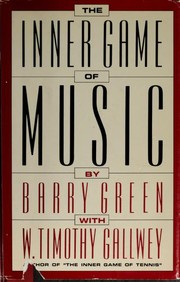
Adapts Timothy Gallwey's Inner Game framework specifically for musicians; it directly addresses the self-interference and anxiety that undermine technical skill in performance.

A practical, research-backed guide to achieving peak performance states on stage. Reading it after Green deepens the mental-skills toolkit with concrete pre-performance routines and confidence strategies.
Discussion
Keep reading
Paths that share books, cover the same subject, or open a related topic.