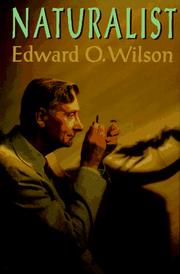
Start with Naturalist, Wilson's autobiography. It explains the two things that determine everything else he wrote: an Alabama boyhood spent outdoors, and a childhood fishing accident that cost him the sight in one eye, so he looked down at small things instead of up at birds. That is the entire origin of a career spent on ants.
The obvious alternative is Sociobiology, the book that made him notorious. It is a 700-page technical synthesis in which exactly one chapter — the last, on humans — caused the controversy. Starting there gives you the argument without the arguer, and you will spend the whole book wondering why anyone shouted. Naturalist gives you the man first, which makes the fight legible when you reach it.
The conservation books
Biophilia is short and closer to an essay than a treatise. It is where Wilson named the hypothesis he is best known for outside biology: that humans have an innate affiliation with other living things. Read it second, because it is the shortest route into how he thought.
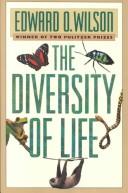
The Diversity of Life is the strongest single statement of the case for biodiversity by anyone, and it is where his prose is at its best. The Future of Life extends the argument into policy. Half-Earth is the proposal that follows from both — set aside half the planet's surface for other species. It is a genuinely contested idea: conservation scientists and human-rights researchers have argued that large-scale protected areas have historically displaced indigenous and rural people, and defenders argue the alternative is worse. Wilson makes his case; the objection is real and is not settled here.
The books about human nature
On human nature is the accessible version of the sociobiology argument and won him his first Pulitzer. Consilience is the most ambitious and the most criticised: an argument that the sciences, social sciences and humanities can be unified under a biological foundation. Humanists have generally not agreed, and that disagreement is worth reading around rather than through.
The Social Conquest of Earth is where Wilson publicly abandoned kin selection — the theory he had spent decades helping to popularise — in favour of group selection. Well over a hundred evolutionary biologists signed a formal objection to the underlying mathematical paper. This is a live scientific disagreement among specialists, and no reading list settles it; read the book knowing the field largely did not follow him.
The technical work, and the other side
Sociobiology belongs here, late, when you know what it is: a synthesis of animal social behaviour that is still a serious reference and only briefly about people. The ants, the enormous monograph that won him a second Pulitzer, is filed in our catalogue under Bert Holldobler — that is not an error in substance, it is the Holldobler and Wilson collaboration, but the record credits only the first author. It is a technical reference, gorgeously illustrated, and not a book you read straight through.
Not in our genes is the opposing case, by Richard Lewontin, Steven Rose and Leon Kamin — the Harvard colleagues who led the attack on sociobiology. Reading it after Wilson rather than instead of him is the point. Their objection is partly scientific and explicitly political, and Wilson's reply was that they had substituted politics for evidence. The exchange is one of the sharpest in modern biology and both books remain in print; we are not going to referee it for you.
If you read three, read Naturalist, The Diversity of Life and Not in our genes. That gets you the naturalist, the argument he cared most about, and the criticism, which is more than most readers of any one of them have. More natural-history sequences sit on Discover.
Follow the full ordered path here: E.O. Wilson in Order: Where to Start with the Ant Man of Harvard.
Ready to learn something deeply?
Build a reading path — free