Drug Policy: The Best Books on Prohibition, Harm Reduction and the War on Drugs, in Order
Drug policy is a field where almost every book is also an argument, so this path is built to put you inside the disagreement rather than on one side of it. It starts with the history of how prohibition came about, moves through the war on drugs and its effect on American criminal justice, then reads the strongest reform case and finishes with the analysts who take neither side and one serious dissenter from the reform consensus. Read the last stage against the fourth on purpose; if you finish the path agreeing with everything in it, you have read it wrong.
How prohibition happened
BeginnerUnderstand that drug control is a recent historical invention with traceable causes, not a natural default.
▸ Study plan for this stage
Pace: Six weeks, 1,035 pages. Forces of Habit (David T. Courtwright) is 277 pages of global drug history and the best organised of the three. Dark Paradise (Courtwright again) is 326 pages and narrower — American opiate addiction before and during the shift to criminalisation. The Pursuit of Oblivion (Ric
- Courtwright's psychoactive revolution: the global spread of drugs as a story about trade, empire and taxation before it is a story about health
- The big three — alcohol, tobacco, caffeine — treated in the same analytic frame as the prohibited drugs, which is where Courtwright's argument does its work
- The nineteenth-century American opiate user as Dark Paradise reconstructs her: middle-class, female, medically supplied, and nothing like the twentieth-century image
- The Harrison Narcotics Act of 1914, the Hague Convention of 1912, and how a regulatory measure became a criminal one through enforcement and case law
- Race and immigration in the origins of specific prohibitions — opium and Chinese labour, cocaine and the American South
- Davenport-Hines on consumption and elite drug use, and why a cultural history reaches different conclusions from a policy history
- Why does Courtwright insist on treating caffeine and tobacco alongside opium and coca, and what does the comparison establish?
- How did the profile of the typical American opiate user change between 1880 and 1930, and what caused the change?
- What did the Harrison Act actually say, and by what mechanism did a tax and registration statute become a prohibition?
- Which specific prohibitions in this period track a racial or immigration panic, and what is the evidence for that in these books?
- Where do Courtwright and Davenport-Hines disagree about what drove control — commerce, medicine, morality or the state?
- Build a single timeline from 1800 to 1940 with three tracks — supply and trade, medical practice, and law — using Courtwright and Dark Paradise, and mark where the law track diverges from the other two
- Take Courtwright's account of one commodity, say opium or coca, and follow it through his chapters on production, distribution and control; the book is structured so this can be done and the structure is the argument
- Reconstruct the demographic shift Courtwright documents in Dark Paradise using his own figures, and write down what would have to be true for a purely medical explanation to account for it
- List every justification offered for prohibition in these three books and sort them into public health, public order and moral claims; the proportions are the finding
Next up: With prohibition established as a historical construction rather than a default, the next stage examines what was built on top of it in the second half of the twentieth century.
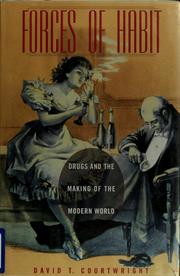
A global history of how coffee, tobacco, opium, alcohol and the rest became commodities, then taxed goods, then in some cases crimes. The best single frame for everything that follows.
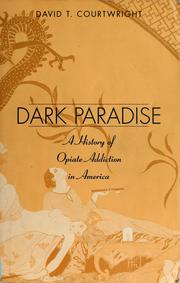
Courtwright's history of American opiate addiction shows that the typical nineteenth-century addict was a middle-aged white woman with a prescription. Read it second: it makes the racial politics of later prohibition visible by contrast.
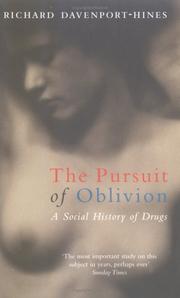
A wide-angle global history of narcotics and the attempts to suppress them, strongest on the international treaty machinery that most accounts skip.
The war itself
IntermediateLearn how American drug policy was actually made, and what it did abroad.
▸ Study plan for this stage
Pace: Seven to eight weeks, 1,268 pages — the longest stage in the path. Smoke and Mirrors (Dan Baum) is 396 pages of American political history from Nixon forward, reported and sequential. Chasing the Scream (Johann Hari) is 400 pages, narrative and openly campaigning; Hari is an advocate for legalisatio
- Baum's account of drug policy as electoral politics: which administrations escalated, what they said, and what the internal record shows they believed
- Mandatory minimums, asset forfeiture and the sentencing architecture built in the 1980s
- Harry Anslinger and the institutional interest of an enforcement bureaucracy in the persistence of the thing it enforces against
- Hari's argument that addiction is driven by isolation rather than by chemical hooks, and his use of Rat Park and of Portugal — both contested readings
- McCoy's supply-side thesis: that counterinsurgency alliances protected trafficking networks, and why the claim was and remains contested
- The difference between a policy history, a campaigning narrative and an investigative allegation — all three are here and they do not carry the same evidentiary weight
- What does Baum's reporting show about the stated versus the actual purposes of the Nixon and Reagan escalations?
- How were mandatory minimums structured, and what did the crack/powder disparity do in practice?
- What is Hari's explanation of addiction, and what are the strongest objections to his use of the Rat Park experiments and of Portuguese decriminalisation?
- What exactly does McCoy allege, what is his evidence, and what have his critics said about it?
- Which claims in this stage would you be willing to repeat without checking, and which would you not?
- Extract Baum's timeline of federal drug legislation with the sponsoring administration for each act, then set it against the electoral calendar and see how much of it clusters
- Take three of Hari's central claims, find his citations for them in the endnotes, and check what the cited sources actually say — the book is built to make this possible and doing it is the point
- Summarise McCoy's causal chain in five steps and mark, for each step, whether his support is documentary, testimonial or inferential
- Write down what Baum and Hari would each say the war on drugs was for, and identify the specific evidence on which they disagree
Next up: The next stage narrows from policy and geopolitics to the single domestic consequence that dominates the American argument.
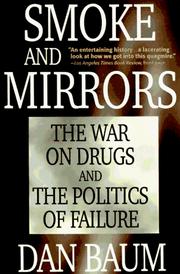
Baum's political history of the drug war from Nixon to Clinton, reconstructed from participants. The book that documents how much of the policy was electoral rather than epidemiological.
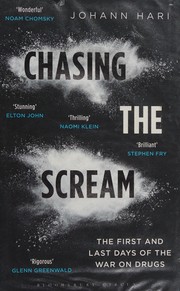
The most widely read popular account, built on reporting from Harry Anslinger's files to Portugal's decriminalisation. Vivid and openly polemical, so read it after Baum and treat its causal claims as arguments to test.

McCoy's investigation of the complicity of intelligence services in the Asian heroin trade. Our catalogue holds it under the original 1972 title, The Politics of Heroin in Southeast Asia; later editions widened the scope to the global trade.
What it did to American criminal justice
IntermediateSee the domestic consequences that dominate the American argument.
▸ Study plan for this stage
Pace: Four weeks, 669 pages — the shortest stage here. The New Jim Crow (Michelle Alexander) is 301 pages of legal argument written by a civil rights lawyer to make a case, not to survey a literature — it is advocacy, and forceful advocacy, and should be read as such. Dreamland (Sam Quinones) is 368 pages
- Alexander's central claim that mass incarceration functions as a racial caste system, with drug enforcement as its principal intake mechanism
- The legal doctrine she builds on — pretextual stops, consent searches, the near-impossibility of proving discriminatory intent under McCleskey
- Collateral consequences: what a felony conviction removes in employment, housing, benefits and voting
- Quinones's supply story: pill mills and reformulated prescription opioids on one side, a distributed Xalisco delivery model on the other
- The difference between an enforcement-driven epidemic and a medically-driven one, and why the opioid crisis complicates the standard prohibition narrative
- The published critiques of The New Jim Crow — including on how much of the prison population is actually drug offenders — which are worth having in mind while reading it
- What is Alexander's argument, in its strongest form, and which of its steps is doing the most work?
- What proportion of the incarcerated population is held on drug offences, and how does that figure bear on Alexander's thesis?
- How does Quinones explain the geography of the opioid epidemic, and what does the Xalisco delivery system have in common with a legal retail business?
- Does the opioid epidemic support or undercut the case for prohibition, and can Dreamland be read both ways?
- Where do Alexander and Quinones locate responsibility, and are those two accounts compatible?
- Lay out Alexander's argument as a numbered chain of claims and mark each one as legal, empirical or interpretive; then locate the empirical ones in her citations
- Draw Quinones's two supply chains — the prescription route and the black tar route — as parallel diagrams and note where they intersect
- Take one legal doctrine Alexander discusses, read her account of the controlling case, and write out what would have had to be decided differently for her mechanism to fail
- Set the incarceration figures in The New Jim Crow beside the overdose figures in Dreamland and write a paragraph on why the two books' harms are so rarely discussed together
Next up: Having read the case that prohibition's costs are unacceptable, the next stage reads the strongest argument that the drugs themselves have been misrepresented.
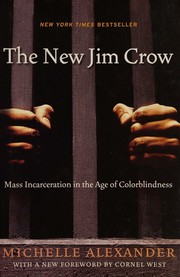
Alexander's argument that drug enforcement rebuilt a racial caste system through the criminal-justice apparatus. The most influential book in this list and the one most worth reading with the counter-arguments in mind.

The opioid epidemic as the collision of pharmaceutical marketing and Mexican black-tar heroin distribution. A reminder that prohibition and prescription are one system, not two.
The science and the case for reform
IntermediateRead the strongest version of the decriminalisation argument, made by people with laboratory and clinical backgrounds.
▸ Study plan for this stage
Pace: Six weeks, 1,034 pages. High Price (Carl L. Hart) is 346 pages and half memoir, half neuroscience — Hart is a Columbia psychologist reporting his own laboratory work on methamphetamine and crack cocaine self-administration. Drug Use for Grown-Ups (Hart again) is 304 pages and considerably more polem
- Hart's laboratory finding that human subjects offered alternative rewards frequently decline additional doses, and what he takes it to disprove about compulsion
- The distinction between pharmacology and context — why the same substance produces different outcomes across populations
- Nutt's multi-criteria harm ranking, which scores drugs on harm to user and harm to others and places alcohol at the top, and the methodological objections to that ranking
- Hart's argument in Drug Use for Grown-Ups that most drug use is non-problematic and that the burden of proof lies with prohibition
- The role of the researcher as advocate: Hart's disclosure of personal use and Nutt's dismissal from public office both change how the arguments are received
- What these books establish about specific drugs and what they only establish about how those drugs have been described
- What were Hart's actual experiments, what did they measure, and what is the strongest objection to generalising from them?
- How does Nutt construct his harm ranking, which criteria carry the most weight, and who has criticised the weighting?
- What does Hart mean by saying most drug use is unproblematic, and what evidence base is that claim resting on?
- Where does the reform case in this stage depend on scientific findings and where does it depend on a political premise about adult autonomy?
- What would have to be true for these three authors to be wrong?
- Reconstruct one of Hart's self-administration studies from High Price — the design, the subjects, the alternative reward, the result — and write down exactly what it does and does not license concluding
- Reproduce Nutt's harm ranking table and then re-rank it yourself with different weights on harm-to-user versus harm-to-others; how much the ordering moves tells you how robust it is
- List the claims in Drug Use for Grown-Ups that follow from Hart's laboratory work and, separately, those that follow from his political position — keeping the two apart is what the book makes hardest
- For each of Nutt's twenty ranked substances, note whether its legal status matches its harm score, and use the mismatches as the agenda for the final stage
Next up: The final stage is deliberately set against this one: the analysts who decline the binary, and a critic who thinks the reform consensus has its facts wrong.

Hart's memoir of growing up in Miami interleaved with his neuropharmacology research, arguing that most drug users are not addicts and that poverty explains more than pharmacology does.

The later, more provocative statement of Hart's position, including his own use. Read it after High Price so you can see how far he has moved and decide whether the evidence moved with him.
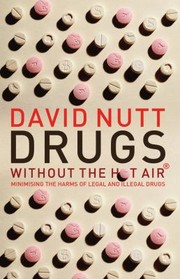
Nutt was sacked as the UK government's drugs adviser for saying that ecstasy was less dangerous than horse riding. This is the harm-ranking argument set out properly, and the best worked example of evidence-based policy colliding with politics.
The analysts, and the dissent
IntermediateFinish with people who refuse the binary, and with a serious critic of the reform consensus.
▸ Study plan for this stage
Pace: Six to seven weeks, and the reading levels are not the same. Drugs and Drug Policy: What Everyone Needs to Know (Mark A. R. Kleiman, Jonathan P. Caulkins and Angela Hawken) has no length recorded in our catalogue; it is written in a question-and-answer format and is deliberately accessible, so treat
- Kleiman, Caulkins and Hawken's core move: treating drug policy as a set of separable design questions rather than a single referendum on legalisation
- That Drugs and Drug Policy is the only book in this path with no recorded length, so plan the stage around Drug War Heresies instead
- Swift, certain and modest sanctions — the HOPE probation model — as an alternative to both incarceration and non-enforcement
- MacCoun and Reuter's central methodological point: that the available cross-national evidence is far weaker than either side's rhetoric implies
- The distinction between depenalisation, decriminalisation and legalisation, and why conflating them wrecks most public arguments
- Dalrymple's clinical claims about withdrawal and his argument that addiction is a moral and social phenomenon dressed as a medical one — a minority position, and one Hart and Nutt would reject outright
- Where the genuine disagreements lie: on the pharmacology, on the elasticity of demand, on what enforcement can achieve, and on who should decide
- That this stage's job is to leave you holding the disagreement rather than resolving it
- What are the separable policy choices Kleiman and colleagues identify, and which of them are independent of the legalisation question?
- What does the HOPE model do differently, what were its results, and what are the replication concerns?
- Which comparative claims do MacCoun and Reuter say the evidence cannot support, and which ones do they think it can?
- What exactly is Dalrymple claiming about opiate withdrawal, and how would Hart and Nutt answer him?
- After all five stages, which factual questions in this field do you now think are genuinely open, and which are settled but politically contested?
- Take Nutt's harm ranking from the previous stage and MacCoun and Reuter's assessment of the evidence base, and mark which of Nutt's rankings MacCoun and Reuter would say are adequately supported
- Write out Dalrymple's argument in its strongest form, then write Hart's rebuttal in its strongest form, without deciding between them; both books are short enough to do this properly
- Use the Kleiman framework to design a policy for one specific substance, stating separately what you would do about production, retail, use, treatment and enforcement — the exercise exposes how much of the debate is a package deal that need not be
- Return to the timeline you built in the first stage and add the reform proposals from stages four and five, marking for each which historical cause it actually addresses
- Write a page listing the three points at which you changed your mind across this path, and which specific book did it
Next up: This completes the path: origins, escalation, domestic consequences, the reform case and the analysts and dissenters set against it — and if you finished agreeing with every book in it, you have read it wrong.

Kleiman, Caulkins and Hawken answer the standard questions one at a time without advocating a single position. The most useful book here for arguing well about the subject.
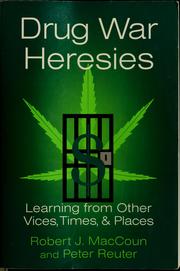
MacCoun and Reuter systematically examine what the international evidence can and cannot support about legalisation. Deliberately unsatisfying to both camps, which is why it belongs at the end.

A doctor's polemic against the disease model of addiction and against much of what the reform movement takes for granted. Read it as the strongest available dissent from the rest of this path, not as a settled verdict.
Discussion
Keep reading
Paths that share books, cover the same subject, or open a related topic.