Rural America: The Best Books on the Heartland and What Happened to It, in Order
Rural and post-industrial America has been explained more confidently than it has been reported, so this path front-loads the reporting: one family, one town, one factory, before anybody tells you what it means. The middle stage then puts five books that reach flatly incompatible conclusions about the same people side by side, on purpose. It closes with the long history of who counted as American poor and with the places that are trying to rebuild, which is the part of the story the argument books mostly skip.
One family, one town, one factory
BeginnerGet the texture before the thesis. These three are narrative reporting anchored to a specific place, so you finish knowing what a plant closure or a generation of rural poverty actually looks like day to day — and you can hold later, more theoretical books against something concrete.
▸ Study plan for this stage
Pace: About five weeks for 999 pages of narrative reporting, all three of which read at trade-paperback pace — 40 to 50 pages an evening is comfortable. Smarsh's Heartland (312pp) first, over ten days; it is a memoir and the author is writing from inside the family she describes, so treat it as testimony
- Generational rural poverty as a class condition with its own history, which is Smarsh's frame rather than a political one
- What a plant closure does on a five-year timescale rather than a news-cycle one: retraining, wage scarring, commuting, household breakup
- The leveraged buyout as a mechanism — how a profitable plant is loaded with debt and stripped, which is Glass House's causal story
- Trade shock versus financial extraction as two different explanations for the same emptied main street
- Why Goldstein's withholding of judgement is a method and not indecision
- The difference between a memoirist's authority and a reporter's, and what each can and cannot establish
- What does Smarsh say the poverty in her family was caused by, and where does she decline to give a single cause?
- What did the Janesville retraining programmes actually deliver, and what evidence does Goldstein give for that outcome?
- In Glass House, name the specific financial transactions Alexander says damaged Anchor Hocking, and say who benefited from each.
- Janesville and Glass House describe similar towns with different antagonists. Which mechanism could you test, and how?
- Which claims in these three books rest on the author's own observation and which on interviews with people recalling the past?
- Build a timeline for Janesville from the plant closure forward, marking for each household what happened in each year. Keep it — the argument books in stage three make claims about people at these exact points.
- For Glass House, list every actor Alexander blames and rank them by how much documentary evidence he supplies for each.
- Take one chapter of Heartland and separate what Smarsh witnessed from what she was told by relatives. Note where the two are the same event.
- Write half a page on what a reporter would have to find in Janesville to conclude that retraining had worked, then check whether Goldstein looked for it.
Next up: You now have three places in concrete detail, which is what the national-scale books in the next stage are generalising from — and what you can test them against.
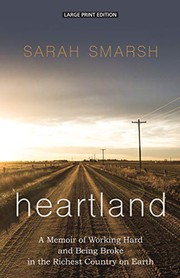
A memoir of five generations of working poverty on a Kansas wheat farm, written by someone who left and can still speak from inside it. Start here because it establishes that rural poverty is a class story with its own long history, not a recent political mood.

Goldstein followed a Wisconsin town for years after the GM plant closed in 2008, including the retraining programmes that were supposed to fix it and mostly did not. The best single case study of what deindustrialisation does to a place, and it withholds its judgement long enough for you to form your own.

Lancaster, Ohio — once a model American town — taken apart by leveraged buyouts of the glass plant that built it. Pairs with Janesville because the villain here is finance rather than trade, which is a different causal story about the same symptom.
What the economy did
BeginnerWiden from single towns to the national picture of the last forty years, and see the two consequences that dominate rural reporting: the opioid epidemic and the collapse of the retirement bargain. Keep track of which claims here are documented and which are the author's framing.
▸ Study plan for this stage
Pace: Four to five weeks for 816 pages. Packer's The Unwinding (448pp) is the longer and the more demanding structurally: it braids several lives across decades with no narrator telling you what to conclude, so read it in three-week blocks of 40 pages a session and keep a note of who is who. Quinones's Dr
- Institutional unwinding as Packer means it — the sequence in which unions, local newspapers, employers and civic bodies lost their hold
- The two simultaneous opioid supply chains Quinones traces, and why either alone underexplains the deaths
- The retirement bargain and its collapse: what a career at one employer used to guarantee and what replaced it
- How a narrative structure can carry an argument that is never stated as a proposition
- The difference between an epidemic's mechanism and its meaning — Quinones supplies the first, and later books borrow it to argue the second
- Which of these national claims the town books from stage one confirm, and which they complicate
- What, in Packer's account, actually unwound, and when does he date it from?
- Describe both halves of Quinones's supply story and explain why he insists they must be told together.
- Which of Packer's braided lives is doing the most argumentative work, and would the book survive without it?
- What evidence does Quinones give that the marketing of prescription opioids changed prescribing behaviour?
- Where does Packer's national picture fit Janesville, and where does Janesville not fit it?
- For each of Packer's main figures, write one sentence naming the institution whose failure the story is about. Then check whether the book supplies evidence for that failure or only depicts it.
- Draw Quinones's two supply chains as diagrams from the book's own detail, and mark the point at which they meet in one town.
- Take three claims from Dreamland that later books in stage three rely on, and note in each case what Quinones actually documented.
- Reread the Janesville chapters on the years Packer covers and list every point of agreement and disagreement between the two accounts.
Next up: Both stages so far describe what happened; the next stage is five authors arguing, incompatibly, about what it means and who is responsible.

Braided lives — a factory worker, a Washington operator, a biodiesel entrepreneur — used to show institutions coming apart from 1978 onward. The wide frame that makes the individual town books read as instances rather than accidents.

How prescription opioids and Mexican black-tar heroin arrived in small-town America simultaneously, told through both supply chains. Read it before any book that treats rural drug deaths as evidence for a political argument, because Quinones supplies the mechanism those arguments assume.
Five explanations that cannot all be right
IntermediateThis is the argument of the subject and it must not be flattened. Vance says culture and personal responsibility; Cramer says a durable rural consciousness about who gets the resources; Wuthnow says moral-community decline; Hochschild says an empathy-bridging story about fairness and queue-jumping; Metzl says racial resentment leads whites to reject policies that would save their own lives. They use different methods on overlapping populations and reach conclusions that contradict each other. Re
▸ Study plan for this stage
Pace: Read these five as one block, not as five separate books — six to seven weeks for 1,477 pages with no long gaps between them, because the disagreement is the point and it disappears if you finish one and forget it before starting the next. Order: Vance's Hillbilly Elegy (272pp, a week) first, since
- Vance's culture-and-personal-responsibility account, and the specific charge against it that a family is not a region
- Cramer's rural consciousness: a durable identity organised around who gets resources, decision-making power and respect
- Wuthnow's moral community and its erosion, which locates the grievance somewhere other than economics
- Hochschild's deep story and the queue-jumping metaphor, offered as an emotional truth rather than a factual claim
- Metzl's argument that racial resentment produces policy preferences that measurably shorten white lives, and the statistical objections to it
- Method as the hidden variable: memoir, ethnographic fieldwork, mass interviewing and epidemiology do not answer the same question
- Falsifiability — what each author would have had to find to abandon their own thesis
- For each of the five, state the thesis in one sentence and name the method it rests on.
- Cramer and Wuthnow interview comparable people and disagree about what the anger is about. Where exactly does the disagreement begin — in the data or in the interpretation?
- What is the standard objection to Hochschild's method, and does she anticipate it in the text?
- What do Metzl's critics say about his mortality statistics, and which part of his argument survives if they are right?
- Which of the five explanations is most consistent with Janesville and Glass House, and which is least?
- Are any two of these five compatible with each other? Argue it from the texts rather than by splitting the difference.
- The stage's central exercise: write, for each of the five, what evidence would have changed that author's mind. Be specific — a finding, a statistic, an interview outcome, not a mood. Then note which of the five was hardest to write, and whether that is because the book is unfalsifiable or because you found it persuasive.
- Take one town or population that appears in more than one of these books and set the accounts side by side, quoting each. Do not reconcile them.
- Find one published academic criticism of Hillbilly Elegy and one of Dying of Whiteness, and for each write whether it attacks the evidence, the method, or the conclusion.
- Reread Cramer's account of how she gained access to her groups, then ask of the other four books how their access was obtained and what it excluded.
- Write a page arguing the position you find least congenial, using only that author's own evidence.
Next up: Having seen five explanations fail to agree, the next stage asks whether the argument is even new — both books there claim the current framing is a repeat of a much older one.
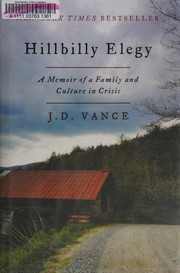
The memoir that set the terms of the whole debate in 2016 and drew the sharpest scholarly pushback, largely for generalising from one family to a region. Read it first in this stage precisely because the other four are, in part, replies to it — and read the criticisms alongside rather than after.

Cramer spent years sitting in Wisconsin gas stations and diners and found a coherent rural consciousness — a sense that decisions, money and respect all flow to the cities. Methodologically the most careful book in this stage, and its conclusion is about distribution and recognition rather than character.
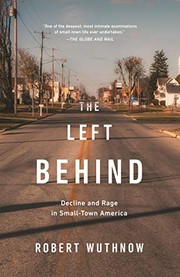
A sociologist of religion's account, built on hundreds of interviews, arguing that what small towns feel is the erosion of a moral community rather than economic grievance alone. Directly disagrees with Cramer about what the anger is about, on comparable evidence.

Five years in Louisiana bayou country asking why people harmed by industrial pollution oppose environmental regulation, answered with a 'deep story' about waiting in line and others cutting in. Sympathetic by design, which is both its method and the standard objection to it.

The most contested book here: Metzl argues that racial resentment leads white voters in Missouri, Tennessee and Kansas to back gun, health and school policies that measurably shorten their own lives. The mortality claims have been disputed on their statistics, so read it as a strong thesis under test and check what the critics actually say.
The longer history
IntermediateEstablish that none of this began in 2016. Both books here argue that the current framing has a four-hundred-year and a fifty-year precedent respectively, and both are contested — Isenberg for how much she folds into one category, Frank for a thesis that Cramer's fieldwork partly undercuts.
▸ Study plan for this stage
Pace: About four weeks for 779 pages. Isenberg's White trash (460pp) is the substantial one — three weeks at 30 pages a session, and it is genuinely a work of history covering colonial poor laws, antebellum class language, twentieth-century eugenics and forced sterilisation, so the pace is slower than the
- The waste people, crackers and squatters of Isenberg's early chapters, and the continuity she claims runs to the present
- Eugenics and sterilisation as the point at which class contempt became state policy
- Deserving and undeserving poor as a category that predates every argument in the previous stage
- Frank's thesis that cultural politics displaced economic interest, and the exact form of Cramer's objection to it
- The difference between showing a long precedent and showing a causal continuity
- Why a four-hundred-year frame makes the 2016 books look like a round in an argument rather than a discovery
- What is Isenberg's claim about continuity, and what would count as evidence that the categories were reinvented rather than inherited?
- Which chapter of White trash is doing the most work, and is it the one with the strongest documentation?
- State Frank's mechanism precisely. What does Cramer's fieldwork suggest is wrong with it?
- Where do Isenberg's categories and Metzl's argument about race overlap, and where do they compete?
- Which of the stage-three authors would be most damaged by Isenberg being right?
- Make a timeline from White trash of the terms used for the rural poor in each era, with the date and the source Isenberg cites for each. Note where the gap between terms is longest.
- Take Frank's central claim and write out the version of it Cramer's data would support, and the version it would not.
- For each of the five books in stage three, write one line on how Isenberg's history would reframe it.
- Find the passage where Isenberg treats eugenics and check what she uses as primary evidence for state policy rather than published opinion.
Next up: Diagnosis is now thoroughly covered from five angles and four centuries; the last stage asks the question none of those books answers, which is what anyone has actually managed to fix.
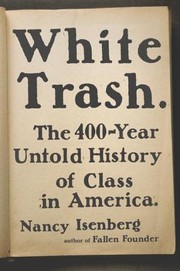
Four hundred years of American class contempt, from colonial waste people to twentieth-century eugenics and trailer-park stereotypes. It reframes every book in the previous stage as the latest round of a very old argument about deserving and undeserving poor.
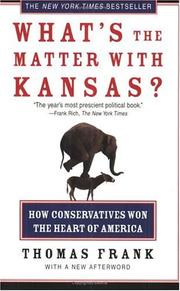
The 2004 book that first popularised the puzzle of voting against apparent economic interest, and the direct ancestor of Cramer, Hochschild and Metzl. The catalogue record carries a Spanish translator and an unrelated name in the author field; the work is Frank's.
What is actually being tried
IntermediateFinish on evidence rather than diagnosis. Both books here are reporting on interventions that exist, so you should end able to name specific things that have worked somewhere, and to be appropriately sceptical about how far a single town's recovery generalises.
▸ Study plan for this stage
Pace: About four weeks for 781 pages, and the two books ask to be read against each other rather than in sequence. Our towns (413pp, by James and Deborah Fallows) is reportage from dozens of towns visited by small plane and reads quickly — two weeks at 40 pages a session — but it openly selects on success
- Selection on the dependent variable — the structural problem with a book that visits places that are recovering
- Municipal fiscal collapse: what actually stops when a city's revenue base goes, and in what order
- The specific repairs Anderson documents in each of her four places, and who paid for them
- Local capacity — libraries, community colleges, a functioning downtown authority — as the variable Fallows keeps finding and Anderson costs out
- The limits of generalising from a single town's recovery to a national policy
- Why an intervention that worked in one place can fail in the next, and what would have to be true for it to transfer
- What do the Fallowses say the recovering towns have in common, and how would you test that against towns that did not recover?
- In each of Anderson's four cases, what was the specific fiscal or governance failure, and what was attempted?
- Which repairs in Fight to Save the Town depended on outside money, and which on local reorganisation alone?
- Does anything in either book contradict the explanations offered in stage three, or do they simply address a different question?
- If you had to fund one intervention across a hundred towns, which one do these two books together best support?
- List every intervention named in Our towns and mark, for each, whether Anderson's cases give any evidence it works where conditions are worse.
- For Stockton or Lawrence, reconstruct from Anderson's account the sequence from fiscal stress to service cuts to attempted repair, and put dollar figures on it where she supplies them.
- Return to Janesville from stage one and write what each of these two books would recommend for it, then say which recommendation Goldstein's evidence would support.
- Write 500 words for a town council: three things worth trying, each with the case study it comes from and the reason it might not transfer.
Next up: You can now read a new book about rural America and place it immediately — reporting, argument, history or policy — and say what evidence it would take to change its mind.

James and Deborah Fallows flew a small plane between dozens of American towns looking for local renewal, and found more of it than the national narrative predicts. Deliberately optimistic and openly selects on success, which is worth knowing while reading it.

A legal scholar on four hollowed-out places — Stockton, Josephine County, Lawrence, Detroit — and the specific municipal-finance and governance repairs people attempted. The most policy-literate book on the path and the right one to end on, because it treats decline as something with levers rather than a mood.
Discussion
Keep reading
Paths that share books, cover the same subject, or open a related topic.