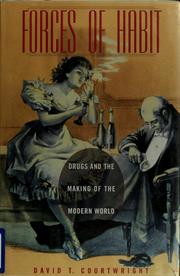
Start with Forces of habit (2001). David Courtwright's global history of psychoactive commerce is the only book here that puts the whole subject on one map: why some drugs were taxed and others banned, how empires financed themselves on the trade, and why the modern prohibition regime is roughly a century old rather than natural. Everything else on this list argues about a piece of that map, and you will judge those arguments badly without it.
Then read Smoke and mirrors (1996) for how American drug policy was actually made. Dan Baum reconstructs it from Nixon forward as a sequence of political decisions rather than a response to evidence. After those two, the list below runs history, then reportage, then the analysts — and the analysts contradict each other flatly, which is the single most important thing to know before starting.
Histories
Dark paradise is Courtwright again, on opiate addiction in America from the nineteenth century onward. His central finding — that the typical nineteenth-century American opiate addict was a middle-class white woman with a prescription — reframes almost every later moral panic. The Pursuit of Oblivion (2001) is Richard Davenport-Hines's wide, anecdote-rich global history, more literary than analytical. The politics of heroin in Southeast Asia (1972) is Alfred McCoy's investigation into complicity between American intelligence operations and the opium trade in Indochina. It was fiercely disputed on publication, parts of the thesis remain contested, and it established a line of inquiry that later work extended. For the Afghan chapter of the same story, see the Soviet-Afghan war.
Reportage
The New Jim Crow (2010) is Michelle Alexander's argument that mass incarceration functions as a racial caste system with drug enforcement as its engine, and it is by some distance the most influential book here. It has also drawn substantial criticism from within criminology: James Forman Jr. argued that it understates Black support for tough enforcement, and John Pfaff's data work argues that drug offences explain far less of prison growth than the book implies. Read it, then read the objections.
Dreamland (2015) interleaves the marketing of OxyContin with the spread of black tar heroin from a single Mexican county. Sam Quinones is doing narrative rather than analysis, and it is extremely effective narrative. Chasing the Scream (2015) is Johann Hari's case against prohibition, built from travel and interviews and written to persuade; Hari resigned from a national newspaper in 2011 after admitting plagiarism and fabricated quotation, which is a reason to check his citations rather than to skip the book, and it is heavily footnoted.
Where the shelf splits
It does not split into two neat sides.
Drugs and Drug Policy (2011) is Mark Kleiman, Jonathan Caulkins and Angela Hawken in question-and-answer form, arguing that both prohibition and legalisation are sold with false certainty and that the variables worth arguing about are enforcement design, swift and certain sanctions, and availability. Drug war heresies (2001) is the most rigorous book on the list and deliberately declines to hand down a verdict: Robert MacCoun and Peter Reuter work through what evidence from other countries and other regimes can and cannot support. Both will frustrate a reader who wants a position.
High price (2013) combines Carl Hart's memoir with his own laboratory work and argues that most users of even the most stigmatised drugs are not addicted, and that poverty and the absence of alternatives, not pharmacology, drive the harms. Drug Use for Grown-Ups (2021) goes much further, defending adult recreational use as a matter of liberty and disclosing his own; it is a manifesto and reads as one. Drugs Without the Hot Air (2012) sets out David Nutt's harm-ranking work — he was dismissed as the UK government's chief drugs adviser after publicly comparing drug harms with other risky activities — and argues that policy does not track the evidence.
Against all of them, Romancing opiates (2006) is Theodore Dalrymple's argument from prison medicine that opiate withdrawal is far milder than commonly described, that the disease model of addiction is largely a social construction, and that harm reduction and methadone maintenance do damage. His clinical claims are disputed and his tone is polemical. He is on the list because the position is real and held.
Nothing here settles the question. What a good reading order can do is ensure you have met the strongest version of each case before you choose one.
Follow the full ordered path here: Drug Policy and the War on Drugs: The Best Books, in Order.